Fast-Moving Goods Placement in Wholesale Markets
Share
In a wholesale market, not every product moves at the same speed.
Some goods are picked, restocked, and loaded many times during the day. Other goods may sit longer in storage before they are needed. This difference matters because the location of fast-moving goods can decide how much workers walk, how often aisles become blocked, and how quickly customers can be served.
In produce markets, seafood markets, restaurant supply warehouses, meat distribution areas, cash-and-carry stores, and general wholesale buildings, fast-moving goods may include daily produce crates, sealed seafood foam boxes, meat cartons, rice bags, cooking oil cartons, paper goods, takeout packaging, cleaning supplies, and common dry goods.
If these high-demand items are placed too deep in the building, workers must travel farther again and again. If they are placed too close to the front without control, they may crowd the sales area, block customer paths, or mix with prepared orders.
This is why fast-moving goods placement matters.
It is not only a storage decision. It is a daily workflow decision.
What Fast-Moving Goods Placement Means
Fast-moving goods placement means deciding where high-demand items should be kept so they can move through the wholesale market with less wasted effort.
In warehouse language, this idea is often related to product slotting or active pick area planning. In a real wholesale market, the idea is simple: the products that move most often should not be hidden in the hardest-to-reach place.
But the answer is not to push everything into the front area.
Front space is limited. Customers, workers, carts, pallet jacks, and small delivery vehicles may all need to move through the same area. If too many cartons, crates, and foam boxes are placed near the front, the market becomes crowded and harder to work in.
Good placement means finding a balance.
Fast-moving products should be close enough to reduce repeated walking, but not so close that they block traffic. They should be organized enough for quick picking, restocking, and customer pickup, but not scattered across the floor.
Why Product Location Affects Labor
A small distance can become a large labor problem when repeated many times.
If a worker walks from the front area to the back storage area once, it may not seem important. But if that same route happens dozens of times during the day, the time adds up. The worker may be restocking the same product, picking the same carton type, or moving the same packaging supply again and again.
In wholesale work, repeated movement is common.
Restaurant supply buyers may ask for the same high-use dry goods. Produce customers may repeatedly buy the same fast-moving vegetables. Seafood and meat buyers may need sealed cartons brought forward from controlled areas. Packaging supplies may need to be replenished near order preparation zones.
If these products are placed without thinking about movement frequency, the business pays for that mistake through extra walking, slower restocking, crowded aisles, and longer customer wait time.
Good product placement reduces unnecessary movement before the movement starts.
High-Demand Items Need Active Locations
Fast-moving goods should be placed near the work zones where they are used most often.
This may include:
front sales area
vendor stall area
active picking zone
customer pickup zone
order preparation area
cold room entrance
high-frequency storage rack
loading lane support area
packaging preparation area
The right location depends on the product.
Produce crates that sell quickly may need to be near the front vendor area. Restaurant supply cartons may need to be near the order preparation counter. Packaging supplies may need to be near the packing area. Sealed seafood or meat cartons may need to stay close to cold storage but still be easy to move toward pickup or staging.
The point is not to create one universal layout. The point is to match product location with real movement patterns.
Where the Electric Utility Vehicle Fits
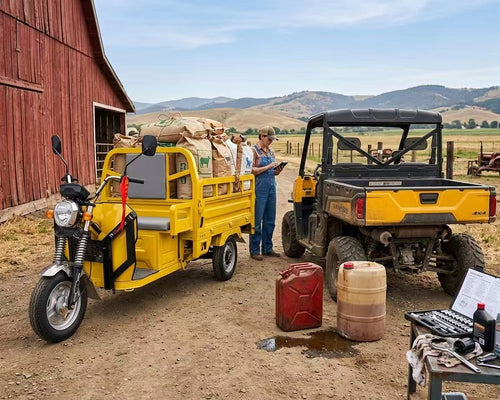
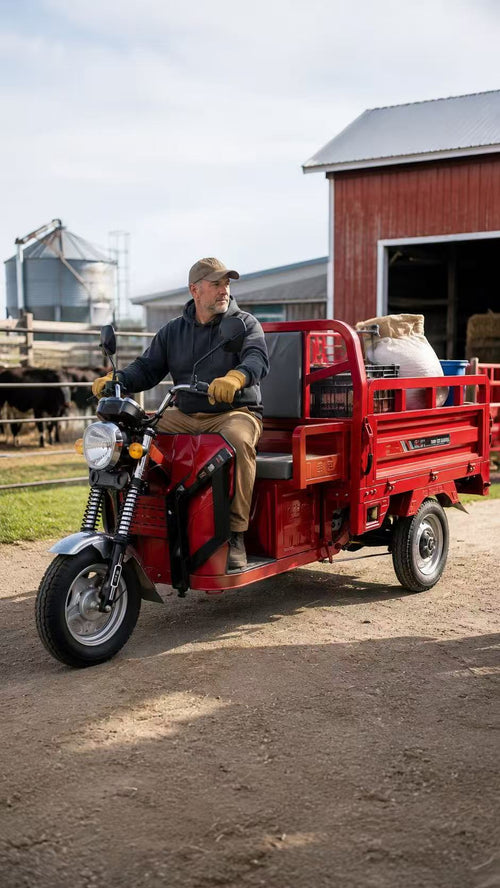
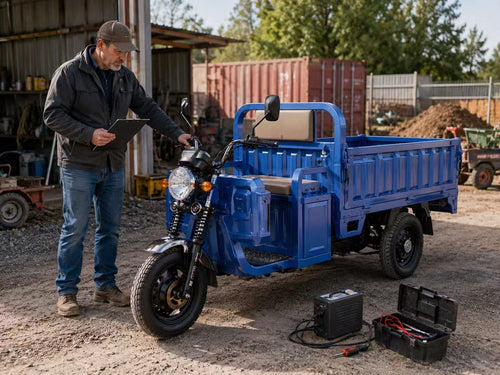
A cargo-bed electric utility vehicle supports fast-moving goods placement because it connects storage zones and active work zones.
Even with good product placement, not every fast-moving item can sit directly in the front area. Space is limited. Some goods must stay in cold areas. Some must remain in back storage. Some must be grouped for customers before moving forward.
The vehicle helps move those goods in controlled short-distance cycles.
It can carry fast-moving products from back storage to active pick areas, from cold room entrances to staging zones, from warehouse racks to customer pickup areas, or from packaging storage to order preparation areas.
This makes the vehicle useful as a bridge between smart placement and daily movement.
It is not replacing warehouse layout. It is helping the layout work better.
The cargo bed can carry mixed goods such as:
closed produce cartons
plastic produce crates
sealed seafood foam boxes
meat cartons
rice bags
cooking oil cartons
paper goods
takeout packaging
dry goods boxes
cleaning supply cartons
general wholesale merchandise
Instead of leaving fast-moving goods scattered in aisles, workers can use the vehicle to move planned groups of goods to the correct active area.
Avoid Turning the Front Area Into Storage
One common mistake is pushing too much inventory to the front.
At first, this may seem efficient. Workers think: if the product sells fast, keep a lot of it near customers. But in a busy wholesale market, this can create another problem.
The front area becomes crowded.
Customers have less room to move.
Hand carts and pallet jacks compete for space.
Workers have trouble separating prepared orders from available stock.
Empty crates and new stock mix together.
Aisles become harder to keep clear.
Fast-moving goods placement should not turn the sales floor into a storage room.
A better approach is to keep a controlled amount of high-demand stock near the front and use a short-distance vehicle to replenish it from a nearby support area when needed.
This keeps goods available without overcrowding the active selling zone.
Placement for Produce, Seafood, Meat, and Restaurant Supply
Each wholesale category has its own placement logic.
Produce markets often need quick access to fast-moving crates and cartons. Items that sell repeatedly during the day should be placed closer to vendor areas or restocking routes, while slower items can stay deeper in storage.
Seafood businesses may need sealed foam boxes and closed cartons near cold room entrances or pickup preparation zones. The goods must remain clean and organized, and they may need faster movement without being left in random aisle space.
Meat distributors often handle sealed cartons or frozen cases that need controlled movement between cold areas, staging, and pickup. Placement should support routing without mixing orders.
Restaurant supply warehouses often move rice, oil, sauces, paper goods, takeout packaging, and cleaning supplies. These items may not need cold storage, but they are often heavy, bulky, and repeatedly requested by customers.
In all of these cases, the question is the same:
Which products move most often, and where should they be placed to reduce unnecessary movement?
Using Vehicles Without Blocking the Layout
A cargo-bed electric utility vehicle works best when the market has a clear route.
If fast-moving goods are placed in active zones, the vehicle should have room to move between those zones without blocking customers or workers. The goal is not to park the vehicle in the middle of the aisle. The goal is to use it as a controlled transfer tool.
A practical route may connect:
back storage
active picking area
front vendor area
order preparation space
customer pickup zone
cold room entrance
empty crate return point
The vehicle can move goods forward and return with empty crates, packaging, or items that need to go back to storage. This creates a cleaner loop instead of one-way clutter.
Good placement and good vehicle movement support each other.
A Better Way to Think About Wholesale Layout
Many small and mid-size wholesale businesses think about storage only as available space.
But the better question is not only “Where can we put this product?”
The better question is:
How often does this product move?
Who needs it next?
Does it need cold storage?
Does it go to customer pickup often?
Does it support order preparation?
Does it block the aisle if placed too close to the front?
Can it be replenished quickly from a nearby support area?
These questions help the business create a more practical layout.
Fast-moving goods should be easy to reach, easy to move, and easy to restock. Slower-moving goods can sit farther away. Heavy or bulky goods may need special routes. Cold-chain goods need temperature-aware placement. Packaging materials should be close to the work zones where they are actually used.
This kind of thinking helps the whole market move better.
A Practical Workflow for Fast-Moving Goods
A practical fast-moving goods workflow can be simple.
First, identify the products that move most often during the day.
Second, place a controlled amount of those goods near the active work area.
Third, keep additional stock in a nearby support area, back storage, or cold room.
Fourth, use a cargo-bed electric utility vehicle to replenish the active area before it becomes empty.
Fifth, return empty crates, packaging, or unused goods to the correct place.
This avoids two extremes.
The market does not hide fast-moving goods too far away.
The market also does not overload the front area with too much inventory.
The vehicle supports the balance by moving the right amount of goods at the right time.
Why This Matters for Customer Experience
Fast-moving goods placement affects customers directly.
A restaurant buyer does not want to wait while workers search deep in the warehouse for common items. A produce buyer does not want to walk through blocked aisles to reach a vendor stall. A seafood customer does not want confusion between prepared orders and available goods. A small store owner does not want pickup delayed because the most common products are far from the loading area.
Better placement helps customers see that the market is organized.
It also helps workers respond faster. When high-demand goods are placed correctly and moved with the right short-distance vehicle, the customer experience becomes smoother.
This is why fast-moving goods placement is not just an internal warehouse decision. It is part of how the wholesale business serves people.
A Smarter Support Tool for High-Demand Goods
Fast-moving goods create repeated movement. Repeated movement creates labor cost, aisle pressure, and customer wait time. A wholesale market can reduce these problems by placing high-demand products more intelligently and using the right short-distance vehicle to support replenishment and transfer.
A cargo-bed electric utility vehicle is useful because it helps connect the key zones of the market:
storage
active picking
front sales
order preparation
cold room entrance
customer pickup
loading support
It helps move goods without turning the front area into a storage pile.
For produce markets, seafood businesses, meat distributors, restaurant supply warehouses, cash-and-carry stores, and general wholesale operations, better placement of fast-moving goods can make daily work easier.
The main goal is simple: put high-demand products where they make sense, keep aisles clear, and use a compact vehicle to move goods between the places where workers and customers need them most.