Cross-Dock Movement in Wholesale Markets
Share
Wholesale markets often move goods faster than traditional warehouses. In many produce terminals, seafood markets, restaurant supply warehouses, meat distribution areas, cash-and-carry stores, and general wholesale buildings, products may arrive in the morning and leave again the same day.
Not every item is stored for a long time.
Some goods move from an inbound truck to a sorting area, then to an order staging zone, then directly to customer pickup vehicles or outbound delivery routes. This type of fast movement is often called cross-dock movement or inbound-to-outbound transfer.
In a large logistics facility, cross-docking may involve advanced dock systems, conveyor lines, warehouse software, and large fleets of material handling equipment. But wholesale markets often have a more practical version of the same idea.
Goods arrive.
Workers check and sort them.
Mixed orders are grouped.
Products move to staging.
Customers or delivery vehicles pick them up.
The challenge is moving those goods through the short distance between receiving, sorting, staging, and outbound loading without slowing down the whole market.
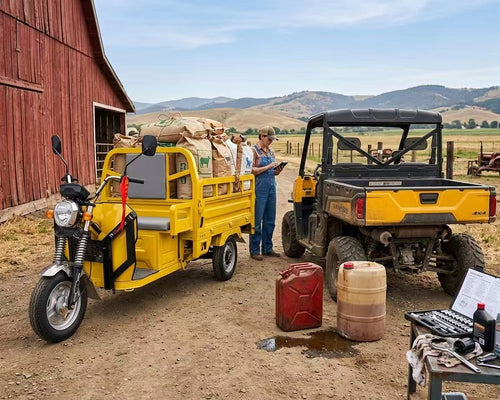
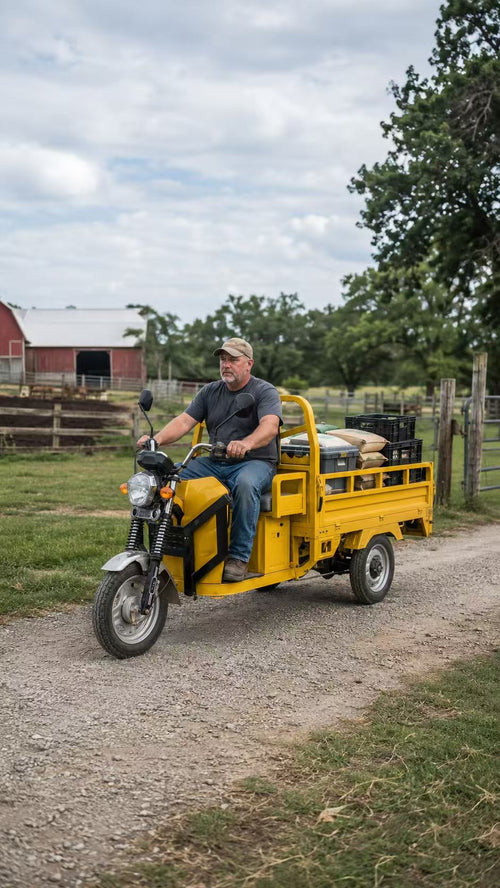
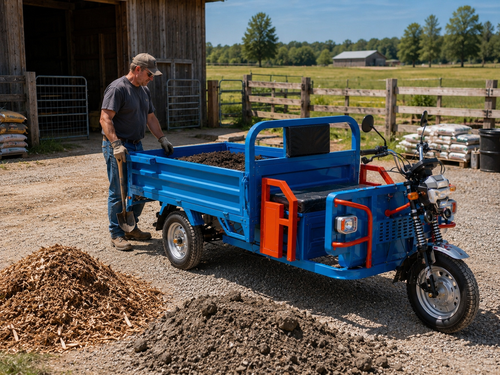
A cargo-bed electric utility vehicle can support this workflow by acting as a short-distance transfer vehicle between inbound receiving and outbound movement.
Why Cross-Dock Movement Matters in Wholesale Markets
Wholesale markets are built around speed.
Fresh produce, seafood, frozen food, restaurant supplies, meat cartons, packaging materials, and general merchandise may all need to move quickly from arrival to customer pickup. If goods sit too long in the receiving area, they can block doors, crowd the dock, delay sorting, and slow down the next truck.
For many wholesale businesses, the problem is not long-distance transportation. The problem is the short route inside the market.
This route may include:
inbound receiving area
sorting table or checking point
temporary staging area
cold room entrance
customer pickup lane
outbound loading door
vendor stall or sales area
small delivery vehicle
If this route is not managed well, goods can pile up in the wrong place. Workers may push several hand carts back and forth. Forklifts may be used for small mixed orders that do not really need forklift handling. Customer vehicles may wait while products are still being moved from the receiving side.
Cross-dock movement is about keeping that short internal flow moving.
The Difference Between Storage and Cross-Dock Flow
Traditional storage means goods are received, put away, stored, picked later, staged, and then shipped or picked up.
Cross-dock flow is different.
The goods are received and then moved quickly toward the next destination. They may be sorted, checked, grouped, and staged, but they are not intended to sit in storage for a long time.
This is common in fresh food wholesale environments.
A produce shipment may arrive and be divided for several buyers. A seafood order may move from receiving to a cold area and then to customer pickup. A restaurant supply shipment may be split into different business orders. General merchandise cartons may be sorted by customer and moved toward the correct loading zone.
In these cases, speed and organization both matter.
Moving goods quickly is not enough if the order becomes confused. Keeping goods organized is not enough if the receiving dock becomes blocked. The right equipment needs to support both flow and control.
Where a Cargo-Bed Electric Utility Vehicle Fits
A cargo-bed electric utility vehicle is useful for cross-dock movement because many wholesale transfers are short, mixed, and repeated.
It can move closed cartons, produce crates, foam boxes, rice bags, cooking oil boxes, paper goods, packaging supplies, and general merchandise cartons between different points in the facility. It can carry more than a hand cart, but it remains more compact and flexible than a truck or forklift.
The vehicle can support:
receiving dock to sorting area movement
sorting area to staging zone transfer
staging area to customer pickup lane movement
vendor stall to outbound vehicle transfer
cold room entrance to loading area support
mixed carton movement between dock doors
same-day wholesale order movement
short-distance transfer for non-palletized goods
This makes it useful for wholesale markets where goods are moving quickly but are not always palletized.
Forklifts, Pallet Jacks, and Cross-Dock Work
Forklifts and pallet jacks are still important in wholesale operations.
Forklifts are the right tools for heavy palletized loads, truck unloading, and warehouse storage movement. Pallet jacks are useful for moving pallets across flat floors. Hand carts are still useful for small loads and tight spaces.
But cross-dock movement often includes goods that do not fit perfectly into one of these categories.
A shipment may arrive partly palletized and partly boxed. A customer order may include several loose cartons and crates. A produce load may need to be split into smaller buyer groups. A restaurant supply order may combine dry goods, paper supplies, sauces, and packaging materials.
These are mixed movements.
A cargo-bed electric utility vehicle fits the middle zone. It helps workers move goods from one part of the flow to the next without using a forklift for every small transfer or pushing many small carts across the same route.
Inbound Receiving to Outbound Loading
The most practical cross-dock route is simple: goods arrive at one side of the market and leave through another point.
A truck unloads at the receiving area. Workers check the goods and separate them by customer, product type, temperature requirement, or delivery route. Some goods go to cold storage for a short time. Some move directly to order staging. Some move to customer pickup. Some move to a small delivery vehicle.
The faster this route stays organized, the better the market performs.
A cargo-bed electric utility vehicle can help move mixed goods between those points. Instead of leaving cartons near the receiving door, workers can place them into the cargo bed and move them to the correct staging area. Instead of using several hand carts for one mixed transfer, the vehicle can carry the grouped load in one trip.
This helps reduce dock congestion and keeps the receiving area ready for the next inbound load.
Fresh Food and Same-Day Wholesale Distribution
Cross-dock movement is especially important for fresh food.
Produce, seafood, meat, dairy, frozen food, and restaurant supply goods often need faster handling than slow-moving general inventory. Even when the movement is short, the timing matters.
For temperature-sensitive goods, a refrigerated electric cargo trike may be the better tool for enclosed cold-chain movement. But for general mixed goods, produce crates, dry cartons, packaging supplies, and non-palletized orders, a cargo-bed electric utility vehicle can support the daily flow.
The key is to choose the vehicle based on the route.
Use refrigerated vehicles when cold-chain protection is required.
Use lift platform vehicles when truck-bed height is the main problem.
Use cargo-bed electric utility vehicles when the job is short-distance mixed transfer between receiving, sorting, staging, and pickup.
A Practical Tool for Wholesale Flow
Cross-dock movement in wholesale markets is not only a logistics term. It is a daily working pattern.
Goods arrive.
Goods are checked.
Goods are sorted.
Goods are grouped.
Goods move to the next vehicle or pickup zone.
When this flow is slow, the receiving area gets crowded. When it is disorganized, orders can be delayed or mixed. When workers rely only on small carts, the same route may require too many trips.
A cargo-bed electric utility vehicle helps by giving workers a compact mobile platform for short-distance inbound-to-outbound movement.
It supports mixed loads, repeated routes, same-day distribution, customer pickup preparation, and non-palletized goods movement. For seafood markets, produce terminals, restaurant supply warehouses, meat distributors, cash-and-carry stores, and general wholesale businesses, this can help keep goods moving through the market instead of sitting at the dock.
The value is not only carrying capacity. The value is faster movement from receiving to sorting, from sorting to staging, and from staging to outbound loading.
In wholesale markets where time, space, and order flow all matter, cross-dock movement is one of the places where a cargo-bed electric utility vehicle can provide real daily value.