Forklift Too Much, Hand Cart Not Enough? Electric Tricycle for Small-Shop Logistics
Share
A hand cart may work when a small shop receives only a few boxes.
A forklift may be necessary when a warehouse handles heavy pallets or needs to place loads on high storage racks.
But many small businesses operate somewhere between those two situations.
They move more cargo than one employee can comfortably push by hand, yet they do not handle enough palletized freight to justify using a forklift for every task.
This creates a common equipment gap:
A hand cart is too slow for repeated trips, but a forklift may be too large, expensive, specialized, or difficult to maneuver.
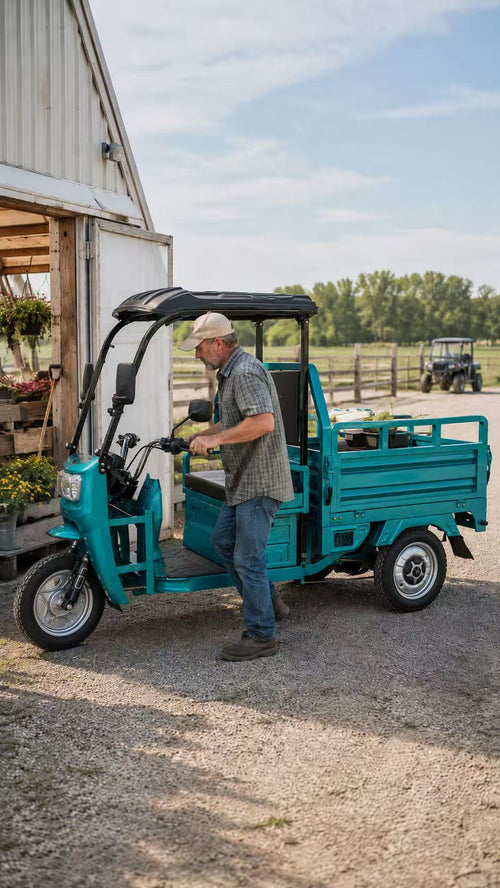
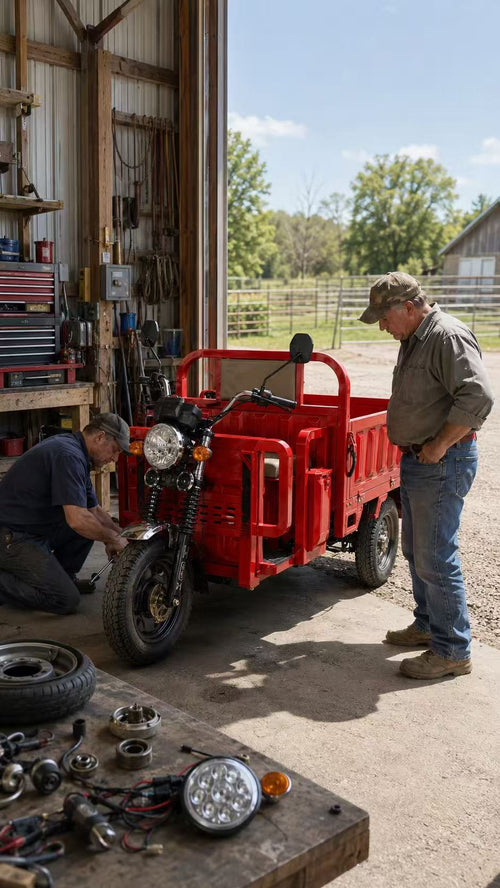
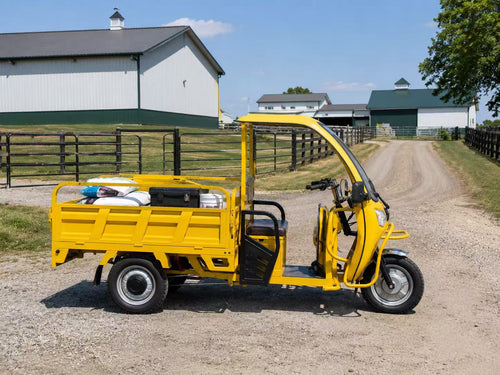
For businesses facing this problem, an electric tricycle for small-shop logistics may provide a practical middle option for short-distance material movement.
The first question should not be:
How powerful is the vehicle?
The better question is:
How many times are you moving the same box every day?
How Many Times Does the Same Box Move?
A box may arrive on a delivery truck, move to the back door, move again into storage, move from storage to a picking area, and then move once more to the sales floor or packing station.
One box may be handled several times before it reaches its final destination.
Multiply this by dozens of cartons, beverage cases, food containers, retail products, tools, supplies, or customer orders, and repeated handling can consume a large part of the working day.
Before purchasing equipment, trace the full route of a normal load:
Delivery vehicle to receiving point
Receiving point to storage
Storage to picking or packing area
Packing area to shipping or customer pickup
Back room to sales floor
Parking area to shop entrance
Warehouse to another building on the same property
This route reveals where labor and time are actually being lost.
If employees make only two or three light trips per day, a hand cart may remain sufficient.
If the same route is repeated throughout the day with heavier or bulkier cargo, powered transport may become more practical.
When Is a Hand Cart Still the Best Tool?
A hand truck, platform cart, or folding wagon is often the right choice when:
Loads are light.
Distances are short.
The floor is smooth and level.
Only a few trips are required.
The business has very narrow indoor spaces.
The budget is limited.
Cargo must be moved through elevators or small doorways.
The equipment is used only occasionally.
A hand cart is inexpensive, simple to store, and requires no battery charging.
For a small retail shop receiving a few cartons at a time, there may be no reason to purchase a powered vehicle.
The limitation appears when employees must repeatedly push heavy loads, make long trips, cross outdoor areas, or move between several buildings.
When repeated manual trips begin delaying receiving, stocking, picking, or customer service, the cheapest tool may no longer be the lowest-cost solution.
When Does a Pallet Jack Make More Sense?
A pallet jack is useful when goods arrive and remain on pallets.
It may be the best option when:
The floor is smooth concrete.
Pallets remain intact.
Loads do not need to be lifted onto high racks.
The route does not include steps, rough outdoor surfaces, or tight turns.
The business has sufficient space around the pallet.
A pallet jack can move heavy loads efficiently, but it is designed around palletized cargo.
It may not be convenient for loose cartons, mixed supplies, small orders, tools, bins, or products that must be distributed to several different work points.
If cargo must be removed from a pallet and then moved in smaller groups, the business may still need another transport method.
When Is a Forklift Necessary?
A forklift is normally considered when the operation requires:
Heavy pallet handling
Loading and unloading trucks
Stacking pallets
High storage racks
Regular lifting
Large industrial loads
Frequent dock or yard operations
A forklift performs jobs that an electric cargo trike cannot perform.
An electric cargo trike does not lift pallets, place loads on racks, or replace material-handling equipment designed for vertical lifting.
However, a forklift may be more equipment than a small shop needs for ordinary horizontal transport.
Before purchasing a forklift, consider:
Aisle width
Turning radius
Maximum lift height
Floor condition
Indoor ventilation requirements
Operator training
Inspection and maintenance
Storage space
Charging or fuel requirements
Daily usage frequency
A warehouse that handles heavy pallets every day may clearly need a forklift.
A shop that mainly moves boxes, bins, tools, supplies, and customer orders between nearby locations may need a different solution.
What If the Business Has No Loading Dock?
Many small shops and mixed-use warehouses operate without a dock-height receiving area.
Goods may arrive at:
A parking lot
A curbside loading point
A ground-level warehouse door
A rear alley
A shared commercial building
A temporary unloading area
The first step is to determine how the goods will safely leave the delivery vehicle.
An electric utility tricycle with cargo bed does not unload pallets from a truck.
The carrier may need a liftgate, or the business may require a forklift, pallet jack, loading ramp, dock plate, or another appropriate unloading method.
After the goods reach the ground, an electric cargo trike may help move individual cartons, containers, tools, or supplies from the receiving area to storage or another work location.
This distinction is important:
Unloading freight and transporting freight are not always the same job.
Where Can an Electric Cargo Trike Fill the Gap?
An electric cargo trike can be useful when the work involves horizontal, short-distance transport rather than lifting.
Possible routes include:
Parking area to shop entrance
Receiving door to storage room
Warehouse to retail floor
Back room to packing station
Packing station to shipping area
Warehouse to workshop
Building to building on private property
Storage container to work area
Market loading area to vendor booth
An electric tricycle for small-shop logistics may reduce repeated pushing and walking while remaining more compact than many full-size industrial vehicles.
Its value may come from:
Reducing the number of trips
Carrying mixed cartons in one load
Moving supplies between indoor and outdoor areas
Helping one employee complete a larger transport task
Supporting frequent restocking
Reducing repeated manual pulling and pushing
Keeping cargo organized inside one cargo bed
It should not be selected only because it is electric.
The route, cargo, building access, safety requirements, and daily workload must all support the decision.
Check the Route Before Checking the Motor
A powerful motor does not solve an unsuitable route.
Measure the actual workplace before choosing any electric cargo trike for warehouse use.
Check:
The narrowest doorway
The narrowest aisle
The tightest turn
The height of door frames
Elevator dimensions and rated capacity
Ramp width and slope
Floor strength
Indoor and outdoor surface conditions
Curbs and thresholds
Pedestrian traffic
Emergency exits
Loading and parking space
Charging location
Secure overnight storage
A vehicle may fit through a doorway but still lack enough room to turn.
A cargo bed may fit inside an aisle but block pedestrian movement.
A vehicle may operate well on smooth concrete but perform differently on broken pavement, loose gravel, grass, or wet surfaces.
The full route must be checked, not only the widest section.
What Type of Cargo Are You Moving?
Different cargo creates different requirements.
Boxes and Cartons
Cartons are often suitable for a fixed cargo bed, especially when they can be stacked safely and secured against movement.
Beverage Cases and Food Supplies
These may be heavier than their size suggests. Load weight, floor condition, braking, and load distribution become important.
Tools and Maintenance Equipment
Tools may be dense, unevenly shaped, or likely to shift. Bins, dividers, straps, or side rails may be needed.
Retail Restocking
A small shop may use an electric cargo trike to move inventory from a parking or storage area to the sales floor, provided the route and building rules allow it.
Customer Orders
Packed orders can be moved between storage, packing, pickup, and shipping points.
Loose Bulk Material
If the business also moves waste, soil, mulch, packaging scraps, or other loose material, a hydraulic dump cargo trike may be considered.
However, most small-shop logistics work involves cartons, totes, cases, and packaged goods. For these loads, a fixed cargo bed is usually more practical than a dump bed.
Is a 60V 1000W Configuration Enough?
A 60V 1000W electric cargo trike may be suitable for moderate short-distance work on reasonably level, firm surfaces.
Possible applications include:
Moving cartons
Restocking retail goods
Transporting tools
Carrying food cases
Moving bins and packaging supplies
Connecting nearby work areas
Supporting moderate daily warehouse transport
A 1000W configuration may be appropriate when:
The route is mostly level.
The cargo weight remains controlled.
Trips are short.
The surface is firm.
The workload is moderate.
The buyer should not judge performance from motor power alone.
Other factors include:
Rated payload
Battery capacity
Cargo-bed dimensions
Vehicle weight
Tire size and pressure
Slope
Ground resistance
Load distribution
Frequency of stops
Daily operating time
When Is a 72V 1500W Configuration More Appropriate?
A 72V 1500W configuration may be more suitable when the business expects:
Heavier regular loads
More frequent trips
Longer private-property routes
Mild inclines
Mixed indoor and outdoor transport
Higher daily workload
Repeated starts with cargo
The extra motor capacity may support more demanding use, but it does not increase the rated payload automatically and does not make unsafe routes suitable.
A buyer should confirm the complete configuration, not only the motor label.
For some businesses, a 1500W electric cargo trike may be valuable.
For others, a smaller and simpler configuration may be enough.
The correct choice depends on the job performed most often.
How Should Cargo Be Loaded?
Poor loading can make suitable equipment unsafe.
Place heavier items low in the cargo bed.
Distribute weight evenly.
Do not overload one side.
Secure boxes and bins before moving.
Do not stack cargo high enough to block the operator’s view.
Keep fragile products separate from heavy equipment.
Load items in the order they will be unloaded.
Confirm that cargo cannot fall into pedestrian areas.
Do not exceed the rated payload.
A large cargo bed should not be treated as permission to carry an unstable load.
Can the Vehicle Be Used Indoors?
Indoor use depends on the building, route, vehicle dimensions, and workplace rules.
Before indoor operation, confirm:
Management approval
Pedestrian separation
Safe speed limits
Door and aisle clearance
Floor condition
Turning space
Emergency access
Battery charging location
Fire-safety requirements
Ventilation requirements for the selected battery system
Visibility at corners
Warning devices
An electric vehicle may produce less operating noise than a combustion vehicle, but quiet operation also means pedestrians may not hear it approaching.
Operators must move slowly and maintain clear visibility.
When Is an Electric Tricycle the Wrong Choice?
An electric cargo trike may not be suitable when:
Loads remain on full pallets.
The job requires vertical lifting.
The business needs to stack freight.
A hand cart already completes the work efficiently.
The route includes stairs.
The aisle is too narrow.
The vehicle cannot turn safely.
The floor cannot support the loaded vehicle.
The building prohibits powered transport.
The route has extreme slopes or rough terrain.
The business needs public-road transportation.
There is no secure charging or storage location.
In these situations, a hand cart, pallet jack, stacker, forklift, conveyor, delivery van, or another solution may be more appropriate.
The goal is not to replace every piece of equipment.
The goal is to remove the repeated transport problem that existing equipment does not solve.
A Simple Equipment Decision Guide
Choose a hand cart when loads are light, distances are short, and only a few trips are required.
Choose a pallet jack when goods remain palletized and move across smooth, level floors.
Choose a stacker or forklift when the job requires lifting, loading trucks, or placing pallets on racks.
Consider an electric cargo trike when boxes, bins, supplies, tools, or orders must be moved repeatedly across longer short-distance routes.
Consider a 60V 1000W configuration for moderate loads and suitable level routes.
Consider a 72V 1500W configuration for more frequent transport, heavier controlled loads, longer routes, or mild inclines.
Choose a fixed cargo bed for cartons, bins, tools, food cases, and packaged products.
Choose a hydraulic dump configuration only when loose bulk unloading is a regular part of the work.
Final Answer
The best equipment for small-shop logistics is not always the cheapest cart or the largest forklift.
A hand cart may be enough for a few boxes.
A forklift may be necessary for heavy pallets and high storage racks.
An electric cargo trike may fill the middle gap when a business needs to move more cargo than employees can comfortably handle by hand, but does not need lifting equipment for every trip.
Before choosing a vehicle, measure:
Cargo weight
Number of trips
Route distance
Door width
Aisle width
Turning space
Floor condition
Slope
Cargo-bed size
Battery requirements
Storage and charging conditions
The most useful question is not:
Which vehicle has the largest motor?
It is:
Which equipment removes the most repeated work without creating a new access, safety, maintenance, or storage problem?