Rush Orders in Wholesale Markets
Share
Wholesale markets are built around movement, timing, and customer pressure. Most orders follow a normal flow: goods are received, stored, picked, staged, checked, and moved to customer pickup or outbound loading.
But not every order follows the normal rhythm.
A restaurant may suddenly run short before lunch service. A small grocery buyer may need one more case before leaving the market. A seafood customer may add a last-minute sealed foam box to an order. A delivery route may be ready to leave but still need one missing carton. A customer may arrive early and ask whether a high-demand item can be pulled quickly.
These are rush orders.
In a wholesale market, a rush order is not just a small order. It is an order that interrupts the normal sequence and needs faster attention without creating confusion for the rest of the operation.
If rush orders are handled poorly, workers may run around the warehouse, pull goods from the wrong location, block aisles, mix rush goods with normal orders, or make promises before confirming inventory. If they are handled well, the business can respond quickly while keeping normal orders moving.
Why Rush Orders Are Different
A normal order gives workers time to follow the usual process.
They can check the order, pick items, group cartons, stage the goods, and prepare them for pickup or loading. A rush order compresses this process. It asks the team to confirm availability, locate goods, move them, and deliver them to the correct area faster than usual.
That pressure creates risk.
Workers may skip the inventory check. They may pick the easiest carton instead of the correct batch. They may place the rush order near another customer’s goods. They may move the item to the pickup area without clear communication. They may interrupt another worker who is already handling a different order.
A rush order should be fast, but it should not be careless.
The goal is controlled speed.
Common Rush Order Situations
Rush orders can appear in many wholesale businesses.
In restaurant supply warehouses, a buyer may need rice, oil, sauce, paper goods, or takeout packaging before opening for the day. In produce markets, a customer may need extra crates of fast-moving vegetables or fruit. In seafood markets, a sealed foam box may be added to an order after the customer has already arrived. In meat and frozen food distribution, a buyer may request an extra sealed case before pickup. In cash-and-carry stores, a small business owner may need a last-minute item before leaving.
Common rush order situations include:
last-minute customer add-ons
missing cartons discovered before pickup
urgent restaurant supply requests
same-day pickup changes
delivery route departure pressure
high-demand product requests
cold-chain goods needing quick movement
small mixed orders added during peak hours
customer waiting at the pickup area
These situations are normal. The important question is whether the market has a simple way to respond.
Rush Orders Need Confirmation First
The first step in a rush order is not moving the vehicle.
The first step is confirming the order.
A worker should confirm what the customer needs, whether the goods are actually available, where the goods are located, and whether the item belongs in dry storage, cold storage, active picking, staging, or customer pickup.
This matters because speed without confirmation can create more work.
If the system says goods are available but the physical carton is not in the right place, the customer may wait longer. If the wrong item is pulled, workers must correct the mistake. If a damaged or returned carton is used, trust can be damaged. If a rush order is mixed with a normal staged order, another customer may receive the wrong goods.
A rush order should move quickly only after the basic facts are clear.
Where an Electric Utility Vehicle Fits
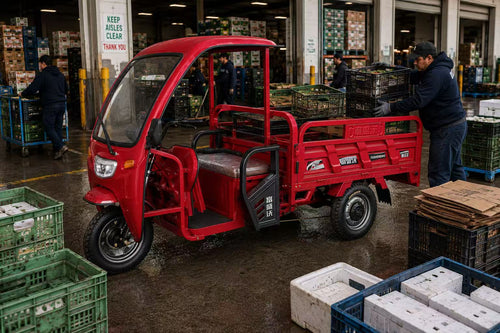
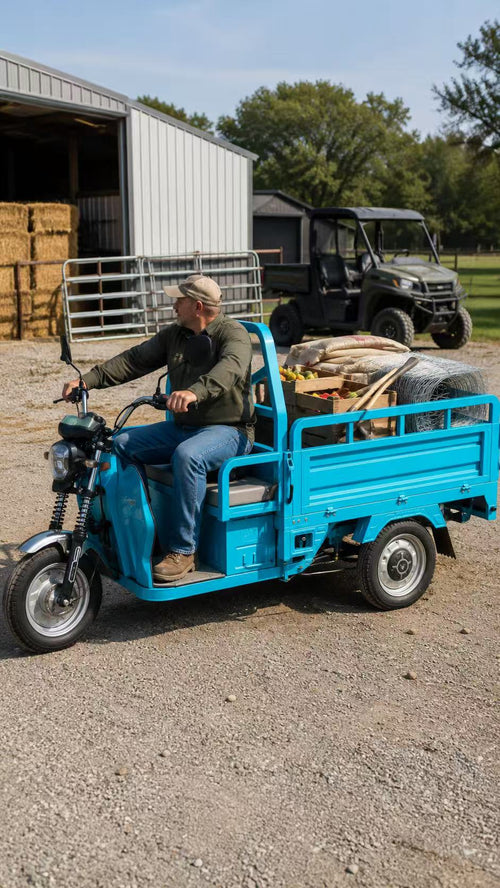
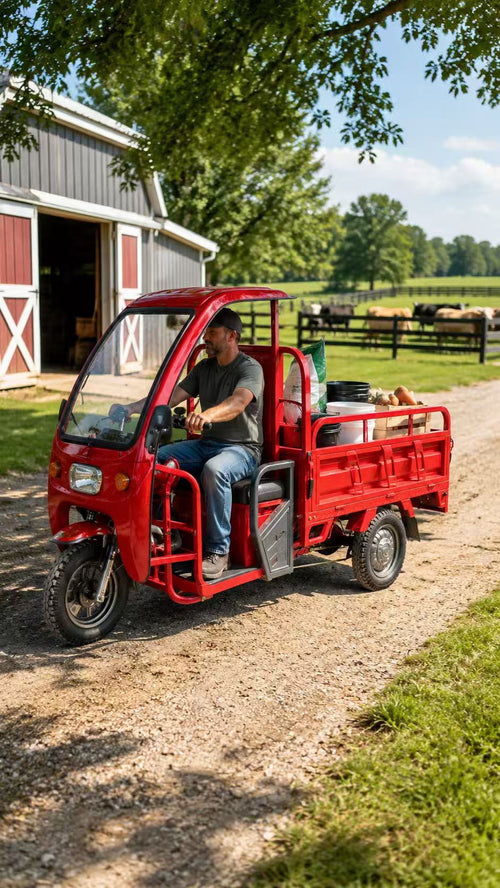
A cargo-bed electric utility vehicle supports rush orders by helping workers move small urgent loads between active zones.
It is not a replacement for inventory control, order checking, or worker communication. It does not decide which order is more important. But it can help move confirmed rush order goods faster and more cleanly than repeated hand carrying or multiple small cart trips.
The vehicle can move urgent goods from:
back storage to order preparation
active picking area to customer pickup
cold room entrance to staging
front sales area to pickup zone
warehouse racks to loading support
restaurant supply storage to checkout area
produce storage to vendor pickup
returned correction area to order review
This is useful because rush orders are often smaller than full pallet loads but still too heavy or mixed for easy hand carrying.
The cargo bed can hold a controlled rush order group: closed cartons, produce crates, sealed foam boxes, rice bags, cooking oil cartons, paper goods, dry goods, or restaurant supply boxes.
The vehicle helps workers move the rush order as one organized load instead of carrying items one by one.
Avoid Mixing Rush Orders With Normal Orders
A rush order needs separation.
In a busy wholesale market, many goods may look similar. Cartons, crates, foam boxes, and bags may be staged for different customers. If a rush order is placed too close to normal orders, it can be picked up by mistake, loaded into the wrong vehicle, or counted as part of another customer’s goods.
This is especially risky during peak hours.
The rush order should be grouped clearly and moved directly to the correct preparation or pickup point. Workers should avoid leaving urgent goods in the aisle, near another customer’s staged order, or in a mixed loading lane.
A cargo-bed electric utility vehicle helps by keeping the rush order together during movement. The vehicle can act as a temporary mobile holding platform while the goods are transferred from storage to the correct active zone.
This reduces the chance that the rush order gets scattered or mixed with other work.
Rush Orders and Inventory Accuracy
Rush orders expose inventory problems quickly.
If the inventory record is wrong, the rush order slows down. If the item is misplaced, workers may search several areas. If goods have been moved to staging but not updated, the team may think the item is missing. If returned goods or damaged cartons are mixed with sellable stock, workers may waste time checking condition before the order can move.
This is why rush order handling is connected to inventory accuracy.
The better the market knows where goods are, the faster rush orders can be handled. The cargo-bed electric utility vehicle supports the physical correction side. If goods are found in the wrong area, they can be moved to the correct order preparation or pickup zone quickly.
A strong rush order workflow depends on both information and movement.
Rush Orders and Fast-Moving Goods
Rush orders often involve fast-moving goods.
A restaurant supply customer may need common dry goods. A produce customer may need popular vegetables. A seafood customer may need a sealed box that moves often. A packaging buyer may need paper goods or takeout supplies before leaving.
If high-demand items are placed in smart active locations, rush orders become easier.
If they are stored too far away or mixed with slow-moving goods, workers must travel farther and search longer. This is why fast-moving goods placement and rush order handling support each other.
A cargo-bed electric utility vehicle helps connect those locations. It can move goods from active picking areas or nearby support zones to order preparation or customer pickup areas without turning the front area into a storage pile.
Cold-Chain Rush Orders
Some rush orders involve temperature-sensitive goods.
Seafood, meat, frozen food, dairy, and other cold-chain products may require faster and more careful movement. These goods should not be left in random aisles or open pickup areas longer than necessary. They need to move between cold storage, staging, and pickup in a controlled way.
For enclosed cold-chain movement, a refrigerated electric cargo trike may be more suitable. But for general sealed goods moving between cold room entrances and active handling areas, a cargo-bed electric utility vehicle can still support the short-distance process when the goods are appropriate for that movement.
The key is to match the vehicle to the product and route.
Rush Orders Should Not Block the Market
A rush order should not create a traffic problem.
When workers are under pressure, it is easy to place cartons in the aisle, park equipment in the wrong location, or stop in the middle of a shared route. This may help one customer for a moment but slow down everyone else.
A good rush order process keeps the route clear.
The vehicle should move the urgent load directly from the source area to the correct destination. It should not become a parked storage unit in the aisle. Workers should keep the rush order contained and move it through the market without blocking picking, staging, receiving, or customer pickup.
Controlled movement is the difference between fast service and disorganized service.
A Practical Rush Order Workflow
A simple rush order workflow can help a wholesale market stay organized.
First, confirm exactly what the customer needs.
Second, check whether the goods are physically available.
Third, identify the correct location and product condition.
Fourth, separate the rush order from normal staged orders.
Fifth, use the cargo-bed electric utility vehicle to move the confirmed goods to order preparation, customer pickup, or loading support.
Sixth, complete the handoff and return to the normal workflow.
This keeps the rush order from becoming a disruption.
The workflow does not need to be complicated. It only needs to be consistent enough that workers know what to do when pressure increases.
Why Rush Order Handling Affects Customer Trust
Customers remember how a wholesale market handles urgent needs.
A restaurant owner who receives a last-minute item quickly may come back. A small grocery buyer who waits too long may look for another supplier. A seafood customer who sees confusion near pickup may lose confidence. A delivery driver who is delayed by one missing carton may affect the next stop on the route.
Rush orders are moments of pressure, but they are also moments of customer trust.
A market that can handle urgent orders without losing control shows that it understands real customer needs. It does not simply move goods. It manages priority, timing, and communication.
A cargo-bed electric utility vehicle helps with one important part of that process: moving confirmed rush order goods through short internal routes quickly and cleanly.
A Better Way to Handle Urgent Orders
Rush orders will always happen in wholesale markets.
The question is whether they create confusion or whether they become part of a controlled workflow.
A good rush order process confirms inventory first, separates urgent goods from normal orders, moves the load through a clear route, and delivers it to the right preparation or pickup area without blocking other work.
A cargo-bed electric utility vehicle supports this process by moving small urgent loads between storage, active picking, cold room entrances, order preparation, customer pickup, and loading support areas.
For produce markets, seafood businesses, meat distributors, restaurant supply warehouses, cash-and-carry stores, and general wholesale operations, better rush order handling can reduce customer wait time and protect normal workflow.
The goal is simple: respond faster without creating more mistakes.