Keeping Loading Lanes Clear in Wholesale Markets
Share
Wholesale markets depend on movement. Goods arrive from trucks, move into storage, pass through vendor spaces, enter order staging areas, and finally leave through customer pickup zones. When this movement is smooth, workers can serve customers faster and keep orders flowing. When the loading lane becomes blocked, the whole operation slows down.
This is a common problem in seafood markets, produce terminals, restaurant supply warehouses, meat wholesale facilities, cash-and-carry stores, and general wholesale markets.
A loading lane may become crowded with customer vans, pickup trucks, box trucks, hand carts, pallet jacks, loose cartons, produce crates, foam boxes, rice bags, packaging supplies, and workers moving in different directions. During peak hours, even a short delay can create congestion.
The problem is not always that the business lacks equipment. Many wholesale markets already use forklifts, pallet jacks, hand carts, and carts. The problem is that the wrong equipment may be used for the wrong type of movement.
Forklifts are useful for pallet loads. Pallet jacks are useful on flat floors. Hand carts are useful for small loads. But loading lanes often need quick short-distance movement for mixed goods that should not sit in the way.
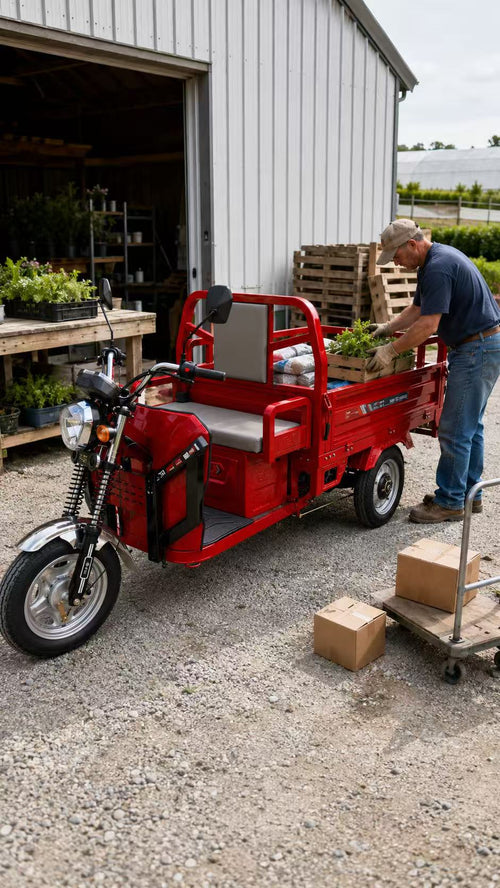
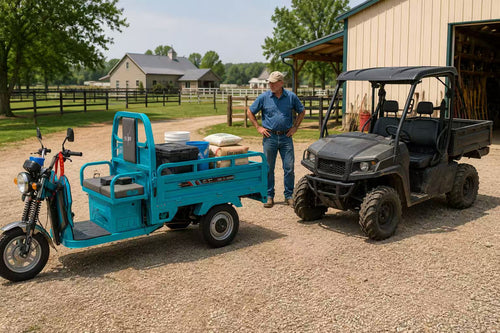
A cargo-bed electric utility vehicle can help keep loading lanes clear by moving goods out of congestion points and into the right staging, storage, or customer pickup area.
Why Loading Lanes Become Congested
Loading lanes become crowded because many activities happen in the same space.
A truck may be unloading produce while a customer van is waiting for a restaurant supply order. A seafood worker may be moving foam boxes from a cold room. A produce vendor may be preparing mixed crates for pickup. A meat wholesaler may be moving sealed cartons toward a refrigerated vehicle. At the same time, workers may be pushing hand carts, checking orders, and moving empty boxes out of the way.
If goods are placed temporarily on the ground or left on small carts, the lane can quickly become blocked.
Common causes of loading lane congestion include:
mixed orders waiting in the traffic path
hand carts parked near loading doors
loose cartons staged too close to vehicle lanes
workers making repeated trips through the same narrow space
forklifts handling small orders that could be moved another way
customer vehicles waiting while goods are still being gathered
cold-chain goods sitting in the lane before being moved to the right vehicle
In a busy wholesale market, these small delays can stack up quickly.
Why Clear Lanes Matter
A clear loading lane is not only about appearance. It affects order speed, worker movement, customer pickup, and the overall flow of the market.
When goods sit in the wrong place, workers have to walk around them. Hand carts may block other carts. Customer vehicles may wait longer. A forklift may have less room to turn. Workers may need to move the same cartons more than once just to clear space.
Keeping the lane clear helps workers move goods through the market instead of around obstacles.
It also helps separate different work zones:
receiving area
cold room entrance
order staging area
customer pickup area
loading dock
warehouse aisle
empty cart return area
When each zone stays clear, goods move more predictably.
The Role of a Cargo-Bed Electric Utility Vehicle
A cargo-bed electric utility vehicle is useful because it can move mixed goods quickly across short distances without leaving them scattered in the lane.
Instead of placing cartons on the ground near the dock, workers can load them into the cargo bed and move them to an order staging zone. Instead of pushing several hand carts through a crowded pickup area, workers can move a larger mixed order in one trip. Instead of using a forklift for every small non-palletized order, workers can use a smaller vehicle to move cartons, crates, foam boxes, bags, and supplies.
The vehicle becomes a short-distance material flow tool.
It helps move goods:
from loading lane to staging area
from warehouse aisle to customer pickup zone
from cold room door to loading area
from vendor stall to order preparation area
from receiving area to storage zone
from crowded pickup lane to the correct customer vehicle
This keeps goods moving instead of sitting in the traffic path.
Hand Carts, Forklifts, and Electric Utility Vehicles
A strong wholesale operation uses different tools for different jobs.
Hand carts are useful for small loads and quick movement. Forklifts are important for pallets and heavy loads. Pallet jacks work well for palletized goods on flat floors. But loading lane congestion often comes from mixed goods that are not large enough for forklift handling and not efficient enough for repeated hand cart trips.
This is where a cargo-bed electric utility vehicle fits.
It does not replace forklifts. It does not remove hand carts from the market. It gives workers another tool for the middle zone: mixed orders, short routes, non-palletized goods, and repeated movement through busy loading areas.
For many wholesale businesses, this middle zone is where the most daily friction happens.
Mixed Goods Should Not Sit in the Traffic Path
Wholesale markets often handle mixed loads.
A restaurant supply order may include rice bags, oil cartons, sauce cases, takeout packaging, paper goods, and cleaning supplies. A seafood order may include foam boxes and sealed cartons. A produce order may include different crates and cartons. A general wholesale order may include many small boxes from several sections.
If these mixed goods are left in the loading lane while workers gather the rest of the order, congestion grows.
A cargo-bed electric utility vehicle can keep one grouped order mobile. Workers can place the mixed load on the vehicle, move it to the correct staging point, check it, and then bring it to the customer vehicle when ready.
This helps reduce loose piles of goods in the lane and makes the pickup process more organized.
Loading lane management becomes most important during peak hours.
Early morning produce pickup, restaurant supply loading, seafood customer pickup, meat wholesale loading, and general merchandise pickup can happen at the same time. Customers may park in different places. Workers may be under pressure to move faster. Small carts and boxes may fill the space around doors.
During these periods, the goal is to keep goods moving through the lane instead of stopping inside it.
A cargo-bed electric utility vehicle helps by reducing the number of separate cart trips and moving larger mixed loads away from the congestion point. It can also help workers shuttle goods between staging areas and customer vehicles without keeping the loading lane blocked for too long.
This is especially helpful for small and mid-size wholesale businesses that do not have large dock systems or wide vehicle lanes.
A Practical Way to Improve Material Flow
Keeping loading lanes clear does not always require a major warehouse redesign. Sometimes the first improvement is better short-distance movement.
Move mixed goods off the traffic path.
Group customer orders before they reach the lane.
Use hand carts for small loads.
Reserve forklifts for palletized work.
Use cargo-bed electric utility vehicles for repeated mixed-load movement.
Keep cold-chain goods moving toward the correct vehicle instead of waiting in the open lane.
Avoid using the loading lane as a long-term staging area.
A cargo-bed electric utility vehicle supports this approach because it gives workers a mobile place to hold and move goods without turning the lane into a temporary storage area.
For seafood markets, produce wholesalers, restaurant supply warehouses, meat distributors, cash-and-carry stores, and general wholesale businesses, clear loading lanes can improve customer pickup, reduce repeated handling, and help workers keep orders moving.
The value of the vehicle is not only the load it carries. The value is how it helps the market keep space open, reduce congestion, and move goods through the right path at the right time.
When loading lanes stay clear, the whole wholesale workflow becomes easier to manage.