Mid-Day Restocking in Wholesale Markets
Share
Wholesale markets do not only move goods at the beginning and end of the day. In many produce markets, seafood markets, restaurant supply warehouses, meat distribution areas, cash-and-carry stores, and general wholesale buildings, goods must be restocked throughout the working day.
A front sales area may run low on fast-moving cartons. A vendor stall may need more produce crates. A customer pickup zone may need additional grouped goods. A restaurant supply warehouse may need to bring more rice bags, oil cartons, paper goods, sauces, or takeout packaging from the backroom to the front area. A seafood or meat business may need to move sealed boxes from a cold room entrance toward the active working area.
This is mid-day restocking.
It is different from inbound receiving, order picking, order staging, cross-dock movement, and customer pickup transport. Restocking is the repeated movement of goods from storage, backroom, cold room, or warehouse space to the front area where customers, workers, and orders need them next.
For many wholesale businesses, restocking is not a small detail. It affects customer wait time, aisle space, worker walking distance, and how smoothly the market continues operating after the first rush of the day.
Why Mid-Day Restocking Matters
A wholesale market may look fully stocked in the morning, but that can change quickly.
Restaurant buyers may arrive and remove several cases of high-demand products. Produce crates may move out of the front display area. Seafood foam boxes may be sent to pickup orders. Packaging supplies may run low near the customer preparation zone. Dry goods may need to be moved from back storage to the sales floor.
If restocking is slow, customers see empty space even when goods are still available in the back.
If restocking is disorganized, workers may leave cartons in aisles, block customer paths, or use multiple hand carts at the same time. If too much is brought forward at once, the front area becomes crowded. If too little is brought forward, workers must make repeated trips.
The real problem is not only whether the business has inventory. The problem is whether the inventory can be moved to the right working area at the right time.
The Restocking Route Inside a Wholesale Market
A restocking route may be short, but it is repeated many times.
Goods may move from:
backroom storage to front sales area
cold room entrance to customer pickup zone
warehouse racks to vendor stall
receiving area to active selling area
dry goods storage to restaurant supply counter
packaging storage to order preparation zone
seafood storage area to sealed-box handling area
produce storage to front crate display
bulk storage to small customer loading area
This movement is often too small for a forklift but too frequent for hand carrying.
A forklift may be useful for pallet movement, truck unloading, or heavy warehouse handling. A pallet jack may work for full pallets on flat floors. A hand cart may work for light loads. But mid-day restocking often involves mixed cartons, crates, foam boxes, bags, and small batches that need to move through active work areas without taking over the aisle.
This is where a cargo-bed electric utility vehicle can support daily workflow.
Using a Cargo-Bed Electric Utility Vehicle for Restocking
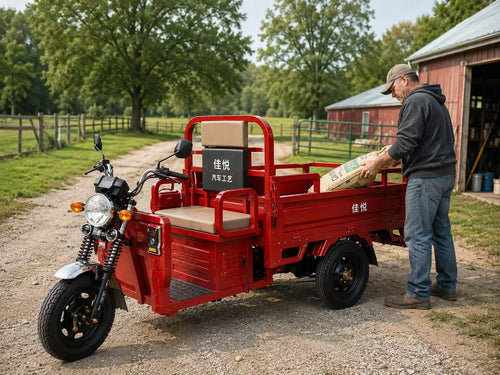
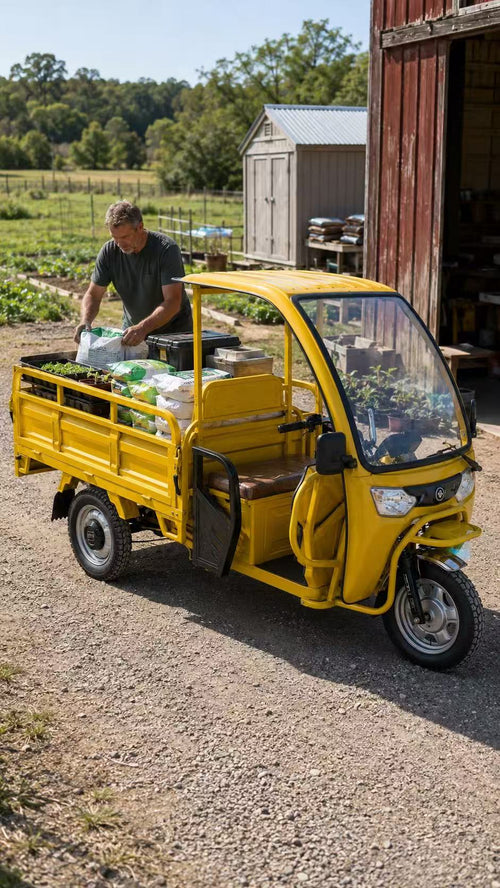
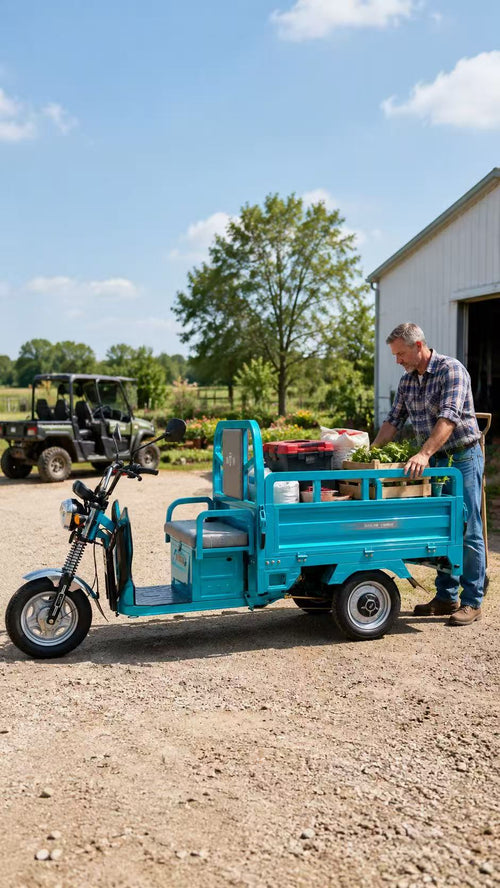
A cargo-bed electric utility vehicle can work as a restocking shuttle inside a wholesale market.
It can carry a grouped load from the back area to the front area without requiring several small cart trips. It can move mixed products in one organized load. It can help workers keep replenishment goods together instead of scattering them across the floor.
The cargo bed may carry:
closed produce cartons
plastic produce crates
sealed seafood foam boxes
restaurant supply cartons
paper goods
takeout packaging
dry goods
rice bags
oil cartons
cleaning supply boxes
general wholesale merchandise
The key is not only load size. The key is controlled movement.
A restocking vehicle should help goods move through the market without blocking customer paths, crowding the sales area, or forcing workers to repeatedly walk the same route with small loads.
Restocking Without Blocking Aisles
One of the biggest problems with mid-day restocking is aisle blockage.
During active business hours, customers, workers, hand carts, pallet jacks, and small delivery vehicles may all share the same space. If workers leave cartons near the front area while restocking, aisles can become narrow. If empty crates and new stock mix together, the work area becomes harder to control.
A cargo-bed electric utility vehicle helps by keeping goods contained while they are being moved.
Instead of dropping cartons along the route, workers can keep the load in the cargo bed until it reaches the restocking point. Instead of bringing too many loose items to the front area, workers can make planned replenishment trips based on what is actually needed.
This helps support a cleaner flow:
identify what is running low
load the restocking vehicle
move goods from backroom or cold room
unload at the correct front area
return with empty crates or packaging when needed
This is a practical way to keep the front area active without turning it into a storage zone.
Produce, Seafood, Meat, and Restaurant Supply Restocking
Different wholesale categories have different restocking needs.
Produce markets may need to move plastic crates, closed cartons, and fresh produce boxes from back storage to vendor stalls or customer-facing areas. Restaurant supply warehouses may need to bring rice, oil, sauces, paper goods, cleaning supplies, and packaging materials from rear storage to order preparation or customer pickup zones. Seafood markets may need to move sealed foam boxes and closed cartons between cold areas and active handling points. Meat and frozen food distributors may need careful movement of sealed cartons toward the correct staging or pickup area.
For general mixed goods and dry goods, a cargo-bed electric utility vehicle is often the most flexible option.
For temperature-sensitive goods, a refrigerated electric cargo trike may be more suitable if goods must stay enclosed during the movement. For height-difference work near a truck bed or dock, a hydraulic lift platform vehicle may be useful. But for most mid-day restocking inside a wholesale market, the ordinary cargo-bed electric utility vehicle is the practical tool.
The purpose is simple: move goods from where they are stored to where they are needed next.
Why Hand Carts Are Not Always Enough
Hand carts are useful, but they have limits.
They work well for small, light, occasional movements. But mid-day restocking can become repetitive. A worker may need to move several cartons from the back area to the front area again and again. If the market is busy, the worker may need to avoid customers, move around other carts, and return for more goods.
This can create extra walking and inconsistent replenishment.
A cargo-bed electric utility vehicle can reduce the number of trips by carrying more goods in one movement. It also provides a more organized way to group restocking items by stall, product category, pickup zone, or customer area.
This does not mean hand carts disappear. They still work for small tasks. But for repeated restocking routes, a cargo-bed electric utility vehicle can become the main short-distance replenishment tool.
Restocking as a Customer Service Problem
Restocking is not only an internal warehouse issue. It affects customer experience.
If a customer arrives and the front area is empty, they may assume the item is unavailable. If workers take too long to bring goods from the back, customers wait. If the aisle is blocked by cartons during restocking, customers and workers move more slowly. If the wrong goods are brought forward, the business loses time correcting the mistake.
A better restocking workflow helps the business show customers that goods are available, organized, and moving.
In wholesale markets, buyers often want speed. They may be restaurant owners, store buyers, seafood dealers, produce vendors, or small distributors who are trying to finish purchasing and return to their own business. A clear restocking system helps the wholesale seller serve them faster.
A Practical Mid-Day Restocking Workflow
A practical restocking workflow can be simple.
First, workers check what is running low in the front area.
Second, they group the needed goods in the backroom, storage zone, or cold room area.
Third, they load the cargo-bed electric utility vehicle with the correct items.
Fourth, they move the goods to the front area, vendor stall, pickup zone, or preparation area.
Fifth, they unload only what is needed and return with empty crates, cartons, or packaging if necessary.
This keeps the front area from becoming overloaded while still keeping goods available.
The vehicle becomes part of the working rhythm of the market. It is not only used for one large transport job. It supports repeated restocking cycles during the day.
A Better Tool for Repeated Wholesale Replenishment
Mid-day restocking is easy to overlook because it does not look as dramatic as truck unloading or customer loading. But in many wholesale markets, it is one of the daily tasks that decides how smooth the operation feels.
If restocking is slow, goods remain in the back while customers wait in the front.
If restocking is messy, aisles become blocked.
If restocking is too manual, workers repeat the same walking route too many times.
If restocking is better organized, goods stay available without crowding the sales area.
A cargo-bed electric utility vehicle gives wholesale businesses a practical way to move restocking loads between backroom storage, cold room entrances, vendor stalls, order preparation areas, and customer pickup zones.
It supports short-distance movement, mixed products, repeated trips, and controlled front-area replenishment.
For produce markets, seafood businesses, restaurant supply warehouses, meat distributors, cash-and-carry stores, and general wholesale operations, mid-day restocking is not just a storage issue. It is a workflow issue.
The right short-distance vehicle can help keep goods moving from the back of the market to the place where customers and workers need them next.