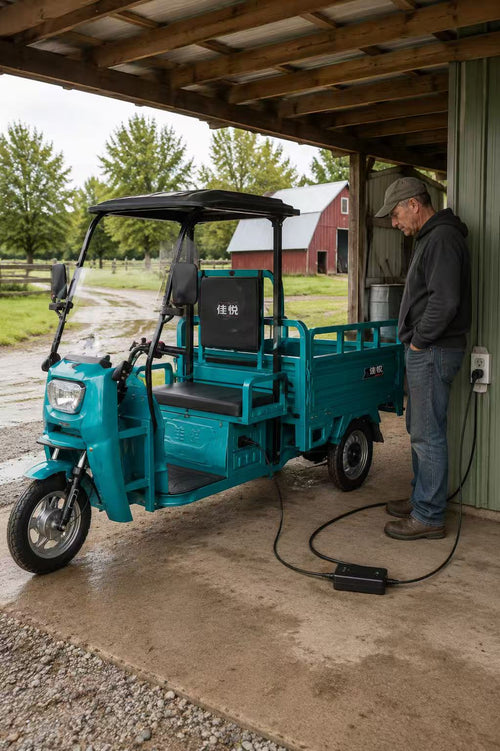
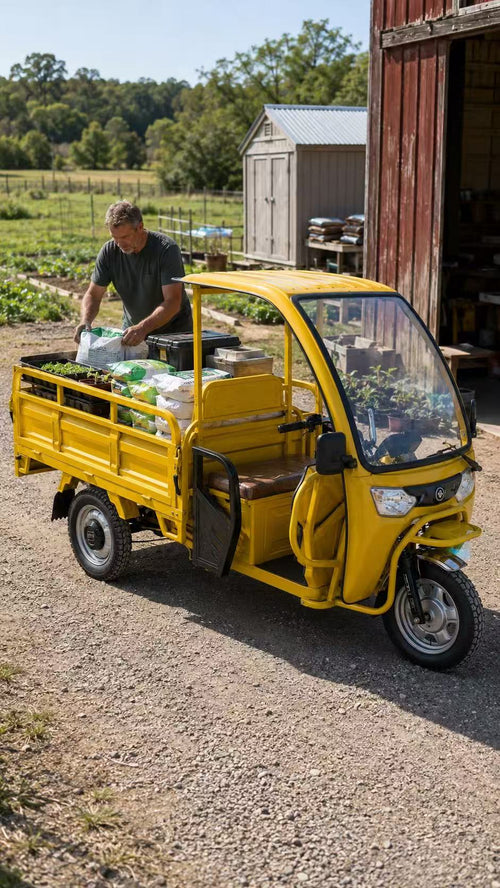
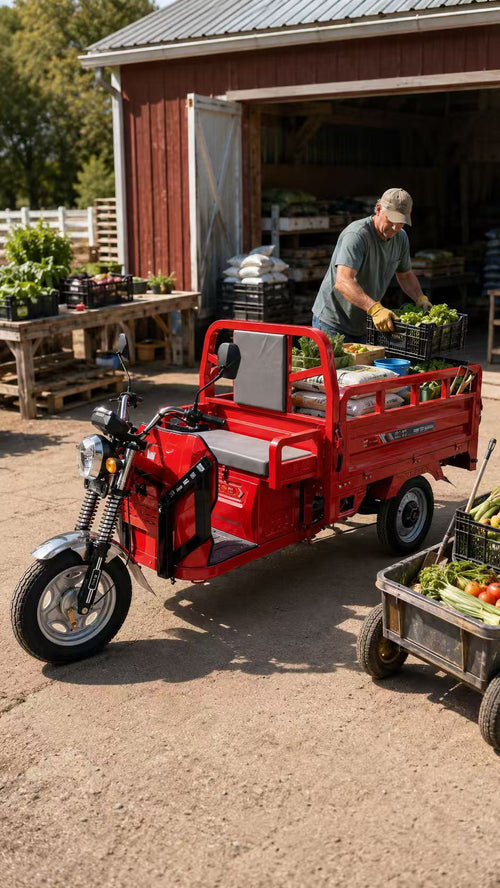
The best utility vehicle is not always the biggest one, the fastest one, or the most expensive one. For many farms, rural properties, small worksites, wholesale markets, and facility maintenance teams, the better question is not “What is the most powerful vehicle I can buy?” The better question is “What vehicle actually fits my daily work?”
Overbuying is common when buyers compare electric utility vehicles, UTVs, golf carts, pickup trucks, tractors, hand carts, and wheelbarrows. A larger machine may look more capable, but if the daily job is short-distance hauling, low-speed movement, fixed-route transport, and repeated small or medium loads, a simple electric utility vehicle or electric cargo trike may do the work with lower cost, easier operation, and less wasted capacity.
The right vehicle should match the job, not just the catalog. Before choosing a vehicle, look at the real work area. What do you move every day? How far does the load travel? Is the route paved, compacted, gravel, barn aisle, warehouse floor, greenhouse path, or rough pasture? Do you need a flat cargo bed, a dump bed, an enclosed box, or a simple open cargo space? Do you need one operator only, or passenger seats? Do you need towing, 4x4 traction, high ground clearance, road speed, or only slow and stable movement inside a private property?
For many small farms and properties, the most practical answer is often a vehicle that is easy to use every day. If the route is short and predictable, and the load is feed bags, tools, crates, mulch, compost, soil, firewood, trash bins, nursery supplies, or repair equipment, an electric utility vehicle can reduce walking, reduce repeated hand pushing, and help one operator finish more small transport tasks with less effort.
This does not mean an electric cargo trike replaces every machine. If the work requires deep mud, steep hills, long off-road routes, heavy towing, high-speed road travel, heavy snow, or large multi-passenger transport, a 4x4 UTV, tractor, skid steer, pickup truck, or other equipment may be the better fit. A smart buyer does not choose the cheapest machine blindly. A smart buyer chooses the machine that fits the real route, load, budget, and work pattern.
Cost also needs to be judged carefully. A lower purchase price is helpful only when the vehicle can actually do the job. A high price is not a problem if the machine is truly needed. But paying extra for features you rarely use can turn into wasted money. If you do not need highway speed, deep off-road traction, heavy towing, or a gasoline engine, then a lower-cost electric utility vehicle may be a more practical choice for daily private-property work.
The most important buying decision is fit. A good vehicle should fit the route, fit the load, fit the operator, fit the work area, and fit the budget. It should make daily movement easier, not create a bigger machine than the job requires.
Use this guide as the starting point before choosing an electric utility vehicle. Then compare your actual situation with specific questions: whether you need a dump bed, whether a lithium battery is worth it, whether an open bed or covered box is better, whether your ground surface is suitable, whether a UTV is more than you need, and whether a lower-cost electric utility vehicle can handle your daily work.
For OneClick China, the goal is not to tell every buyer to choose the same vehicle. The goal is to help buyers avoid overbuying, avoid choosing the wrong machine, and find a practical vehicle for daily material movement. The right vehicle is not the most expensive one. It is the one that fits the job.