Electric Farm Utility Vehicle for Daily Hauling: UTV, Dump Bed & Work Guide
Share
Farm Utility Vehicles for Everyday Work
A farm utility vehicle is built around a simple requirement: moving people, tools, feed, supplies, and materials efficiently between daily jobs. On farms, ranches, orchards, nurseries, and other working properties, these trips may be short, but they happen repeatedly throughout the day.
Traditional farm UTVs and utility side-by-sides are common choices because they combine a cargo bed with useful payload and towing capacity. For operations where most travel takes place over relatively short internal routes, an electric farm utility vehicle can provide another practical option, especially when low noise, frequent stop-and-start operation, compact dimensions, and simple daily maintenance matter.
The right vehicle is not necessarily the fastest or most powerful one. It is the vehicle that matches the work being done.
What Jobs Can a Farm Utility Vehicle Handle?
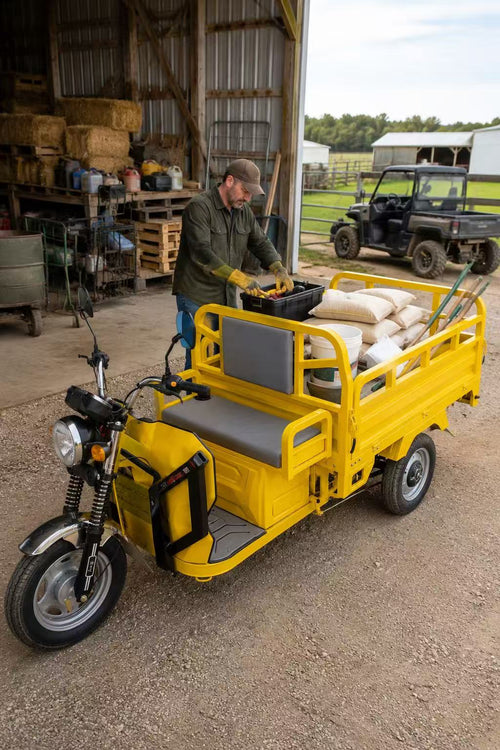
Daily hauling is one of the most common jobs for a farm UTV or work UTV. A useful vehicle may spend the morning carrying feed to livestock, move fencing tools later in the day, and transport soil, fertilizer, firewood, harvested produce, or maintenance supplies before the workday is finished.
Typical jobs include:
Moving feed, hay, tools, and farm supplies
Carrying fencing and maintenance equipment
Transporting soil, mulch, gravel, and fertilizer
Moving produce and harvesting supplies
Supporting livestock and barn chores
Carrying materials between sheds, fields, orchards, and greenhouses
Handling routine property maintenance
This is why cargo capacity and vehicle size often matter more than maximum speed for daily farm work. A compact electric farm vehicle can be particularly useful where repeated short-distance hauling is more important than long-distance road travel.
Farm UTV vs. Electric Farm Utility Vehicle
A conventional farm UTV or utility side by side is often designed for rough terrain, towing, higher travel speeds, and recreational as well as work use. Gas and diesel models remain appropriate when a farm regularly needs demanding off-road capability, long operating periods away from charging, or substantial towing performance.
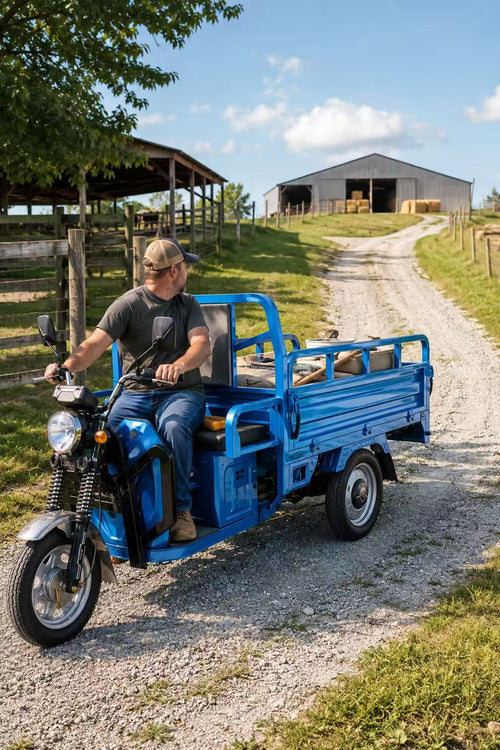
An electric farm utility vehicle serves a somewhat different working pattern. Electric power can be well suited to predictable routes between barns, workshops, fields, greenhouses, storage areas, and other points around a property. Frequent stopping and starting does not require an engine to idle, and quieter operation can be useful around livestock, workers, residential areas, and enclosed agricultural facilities.
For buyers comparing a farm side by side with a compact electric work vehicle, the decision should therefore begin with the job rather than the powertrain.
Ask how far the vehicle normally travels, what it carries, how rough the terrain is, whether towing is required, and how often the vehicle stops during a normal working day.
When Is a Dump Bed Worth Having?
A standard cargo bed works well for tools, boxes, feed bags, harvested produce, and equipment that can be loaded and unloaded by hand. A UTV with dump bed becomes much more useful when the load consists of loose or heavy materials.
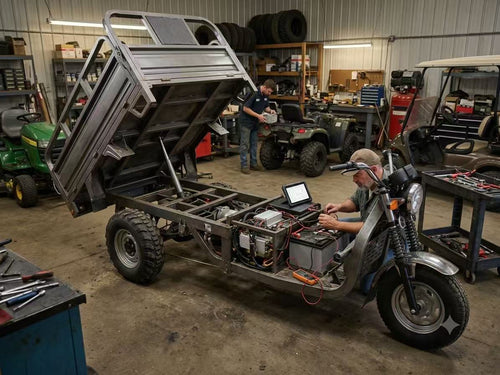
Soil, gravel, mulch, manure, firewood, landscaping material, and farm debris can require considerable labor to unload manually. A side by side with dump bed allows the bed to tilt so these materials can be discharged rather than removed piece by piece.
For frequent material handling, an electric UTV with dump bed or electric utility vehicle with dump bed can combine short-distance electric transport with mechanical unloading. A hydraulic dump bed is particularly useful when unloading is repeated throughout the day.
The important question is not simply whether a dump bed is available. Buyers should consider the bed dimensions, payload rating, dumping mechanism, loading height, and the type of material normally carried.
Cargo Bed, Payload and Towing Capacity
Payload capacity should be matched to real work rather than selected from a specification sheet alone. A farm carrying hand tools and several feed bags has very different requirements from an operation regularly transporting gravel, soil, firewood, or bulk agricultural materials.
Before choosing a farm utility vehicle, estimate the heaviest normal load and consider how that weight will be distributed in the cargo bed. Bed dimensions are also important. A high payload rating is less useful when the cargo area cannot conveniently hold the equipment or materials normally transported.
Towing capacity is a separate consideration. Farms that pull loaded trailers, sprayers, seed spreaders, or other implements should verify the vehicle's rated towing capability rather than assuming that cargo payload and towing capacity are interchangeable.
This distinction is especially important when comparing a traditional utility SxS with a smaller electric farm vehicle. A compact electric vehicle may be highly efficient for carrying materials while a larger farm UTV may remain the better choice for demanding trailer work or severe terrain.
Where Electric Farm Vehicles Make Sense
Electric farm utility vehicles are particularly suited to operations with predictable daily routes and frequent short trips.
Barns and livestock areas can benefit from quieter operation when moving feed, tools, and supplies. Orchards and nurseries often require repeated transport between rows, storage areas, and work stations. Greenhouses and other controlled environments may benefit from compact dimensions and the absence of local exhaust emissions during operation.
On larger properties, an electric vehicle can also handle maintenance supplies, landscaping materials, tools, and routine property work without using a full-size pickup for every small trip.
The operating environment still matters. Deep mud, severe off-road terrain, very long distances, high-speed travel, or demanding towing may favor a conventional UTV or another heavier vehicle. Electric utility vehicles should be selected for the jobs they perform well rather than treated as universal replacements for every farm machine.
What to Check Before Buying
Start with payload. Determine the heaviest load the vehicle will realistically carry, not just the average load.
Next, check cargo-bed dimensions. Tools, feed bags, produce containers, landscaping materials, and bulky equipment may require different bed shapes even when their total weight is similar.
If loose materials are common, consider a dump bed and determine whether manual tipping, power-assisted dumping, or a hydraulic system best matches the workload.
Battery capacity and practical working range should be considered against the actual daily route. A farm vehicle that repeatedly travels short loops has different energy requirements from one expected to operate far from its charging location for an entire day.
Terrain and gradeability also matter. Buyers should consider slopes, unpaved surfaces, mud, grass, gravel roads, and seasonal conditions instead of judging a vehicle only on level pavement.
Finally, consider width, turning space, maintenance, replacement parts, and service support. A compact work vehicle may offer significant advantages around barns, narrow farm lanes, greenhouses, storage buildings, and other confined areas.
Choosing the Right Vehicle for Daily Hauling
There is no single farm utility vehicle that is best for every property.
A traditional farm UTV or utility side by side remains a strong choice for rough terrain, substantial towing, and demanding off-road work. A compact electric farm utility vehicle becomes attractive when the main tasks involve repeated short-distance hauling, frequent stops, cargo movement, lower-noise operation, and work around buildings or established internal routes.
A dump-bed configuration adds another level of usefulness when soil, gravel, mulch, manure, firewood, or debris must be transported and unloaded regularly.
The best buying decision therefore starts with four questions: What will the vehicle carry? How much will it carry? Where will it operate? How will the load be unloaded?
Answering those questions makes it much easier to choose between a farm UTV, utility side by side, work UTV, or compact electric utility vehicle based on actual daily work rather than specifications that may never be used.