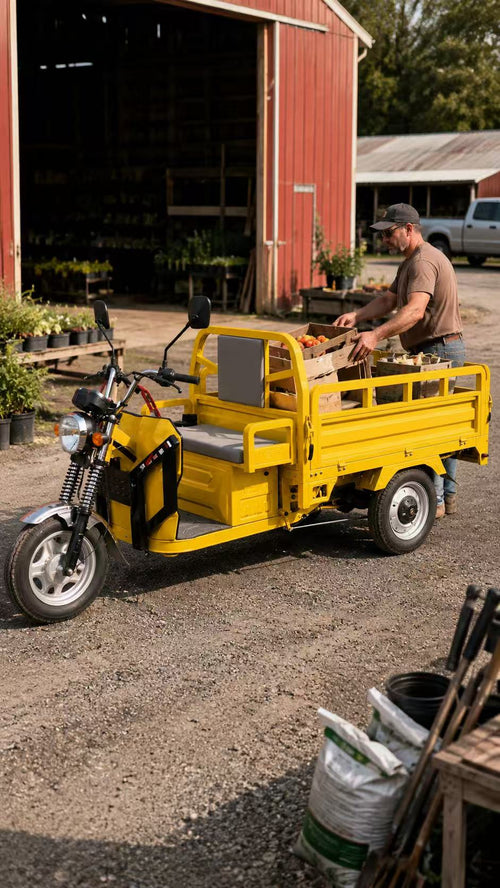
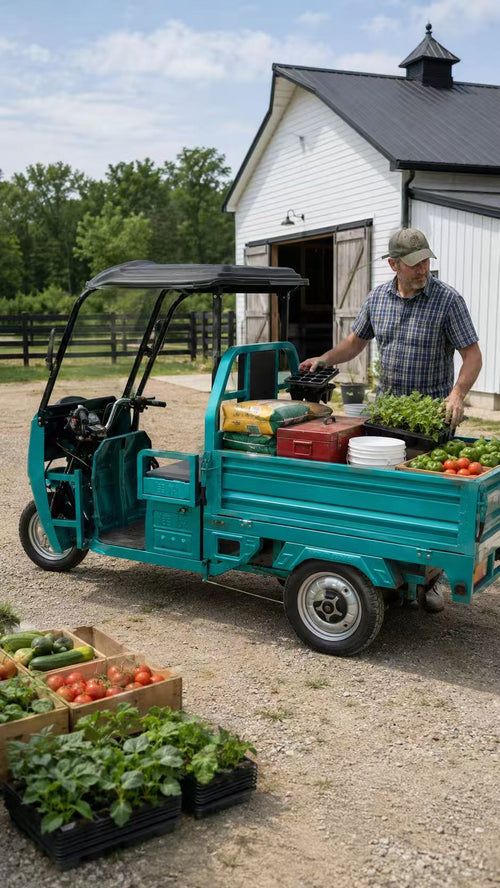
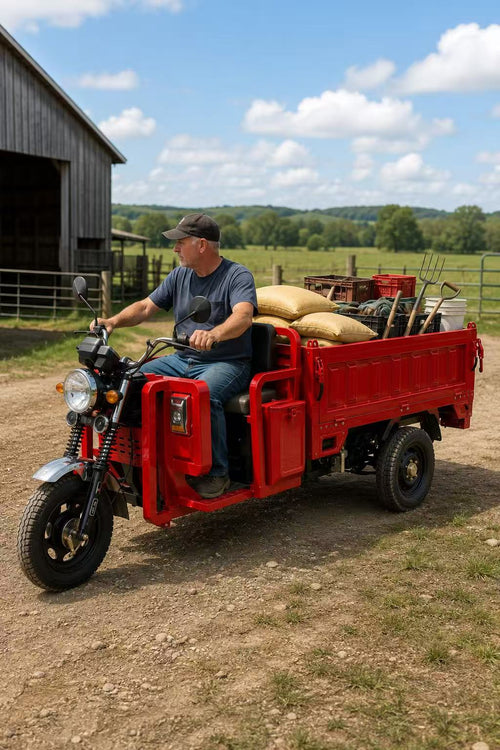
Electric Utility Vehicle System for Commercial Horticulture Operations
Share
Quick Summary
Commercial horticulture is one of the most specialized sectors within modern agriculture. Unlike traditional farming, which often focuses on livestock, field crops, and large-scale agricultural production, horticultural businesses manage high-value plants, fruit trees, nursery stock, greenhouse vegetables, flowers, vines, ornamental plants, and specialty crops that require continuous care throughout every growing season.
Every day, workers transport seedlings, irrigation equipment, fertilizers, potting media, plant containers, harvested fruit, pruning tools, greenhouse supplies, replacement plants, and maintenance materials between different production areas. These repetitive transportation tasks directly influence labor efficiency, crop quality, and daily productivity.
An electric utility vehicle is not intended to replace tractors or heavy agricultural equipment. Instead, it provides an efficient solution for the frequent short-distance transportation that supports commercial horticulture operations from propagation to harvest.
⸻
Introduction
Commercial horticulture is built around plant production.
Every nursery, greenhouse, orchard, vineyard, and garden center depends on the continuous movement of plants, materials, equipment, and harvested products.
Unlike livestock farms where daily work focuses on feeding animals and maintaining ranch infrastructure, horticultural operations require constant transportation between growing areas, irrigation systems, propagation houses, storage buildings, maintenance workshops, harvesting zones, packing stations, and shipping facilities.
The transportation distances are often short.
The transportation frequency is extremely high.
Workers repeatedly move trays of seedlings.
Young trees are relocated between nursery blocks.
Greenhouse vegetables travel from growing benches to harvesting stations.
Harvested fruit is collected from orchard rows before entering packing facilities.
Irrigation equipment, fertilizers, growing media, pruning tools, replacement plants, and maintenance supplies are continuously transported throughout the property.
Although each individual trip appears small, together these movements determine the overall efficiency of commercial horticulture.
⸻
Why Commercial Horticulture Requires Different Transportation
Horticultural businesses operate differently from traditional farms.
Plant production depends on precision.
Products are often fragile.
Growing environments are carefully controlled.
Production areas are densely organized.
Access lanes are narrower.
Daily handling is more frequent.
Nurseries move thousands of container plants.
Greenhouses transport seedlings multiple times before harvest.
Garden centers continuously reorganize seasonal inventory.
Fruit orchards collect harvested produce throughout the day.
Vineyards move harvesting equipment and grape containers between production rows.
Because these operations depend on repeated movement rather than heavy hauling, flexibility becomes more valuable than maximum load capacity.
The right transportation system reduces unnecessary labor while protecting delicate crops and improving workflow.
⸻
The Hidden Cost of Plant Movement
One of the largest hidden costs in horticulture is repeated manual transportation.
Employees walk long distances carrying trays.
Plants are relocated several times during different growth stages.
Fertilizers and growing media move repeatedly between storage and production areas.
Harvest containers travel continuously from orchards to packing stations.
Maintenance crews transport irrigation components, replacement parts, tools, and repair equipment throughout the property.
Every unnecessary trip consumes labor.
Every repeated movement reduces productive working time.
As production expands, these small transportation tasks become one of the largest contributors to operational cost.
Improving plant movement is therefore not simply about transportation.
It is about improving the efficiency of the entire horticultural production system.
⸻
A Typical Day in Commercial Horticulture
Early each morning, greenhouse staff inspect seedlings and irrigation systems.
Nursery workers prepare young plants for transplanting.
Orchard crews transport harvesting containers into production rows.
Maintenance teams deliver irrigation fittings, pumps, replacement parts, and repair equipment to different growing zones.
Throughout the day, fertilizers, growing media, plant trays, flowers, fruit bins, nursery containers, pruning equipment, packaging supplies, and harvested crops move continuously between work areas.
At the end of the day, harvested products are transported to sorting facilities before entering packing and shipment.
Meanwhile, empty containers, reusable trays, maintenance equipment, and operational supplies return to storage areas for the next production cycle.
These repeated short-distance transportation tasks occur every day across commercial horticulture operations.
Efficient movement helps improve productivity while protecting valuable plants and harvested crops.
Why Tractors Are Not the Answer for Every Horticulture Task
Tractors remain essential equipment for many agricultural operations.
They prepare fields, pull implements, spray crops, and transport heavy loads over long distances.
However, commercial horticulture presents a different working environment.
Greenhouses contain narrow aisles and controlled growing areas.
Nurseries organize thousands of container plants in compact production blocks.
Orchards and vineyards require vehicles capable of traveling between closely spaced rows without damaging trees or vines.
Garden centers move delicate plants between display areas, storage yards, and customer loading zones throughout the day.
These daily activities rarely require heavy agricultural machinery.
Instead, they require compact, maneuverable transportation that protects valuable crops while improving operational efficiency.
An electric utility vehicle fills this role by supporting the repeated short-distance movement that occurs throughout commercial horticulture operations.
⸻
Plant Flow Is the Foundation of Modern Horticulture
Every successful horticultural business depends on continuous plant flow.
Seedlings move from propagation areas into growing houses.
Young plants are transferred into larger containers.
Finished plants are relocated for sale or shipment.
Fruit travels from orchard rows to collection stations before entering packing facilities.
Flowers move between greenhouse benches, grading tables, and loading areas.
Every stage requires transportation.
When movement slows, production slows.
Workers spend more time carrying plants than caring for them.
Harvest teams lose valuable time transporting containers.
Maintenance crews repeatedly travel across the property with irrigation equipment and replacement parts.
Improving plant flow allows growers to spend more time producing healthy crops and less time performing unnecessary manual transport.
⸻
Industry Applications
Commercial Orchards
Apple, citrus, peach, cherry, pear, and other commercial orchards require continuous transportation of harvesting bins, pruning equipment, fertilizers, irrigation components, replacement trees, and maintenance supplies.
Efficient movement between orchard rows improves harvesting speed while reducing worker fatigue.
⸻
Vineyards
Modern vineyards rely on daily transportation during pruning, irrigation, canopy management, harvesting, and maintenance operations.
Workers regularly move grape bins, vineyard tools, irrigation supplies, replacement vines, fencing materials, and repair equipment across large vineyard properties.
Reliable short-distance transportation supports every stage of vineyard management.
⸻
Greenhouses
Greenhouses operate in highly organized environments where thousands of plants move through different growth stages.
Seed trays, fertilizer, growing media, irrigation systems, carts, packaging materials, harvesting containers, and maintenance equipment travel constantly between propagation, production, harvesting, and packing areas.
Compact electric utility vehicles improve efficiency while operating safely within controlled greenhouse facilities.
⸻
Plant Nurseries
Nurseries continuously transport young trees, shrubs, flowers, container plants, soil mixes, fertilizer, irrigation equipment, labels, and packaging materials throughout production areas.
Because plants are frequently relocated during different growth stages, efficient internal transportation becomes an essential part of nursery management.
⸻
Garden Centers
Garden centers receive seasonal inventory throughout the year.
Employees move ornamental plants, flowers, trees, shrubs, fertilizers, decorative materials, irrigation supplies, and customer orders between storage areas, outdoor displays, greenhouses, and loading zones.
Flexible transportation supports both inventory management and customer service.
⸻
Specialty Crop Production
Many specialty crops require careful handling throughout cultivation and harvest.
Herbs, berries, flowers, nursery stock, and greenhouse vegetables all benefit from efficient movement that reduces unnecessary handling while protecting product quality.
⸻
Supporting Sustainable Horticulture
Commercial horticulture continues moving toward more efficient and sustainable production systems.
Growers seek ways to reduce labor pressure, improve productivity, minimize crop damage, and optimize daily operations.
Rather than relying solely on larger agricultural machinery, many businesses are introducing compact transportation solutions that better match the repetitive movement required throughout horticultural production.
Electric utility vehicles support this transition by improving mobility while reducing unnecessary manual transport.
Instead of replacing existing equipment, they strengthen the workflow that connects every stage of plant production, maintenance, harvesting, and distribution.
Return on Investment (ROI)
Commercial horticulture businesses invest in irrigation systems, greenhouses, propagation facilities, climate control equipment, and specialized growing technologies to improve plant quality and production efficiency.
However, one operational cost often receives less attention: repeated internal transportation.
Workers move seedling trays multiple times during production.
Harvest crews transport fruit containers throughout orchards.
Nursery staff relocate thousands of container plants between growing areas.
Greenhouse employees repeatedly carry fertilizers, growing media, irrigation supplies, packaging materials, and maintenance equipment across production facilities.
These transportation activities occur every day.
Although each individual trip appears small, together they consume significant labor hours throughout the growing season.
An electric utility vehicle improves productivity by reducing unnecessary walking, increasing transportation efficiency, and allowing workers to focus more time on plant production rather than manual hauling.
The greatest return on investment comes from improving thousands of routine transportation tasks performed throughout the year.
⸻
The Future of Commercial Horticulture
The horticulture industry continues evolving toward higher efficiency, improved sustainability, and greater production quality.
Commercial growers increasingly adopt automated irrigation systems, climate-controlled greenhouses, precision agriculture technologies, digital crop monitoring, and modern production management software.
Despite these innovations, one reality remains unchanged.
Plants must still move.
Seedlings require transportation.
Harvested crops must reach packing stations.
Maintenance equipment must travel between production areas.
Supplies must arrive where they are needed every day.
Future horticultural operations will continue improving both digital management and physical workflow.
Compact electric utility vehicles support this transition by connecting every stage of commercial plant production through efficient short-distance transportation.
⸻
Continue Exploring Commercial Horticulture Solutions
Every horticultural operation has different transportation requirements.
Explore additional guides covering specific commercial horticulture applications:
* Orchard Harvest Transportation
* Vineyard Daily Operations
* Greenhouse Material Handling
* Greenhouse Maintenance Workflow
* Nursery Plant Transportation
* Tree Nursery Operations
* Garden Center Logistics
* Irrigation Equipment Transport
* Plant Tray Handling Solutions
* Fruit Harvest Collection
* Specialty Crop Transportation
* Commercial Horticulture Best Practices
Each guide focuses on one horticultural environment while connecting back to this Commercial Horticulture Operations Hub.
⸻
Frequently Asked Questions
Can an electric utility vehicle replace tractors?
No.
Tractors remain essential for field preparation, heavy agricultural work, and equipment towing.
Electric utility vehicles are designed to improve the repeated short-distance transportation that occurs throughout orchards, greenhouses, nurseries, vineyards, and garden centers.
The two types of equipment complement each other rather than compete.
⸻
Is it suitable for greenhouse operations?
Yes.
Compact electric utility vehicles are particularly useful inside greenhouse facilities where workers repeatedly transport seedlings, growing media, irrigation supplies, packaging materials, harvested vegetables, maintenance equipment, and operational tools between production areas.
⸻
Which horticultural businesses benefit the most?
Commercial orchards.
Vineyards.
Greenhouse vegetable producers.
Plant nurseries.
Tree nurseries.
Garden centers.
Flower growers.
Landscape nurseries.
Specialty crop producers.
Any business performing repeated short-distance transportation throughout plant production can benefit from improved internal mobility.
⸻
Can one vehicle support multiple production activities?
Yes.
The same utility vehicle may transport seedlings in the morning, irrigation equipment during maintenance, harvested fruit in the afternoon, packaging supplies later in the day, and maintenance tools before closing.
Its flexibility allows one vehicle to support multiple stages of horticultural production.
⸻
Business Guidance
Before selecting transportation equipment, evaluate how plants, materials, and supplies move throughout your operation.
Consider practical questions:
* Where do workers spend the most time carrying plants?
* Which materials require repeated transportation every day?
* Where does harvesting slow because containers arrive too late?
* Which greenhouse tasks involve unnecessary walking?
* Which nursery operations require repeated movement between production zones?
* How can transportation become more efficient without disrupting delicate crops?
The most effective transportation solution is not necessarily the largest machine.
It is the equipment that improves daily workflow while protecting valuable plants and reducing unnecessary labor.
⸻
Conclusion
Commercial horticulture depends on continuous movement.
Plants, seedlings, irrigation equipment, fertilizers, growing media, harvested fruit, flowers, maintenance supplies, and operational materials all move through multiple production stages before reaching customers.
While tractors and agricultural machinery remain important, much of the industry’s daily work depends on efficient short-distance transportation.
An electric utility vehicle strengthens this workflow by improving plant movement, reducing manual handling, increasing operational efficiency, and supporting every stage of modern horticultural production.
As commercial horticulture continues to expand, businesses that improve both production management and internal transportation will be better positioned to increase productivity, protect crop quality, and meet growing market demand.