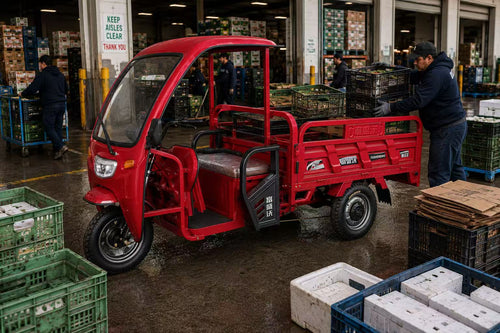
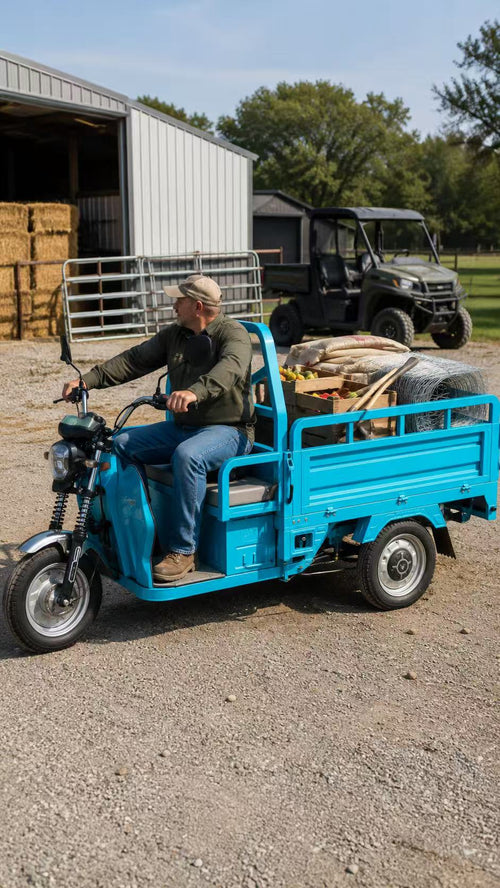
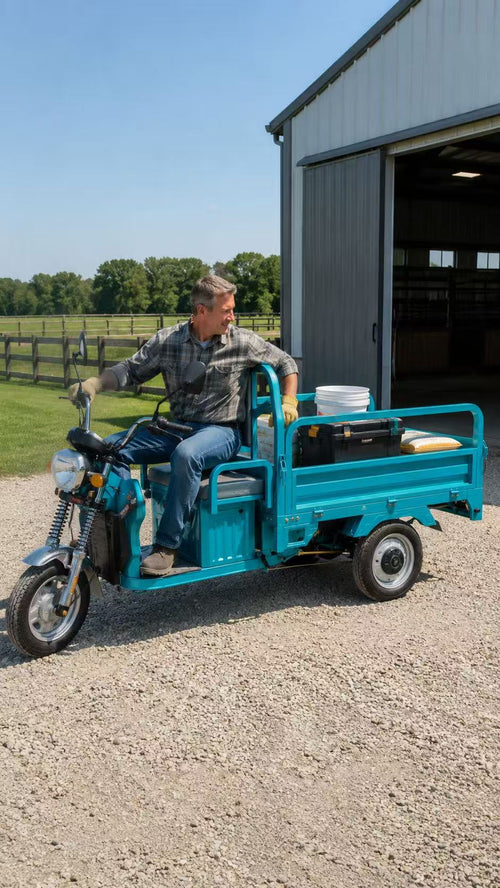
Construction Material Flow System for Modern Job Sites
Share
Quick Summary
Modern construction projects depend on far more than heavy machinery. Every successful job site requires a continuous flow of building materials, tools, equipment, replacement parts, waste removal, and daily supplies. While excavators, skid steers, forklifts, and trucks handle major construction tasks, hundreds of smaller transportation jobs take place throughout every working day.
An electric construction utility vehicle is not designed to replace heavy equipment. Instead, it improves the movement of materials between storage areas, work zones, loading points, maintenance stations, and cleanup locations. By reducing repeated manual transport and improving short-distance material flow, construction teams can complete more work with less unnecessary movement.
Construction productivity is not determined by how much equipment is available. It is determined by how efficiently materials reach the people who need them.
⸻
Introduction
Every construction project follows a workflow.
Building materials arrive at the site.
Equipment is unloaded.
Temporary storage areas are established.
Workers collect tools and supplies before moving to different work zones.
Throughout the day, concrete bags, bricks, lumber, pipes, electrical materials, drywall, fencing supplies, landscaping materials, hardware, safety equipment, and replacement parts move continuously across the project.
At the same time, construction waste, packaging materials, damaged components, empty containers, and unused supplies travel back toward collection or storage areas.
Although large machines perform heavy lifting, much of the daily work depends on repeated short-distance transportation.
These small movements rarely receive attention.
However, they directly affect productivity, labor efficiency, and project progress.
A modern construction site is not simply a workplace.
It is a constantly moving material handling system.
⸻
Why Construction Material Flow Matters
Construction projects rarely stop because workers lack skills.
More often, work slows because the right materials are not in the right place at the right time.
A carpenter waits for lumber.
An electrician walks back to retrieve conduit and fittings.
A plumber returns to storage for additional pipe.
A concrete crew transports bags across the site.
A landscaper repeatedly moves soil, edging materials, irrigation components, and tools between different work areas.
Each interruption appears minor.
Together, they create significant delays.
Modern contractors increasingly recognize that improving internal material movement often delivers greater productivity gains than simply adding more labor.
When tools, equipment, and materials move efficiently, every trade works more effectively.
⸻
The Hidden Cost of Repeated Transport
Construction companies carefully monitor labor rates, equipment rental, fuel consumption, and project schedules.
However, one of the largest hidden costs remains repeated internal transportation.
Workers make dozens of unnecessary trips every day.
Tools are carried by hand.
Small quantities of materials are transported repeatedly.
Equipment moves back and forth between temporary storage and active work zones.
Construction debris accumulates before removal.
These repeated movements consume valuable working hours without directly creating progress.
The challenge is not transportation distance.
The challenge is transportation frequency.
Reducing unnecessary movement allows skilled workers to spend more time building and less time walking.
⸻
A Typical Construction Workday
Early each morning, materials arrive at the construction site.
Forklifts unload palletized products.
Large equipment positions heavy materials.
Once unloading is complete, daily work begins.
Carpenters transport lumber and fasteners.
Electricians move conduit, wiring, electrical boxes, and tools.
Plumbers carry pipes, fittings, valves, and repair equipment.
Concrete crews relocate bags, finishing tools, and reinforcement materials.
Roofing contractors transport shingles, safety equipment, and repair supplies.
Landscaping teams move mulch, edging materials, irrigation parts, plants, and maintenance tools.
Maintenance personnel deliver replacement parts, fuel containers, batteries, and repair equipment throughout the site.
Later in the day, construction waste, empty packaging, damaged materials, and unused supplies return to designated collection areas.
None of these transportation tasks appear large individually.
Together, they determine how efficiently the entire construction project operates.
A practical construction utility vehicle supports these repeated movements while improving workflow between every stage of the job site
Why Heavy Equipment Cannot Handle Every Job
Every construction site uses different types of equipment.
Excavators dig foundations.
Wheel loaders move bulk materials.
Forklifts unload pallets.
Telehandlers lift heavy loads to elevated work areas.
Pickup trucks transport materials between suppliers and the job site.
Each machine performs a specific task exceptionally well.
However, much of the daily work on a construction site involves transporting smaller quantities of materials, tools, equipment, and supplies over short distances.
Workers frequently carry electrical fittings, plumbing components, fasteners, hand tools, safety barriers, paint supplies, hardware, adhesives, batteries, generators, ladders, and maintenance equipment between different work zones.
These jobs do not require large machines.
They require practical mobility.
A compact electric construction utility vehicle fills the operational gap between manual transportation and heavy construction equipment.
Instead of replacing major machinery, it supports the countless transportation tasks that keep every construction project moving.
⸻
Construction Material Flow Is the Foundation of Productivity
Successful construction projects depend on continuous material flow.
Every trade relies on receiving the right materials at the right location before work can begin.
When materials stop moving, productivity slows immediately.
A framing crew cannot continue without lumber.
Concrete workers cannot pour without supplies reaching the work area.
Electricians lose valuable time walking back to temporary storage.
Landscaping crews repeatedly move plants, irrigation components, edging materials, and tools across large properties.
Maintenance teams transport replacement parts throughout the site.
Construction productivity is closely connected to transportation efficiency.
The smoother materials move across the project, the smoother construction progresses.
Improving material flow often creates greater productivity gains than increasing labor alone.
⸻
Industry Applications
Residential Construction
Home builders transport framing materials, drywall, insulation, roofing supplies, plumbing components, electrical equipment, windows, doors, and interior finishing materials across residential projects every day.
Short-distance transportation occurs continuously from material staging areas to active work locations.
⸻
Commercial Construction
Commercial projects involve larger work zones and more specialized trades.
Workers transport tools, mechanical equipment, electrical systems, plumbing materials, finishing products, safety equipment, and maintenance supplies throughout office buildings, retail developments, schools, hospitals, and mixed-use construction sites.
Efficient internal transportation helps reduce unnecessary delays between different contractors.
⸻
Infrastructure Projects
Road construction, bridge maintenance, utility installation, and municipal infrastructure projects require continuous movement of tools, repair materials, barriers, safety equipment, cables, pipes, concrete products, and operational supplies.
Compact utility vehicles provide flexible transportation where large equipment is unnecessary or impractical.
⸻
General Contractors
General contractors coordinate multiple subcontractors working simultaneously.
Maintaining smooth material flow between temporary storage, work zones, equipment staging areas, and site offices improves communication, scheduling, and overall project efficiency.
⸻
Remodeling and Renovation
Renovation projects often take place in occupied buildings where space is limited.
Materials must move carefully through narrow access routes, parking areas, service corridors, and existing structures.
Compact utility vehicles reduce manual transport while minimizing disruption to surrounding operations.
⸻
Landscaping Contractors
Landscaping professionals transport mulch, plants, irrigation systems, edging materials, decorative stone, soil amendments, fertilizers, tools, and maintenance equipment across residential, commercial, and municipal properties.
Daily work involves constant movement between staging areas and active landscaping zones.
⸻
Utility Contractors
Electrical, plumbing, HVAC, telecommunications, and underground utility contractors frequently move specialized tools, replacement parts, cable reels, piping, fittings, generators, testing equipment, and repair materials between multiple work locations.
Reliable short-distance transportation improves service efficiency throughout the project.
⸻
Municipal Construction and Public Works
Municipal maintenance departments manage sidewalks, parks, public buildings, roads, drainage systems, recreational facilities, and infrastructure upgrades.
Daily operations require transporting maintenance equipment, repair materials, traffic control devices, landscaping tools, and public works supplies across different locations.
Flexible utility vehicles improve operational efficiency while supporting a wide variety of construction and maintenance activities.
⸻
Building Better job site Mobility
Construction projects continue becoming more complex.
Projects involve more specialized trades.
Schedules become tighter.
Labor costs continue increasing.
At the same time, expectations for productivity, safety, and project delivery continue rising.
Improving job site mobility is no longer simply about adding more equipment.
It is about improving how people, tools, materials, and supplies move throughout the entire construction process.
An electric construction utility vehicle supports this objective by creating a practical transportation layer between heavy machinery and manual labor.
Rather than replacing existing construction equipment, it strengthens the workflow that connects every stage of the job site.
Return on Investment (ROI)
Construction companies evaluate equipment by one simple question:
Does it help complete projects faster without increasing unnecessary costs?
Heavy machinery delivers tremendous value during excavation, lifting, grading, and bulk material handling.
However, many daily construction activities involve transporting relatively small quantities of materials, tools, replacement parts, safety equipment, and operational supplies between different work zones.
When these movements depend entirely on manual labor, productivity decreases.
Workers spend valuable time walking instead of building.
Supervisors wait for materials to arrive.
Specialized trades pause while tools or supplies are retrieved from temporary storage.
A practical construction utility vehicle reduces these interruptions.
Instead of making multiple manual trips, crews transport everything required for the next stage of work in a single journey.
Instead of using larger equipment for routine internal transportation, contractors reserve heavy machinery for tasks where it creates the greatest value.
The return on investment comes from improving hundreds of small transportation activities performed every week.
Individually these tasks appear insignificant.
Collectively they influence project schedules, labor efficiency, equipment utilization, and overall job site productivity.
⸻
The Future of Construction Material Flow
Construction methods continue evolving.
Projects are becoming larger, schedules are becoming tighter, and skilled labor is becoming more difficult to recruit.
Building Information Modeling (BIM), digital project management, prefabrication, modular construction, robotics, and electric equipment are transforming the construction industry.
Despite these technological advances, one requirement remains constant.
Materials still need to move.
Workers still need tools.
Equipment still needs replacement parts.
Construction waste still requires removal.
No digital platform can eliminate the physical movement of materials across a job site.
Future construction projects will increasingly depend on smarter coordination between digital planning and practical material transportation.
Compact electric utility vehicles represent one part of this transition by improving the daily movement that connects every stage of construction.
⸻
Continue Exploring Construction Solutions
Different construction environments require different transportation solutions.
Explore additional guides covering specific construction applications:
* Residential Construction Transport
* Commercial Job Site Logistics
* General Contractor Material Handling
* Electrical Contractor Utility Vehicles
* Plumbing Contractor Transport Solutions
* HVAC Installation Support
* Roofing Material Transport
* Concrete Construction Workflow
* Landscaping Contractor Equipment
* Municipal Public Works Operations
* Infrastructure Maintenance Projects
* Remodeling & Renovation Material Flow
Each guide focuses on one construction discipline while connecting back to this Construction Material Flow System Hub.
⸻
Frequently Asked Questions
Can an electric utility vehicle replace construction equipment?
No.
Excavators, loaders, forklifts, telehandlers, cranes, and other heavy machines remain essential for construction work.
An electric utility vehicle supports the many short-distance transportation tasks that occur between those larger machines.
⸻
Is it suitable for active construction sites?
Yes.
It is particularly useful for transporting tools, building materials, maintenance equipment, replacement parts, safety supplies, and operational materials across large construction projects where repeated internal movement occurs throughout the day.
⸻
Which construction businesses benefit the most?
Residential builders.
Commercial contractors.
General contractors.
Electrical contractors.
Plumbing contractors.
HVAC contractors.
Landscaping companies.
Municipal maintenance departments.
Infrastructure contractors.
Property renovation specialists.
Any organization performing frequent short-distance transportation on active job sites can improve efficiency through better internal mobility.
⸻
Can one vehicle support multiple trades?
Yes.
A single utility vehicle may support carpenters in the morning, electricians in the afternoon, landscaping crews later in the day, and maintenance teams before the project closes.
Its flexibility makes it valuable across nearly every stage of construction.
⸻
Business Guidance
Before purchasing additional equipment, examine how materials actually move across your construction projects.
Ask practical questions:
* Where do workers spend the most time walking?
* Which materials require repeated manual transport?
* Which tools travel between multiple work zones every day?
* Which trades experience the most transportation delays?
* Where could one compact vehicle eliminate multiple unnecessary trips?
* Which activities reduce productivity without directly contributing to construction progress?
The most valuable equipment is not always the largest.
It is the equipment that keeps work moving continuously while allowing skilled workers to spend more time building and less time transporting materials.
⸻
Conclusion
Every successful construction project depends on continuous movement.
Building materials, tools, safety equipment, replacement parts, maintenance supplies, and construction waste must move efficiently between staging areas, work zones, storage locations, and support facilities.
Heavy equipment performs the major lifting.
Specialized machinery completes complex operations.
However, modern construction also depends on the countless smaller transportation tasks that connect every phase of the project.
An electric construction utility vehicle strengthens that connection.
By improving short-distance material flow, reducing unnecessary manual transportation, and supporting daily job site operations, it becomes an important part of a modern construction material handling system.
As construction projects continue becoming more demanding, businesses that improve both workflow and mobility will be better positioned to increase productivity, reduce operating costs, and complete projects more efficiently.