Inbound Receiving Checks in Wholesale Markets
Share
Wholesale market workflow does not begin when a customer arrives for pickup. It begins much earlier, when goods first arrive at the receiving dock.
In produce terminals, seafood markets, restaurant supply warehouses, meat distribution areas, cash-and-carry stores, and general wholesale buildings, inbound receiving is the first control point of the day. Trucks arrive with cartons, crates, foam boxes, sealed food cases, dry goods, packaging supplies, and mixed wholesale shipments. Before those goods move to staging, cold storage, vendor spaces, or customer pickup, workers need to check what actually arrived.
This step matters because receiving mistakes can create problems across the entire operation.
If the quantity is wrong, the order picking team may discover the shortage too late. If damaged cartons are not recorded, the business may have a customer dispute later. If temperature-sensitive goods sit too long at the dock, cold-chain movement may become less organized. If mixed cartons are placed in the wrong area, staging, pickup, and outbound loading can all slow down.
Inbound receiving checks help wholesale markets control this first step.
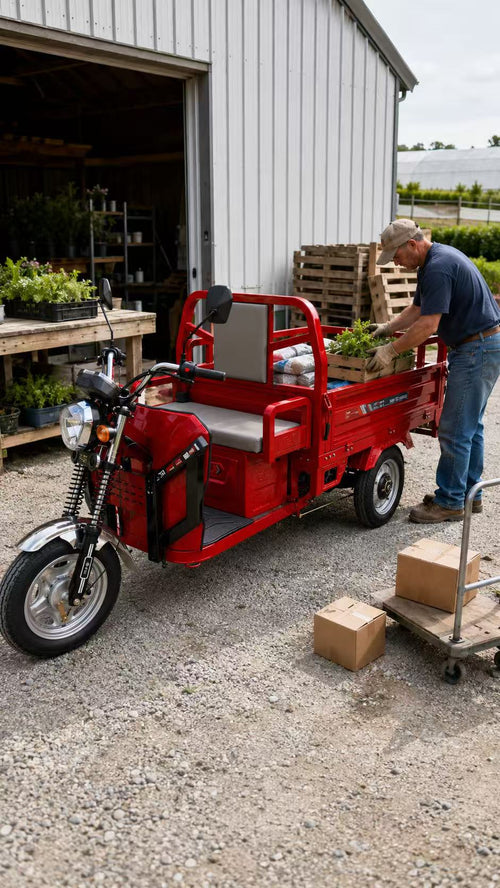
A cargo-bed electric utility vehicle can support the process by moving checked goods from the receiving area to the correct next point: sorting area, order staging zone, cold room entrance, vendor stall, storage area, or customer pickup lane.
It is not a replacement for receiving staff, warehouse software, paperwork, barcode scanning, forklifts, or pallet jacks. It is a short-distance material handling tool that helps workers move verified mixed goods away from the dock before the receiving area becomes crowded.
Why Receiving Checks Matter
The receiving dock is where problems first appear.
A truck may arrive with the wrong quantity. A carton may be crushed. A foam box may be damaged. A mixed shipment may include goods for several customers. Some cartons may need to go to cold storage. Some products may go directly to staging. Some goods may need to be held for inspection before being moved further.
If the receiving team does not check goods early, problems move deeper into the market.
A missed carton at receiving can become a customer complaint during pickup. A damaged box that is not recorded can create a dispute later. A wrong item placed into the staging area can become a wrong-order loading problem. A cold-chain product left too long in the wrong place can interrupt the flow between cold storage and loading.
Good receiving checks help prevent these issues before they spread.
Common receiving checks include:
quantity check
damaged carton inspection
wrong item check
shipment count verification
shortage and overage notes
cold-chain routing decision
sorting by customer or product type
separating goods for staging, storage, or pickup
These checks are not only administrative tasks. They are part of material handling.
The Receiving Dock Can Become a Bottleneck
Receiving areas can become crowded quickly.
One truck may be unloading produce crates while another delivery brings restaurant supply cartons. Seafood foam boxes may need to move toward cold storage. General merchandise cartons may need sorting. Workers may be checking quantities while hand carts, pallet jacks, and forklifts move through the same space.
If goods stay too long at the receiving dock, the next truck may wait, the lane may become blocked, and workers may have less space to inspect products properly.
This is where short-distance movement becomes important.
Once goods are checked, they should move to the correct next location. They should not sit in the receiving path longer than necessary. A cargo-bed electric utility vehicle can help move smaller mixed loads away from the receiving area without requiring a forklift for every non-palletized transfer.
How an Electric Utility Vehicle Supports Receiving Work
A cargo-bed electric utility vehicle fits receiving work because many inbound goods are mixed, boxed, and short-distance.
Not every inbound shipment is a full pallet. A delivery may include loose cartons, produce crates, foam boxes, bags, paper goods, and packaging supplies. Some goods may need to go to staging. Some may need to go to cold storage. Some may need to move to a vendor area or customer pickup zone.
The cargo bed can hold a grouped set of checked goods and move them through the facility in one trip.
This helps workers move:
checked cartons from receiving to staging
produce crates from dock to vendor area
foam boxes from receiving to cold room entrance
restaurant supply cartons to order preparation
packaging supplies to storage
mixed customer goods toward pickup lanes
damaged cartons to a holding area
short-distance transfers between dock doors
The value is not only carrying capacity. The value is helping the receiving dock stay open while goods move to the correct next step.
Forklifts and pallet jacks remain important for palletized receiving. But a cargo-bed electric utility vehicle is useful for mixed cartons, smaller loads, non-palletized goods, and repeated short-distance transfers after inspection.
Receiving Checks Before Cross-Dock Movement
Inbound receiving checks are closely connected to cross-dock movement.
In a fast wholesale operation, goods may not stay in storage for long. They may arrive, get checked, get sorted, and move quickly toward staging, customer pickup, or outbound loading.
But fast movement only works if the receiving check is clear.
Workers need to know what arrived, what is damaged, what is short, what must go to cold storage, and what should be staged for pickup. If this step is skipped or rushed, the cross-dock flow may become faster but less accurate.
A cargo-bed electric utility vehicle helps after the check is complete.
Once a group of goods is verified, workers can load it into the vehicle and move it to the correct next point. This keeps the receiving dock from becoming a long-term holding area and helps maintain a clean route from inbound receiving to sorting, staging, and outbound movement.
Fresh Food, Dry Goods, and Mixed Wholesale Shipments
Different wholesale categories have different receiving needs.
Produce markets often receive crates, cartons, and mixed fruit or vegetable loads that need quick checking and routing to stalls, staging zones, or customer orders. Seafood markets may receive foam boxes and sealed cartons that need clean and fast movement toward cold storage or pickup areas. Meat and frozen food distributors need sealed cartons and packaged cases routed carefully toward cold-chain areas. Restaurant supply warehouses may receive dry goods, oil cartons, paper products, takeout packaging, sauces, and cleaning supplies in mixed shipments.
A cargo-bed electric utility vehicle can support all of these categories when the goods are closed, boxed, and suitable for short-distance movement.
For temperature-sensitive goods, a refrigerated electric cargo trike may be more suitable after receiving, especially if the route includes cold storage or outdoor movement. For truck-bed height differences, a hydraulic lift platform vehicle may help with loading and unloading at different heights. But for general receiving dock transfer, the cargo-bed electric utility vehicle is often the most flexible tool.
A Practical Receiving Dock Workflow
A practical receiving workflow can be simple.
First, goods arrive at the dock.
Second, workers check quantity, condition, and routing.
Third, goods are grouped by destination.
Fourth, checked goods move away from the receiving lane.
Fifth, the next truck or shipment has space to unload.
This is where many small and mid-size wholesale businesses can improve.
Instead of letting mixed cartons sit near the dock, workers can group them into the cargo bed and move them to the correct next area. Instead of using several small carts for one inbound transfer, one vehicle can move more goods in one trip. Instead of pushing every checked item manually through a busy receiving zone, workers can use the vehicle as a mobile transfer platform.
The result is a cleaner receiving process:
check the goods
group the goods
move the goods
keep the receiving dock open
Why This Helps the Whole Wholesale Operation
Inbound receiving is the beginning of the material flow.
If receiving is organized, order picking becomes easier. If checked goods move to the correct staging zone, customer pickup becomes smoother. If damaged cartons are separated early, loading mistakes are reduced. If cold-chain goods move quickly toward the correct area, the operation stays more controlled.
A cargo-bed electric utility vehicle supports this early step by moving goods after the check and before the next workflow becomes crowded.
For seafood markets, produce terminals, restaurant supply warehouses, meat distributors, cash-and-carry stores, and general wholesale businesses, better receiving checks can reduce confusion before it reaches the customer.
The vehicle is not only used after orders are prepared. It can also help at the first point where goods enter the market.
When incoming cartons, crates, foam boxes, bags, and supplies are checked and moved quickly to the right place, the whole wholesale workflow becomes easier to manage.