Electric Cargo Vehicle for Farm Work: Choosing Between Open Bed, Canopy, Cab, and Dump Options
Share
An electric cargo vehicle for farm work is not always one single type of machine. Some buyers need a simple open cargo bed. Some need shade and basic front protection. Some want a semi-enclosed cab for repeated daily use. Others need a hydraulic dump bed for loose materials such as soil, compost, manure, mulch, or wood chips.
The best choice depends on the work.
When farmers, nursery owners, greenhouse operators, ranch support teams, warehouse managers, and private property owners compare electric cargo vehicles, they should not only ask which model is bigger or faster. A better question is:
Which vehicle configuration fits the materials, route, operator, and unloading method used every day?
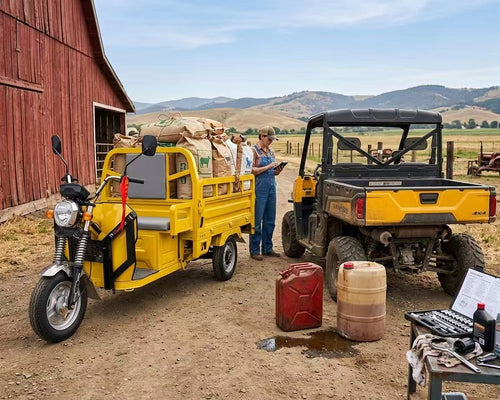
For low-speed work on private property, the right electric cargo vehicle can become a daily material mover. It can help move tools, feed bags, plant trays, produce crates, small equipment, buckets, supplies, and bulk materials across short internal routes without using a full-size truck for every task.
Why Electric Cargo Vehicles Fit Farm Work
Many farm jobs happen at low speed. Workers move between barns, equipment sheds, greenhouses, nurseries, livestock areas, packing zones, storage areas, and private work yards. These routes often include gravel, concrete, packed dirt, greenhouse paths, farm lanes, and repeated stop-and-start movement.
A full-size pickup or large UTV can be useful, but it is not always necessary for every short trip.
An electric cargo vehicle can help with daily internal movement because it is quiet, easy to operate, and better suited for repeated short-distance transport. Instead of starting a larger vehicle for a small load, workers can use a compact electric cargo vehicle for tools, feed, produce, plants, or supplies around the property.
Electric operation can also make sense in greenhouses, nurseries, barns, packing areas, and work zones where lower noise and zero tailpipe emissions are useful.
Start With the Cargo, Not the Vehicle Name
The first step is to identify what the vehicle will carry most often.
A farm may need to move feed bags, produce crates, buckets, small tools, fencing supplies, fertilizer bags, plant trays, soil bags, compost, wood chips, or general maintenance supplies. These materials do not all need the same vehicle configuration.
A simple open cargo bed may be best for mixed daily supplies. A canopy vehicle may be better when the operator works outdoors for long periods. A cab vehicle may help in more exposed or business-use environments. A dump vehicle may be necessary when loose material needs to unload quickly.
The vehicle name matters less than the daily cargo pattern.
Option 1: Open Bed Electric Utility Vehicle
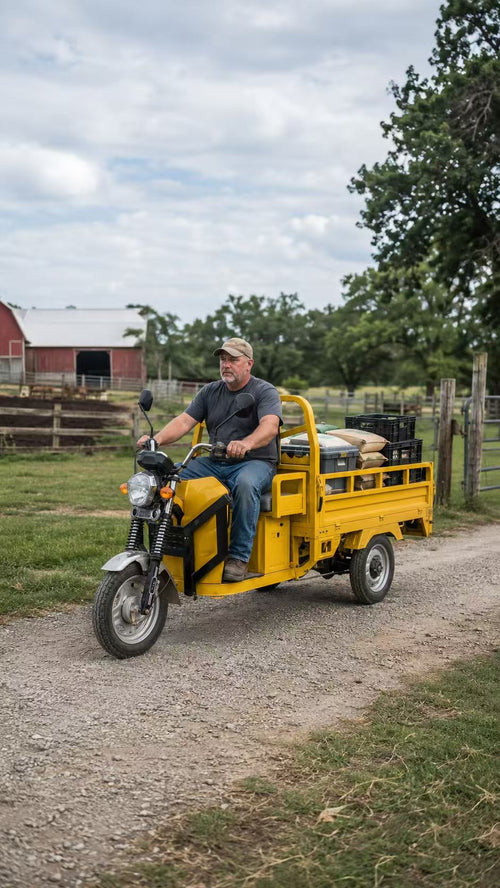
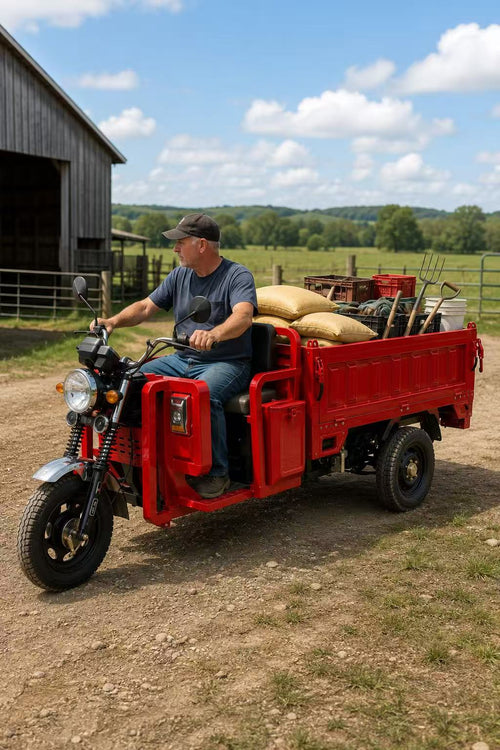
An open bed electric utility vehicle is the simplest and most flexible choice for many farms and private work properties.
It works well for:
tools
feed bags
produce crates
buckets
small equipment
plant trays
farm supplies
warehouse materials
private lot transport
general maintenance items
The main advantage is easy loading and unloading. Workers can see the load, organize mixed materials, and access the cargo bed from the side or rear. For farms, nurseries, warehouses, and logistics yards, this makes the open bed style useful for repeated small or moderate loads.
This type of electric cargo vehicle fits buyers who need a practical daily work vehicle but do not need operator enclosure or hydraulic dumping.
It is often a good match for short-distance internal transport on private property.
Option 2: Canopy Utility Cargo Vehicle
A canopy utility cargo vehicle adds basic operator protection while keeping the open cargo bed useful.
This configuration is a good fit when the operator works outdoors many times per day and needs shade, wind protection, or a more comfortable driving position. It can be especially useful in farms, nurseries, greenhouses, ranch support areas, private lots, and property maintenance routes.
A canopy vehicle can carry many of the same materials as an open bed vehicle:
plant trays
feed bags
hand tools
produce crates
soil bags
buckets
maintenance supplies
small equipment
The difference is that the operator has a canopy and windshield area. This can matter when the vehicle is used repeatedly across open property, especially in sun, light wind, dust, or changing daily conditions.
For many buyers, this is a balanced option: more comfortable than a fully open vehicle, but still simple and flexible for cargo work.
Option 3: Cab Utility Cargo Vehicle
A cab utility cargo vehicle is better when operator protection is more important.
This type of configuration may fit:
warehouses
private lots
logistics parks
large farms
business properties
security or maintenance routes
worksites with repeated daily driving
properties with more weather exposure
A semi-enclosed cab can help the operator stay more protected during repeated movement. This may be useful when the vehicle is used as a daily work platform, not just an occasional farm cart.
A cab vehicle may be less open and simple than a basic cargo bed trike, but it gives a more vehicle-like work experience. For businesses, logistics yards, private properties, and farms with more frequent use, operator comfort can become part of productivity.
The buyer should choose this option when the operator spends more time driving and the route requires better protection than a basic open vehicle provides.
Option 4: Hydraulic Dump Utility Vehicle
A hydraulic dump utility vehicle is different from the other options because it is built around unloading.
This type of vehicle is best when the work includes loose or bulk materials such as:
compost
mulch
soil
wood chips
manure
gravel
bedding material
landscaping material
farm waste
general bulk debris
If the load is mostly bagged feed, tools, crates, or trays, a dump bed may not be necessary. But if the vehicle is used for repeated unloading of loose material, hydraulic dumping can reduce labor and make the work faster.
For farms, ranches, nurseries, gardens, property maintenance teams, and material handling areas, the dump configuration can be the right choice when unloading is just as important as transport.
This vehicle should be chosen when the main job is not only carrying material, but also placing or dumping it efficiently.
How to Choose Between the Four Options
The best electric cargo vehicle depends on what the buyer does every day.
Choose an open bed electric utility vehicle if the work is general transport of tools, feed, crates, buckets, and mixed supplies.
Choose a canopy utility cargo vehicle if the operator needs shade or front protection while still using an open cargo bed.
Choose a cab utility cargo vehicle if the operator needs more protection, more comfort, or a more vehicle-like work platform for farms, warehouses, private lots, or logistics yards.
Choose a hydraulic dump utility vehicle if the work involves loose materials that need to be unloaded quickly, such as compost, soil, manure, mulch, wood chips, or gravel.
These are not just style differences. They are work-flow differences.
Cargo Bed, Cab, or Dump: Match the Job First
Many buyers make the mistake of choosing by appearance. A vehicle may look strong, but if the cargo bed does not match the job, it may not improve the work. A cab may look comfortable, but it may not be necessary for a short nursery route. A dump bed may look useful, but it may not help if the farm mainly moves crates and tools.
The buyer should ask:
What do we move most often?
Is the cargo bagged, boxed, loose, or mixed?
Does the operator need shade or weather protection?
Do we need to unload loose material?
Will the vehicle run in a farm, greenhouse, warehouse, private lot, or logistics yard?
How many short trips happen each day?
What route surface will the vehicle use?
These questions help identify the correct configuration before comparing prices.
Where Electric Cargo Vehicles Work Best
Electric cargo vehicles are best used on private property and controlled low-speed routes. They can work well in:
farms
ranches
greenhouses
nurseries
orchards
vineyards
warehouses
private lots
logistics parks
equipment sheds
produce handling zones
feed storage areas
maintenance routes
They are especially useful when the route is short, the work is repeated, and the cargo is moderate but frequent.
They are not meant to replace every truck, tractor, or heavy UTV. Instead, they help fill the gap between hand carrying and larger equipment.
Before buying an electric cargo vehicle for farm work, check these practical points:
1. Daily cargo type
Will the vehicle carry tools, feed bags, produce crates, plant trays, buckets, or loose materials?
2. Unloading method
Will workers unload by hand, or do they need a hydraulic dump bed?
3. Operator protection
Does the driver need shade, windshield protection, or a semi-enclosed cab?
4. Work route
Will the route be gravel, packed dirt, concrete, greenhouse paths, warehouse floors, or private lot surfaces?
5. Payload needs
How much weight will the vehicle carry in a normal trip?
6. Work frequency
Will it be used occasionally or many times per day?
7. Turning space
Can it move through gates, sheds, greenhouse lanes, packing areas, or warehouse aisles?
8. Charging routine
Can charging fit into the daily work schedule?
9. Local maintenance support
Can a local small equipment, farm machinery, or motor repair technician help with basic service needs?
These questions are more useful than choosing only by motor size or appearance.
Final Thought
An electric cargo vehicle for farm work should be chosen by configuration, not just by category name.
An open bed model works well for general tools, feed, crates, and supplies. A canopy vehicle adds shade and front protection while keeping cargo access simple. A cab vehicle supports operators who need more comfort and protection during repeated use. A hydraulic dump vehicle is better for loose materials that need efficient unloading.
For farms, nurseries, greenhouses, warehouses, private lots, and logistics parks, the right choice is the vehicle that matches the real work route, cargo type, operator needs, and unloading method.