Peak-Hour Order Staging in Wholesale Markets
Share
Wholesale markets do not become busy only when trucks arrive. In many seafood markets, produce terminals, restaurant supply warehouses, meat distribution areas, cash-and-carry wholesale stores, and general merchandise markets, the busiest pressure often happens before the customer pickup area.
That pressure happens in the order staging zone.
Order staging is the temporary step between picking goods and loading them into a customer vehicle. Products may come from different parts of the market: produce crates from a stall, foam boxes from a seafood cold room, sealed cartons from a storage area, rice bags and oil cartons from restaurant supply aisles, or packaging materials from a dry goods section. Before the customer vehicle is ready, these goods often need to be gathered, checked, grouped, and moved to a staging area.
During peak hours, this process can become difficult.
Workers may need to move many small and mixed orders at the same time. Customer vans, pickup trucks, box trucks, and small refrigerated vehicles may arrive close together. Hand carts may block lanes. Forklifts may be busy with pallet work. Orders may come from cold rooms, shelves, packing stations, and vendor stalls at the same time.
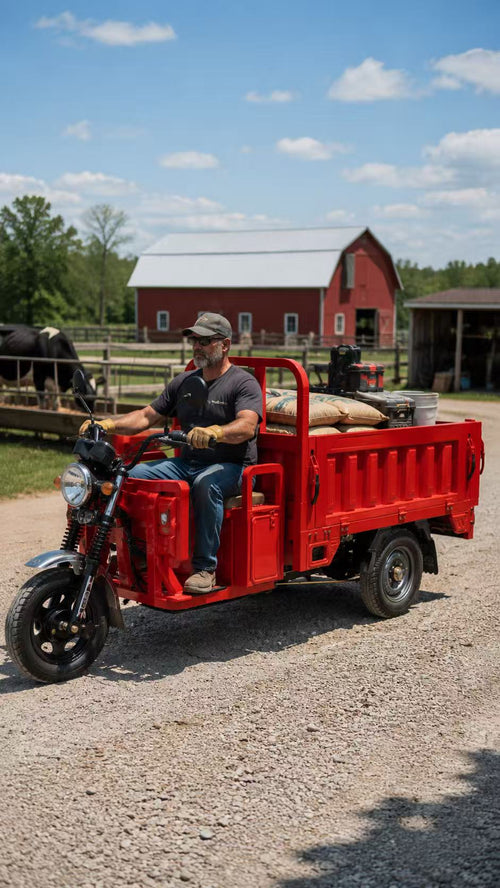
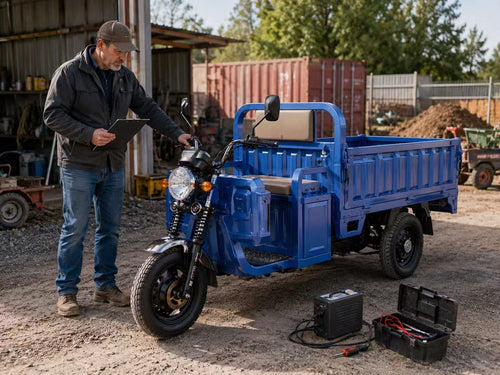
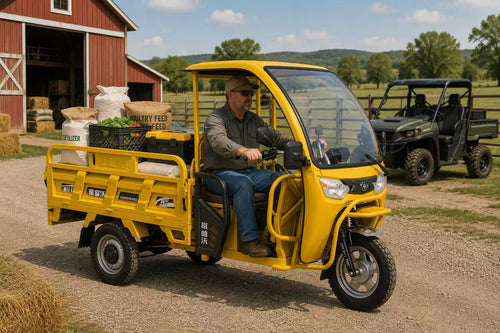
A cargo-bed electric utility vehicle can help support this short-distance order staging process.
It gives workers a flexible way to collect mixed goods from different areas, move them to the staging zone, and prepare them for customer pickup or loading.
Why Order Staging Matters in Wholesale Markets
In a wholesale market, the staging area is the bridge between order picking and customer pickup.
If goods are picked but not organized, workers waste time searching for cartons, checking order details, and moving items again. If the staging area becomes crowded, customer vehicles may wait longer. If every small order depends only on hand carts, workers may make too many repeated trips between storage and loading areas.
Good order staging helps the business keep movement organized.
It allows workers to group goods by customer, pickup time, route, temperature requirement, or vehicle type. It also helps separate dry goods, cold-chain goods, foam boxes, produce crates, restaurant supply cartons, and general merchandise orders before they are loaded.
This is especially important in wholesale businesses where orders are mixed and time-sensitive.
A restaurant supply customer may need dry goods, paper goods, sauces, and cleaning supplies together. A produce buyer may need fruit boxes and vegetable crates from several stalls. A seafood customer may need foam boxes and sealed cartons staged near a cold pickup area. A small grocery customer may collect frozen food boxes, produce crates, and general supplies in one trip.
These orders are not always full pallets. They are often mixed, non-palletized, and handled in smaller batches.
The Peak-Hour Problem
Peak hours create pressure because many orders move at the same time.
Early morning produce pickup, seafood market loading, restaurant supply collection, and meat wholesale customer pickup can all involve repeated short-distance movement. Workers may need to move goods from storage aisles to staging zones, from cold rooms to dock areas, from vendor stalls to pickup lanes, or from packing stations to customer vehicles.
The challenge is not only the weight of the goods. The challenge is the number of repeated trips.
A hand cart may work for one small order. But when many orders need to be staged at once, hand carts can become slow and crowded. A forklift may move pallets efficiently, but it may not be the right tool for every mixed customer order. A truck is not useful for movement inside the market.
This is where a compact electric utility vehicle fits the workflow.
It can move through short routes, carry mixed goods in the cargo bed, and help workers reduce repeated manual movement during busy periods.
How an Electric Utility Vehicle Supports Order Staging
A cargo-bed electric utility vehicle can support peak-hour order staging in several practical ways.
It can collect goods from different warehouse sections and bring them to one staging point. It can move completed orders from a packing station to a pickup lane. It can carry produce crates, foam boxes, sealed cartons, rice bags, cooking oil boxes, packaging supplies, and paper goods together in one short trip. It can also help move staged orders closer to customer vehicles when pickup begins.
The vehicle is especially useful when:
orders are mixed instead of palletized
workers need to collect items from different areas
the same short route is repeated many times
pickup lanes become crowded during busy hours
hand carts require too many trips
forklifts are better reserved for pallet work
customers arrive with different vehicle types
The main value is not replacing warehouse equipment. The value is improving movement between order picking, staging, and pickup.
From Cold Rooms, Stalls, and Aisles to the Staging Zone
Wholesale orders often come from more than one location.
In a produce market, one order may include boxes from several vendors or storage areas. In a seafood market, foam boxes may come from a cold room while packaging materials come from another section. In a restaurant supply warehouse, dry goods, paper products, oil cartons, and cleaning supplies may come from different aisles. In meat wholesale operations, sealed cartons may need to be staged close to a cold pickup area.
This makes order staging a routing problem.
A compact electric utility vehicle helps because it can move between these points without depending on a large truck or forklift for every small order. Workers can use the cargo bed as a short-distance collection platform, gathering goods from several points before bringing them to the correct staging area.
For wholesale markets with many small business customers, this can make the pickup workflow easier to manage.
Reducing Repeated Manual Cart Trips
Manual carts still have a place in wholesale work. They are useful for small, light, and occasional movement.
But peak-hour order staging often requires more capacity and more repetition.
When workers use only hand carts, they may need several trips to complete one mixed order. During busy pickup periods, this can slow down the entire workflow. It can also create congestion when multiple workers push carts through the same lanes.
A cargo-bed electric utility vehicle can carry more goods in one trip. It can help move larger mixed orders without turning each order into a forklift job. It can also reduce the physical burden of pushing heavy carts back and forth during peak hours.
This is important for small and mid-size wholesale businesses that need better movement but may not have large automated warehouse systems.
A Practical Tool for Wholesale Order Flow
Peak-hour order staging is not only a storage issue. It is a movement issue.
Goods need to be picked, grouped, checked, moved, held temporarily, and then loaded into the right customer vehicle. When this process is slow, the customer pickup area becomes crowded and workers spend too much time walking between zones.
A cargo-bed electric utility vehicle helps connect these steps.
It can support the route from storage to staging, from cold room to staging, from stall to staging, and from staging to customer pickup. It gives workers a practical short-distance hauling tool for the real mixed-order movement that happens every day in wholesale markets.
For seafood markets, produce wholesalers, restaurant supply warehouses, meat distributors, cash-and-carry stores, and general wholesale operations, order staging is a key part of customer service.
When the busy hour begins, the right vehicle can help keep goods moving from the warehouse floor to the staging zone and finally to the customer vehicle.