Moving Goods on Wet Floors in Wholesale Markets
Share
Wholesale market floors are not always dry, clean, and easy to move through. In seafood markets, produce terminals, meat wholesale facilities, cold storage areas, restaurant supply warehouses, and loading docks, workers often deal with wet floors during normal daily operations.
The water may come from rain at the loading door, ice melt from seafood boxes, cold room condensation, produce washdown areas, floor cleaning, wet crates, or customer vehicles bringing moisture into the dock area. The movement may still be short-distance, but the handling conditions become more difficult.
This is why wet floor material handling deserves its own discussion.
A wholesale business may already use hand carts, pallet jacks, forklifts, and manual carrying. But when floors are wet, workers need a more organized way to move goods so they do not have to carry cartons, foam boxes, produce crates, or bags across the same slippery route again and again.
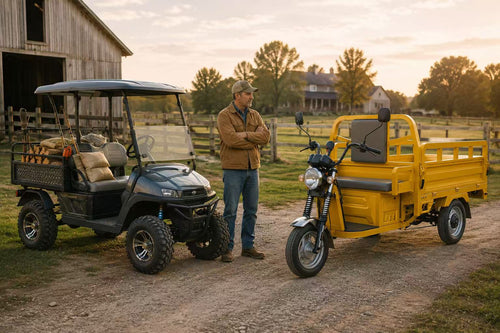
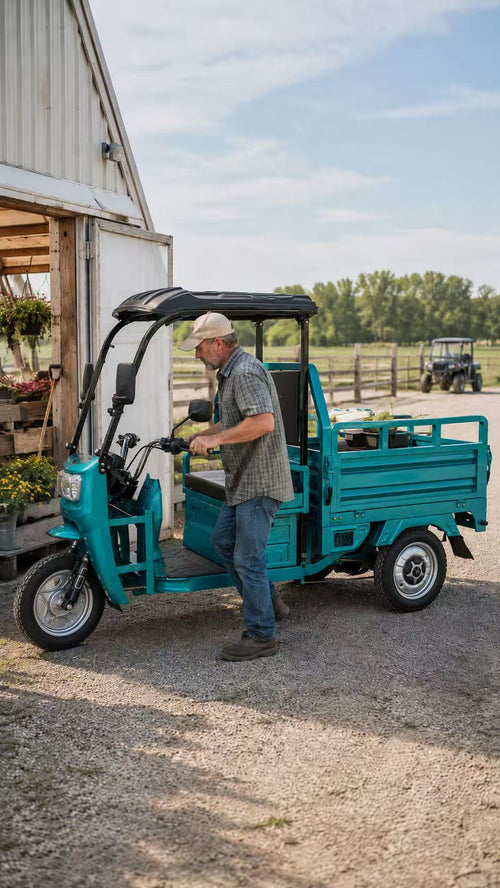
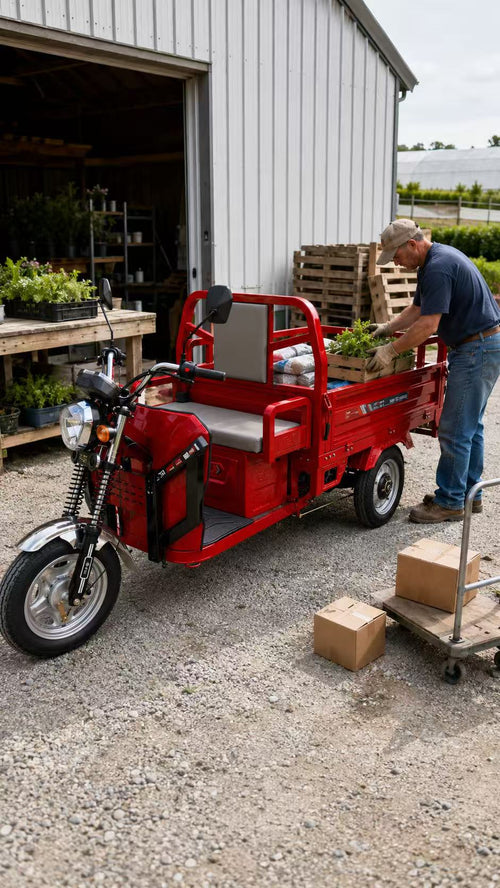
A cargo-bed electric utility vehicle can help support this type of work by reducing repeated manual carrying and helping workers keep mixed goods grouped in one mobile load.
It does not remove the need for proper floor cleaning, drainage, footwear, aisle control, or safe operating practices. But it can help improve the way goods move across wet or rainy wholesale areas.
Why Wet Floors Are Common in Wholesale Markets
Wet floors are especially common in food-related wholesale environments.
Seafood wholesalers may handle foam boxes, ice, cold rooms, and washdown areas. Produce markets may move wet vegetable crates, fruit boxes, and plastic bins from cool storage or outdoor loading zones. Meat and frozen food distributors may work near cold storage doors where condensation or temperature changes create moisture. Restaurant supply warehouses may have loading doors open during rain while workers move cartons, bags, and supplies to customer vehicles.
Even general wholesale markets can face wet floor conditions when rain enters the loading dock or when workers move goods between indoor storage and outdoor pickup areas.
Common wet floor areas include:
rainy loading docks
cold room entrances
seafood market floors
produce washdown areas
wet customer pickup zones
roll-up door entrances
warehouse loading lanes
short outdoor transfer routes
cold storage to loading dock paths
In these areas, the goal is not only to move goods. The goal is to reduce unnecessary handling and keep movement more controlled.
The Problem with Repeated Manual Carrying on Wet Floors
A single box may not seem difficult to move. But wholesale work often involves repeated movement.
A worker may carry sealed cartons from a cold room to a staging area. Another worker may move produce crates from a wet dock to a customer van. A seafood market worker may carry foam boxes from a storage area to a pickup lane. A restaurant supply worker may move bags and cartons across a rainy loading dock.
When this happens many times per day, the wet floor becomes a bigger issue.
Repeated manual carrying can create more walking, more turning, more stopping, and more chances for workers to lose balance or move awkwardly. Hand carts can help, but small carts may still require many trips. If cartons are placed temporarily on the floor, the loading area can become crowded and harder to keep clear.
A better approach is to reduce unnecessary trips and keep goods grouped.
That is where a cargo-bed electric utility vehicle becomes useful as a short-distance hauling vehicle.
How a Cargo-Bed Electric Utility Vehicle Helps
A cargo-bed electric utility vehicle can carry mixed goods across wet wholesale routes in fewer trips.
Instead of carrying one or two boxes at a time, workers can load closed cartons, foam boxes, produce crates, rice bags, paper goods, and packaging supplies into the cargo bed. The vehicle can then move the grouped load from the wet area to a drier staging point, customer pickup zone, cold room entrance, or loading area.
This helps in several ways.
It reduces repeated walking across wet floors. It keeps goods off the ground. It helps workers move a complete mixed load together. It can reduce the number of hand carts parked in the loading lane. It can support short-distance transport when rain, washdown, or cold room moisture makes manual movement less comfortable.
The vehicle should still be operated carefully. Wet floors require slower movement, clear paths, careful turning, and attention to people nearby. But the workflow itself can become more organized when goods are moved in larger grouped loads rather than scattered across many hand trips.
Seafood, Produce, Meat, and Restaurant Supply Use Cases
In seafood wholesale markets, wet floors are part of the work environment. Workers may move foam seafood boxes, sealed cartons, plastic crates, and supplies between cold rooms, sorting areas, and pickup vehicles. A cargo-bed electric utility vehicle can help reduce repeated hand carrying across wet seafood market floors.
In produce wholesale markets, wet crates and outdoor loading areas can create similar conditions. Fruit boxes, vegetable crates, and mixed produce orders may need to move from storage areas to customer vehicles. A short-distance electric utility vehicle can help carry more goods in one organized trip.
In meat wholesale and cold storage areas, the vehicle should be used for sealed cartons, packaged food boxes, and closed containers only. It can support movement between cold storage, loading docks, and pickup areas without presenting the vehicle as a tool for exposed food.
In restaurant supply warehouses, rainy loading doors can slow down customer pickup. A vehicle with a cargo bed can help workers move rice bags, oil cartons, paper goods, takeout packaging, and closed cartons between warehouse aisles and pickup areas while reducing repeated wet-floor routes.
Wet Floor Transport Is Also a Flow Problem
Wet floor handling is not only a safety issue. It is also a flow issue.
When workers slow down because the floor is wet, customer pickup can slow down. When hand carts gather near a rainy loading door, the lane can become crowded. When boxes sit on the ground, workers may need to move them again before loading. When cold-chain goods wait too long near a wet dock, the process becomes less organized.
A cargo-bed electric utility vehicle helps by giving workers a mobile place to group goods and move them away from the wet traffic path.
For example, goods can be collected near the cold room and moved to a staging point in one trip. Mixed orders can be moved from warehouse aisles to the pickup area without several hand-cart routes. Foam boxes and produce crates can be kept together instead of being placed across the floor.
The result is a cleaner workflow: pick the goods, group the goods, move the goods, and keep the path clear.
Choosing the Right Vehicle for Wet Wholesale Areas
Not every wet-floor task needs the same vehicle.
For general mixed goods, a cargo-bed electric utility vehicle is often the best starting point. It can handle cartons, crates, bags, boxes, packaging materials, and customer pickup orders.
For temperature-sensitive goods, a refrigerated electric cargo trike may be more suitable, especially when seafood, meat, frozen food, dairy, or fresh food must move between cold storage and loading areas.
For truck-bed height problems, an electric lift tricycle with a hydraulic platform may help when workers need to handle goods near a raised vehicle floor. In wet conditions, the work area should be controlled carefully and the platform should be used only in suitable conditions.
The main rule is simple: choose the vehicle based on the workflow, not only the product category.
A Practical Way to Improve Wet Floor Material Handling
Wet floors cannot always be avoided in wholesale markets. Rain, ice, washdown, cold rooms, and food handling areas are part of the environment.
But the way goods move through that environment can be improved.
Keep walkways clear. Keep goods off the floor when possible. Avoid scattering mixed orders across wet loading lanes. Reduce repeated hand-carry trips. Move goods in grouped loads. Use hand carts for small loads, pallet jacks for palletized goods, forklifts for heavy pallet movement, and cargo-bed electric utility vehicles for repeated short-distance hauling.
For seafood markets, produce terminals, meat wholesale facilities, restaurant supply warehouses, and general wholesale pickup areas, a cargo-bed electric utility vehicle can support a more organized wet-floor transport process.
It is not only about moving faster. It is about moving goods through wet wholesale areas with fewer repeated trips, less scattered handling, and a clearer path from storage to staging, loading, or customer pickup.