Do You Need to Cover the Load? Planning Tarps, Straps, and Cargo Protection for a Powered Dump Hauler
Share
A powered dump hauler is often judged by what it can carry.
Buyers look at the cargo bed, load capacity, dump function, tires, battery range, frame strength, and daily work use.
Those details matter.
But there is another question many buyers do not think about until the first windy day, rainy morning, or bumpy route:
Does the load need to be covered or secured?
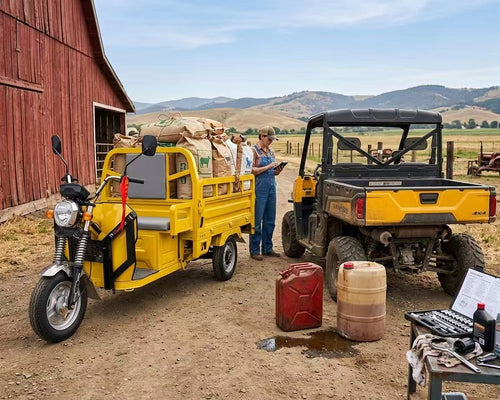
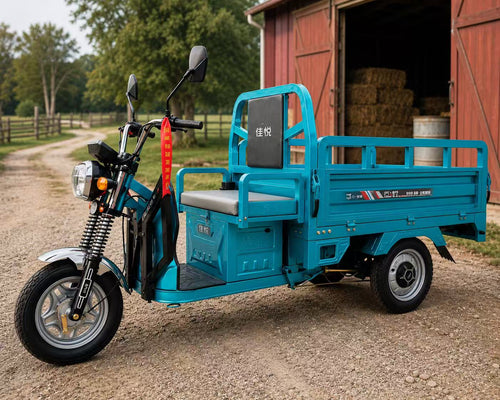
A powered dump hauler, electric dump cart, electric work trike, powered wheelbarrow, motorized wheelbarrow, or battery-powered utility cart may carry many different materials during a normal workday.
Mulch.
Compost.
Feed bags.
Soil bags.
Small tools.
Plant trays.
Stable supplies.
Yard debris.
Leaves.
Branches.
Cleaning supplies.
Maintenance parts.
Light farm materials.
Some loads can sit open in the bed.
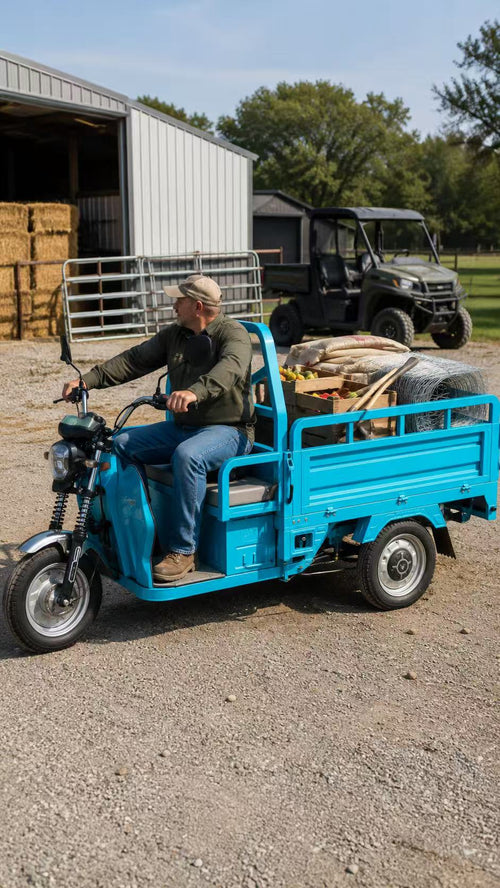
Other loads may need a tarp, cargo net, light strap, bungee cord, or simple load protection.
The question is not only:
Can the hauler carry it?
The better question is:
Will the load stay dry, stable, clean, and contained during the trip?
Not every load needs a cover
A powered dump hauler does not need a tarp for every job.
Loose manure bedding waste moving from stalls to a compost pile may not need a cover. Gravel moving a short distance on private property may not need a cover. Wet soil being moved directly to a work area may not need a cover. Mulch used immediately on a landscaping job may not need a cover if the route is short and calm.
Many daily jobs are simple.
Load the material.
Move slowly.
Dump or unload in the planned area.
Return for the next trip.
But some materials are different.
Feed bags should stay dry. Tools should not slide. Lightweight leaves can blow around. Plant trays can tip. Cleaning supplies may spill. Small parts can get lost. Bags can shift. A rain shower can damage clean material.
That is when cargo protection matters.
Bed sides help, but they do not solve every load problem
Cargo bed sides are useful.
They help contain loose material and keep many loads inside the bed. They make the hauler more practical than a flat platform for farm, stable, nursery, greenhouse, landscaping, and property maintenance work.
But bed sides are not the same as a cover.
They do not stop rain from reaching bags.
They do not stop lightweight leaves from blowing in strong wind.
They do not stop tools from sliding if they are placed poorly.
They do not protect clean supplies from wet manure residue.
They do not secure tall or loose items that are above the bed edge.
A buyer should understand the difference.
Bed sides are part of containment.
Tarps, straps, and cargo nets are part of load protection.
Rain can change the need for a cover
A short outdoor trip may seem simple until the weather changes.
A farm worker may carry feed bags from storage to a barn. A stable worker may move clean bedding supplies. A nursery employee may move soil bags or plant trays. A property maintenance worker may carry tools, cleaning supplies, or small repair materials across an apartment property.
If rain starts, an uncovered load may become a problem.
Feed bags may get wet.
Cardboard packaging may soften.
Tools may become slippery.
Clean supplies may become dirty.
Plant trays may collect water.
Paper labels may be damaged.
Small parts may rust.
This does not mean every load needs a permanent cover.
It means buyers should plan for simple weather protection when the material needs it.
A small tarp can be useful for clean or packaged loads, especially in farms, stables, nurseries, greenhouses, and property maintenance routes.
Wind can affect lightweight materials
Wind matters more with light material than heavy material.
Gravel will not blow away easily. Wet soil will not move like leaves. But dry leaves, loose plastic, light mulch, plant debris, straw, hay scraps, cardboard, empty feed bags, or lightweight yard waste can shift or blow out of an open cargo bed.
This is especially common on open farm lanes, ranch roads, nursery paths, landscaping jobs, and property maintenance areas.
A cargo net or tarp can help keep lightweight material contained.
The operator should also avoid overfilling the bed above the side rails when the material is light and loose.
A low, stable load is still the first protection.
A cover is extra support.
Tools need organization, not only a cargo bed
Tools are different from loose material.
A shovel, rake, broom, cordless tool, bucket, toolbox, hose, strap, or small ladder may fit in the cargo bed, but that does not mean it is secure.
Tools can slide during turns, bounce on uneven gravel, hit the side panels, damage other supplies, or fall if placed carelessly.
For tool hauling, the buyer should think about organization.
Small tools may belong in a toolbox.
Long tools should be placed low and aligned with the bed.
Sharp tools should not point toward the operator or hang over the side.
Heavy tools should stay low.
Light straps or bungee cords may help keep tool bundles stable.
A powered dump hauler can be very useful for property maintenance and farm repair work, but the cargo bed should not become a loose pile of tools.
Good tool placement protects both the load and the vehicle.
Feed bags and clean supplies may need protection
Feed bags, seed bags, bedding bags, fertilizer bags, soil bags, and packaged supplies often need more care than dirty bulk material.
These loads may be clean, dry, and packaged.
They may be moved between storage rooms, barns, greenhouses, feed areas, nurseries, apartment maintenance rooms, or work sheds.
If the bed was previously used for manure, compost, mulch, wet soil, gravel, or yard debris, the operator should check whether the cargo bed is clean enough for the next load.
A tarp can help protect clean bags from moisture or residue.
But the better first step is simple:
Use a clean bed for clean loads.
A cover helps with weather.
It does not replace cleanout when the material needs a clean surface.
Straps should be used carefully
Light straps, bungee cords, or simple tie-downs can help with certain loads.
They may be useful for toolboxes, small ladders, bundled tools, lightweight bags, empty containers, or loose supplies that could shift during a short private-property route.
But straps should be used carefully.
They should not interfere with the operator.
They should not block steering or controls.
They should not wrap around wheels.
They should not hang loose near moving parts.
They should not be placed where they can catch on fences, gates, posts, plants, or equipment.
The goal is not to make the cargo bed look complicated.
The goal is to keep the load stable during normal low-speed work.
A simple strap used correctly can help.
A loose strap used carelessly can create a problem.
Cargo nets can help with bulky light material
A cargo net may be useful for bulky but light materials.
Leaves, branches, plant waste, straw, empty bags, light yard debris, and loose cleanup material may fill the bed quickly without being very heavy.
These loads can bounce or shift.
A cargo net can help keep them contained during short trips around private property, farms, stables, nurseries, landscaping jobs, or HOA maintenance routes.
But the net should match the load.
It should not be so loose that material escapes.
It should not be so tight that it damages fragile plant trays or supplies.
It should not be left hanging where it can catch on the vehicle or surroundings.
A cargo net is a simple tool, not a replacement for good loading habits.
Do not cover a load that needs to dump immediately
A powered dump hauler is often chosen because of the dump bed.
If the next step is dumping loose material, the operator should think carefully before covering the load.
A tarp, cargo net, strap, or bungee cord must be removed before dumping. If the operator forgets, the cover can interfere with material release, create a mess, or become damaged.
For loose materials such as mulch, compost, wet soil, gravel, wood chips, or manure bedding waste, a cover may not be needed for short controlled trips.
If a cover is used because of wind or rain, the operator should remove it completely before raising the dump bed.
The rule is simple:
Secure or cover the load during transport when needed.
Remove the cover before dumping.
Dump only when the rear area is clear.
The load should stay below the bed edges
A cover is not an excuse to overload the cargo bed.
Some operators may think that if a tarp or net can cover the material, the load is acceptable.
That is not always true.
A high pile can shift. A tall stack can lean. Loose material can press against the cover. Bags can slide. Tools can push upward. A cover stretched over too much material may fail or become difficult to remove.
The best load is still low and balanced.
A powered dump hauler should carry material in a way that matches the route, ground, stopping distance, turns, reverse movement, and unloading area.
Covers and straps help protect a good load.
They should not hide a bad load.
Short trips can still need protection
Some buyers think load protection only matters for highway transport.
That is not true.
A powered dump hauler is usually not a public-road hauling vehicle. It is mainly used for private-property material handling. But even short trips can expose material to rain, wind, bumps, turns, animals, people, and uneven ground.
A short route from a feed room to a barn can still get wet.
A short route across a nursery can still shake plant trays.
A short route through an apartment property can still pass residents or parked cars.
A short route beside a stable can still pass horses.
A short route across gravel can still make tools slide.
Load protection is not only about distance.
It is about what the load is and what it may encounter.
Customer-facing work needs cleaner load handling
Landscaping crews, apartment maintenance teams, HOA workers, resorts, schools, parks, and private estate crews often work where customers, residents, visitors, students, or homeowners can see the equipment.
A messy load can make the crew look careless.
Mulch spilling on a sidewalk, wet tools sliding around, bags falling over, loose trash blowing away, or plant debris falling near parked cars can create complaints.
A powered dump hauler should help the work look organized.
Using a tarp, strap, or cargo net when appropriate can make the job cleaner and more professional.
This is especially useful when moving yard debris, cleaning supplies, tools, packaged materials, light branches, empty bags, or loose leaves through visible areas.
Good cargo protection is part of good property maintenance.
Animal areas need stable loads
Horse stables, cattle barns, dairy areas, poultry farms, and ranch work zones often include animals nearby.
A shifting or noisy load may disturb animals. Loose tools can rattle. Bags can fall. Buckets can slide. A tarp flapping in the wind may create distraction.
When working near animals, load stability matters.
The operator should place material low, avoid loose hanging straps, secure tools quietly, and avoid sudden movement.
If a tarp is used, it should be placed tightly enough that it does not flap excessively.
A powered dump hauler used around animals should feel calm and predictable.
Cargo protection is not only about keeping material inside the bed.
It also helps keep the work environment controlled.
Nurseries and greenhouses need gentle cargo protection
Plant trays, seedlings, nursery pots, soil bags, irrigation parts, and greenhouse supplies may need careful handling.
These materials are different from gravel or manure bedding waste.
They may be fragile, clean, or sensitive to weather.
A cargo net, tarp, or light strap may help protect them during movement, but the operator must avoid crushing them.
Plant trays should not be stacked carelessly.
Straps should not press too hard on young plants.
A tarp should not trap heat or moisture for too long when plants need air.
Tools should not be placed on top of fragile material.
In nurseries and greenhouses, cargo protection should be gentle.
The goal is to keep material stable without damaging it.
Dirty and clean loads should be planned separately
A powered dump hauler may carry dirty material in the morning and clean supplies in the afternoon.
That is common.
A stable may haul manure bedding waste and then move feed bags. A farm may move compost and then tools. A landscaping crew may move mulch and then cleaning supplies. A nursery may move plant debris and then soil bags.
The operator should think before switching load types.
A tarp may protect clean bags from light dirt, but it does not fix a bed full of wet manure residue or gravel grit.
If the next load is clean, the cargo bed should be inspected first.
Cargo protection works best when combined with cleanout.
The right order matters:
Remove dirty material.
Clean or clear the bed if needed.
Place clean material low and stable.
Use a cover if weather or residue risk requires it.
Do not let tarps block visibility
A tarp should not block the operator’s view.
If the load is covered too high, or the tarp is tied awkwardly, it may make it harder to see behind or around the vehicle. This can matter when reversing, turning, entering a barn aisle, passing through a greenhouse lane, working near animals, or moving near residents.
Cargo protection should never make operation harder.
A cover should stay within the cargo bed area and below a practical height.
The operator should still be able to judge the route, rear clearance, and nearby obstacles.
If the cover creates a visibility problem, the load should be reduced or rearranged.
A safe load is one the operator can still control.
Remove loose covers before raising the bed
This is especially important for dump haulers.
Before raising the dump bed, the operator should remove tarps, loose straps, cargo nets, and any cover that could interfere with unloading.
A cover caught during dumping can create a mess, slow the job, damage the cover, or block material release.
This matters when unloading mulch, compost, manure bedding waste, wet soil, gravel, wood chips, leaves, or yard debris.
The operator should stop in the dump area, check the rear discharge area, remove any cover, and then raise the bed only when ready.
The dump function works best when material can move freely from the rear of the bed.
Cargo protection helps during transport.
It should not interfere with unloading.
Avoid tying to weak or moving parts
If straps are used, they should be attached only where appropriate.
The operator should not attach straps to fragile panels, loose trim, electrical parts, controls, mirrors, windshield parts, roof supports, or anything not intended to handle tension.
A light strap around a toolbox is different from a heavy tie-down pulling against the vehicle structure.
For small utility loads, the goal is light cargo stability, not heavy-duty transport binding.
If the buyer wants to regularly secure unusual loads, they should ask the seller about suitable attachment points and safe load placement.
A powered dump hauler is a work vehicle, but it is not a dump trailer or flatbed truck.
The load protection method should match the vehicle.
Weather protection is not the same as waterproof storage
A tarp can help keep a load dry during a short trip.
That does not mean the vehicle should be stored outside uncovered for long periods with material in the bed.
A tarp over cargo is temporary load protection.
It is not a replacement for dry storage, proper charging, cargo bed cleanout, or off-season equipment care.
If clean bags or tools need to stay dry, the better plan is to move them promptly into storage after transport.
Do not leave wet tarps, damp bags, or covered debris sitting in the cargo bed longer than needed.
A cover is useful during work.
It should not become a way to ignore storage and cleanout.
Crew rules should include cargo protection
If several workers use the same powered dump hauler, cargo protection rules should be simple.
When should a tarp be used?
Where are straps stored?
Who removes the cover before dumping?
Can tools be carried loose?
Should feed bags be protected from rain?
Can dirty loads and clean loads share the bed without cleaning?
Where should wet tarps be dried?
Who checks that straps are not near wheels or controls?
These rules do not need to be complicated.
They help keep daily hauling smoother.
A shared vehicle works better when every operator follows the same load habits.
Buyers should ask what they will carry most often
Before buying a powered dump hauler, electric dump cart, electric work trike, powered wheelbarrow, motorized wheelbarrow, or battery-powered utility cart, buyers should think about their normal load types.
Will it carry loose mulch?
Will it carry manure bedding waste?
Will it carry feed bags?
Will it carry soil bags?
Will it carry tools?
Will it carry plant trays?
Will it carry yard debris?
Will it carry cleaning supplies?
Will it carry small parts?
Will it carry wet material?
Will it carry clean supplies after dirty loads?
The answer decides whether tarps, straps, cargo nets, bed liners, bins, or toolboxes may be useful.
A buyer who understands the load will use the hauler more effectively.
Load protection makes the vehicle more useful
A powered dump hauler is most valuable when it becomes a flexible daily work tool.
It can carry dirty bulk material.
It can move clean packaged supplies.
It can support farm jobs.
It can help horse stable cleanup.
It can serve nursery and greenhouse work.
It can support property maintenance and landscaping crews.
But different loads need different care.
Some loads should be open.
Some should be covered.
Some should be strapped.
Some should be boxed.
Some should be kept dry.
Some should be separated from dirty residue.
Some should be unloaded by hand instead of dumped.
A buyer who plans cargo protection will get more practical use from the same vehicle.
Ask these cargo protection questions before buying
Before choosing a powered dump hauler, buyers should ask:
Will I carry loose material or packaged material?
Will I carry clean supplies after dirty loads?
Will rain affect feed bags, tools, or soil bags?
Will wind affect leaves, straw, plant debris, or light yard waste?
Will tools need a box or strap?
Will plant trays need gentle protection?
Will a tarp interfere with dumping?
Where will straps, nets, and tarps be stored?
Can the cargo bed be cleaned easily before clean loads?
Will the route include bumps, turns, animals, residents, or customers?
These questions help buyers think beyond capacity.
They help match the vehicle to real daily hauling.
A covered load is about control, not decoration
A tarp, strap, or cargo net is not there to make the vehicle look better.
It is there to solve a real work problem.
Keep clean bags dry.
Keep light debris contained.
Keep tools from sliding.
Keep plant trays stable.
Keep supplies organized.
Keep visible work areas cleaner.
Keep the operator from wasting time picking up spilled material.
A powered dump hauler does not need cargo protection for every trip.
But when the load needs it, simple protection can make daily work smoother.
The best hauler is not only the one that carries material.
It is the one that helps the operator move the right material, in the right condition, to the right place, without creating extra cleanup.
Before buying, do not only ask how much the bed can hold.
Ask whether the load needs to be covered, secured, or protected.