Will an Electric Farm Utility Trike Feel Too Rough for Daily Farm Work?
Share
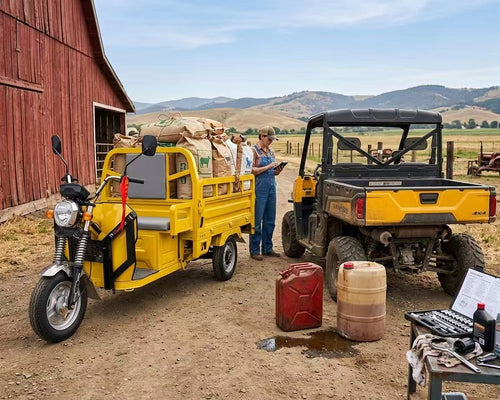
Many buyers compare a simple electric farm utility trike with a larger UTV and immediately notice one difference:
The UTV usually has a more complex suspension system.
That can create an important concern:
Will a simpler electric cargo trike feel too rough for daily farm work?
The answer depends on the route, speed, driving time, cargo, tire condition, and the operator.
A short trip on firm gravel is very different from several hours on deep ruts.
A low-speed route between a barn and a feed area is different from driving across rough pasture.
A healthy operator making five-minute trips may accept a firmer ride.
A buyer with back, hip, knee, or mobility problems may need more comfort.
The correct question is not only:
Does the vehicle have advanced suspension?
The better question is:
How long will I drive, and what kind of ground will I use every day?
Why Ride Comfort Matters
Ride comfort is not only about luxury.
Excessive vibration and repeated impact can affect:
operator fatigue
back and joint comfort
cargo movement
tool damage
box and crate stability
vehicle fasteners
driving speed
steering control
If the vehicle feels too rough, the operator may avoid using it.
That reduces the value of the machine.
But buyers should also avoid assuming that every low-speed farm task requires an expensive comfort-focused UTV.
Many daily cargo trips are short.
The operator may drive for a few minutes, stop, load or unload, and continue later.
For this type of work, a simple farm utility trike may provide enough comfort when the route is suitable.
Short Trips Are Different From All-Day Driving
Driving time changes the decision.
A five-minute trip on a maintained gravel path may be acceptable in a simple electric farm cargo trike.
Several hours on rough pasture may not be.
A buyer should estimate:
how many minutes each trip takes
how many trips happen each day
how long the operator remains seated
how rough the route is
how often the route changes
whether the operator has physical limitations
The longer the operator drives, the more important suspension and seat comfort become.
A buyer who uses the vehicle for short cargo runs may not need the same ride quality as a worker operating a UTV continuously across a large property.
The Route Often Matters More Than the Vehicle
A simple vehicle can feel reasonable on a good route.
A premium vehicle can still feel uncomfortable on a badly damaged path.
Before judging suspension, the buyer should inspect:
potholes
deep ruts
washouts
loose rock
broken concrete
tree roots
soft shoulders
mud
strong side slopes
A maintained route can reduce vibration and impact.
The buyer may improve comfort by:
filling potholes
repairing washouts
adding suitable gravel
avoiding deep ruts
using a fixed route
reducing speed
keeping the load balanced
The vehicle should not be expected to correct a bad road.
Suspension can reduce some impact.
It cannot turn a severely damaged path into a smooth route.
Low Speed Changes Ride Comfort
Speed strongly affects how a vehicle feels.
A small bump at low speed may be manageable.
The same bump at higher speed can create a sharp impact.
An electric farm utility trike is designed for low-speed private-site work.
The operator should slow down before:
potholes
ruts
gravel transitions
gate tracks
drainage channels
uneven concrete
Turning and braking should also be smooth.
A buyer should not judge a low-speed cargo trike by driving it like a recreational UTV.
The machine has a different purpose.
Its job is to carry practical cargo safely across suitable short routes.
Seat Design Still Matters
Even when a vehicle has simple suspension, the seat can affect comfort.
The buyer should look at:
seat width
seat cushion thickness
back support
legroom
driving position
ease of getting on and off
A soft seat cannot correct a severely rough route.
But a supportive seat can make short daily work more comfortable.
The operator should also be able to sit naturally without twisting or crowding the legs.
A buyer with back or joint concerns should test the seating position before purchase whenever possible.
Tire Pressure Can Change the Ride
Tire pressure affects:
ride firmness
steering
traction
tire wear
load capacity
A tire that is overinflated may feel unnecessarily hard.
A tire that is underinflated may overheat, handle poorly, or become damaged.
The owner should use the pressure recommended for the actual tire, load, and vehicle.
Do not lower pressure randomly in an attempt to create a softer ride.
The correct pressure should support the vehicle and cargo while maintaining control.
Tire condition also matters.
Worn, damaged, mismatched, or incorrectly sized tires can make the vehicle feel worse.
The Load Changes Ride Quality
An empty cargo bed and a loaded cargo bed may feel different.
A moderate, balanced load can change how the rear of the vehicle responds.
An excessive or uneven load can make the ride and handling worse.
Cargo should remain:
within the rated capacity
low in the bed
balanced from side to side
secured when necessary
fully inside the cargo area
The operator should avoid placing heavy items high above the bed floor.
High cargo increases movement and can make bumps feel more severe.
Boxes, tools, trays, and supplies should be arranged to reduce shifting and impact.
Protecting Cargo From Vibration
Some cargo can tolerate vibration.
Other cargo needs protection.
Farm buyers may carry:
hand tools
power tools
glass containers
eggs
produce
nursery trays
repair parts
electrical components
The buyer may use:
rubber mats
dividers
straps
padded containers
low stacking
These methods can reduce cargo movement.
The cargo bed should not be treated as a place to throw fragile equipment loosely.
A smooth route and organized loading can matter as much as suspension.
When a Simple Farm Utility Trike Can Be Comfortable Enough
A simple electric farm utility trike can be comfortable enough when:
trips are short
speed remains low
the route is maintained
the surface is concrete, firm gravel, asphalt, or compacted soil
the load is moderate
the operator stops frequently
the operator does not have serious back or mobility problems
This can fit:
small farms
homesteads
nurseries
greenhouses
warehouse yards
property-maintenance routes
private markets
The buyer may use the vehicle for:
moving feed bags
carrying tools
transporting boxes
moving nursery trays
delivering repair parts
carrying animal-care supplies
For these jobs, practical cargo movement may matter more than long-travel suspension.
When a UTV May Be Worth the Higher Cost
A comfort-focused UTV may be the better choice when:
the operator drives for several hours each day
the route stays rough
the property has deep ruts and washouts
the work crosses pasture or forest trails
the operator has back, hip, knee, or joint problems
passengers ride regularly
the vehicle travels at higher speed
route improvement is not possible
In these conditions, a better suspension system, wider seating, four-wheel structure, and larger tires may justify the higher price.
The buyer should not choose a simple trike if the real work requires continuous rough-terrain travel.
The goal is not to force one vehicle into every job.
The goal is to match the machine to the route and operator.
Comfort and Work Capacity Are Different Questions
A vehicle can be comfortable but poorly matched to the work.
A vehicle can also be firm-riding but very useful for short tasks.
The buyer should evaluate comfort together with:
cargo capacity
route suitability
braking
turning space
range
charging
maintenance
replacement parts
local repair support
A soft ride does not automatically make a vehicle the right cargo tool.
A simple suspension does not automatically make a vehicle unusable.
The complete work pattern should decide.
Frequent Stops Can Favor a Smaller Vehicle
Farm work often involves short movement followed by a stop.
The operator may:
open a gate
load feed
check an animal
collect a tool
deliver a box
inspect a fence
unload supplies
In this work pattern, the operator may not remain seated for long periods.
Ease of stopping, turning, parking, and getting on and off may matter more than long-distance ride comfort.
A smaller electric cargo trike for farm work can fit this pattern well.
The buyer should ask:
Am I driving continuously?
Or am I making many short stops?
That answer changes the comfort requirement.
Older Operators Need a More Careful Decision
An older operator may value:
easy entry
low step height
supportive seat
simple controls
low speed
short route
But age alone does not determine the correct vehicle.
Some older operators can use a simple farm utility trike comfortably.
Others may need:
better suspension
more back support
greater stability
more weather protection
a wider seat
Before purchasing, the buyer should consider the actual operator.
A machine that works well for one person may not work well for another.
The buyer should not assume that a smaller vehicle is always easier or more comfortable.
The seating and route must be evaluated together.
Do Not Ignore Persistent Pain or Fatigue
If the operator experiences:
back pain
neck pain
joint pain
numbness
excessive fatigue
difficulty controlling the vehicle
the work setup should be reviewed.
Possible causes may include:
route condition
speed
seat position
tire pressure
excessive driving time
cargo balance
vehicle choice
The operator should not simply continue driving through pain.
A different route, lower speed, better seat, shorter work periods, or another vehicle may be necessary.
A Farm Route Can Be Improved for Every Vehicle
Improving the route does not only help an electric farm utility trike.
It can also help:
UTVs
ATVs
tractors
carts
workers on foot
A repaired route can reduce:
operator fatigue
cargo damage
tire wear
vehicle vibration
maintenance
surface erosion
This makes route improvement a long-term investment.
A buyer should compare the cost of improving the route with the cost of buying a much more expensive vehicle only for comfort.
Sometimes the better answer is a smoother path, not a larger machine.
What About Suspension Upgrades?
Some buyers may consider changing shocks, springs, seats, or tires.
Any modification should be compatible with the vehicle.
A random modification may change:
ride height
steering
braking
load capacity
stability
tire clearance
warranty coverage
The buyer should not install unknown parts simply to create a softer ride.
Before modifying the vehicle, ask the seller or a qualified technician:
Is the part compatible?
Will it change the load rating?
Will it affect steering or braking?
Will it affect the warranty?
Will it create tire contact?
A safe vehicle is more important than a soft vehicle.
The Cargo Bed Can Increase Practical Value
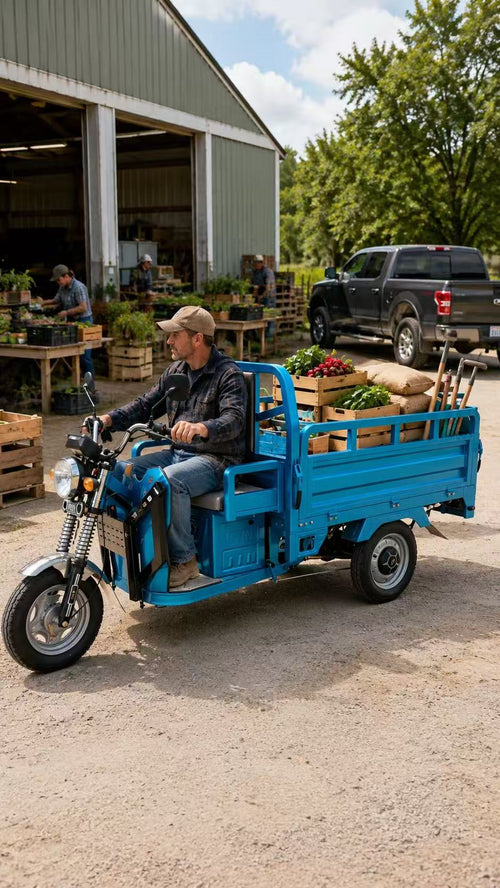
The value of an electric utility trike with cargo bed comes from carrying materials that would otherwise require repeated walking or hand transport.
A large bed can hold:
feed bags
tools
boxes
crates
buckets
nursery trays
repair supplies
A buyer may accept a firmer ride when the trip is short and the vehicle saves many manual trips.
The correct comparison is not only:
Which machine feels softer?
It is also:
Which machine completes the daily work at a reasonable cost?
A more expensive UTV may provide better comfort.
A simpler trike may provide enough comfort and strong cargo value for a short route.
Buyer Questions Before Purchase
Before buying, ask:
How long is each trip?
How many hours will the operator drive each day?
What is the normal surface?
How many potholes or ruts are on the route?
Can the route be improved?
What is the normal cargo?
Does the operator have back or joint problems?
Will passengers ride?
How often will the vehicle stop?
What tire pressure is recommended?
Can the seat be tested?
Does the work require off-road suspension?
These questions help separate a real comfort requirement from a feature preference.
A Practical Test Route
A buyer evaluating a vehicle should not only look at it while parked.
The test should reflect the real job.
A practical test may include:
starting from the normal parking area
driving the actual route
crossing normal gravel transitions
turning through the real gate
carrying a moderate representative load
stopping at the usual work points
returning to the parking area
The buyer should not test on the smoothest possible surface if the daily route is rough.
The route should represent normal use.
This helps the buyer judge:
seat comfort
steering effort
ride firmness
cargo movement
braking
turning space
A Five-Minute Job Does Not Need a Luxury Ride
Many farm tasks only take a few minutes.
The operator may need to move one load from the barn to the greenhouse.
The vehicle may then remain parked.
For this type of task, luxury-level comfort may not create enough value to justify a much higher purchase price.
The machine still needs to be safe and usable.
But it does not need to feel like a passenger vehicle.
A work vehicle should be judged by:
how long it is used
what it carries
where it travels
how often it works
This keeps the purchase decision realistic.
When Comfort Becomes a Productivity Issue
Comfort becomes more than preference when a rough ride causes:
slower work
frequent breaks
operator avoidance
cargo damage
pain
reduced control
In that case, the buyer should not dismiss the problem.
A more comfortable vehicle may improve productivity.
This is especially true for:
commercial nurseries
large farms
property-maintenance teams
warehouse yards
operations with multiple daily drivers
The cost of a better UTV may be justified when the vehicle is used for long hours by paid workers.
The work schedule should decide.
Do Not Confuse Simple With Poor Quality
A simple electric farm utility tricycle may use a less complex suspension system than a premium UTV.
That does not automatically mean the vehicle is poorly made.
Simple construction can offer:
lower purchase cost
fewer complex components
easier inspection
simpler local repair
But simplicity also creates limits.
The buyer should not expect:
high-speed comfort
long-travel suspension
deep off-road performance
passenger-car ride quality
The vehicle should be evaluated honestly.
A simple machine can be a good machine when it is used for the correct work.
Final Thought
Will an electric farm utility trike feel too rough for daily farm work?
It depends on the daily route and the operator.
For short, low-speed cargo trips on concrete, firm gravel, asphalt, or compacted soil, a simple electric farm utility trike may be comfortable enough.
The buyer can improve the experience by:
maintaining the route
driving slowly
using correct tire pressure
keeping cargo balanced
choosing a supportive seat
avoiding potholes and deep ruts
For long hours, rough pasture, forest trails, deep washouts, or operators with significant back or joint concerns, a comfort-focused UTV may be the better choice.
The correct question is not whether the trike has the same suspension as a premium UTV.
The correct question is whether the route, speed, driving time, and operator match the vehicle.
Comfort should support the work.
It should not become an unused feature or an ignored limitation.