Rain, Wet Ground, and Electric Dump Haulers: What Buyers Should Understand Before Outdoor Use
Share
Outdoor work does not always happen on dry ground.
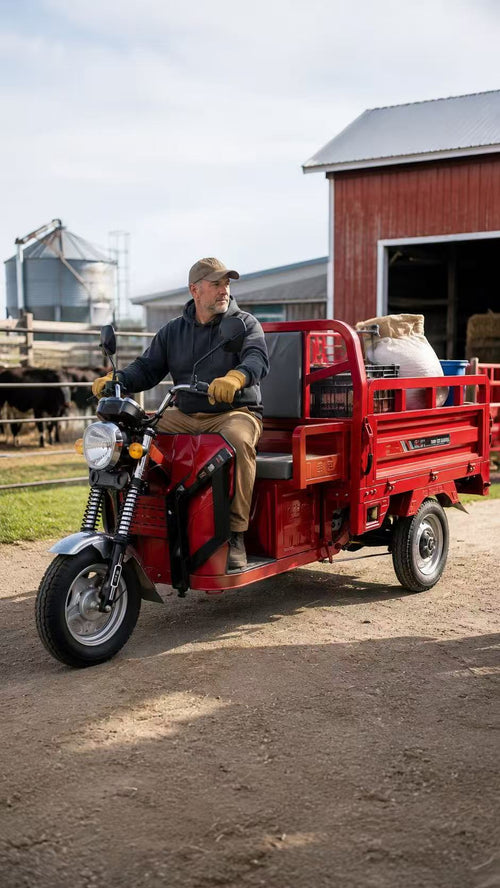
A powered dump hauler, electric dump cart, electric work trike, powered wheelbarrow, motorized wheelbarrow, or battery-powered utility cart may need to work after light rain, morning dew, irrigation, muddy barn traffic, wet gravel, damp concrete, or soft soil.
That is normal for farms, ranches, horse stables, nurseries, greenhouses, landscaping jobs, apartment properties, HOA maintenance areas, and rural properties.
But outdoor use does not mean unlimited wet use.
A buyer should not assume that an electric dump hauler can be driven through deep water, stored in heavy rain, charged in damp conditions, or washed aggressively around electrical areas.
The better way to think about wet conditions is simple:
Can the route, ground, load, operator, and charging habit support safe daily outdoor use?
Rain and wet ground do not automatically stop work.
But they change how the vehicle should be used.
Outdoor use is not the same as waterproof use
Many buyers hear the words “outdoor work” and think the machine can handle any weather.
That is not the right assumption.
A powered dump hauler may be useful outdoors, but electric equipment still needs reasonable care. The operator should avoid deep standing water, flooding, direct water spray into sensitive areas, and careless charging in wet locations.
The buyer should ask the seller about normal outdoor use, storage, charging guidance, and water-resistance expectations.
This is especially important for farms, horse stables, nurseries, greenhouses, landscaping crews, and property maintenance teams that work in changing weather.
A practical work vehicle should be matched to real weather conditions, not abused as if weather does not matter.
Wet ground changes traction
Wet ground can reduce traction.
Gravel may shift. Dirt may soften. Grass may become slick. Concrete may become slippery. Barn entrances may collect mud. Greenhouse doorways may stay damp after irrigation. Curb cuts and concrete pad edges may become harder to cross when the surface is wet.
This matters more when the cargo bed is loaded.
A light empty vehicle may move easily across a damp surface. A loaded hauler carrying wet soil, gravel, compost, manure bedding waste, mulch, feed bags, or tools may respond differently.
The operator may need slower movement, lighter loads, and more careful braking.
Wet ground is not only a tire question.
It is a route and load question.
Rain after dry weather can hide soft spots
After rain, some areas may look firm but behave differently under load.
A gravel lane may have soft edges. A grassy path may have wet low spots. A barn approach may have mud near the doorway. A nursery lane may be wet near irrigation lines. A ranch path may hold water in tire tracks. A landscaping route may be firm near the driveway but soft near the lawn.
Before the first wet-ground load, the operator should look closely at the route.
Where will the tires travel?
Where will the loaded vehicle turn?
Where will it stop?
Where will it reverse?
Where will it unload?
Is the ground firm enough for repeated trips?
A powered dump hauler works best when the route is predictable.
Wet ground makes route planning more important.
Wet loads make the work harder
Rain does not only affect the ground.
It affects the load.
Wet soil is heavier than dry soil. Compost can hold moisture. Manure bedding waste can become heavier after rain. Mulch can become waterlogged. Gravel may carry wet fines. Yard debris may become slippery and dense.
A buyer should not judge a normal load only by volume.
The same cargo bed filled with dry leaves, dry mulch, wet soil, or damp manure bedding waste may create very different working conditions.
In wet weather, the operator should consider reducing load size.
A moderate load that moves smoothly may be more productive than an aggressive load that slips, spills, damages ground, or becomes hard to control.
Wet conditions reward controlled hauling.
Braking distance can change when surfaces are wet
Wet surfaces can affect stopping.
A powered dump hauler carrying material has more weight than an empty vehicle. When the route is wet, the operator should allow more time to slow down and stop.
This matters near barns, stable entrances, greenhouse lanes, trailer ramps, curb cuts, gravel paths, property sidewalks, apartment buildings, HOA lawns, parked vehicles, fences, and animals.
The rule should be simple:
Move slowly enough to stop calmly.
Wet ground is not the place for speed.
A controlled electric dump cart should be used with steady movement, clear visibility, and careful braking, especially when the bed is loaded.
Wet grass and lawns need extra caution
Many landscaping and property maintenance jobs involve grass.
Wet grass can be sensitive.
A loaded vehicle may leave marks, ruts, or compressed areas if the soil below the grass is soft. Even if the tires have good contact, the ground itself may not be strong enough for repeated loaded trips.
This matters for HOA communities, apartment properties, schools, parks, resorts, private estates, and residential landscaping jobs.
The operator should choose firm routes when possible.
If the hauler must cross grass after rain, the crew should consider lighter loads, fewer trips, wider route planning, temporary ground protection, or waiting until the surface is firmer.
The goal is not only to move material.
The goal is to move material without damaging the property.
Barn and stable entrances often stay wet
Horse stables and barns often have wet transition areas.
Water may collect near doors. Mud may build up at the edge of gravel and concrete. Bedding waste, manure, water buckets, wash areas, and animal traffic may create damp ground near the entrance.
A powered dump hauler used for stable cleanup should approach these areas carefully.
The cargo bed may carry manure bedding waste, clean bedding, feed bags, buckets, or tools. The operator may also be working near horses, workers, dogs, or visitors.
Wet ground near animals requires calm movement.
The hauler should move slowly, avoid sudden backing, and keep the bed lowered during normal movement. The operator should not rush over wet thresholds, slick concrete, or muddy barn entrances.
Greenhouses and nurseries have wet work zones
Greenhouses and nurseries often include irrigation, misting, damp floors, gravel lanes, weed fabric, compacted soil, and concrete pads.
A battery-powered utility cart may be useful for moving potting mix, soil bags, trays, plant waste, compost, tools, or supplies. But wet floors and narrow lanes require careful operation.
A greenhouse lane may look clean but still be slick. A nursery path may have wet low spots. A door track or floor lip may become slippery after irrigation. Plants, benches, irrigation lines, and customers may be close to the route.
The operator should keep the load low, move slowly, and avoid sharp turns on wet surfaces.
Wet greenhouse and nursery work is not about power.
It is about control.
Charging should stay dry and organized
Charging habits matter in wet conditions.
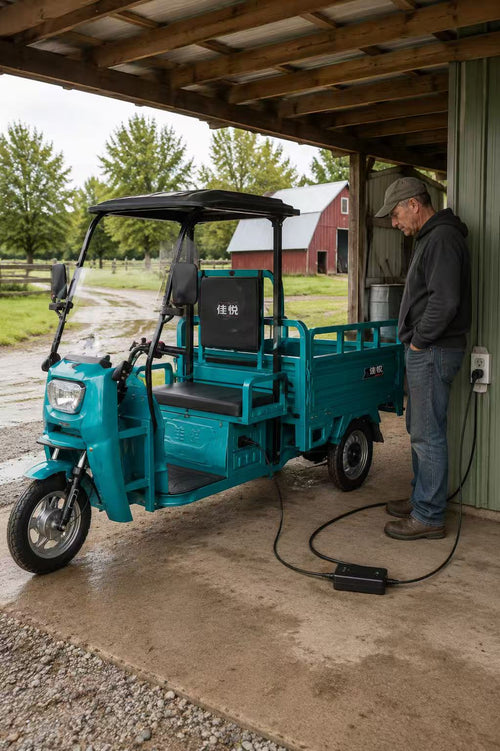
A powered dump hauler should not be charged in standing water, exposed rain, or a damp unsafe area. Charging equipment should be handled according to the seller’s instructions and kept in a dry, organized location.
The charging cord should not lie across wet work routes where workers, animals, carts, forklifts, vehicles, or residents may pass.
The operator should disconnect and store charging equipment before moving the vehicle.
This is not complicated.
It is basic equipment care.
A good charging area helps the vehicle stay ready for outdoor work without creating avoidable risks.
Do not wash electrical areas carelessly
After muddy or wet work, some operators may want to wash the vehicle.
Cleaning is useful, but electric equipment should be treated carefully.
The operator should avoid spraying high-pressure water directly into the dashboard area, controller area, wiring connections, charging port, battery area, switches, or other sensitive parts. The cargo bed, tires, and exterior work surfaces may need cleaning, but electrical areas need more care.
This matters after hauling manure bedding waste, wet soil, compost, mulch, gravel, or muddy debris.
The goal is to clean the vehicle without creating new problems.
Buyers should ask the seller how to clean the vehicle properly after wet or dirty work.
Storage matters after wet use
Where the vehicle rests after wet work also matters.
A powered dump hauler should be stored in a dry, protected, and practical location when possible. A barn, shed, garage, equipment bay, maintenance room, or covered storage area can help protect the vehicle from unnecessary weather exposure.
The cargo bed should be lowered. Wet material should not be left in the bed longer than needed. Mud, manure residue, compost, and wet debris should be cleaned out when appropriate.
If the vehicle is parked outside temporarily, the owner should still think about rain exposure, charging location, ground condition, and next-day readiness.
Wet use is one part of ownership.
Dry storage helps support long-term daily use.
Wet weather can change the best route
A route that works in dry weather may not be the best route after rain.
A farm lane may become soft near the edge. A ranch road may develop muddy tracks. A horse stable entrance may become slick. A greenhouse path may collect water. A landscaping side yard may become too soft for loaded trips. A property maintenance sidewalk route may be safer than a wet lawn route.
The operator should adjust the route, not force the same path every day.
Sometimes a longer route is better because it stays firm.
Sometimes the load should be smaller.
Sometimes the task should wait.
Sometimes a temporary ground mat, plywood protection, gravel fill, or different staging area can make the work smoother.
A powered dump hauler is most useful when the route matches the day’s conditions.
Wet ground can affect dumping areas
The unloading area should also be checked after rain.
A dump zone may become soft, uneven, or slippery. A compost pile area may collect water. A manure pile may have muddy edges. A gravel patch may hold wet fines. A mulch bed may be near soft turf. A soil station may become difficult to access.
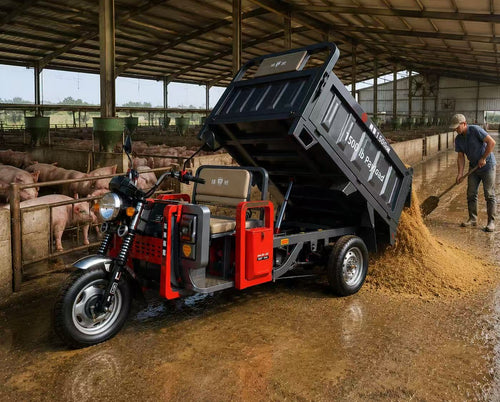
Before raising the dump bed, the operator should make sure the vehicle is stopped on firm ground and the rear discharge area is clear.
Wet dumping areas require extra attention.
The bed should not be raised on unstable ground. People and animals should stay clear of the rear unloading area. After unloading, the bed should be lowered before moving away.
Wet conditions do not remove the value of a dump bed.
They make controlled dumping more important.
Do not assume covered areas are dry
A barn overhang, shed doorway, greenhouse entrance, trailer area, or covered work bay may still have wet ground.
Water can blow in from the side. Mud can be tracked in by tires, boots, animals, or equipment. Condensation and irrigation can leave surfaces damp. Gravel near a roof edge may wash out after rain.
The operator should check the surface, not only the roof.
This is important when moving between indoor and outdoor areas.
A powered dump hauler may start on dry concrete, cross a wet threshold, move over gravel, and stop at a muddy unloading point. Each surface changes how the vehicle feels.
Daily outdoor work often includes mixed surfaces.
Wet transitions deserve attention.
Wet weather affects team rules
If more than one person uses the vehicle, wet-weather rules should be clear.
The crew should know when to reduce load size, avoid lawns, use firm routes, clean the cargo bed, store the charger, report slippery areas, and avoid deep puddles or muddy shortcuts.
This matters for farms, stables, landscaping crews, nurseries, greenhouses, apartment maintenance teams, HOA crews, and contractors.
A vehicle may be capable, but team habits determine how well it performs in changing weather.
Simple wet-weather rules can prevent ruts, spills, charging mistakes, and poor route choices.
The rules do not need to be complicated.
Use firm routes.
Move slowly.
Reduce heavy wet loads.
Keep charging areas dry.
Avoid deep water.
Clean wet material when needed.
Store the vehicle properly.
Ask about water resistance, not waterproof promises
Buyers should ask sellers practical questions.
Do not only ask, “Is it waterproof?”
That question is too broad.
Better questions are:
Can it be used outdoors after light rain?
What wet conditions should be avoided?
Where should it be charged?
How should the battery and electrical areas be protected?
Can the vehicle be stored outside?
How should wet material be cleaned from the cargo bed?
What areas should not be sprayed directly?
What should operators do after wet use?
These questions help buyers understand real use boundaries.
A responsible seller should explain outdoor use in practical terms, not make unlimited waterproof promises.
Rainy climates need better planning
Some regions deal with wet weather often.
Farms in rainy areas, Pacific Northwest properties, southern storm seasons, irrigated nurseries, dairy barns, horse stables, and landscaping crews may all face frequent wet ground.
For these buyers, wet-weather planning should be part of the purchase decision.
They should think about storage, route firmness, charging location, load type, tire condition, dumping areas, operator rules, and cleanup.
A powered dump hauler can still be useful in these environments when used correctly.
But the buyer should not rely on hope.
They should prepare the property, routes, and daily habits for wet conditions.
Heavy wet material should be treated carefully
Wet material can surprise operators.
A bed of wet compost may weigh more than expected. Wet soil may pack tightly. Manure bedding waste may become heavier and less predictable. Gravel mixed with water may settle differently. Wet mulch can cling together and shift.
This affects loading, stopping, turning, reversing, and dumping.
The operator should keep heavy wet material low and balanced. The load should stay below the bed edges. Dense wet material should not be treated like dry leaves or light yard debris.
If the ground is also wet, the operator should be even more conservative.
Wet load plus wet ground is a different situation from dry load plus firm concrete.
Avoid deep puddles and standing water
A damp surface is different from standing water.
A powered dump hauler should not be driven through deep puddles, flooded areas, washed-out paths, or unknown water depth. Standing water can hide holes, soft ground, debris, and uneven surfaces. It may also create unnecessary risk around electric components.
If the route includes standing water, the operator should choose another path or wait until conditions improve.
This is especially important on farms, ranch roads, barn entrances, greenhouse service paths, landscaping sites, and property maintenance routes after heavy rain.
Outdoor work should be practical.
It should not turn into a water-crossing test.
Wet conditions may require smaller first loads
The first load after rain should usually be more cautious.
The operator may not yet know how the route feels, how soft the ground is, how slick the concrete is, or how heavy the material has become.
A smaller first load helps test the day’s conditions.
After the first trip, the operator can decide whether the route supports normal loads or whether the work should continue with lighter loads.
This is especially useful for gravel, wet soil, compost, manure bedding waste, and mulch.
A cautious first load can prevent a full day of problems.
Wet use should still look professional
On customer-facing properties, wet-ground handling affects how the crew looks.
A landscaping crew that leaves deep ruts may look careless. An HOA maintenance team that drives across wet lawns may create complaints. A stable worker rushing through mud near horses may look unsafe. A nursery worker splashing through wet aisles may damage plants or supplies.
A powered dump hauler should help the crew look organized.
That means slow movement, firm route choices, stable loads, clean unloading areas, and careful storage.
Wet weather is when good work habits become more visible.
The vehicle should support professional work, not create avoidable mess.
Buyers should define normal wet conditions before buying
Before choosing a powered dump hauler, electric dump cart, electric work trike, battery-powered utility cart, powered wheelbarrow, or compact farm utility vehicle, buyers should define what “wet use” really means on their property.
Is the ground damp after morning dew?
Does rain create mud at the barn entrance?
Do greenhouse floors stay wet after irrigation?
Do nursery lanes have soft spots?
Does the property require crossing grass after rain?
Where will the vehicle be charged?
Where will it be stored?
Will it carry wet soil, compost, manure bedding waste, mulch, or gravel?
Will operators need wet-weather rules?
Is there a firm route available in rainy conditions?
These questions help buyers avoid unrealistic expectations.
They also help match the vehicle to the real work environment.
Wet-ground planning makes outdoor use more reliable
A powered dump hauler can be a useful outdoor material-handling tool.
But it should be used with respect for weather, ground condition, load weight, charging habits, and storage.
Rain does not make outdoor work impossible.
It simply changes the work plan.
The best buyers do not ask only whether the vehicle can work outside. They ask how it should be used outside.
A good wet-weather plan includes firm routes, moderate loads, dry charging, careful cleaning, lowered-bed movement, slow control, and proper storage.
That is what makes outdoor use practical.
Not dramatic weather claims.
Not deep-water driving.
Not careless charging.
Just a realistic work routine that fits farms, stables, nurseries, greenhouses, landscaping jobs, property maintenance routes, and private work areas.
When buyers understand rain and wet ground before purchase, they are more likely to use the powered dump hauler safely, confidently, and consistently.