When an Electric Dump Cart Is Not the Right Tool for the Job
Share
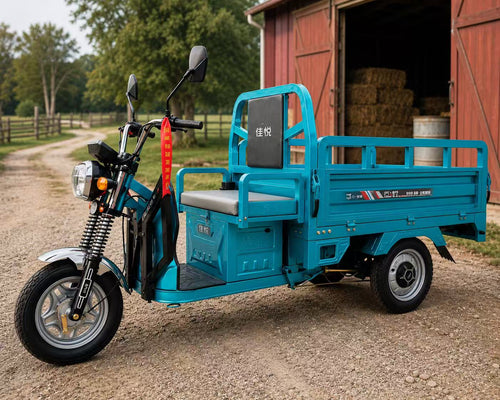
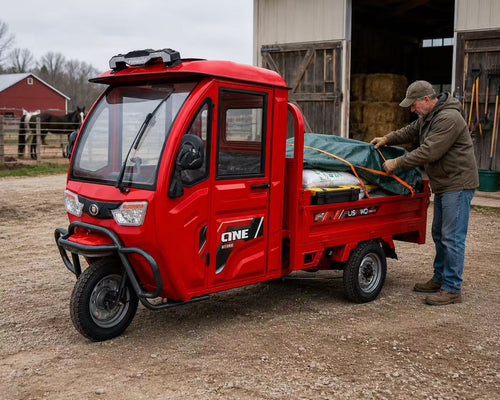
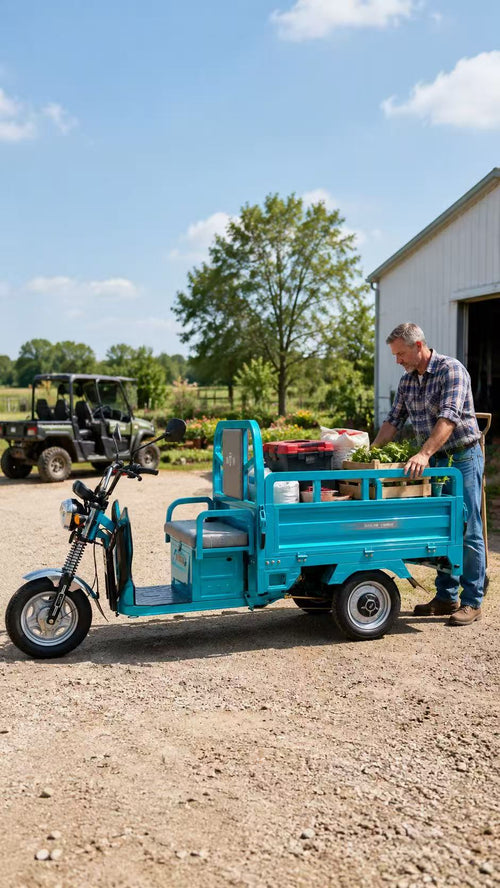
An electric dump cart can be a practical labor-saving tool for farms, ranches, horse stables, landscaping crews, nurseries, construction cleanup jobs, and property maintenance teams.
But it is not the right tool for every job.
That may sound like a strange thing to say in a product article, but it is important. A useful work vehicle should match the task, the route, the material, the ground condition, and the daily workflow. If the job does not fit the vehicle, even a good electric dump cart may not solve the problem.
The best buying decision is not asking, “Can this vehicle do everything?”
A better question is, “Is this the right tool for the work I need to repeat every day?”
An electric dump cart is most valuable when it is used for short-distance, repeated material hauling. It works best when workers need to move loose materials, tools, debris, feed, bedding waste, compost, mulch, soil, gravel, or cleanup material across a farm, barn, property, landscaping site, or small jobsite.
It is less useful when the job requires high-speed road travel, passenger transport, heavy machine work, oversized cargo, extreme terrain, or poorly planned material flow.
Understanding those limits helps buyers choose equipment more confidently.
It is not a highway transport vehicle
An electric dump cart is not designed to replace a pickup truck, delivery van, trailer, or highway vehicle.
Its purpose is short-distance work. It moves material within a farm, ranch, stable, nursery, landscape yard, construction cleanup area, warehouse yard, or private property. It is meant for low-speed hauling inside a work environment, not long-distance road travel.
If the job requires regular travel on public roads, highways, or long routes between distant sites, a different vehicle may be needed.
This does not make the electric dump cart weak. It simply means the vehicle is built for a different kind of work.
A pickup truck may be better for driving across town. A trailer may be better for moving material between distant locations. An electric dump cart is better when the problem is repeated short-distance hauling inside the same property or worksite.
It is not a passenger vehicle
An electric dump cart is a work vehicle, not a people mover.
Some buyers compare small electric work vehicles with golf carts, UTVs, or passenger utility vehicles. That comparison can be useful in some ways, but the purpose is different.
A passenger vehicle is designed mainly to move people. A dump cart is designed mainly to move material.
The cargo bed, dump function, frame layout, and work position should support hauling tasks. It should be used for tools, loose materials, cleanup waste, feed, bedding, gravel, compost, soil, wood chips, mulch, and similar work materials.
If the main need is moving workers, guests, residents, students, or passengers around a property, then a passenger golf cart, shuttle cart, or UTV may be a better fit.
If the main need is moving material again and again, an electric dump cart becomes much more relevant.
It is not the best choice for oversized cargo
Electric dump carts are useful for many daily hauling jobs, but they are not designed for every type of cargo.
They are not the best choice for very long beams, large pallets, oversized machines, tall unstable loads, large fixed containers, or cargo that hangs far outside the bed. A compact dump bed works best when the load fits inside the cargo area with a low and balanced profile.
Loose materials are usually a better match.
Soil, compost, mulch, wood chips, manure, bedding waste, sand, gravel, yard debris, small tools, repair supplies, and bagged materials can often be carried more naturally than long or oversized objects.
The question is not only weight. Shape matters too.
A load may be light but still unsafe if it is too tall, too wide, too long, or difficult to secure. A compact electric dump cart should not be forced to carry cargo that does not fit the bed properly.
It is not an excavator, loader, or skid steer
An electric dump cart can move material, but it does not replace heavy equipment.
It is not an excavator. It is not a loader. It is not a skid steer. It is not a tractor with a front bucket.
If the job requires digging, pushing large piles, breaking hard ground, lifting heavy bucket loads, grading a large area, or loading material mechanically from a big stockpile, heavy equipment may be more appropriate.
An electric dump cart is strongest after the material is ready to be hauled.
For example, it can help move manure from a barn area to a compost pile. It can carry mulch from a staging area to landscape beds. It can move gravel for small driveway repairs. It can haul soil, compost, wood chips, sand, and cleanup debris across short work routes.
But if the job requires heavy digging or machine loading, the dump cart should support the workflow rather than replace the machine.
In many real jobs, both types of equipment can have a place. Heavy equipment may prepare the material. A compact dump cart may handle repeated short trips where a larger machine is too heavy, too expensive, too wide, or unnecessary.
It is not ideal for chaotic ground conditions
Ground condition matters.
An electric dump cart works best on firm, reasonably stable ground such as compacted dirt, gravel, barn lanes, property paths, farm roads, landscape yards, nursery paths, and maintained work areas.
It is not ideal for deep mud, loose wet ground, extremely uneven terrain, steep unstable slopes, ditch edges, soft field ruts, or areas where the surface cannot support the vehicle and load.
Some work vehicles can handle rougher ground than others, but every vehicle has limits. A loaded vehicle is different from an empty vehicle. Wet soil, gravel, manure, compost, and sand can become heavy quickly, and poor ground can make movement harder.
Before choosing an electric dump cart, the buyer should think about the real ground where the vehicle will work.
Is the route firm enough?
Will the vehicle sink after rain?
Are there deep ruts?
Are there tight turns on loose ground?
Is the loading point stable?
Is the dump zone safe and level enough?
If the answer is no, the ground may need improvement before the vehicle can work efficiently.
It is not a solution for poor workflow planning
A work vehicle cannot fix every workflow problem by itself.
If the material pile is in the wrong place, the loading point is blocked, the route is too narrow, the dump zone is poorly planned, or the vehicle has nowhere to wait between trips, the job may still waste labor.
An electric dump cart saves the most time when the work loop is clear.
The material should be staged where the vehicle can approach. The loading point should allow efficient loading. The route should be open and firm. The dump zone should have enough room for safe unloading. The vehicle should have practical temporary parking spots between loads.
If none of these parts are planned, workers may still spend time walking, shoveling, backing up, repositioning, or moving the same material twice.
The vehicle matters, but the workflow matters too.
It is not the right choice for every business
Different businesses need different equipment.
A small horse stable may need a compact dump cart for bedding waste and manure hauling. A landscaping crew may need it for mulch, soil, and yard debris. A nursery may use it for soil bags, pots, plant waste, and compost. A ranch may use it for feed area cleanup, gravel patches, and daily material movement.
But another business may need a forklift, pallet jack, pickup truck, loader, tractor, trailer, or full-size UTV instead.
That is normal.
The purpose of choosing equipment is not to force one vehicle into every job. The purpose is to match the vehicle to the most repeated and costly work.
If the daily problem is short-distance material hauling, an electric dump cart may be a strong fit. If the daily problem is highway transport, passenger movement, heavy excavation, or large pallet logistics, another tool may be better.
It is not always better to buy bigger
Some buyers assume that bigger equipment is always better.
That is not always true.
A larger machine may carry more, but it may also cost more, take more space, damage soft ground, require more storage room, need more fuel or maintenance, and be harder to use in barns, gates, narrow paths, greenhouses, residential properties, and small job areas.
At the same time, a compact electric dump cart should not be pushed into jobs that are too large for it.
The right answer depends on the task.
If the job involves many short trips with moderate loads, a compact dump cart can be more practical than a larger machine. If the job involves large-scale earthmoving, heavy loading, or oversized cargo, bigger equipment may be necessary.
Good equipment planning is not about choosing the biggest machine. It is about choosing the machine that matches the work.
What jobs are usually a good fit?
An electric dump cart is usually a good fit when the work is repeated, short-distance, material-focused, and slow-speed.
Good examples include moving manure and bedding waste in horse stables, hauling compost on small farms, carrying mulch in landscaping work, moving soil in nursery areas, transporting gravel for driveway patching, moving feed bags around a barn, hauling yard debris across a property, supporting greenhouse cleanup, and carrying tools or supplies across a maintenance site.
These jobs usually do not require high speed. They do not require highway travel. They do not require a large loader. They simply require a practical way to move material many times with less manual effort.
That is where an electric dump cart can make sense.
What questions should buyers ask first?
Before buying an electric dump cart, buyers should ask practical questions about their daily work.
What materials will be moved most often?
How far will each trip be?
How many trips happen in a normal day?
Is the route firm enough?
Can the vehicle reach the loading point?
Is the dump zone planned?
Will the cargo fit inside the bed?
Is the job mostly material hauling or passenger movement?
Does the work require digging, pushing, or lifting with a machine?
Is the route inside a property or on public roads?
These questions help avoid buying the wrong tool.
They also help buyers understand where an electric dump cart can create the most value.
The right tool has clear limits
A good electric dump cart is not valuable because it can do every job.
It is valuable because it can do the right short-distance material jobs repeatedly, safely, and efficiently.
For farms, ranches, horse stables, landscaping crews, nurseries, construction cleanup teams, and property maintenance workers, that may be exactly the kind of help needed. The vehicle can reduce repeated wheelbarrow work, shorten material hauling routes, support daily cleanup, and make small crews more efficient.
But the best results come when the job matches the vehicle.
If the work requires highway travel, passenger transport, oversized cargo, heavy excavation, extreme ground conditions, or a completely unplanned workflow, an electric dump cart may not be the right tool.
If the work is repeated material hauling across a manageable distance, it may be one of the most practical tools on the property.
The goal is not to use one vehicle for every job.
The goal is to use the right vehicle for the job that happens again and again.