Reducing Repeated Walking in Wholesale Market Order Picking
Share
Wholesale market work is not only about lifting heavy goods. In many seafood markets, produce terminals, restaurant supply warehouses, meat distribution areas, cash-and-carry stores, and general wholesale buildings, one of the biggest daily problems is repeated walking.
A worker may walk from a storage aisle to a packing table, then to a cold room, then to a vendor stall, then back to an order staging area. A few minutes later, the same worker may walk the same route again for another customer order. During busy hours, these repeated trips can happen dozens of times.
The load may not always be extremely heavy, but the route is repeated again and again.
This is why order picking material handling matters in wholesale markets. The real problem is often not one large pallet. It is the repeated route between aisles, cold rooms, vendor areas, staging zones, loading doors, and customer pickup vehicles.
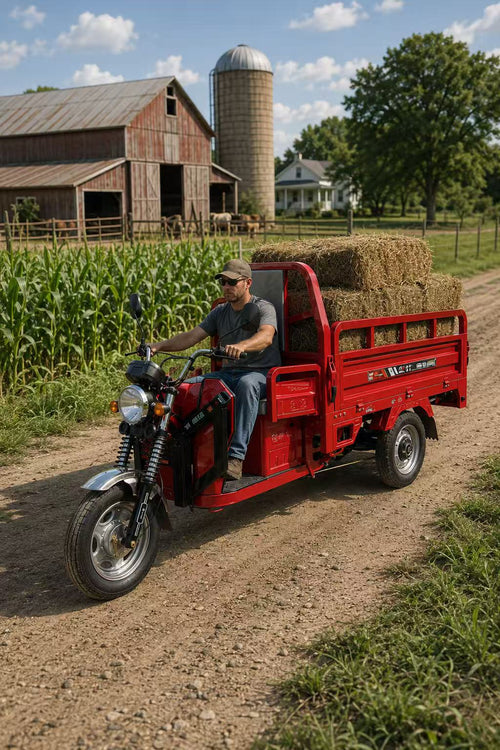
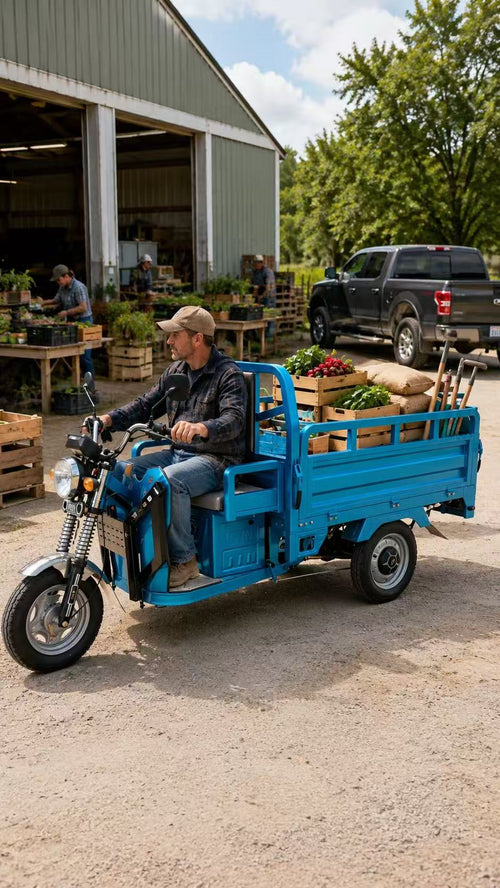
A cargo-bed electric utility vehicle can help reduce this repeated walking by acting as a small mobile picking platform. Instead of pushing a manual cart back and forth for every group of boxes, workers can load mixed goods into the cargo bed and move them through the picking route more efficiently.
Why Repeated Walking Becomes a Cost
In a wholesale market, time is often lost in small movements.
A restaurant supply order may require rice bags from one section, oil cartons from another aisle, takeout packaging from a storage area, and cleaning supplies from a different shelf. A produce order may include fruit boxes, vegetable crates, and smaller cartons from several vendors. A seafood order may include foam boxes from a cold room and support items from a nearby packing area.
Each item may only be a short walk away. But when workers repeat these routes all day, the total labor time becomes significant.
Repeated walking can create several problems. Workers spend more time moving than picking. Hand carts may require too many trips. Mixed orders take longer to complete. Customer pickup can slow down. During peak hours, staging areas and aisles may become crowded with workers, carts, and unfinished orders.
For small and mid-size wholesale businesses, reducing repeated walking can improve the whole order flow.
The Limits of Manual Carts in Picking Routes
Hand carts, platform carts, and dollies are still useful in wholesale markets. They are simple and practical for small loads, short routes, and occasional movement.
But order picking is different from one-time movement.
During order picking, workers may need to visit several areas before one customer order is complete. If every part of the order requires a separate cart trip, the worker may spend too much time walking back and forth. If the order includes mixed cartons, produce crates, foam boxes, rice bags, or packaging supplies, a small manual cart may fill up quickly.
This is where a cargo-bed electric utility vehicle can provide value.
It can carry more than a hand cart while still being smaller and more flexible than a truck or forklift. It gives workers a powered short-distance hauling tool for mixed order picking, non-palletized goods, and repeated internal transport.
Where Electric Utility Vehicles Fit in Order Picking
A cargo-bed electric utility vehicle is most useful when the order is mixed, the route is repeated, and the distance is too long or too frequent for comfortable manual cart movement.
It can move between warehouse aisles, cold room entrances, vendor stalls, staging areas, and customer pickup zones. Workers can load cartons, crates, bags, foam boxes, and supply boxes into the cargo bed as they move through the picking route.
This helps reduce unnecessary empty walking.
For example, a worker can collect restaurant supply cartons from several aisles, place them together in the vehicle, and move the order to the staging area in one trip. A produce worker can collect mixed crates from different vendor spaces and bring them to the pickup zone. A seafood market worker can move sealed foam boxes and closed cartons from a cold room area to customer pickup without making several separate hand-cart trips.
The vehicle does not replace the worker’s judgment. Workers still check items, count boxes, separate orders, and handle products carefully. The vehicle simply helps carry the load through the route more efficiently.
Order Picking Before Order Staging
Order picking comes before order staging.
First, the goods are collected from different areas. Then they are grouped and placed in a staging area. After that, the order moves to the customer pickup zone or loading area.
If the picking step is slow, the staging step becomes messy. If workers take too long to gather the goods, customer pickup can be delayed. If orders are picked in many small hand-cart trips, the market may look busy but still move slowly.
A cargo-bed electric utility vehicle can support the first part of this process.
It can act as a moving collection point between the picking area and the staging zone. This is especially useful for wholesale markets where orders are not always palletized and where products come from several different sections.
A Practical Tool for Mixed Order Picking
Many wholesale orders are mixed by nature.
Restaurant supply orders may include foodservice cartons, paper goods, bags, containers, sauces, and cleaning products. Produce orders may include different box sizes and crate types. Seafood orders may include foam boxes and sealed cartons. Meat wholesale orders may include packaged cartons and frozen food cases. General wholesale orders may include many small boxes from different warehouse sections.
These are not always forklift jobs.
A forklift is useful for pallet movement. A pallet jack is useful for flat-floor pallet transport. A hand cart is useful for small loads. But a cargo-bed electric utility vehicle is useful for repeated mixed order picking across short distances.
It helps workers move more goods per trip, reduce repeated manual cart routes, and keep the order moving toward staging and pickup.
Reducing Movement Without Overcomplicating the Operation
Not every wholesale business needs a large warehouse automation system. Many small and mid-size wholesalers simply need a better way to move goods through daily picking routes.
A cargo-bed electric utility vehicle is a practical middle solution.
It does not require the business to change every process. It can work alongside hand carts, pallet jacks, forklifts, cold rooms, loading doors, and staging areas. Workers can use it when the order is too large for one manual cart, too mixed for pallet-only movement, or too repetitive for hand carrying.
The goal is simple: reduce repeated walking and repeated manual cart trips.
For wholesale markets, restaurant supply warehouses, produce terminals, seafood markets, meat distributors, and cash-and-carry stores, this can improve order picking without making the workflow more complicated.
When a worker spends less time walking the same route again and again, more time can go into checking orders, serving customers, and keeping goods moving toward pickup.
A cargo-bed electric utility vehicle becomes useful because it supports the real rhythm of wholesale work: short routes, mixed goods, repeated trips, and constant movement between picking, staging, and loading.