Empty Crates and Packaging Return Flow in Wholesale Markets
Share
Wholesale markets do not only move full boxes toward customers. Every day, they also deal with the reverse side of material flow: empty crates, reusable totes, foam boxes, folded cardboard, damaged cartons, packaging supplies, returned containers, and empty bins that need to move back through the market.
This reverse flow is easy to ignore, but it affects the whole operation.
In produce markets, empty plastic crates may come back from vendor stalls, customer pickup areas, and sorting tables. In seafood markets, clean empty foam boxes and packaging materials may need to be moved away from loading zones. In restaurant supply warehouses, folded cartons, packaging waste, reusable containers, and empty totes can build up near aisles and pickup lanes. In general wholesale markets, empty boxes and returned containers may collect around loading doors after customers leave.
If these materials are not moved quickly, they begin to take up valuable working space.
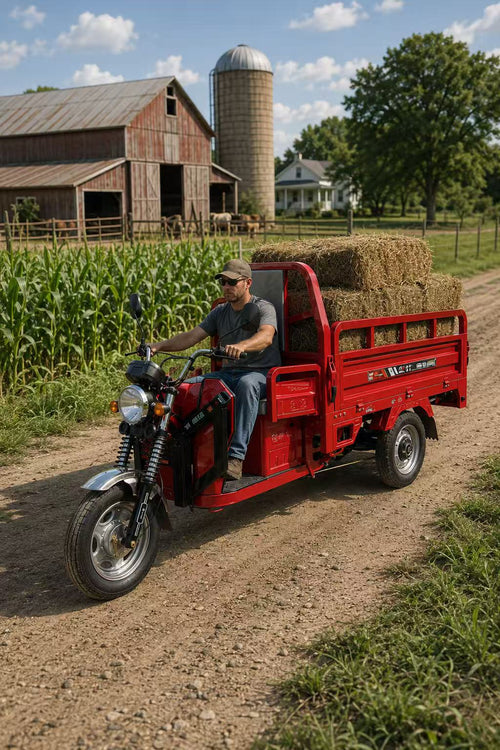
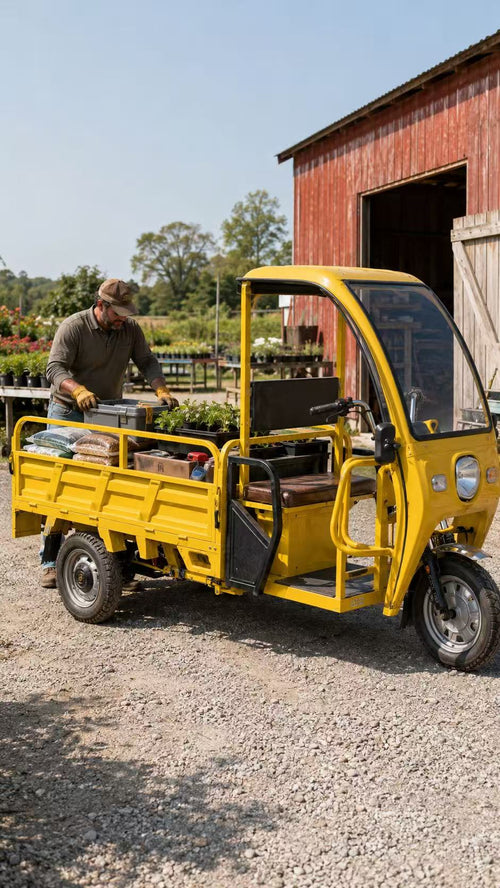
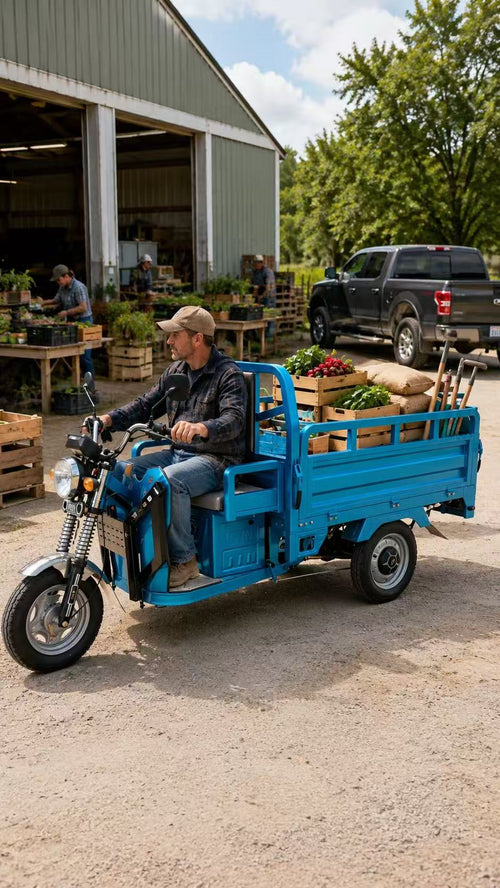
A cargo-bed electric utility vehicle can help by giving workers a practical way to collect empty crates and packaging materials from different points and move them to a return, sorting, recycling, cleaning, or storage area.
This is not about hauling trash in a messy way. It is about keeping reverse material flow organized so the wholesale market stays clear, efficient, and ready for the next round of orders.
Why Empty Crates and Packaging Matter
A busy wholesale market creates a constant cycle.
Full goods move from receiving areas, cold rooms, shelves, vendor spaces, and staging zones toward customer pickup vehicles. After that movement, empty containers and packaging materials often move in the opposite direction.
This may include:
empty plastic produce crates
clean foam boxes
reusable totes
folded cardboard boxes
empty packaging cartons
returnable containers
broken-down case packaging
empty bins and trays
lightweight pallet covers
customer-returned crates
These items may not be heavy compared with full product loads, but they take up space. They can block lanes, crowd staging areas, slow workers, and make pickup zones look disorganized.
In wholesale markets, space is part of productivity. A blocked aisle, crowded loading door, or pile of empty crates near a pickup lane can slow down the next order before it even starts.
The Reverse Flow Problem
Most businesses think about how goods move out. Fewer think about how empty containers move back.
But reverse material flow is part of daily wholesale work.
A produce order leaves the stall, and empty crates remain. A restaurant supply order is packed, and folded cartons collect near the staging area. A seafood customer picks up product, and clean foam boxes or packaging supplies need to be moved away. A general wholesale customer unloads reusable containers, and they need to return to storage.
If workers handle these materials only when the area becomes crowded, the market becomes reactive instead of organized.
The problem is not only cleanliness. It is workflow.
When empty crates stay near the loading lane, workers lose space. When folded cardboard piles up near doors, hand carts and pallet jacks have less room. When returned totes sit in pickup zones, the next customer order may be harder to stage. When packaging materials are scattered, workers may spend extra time clearing the path before moving new goods.
A better system moves empty containers and packaging materials as part of the daily route.
How a Cargo-Bed Electric Utility Vehicle Helps
A cargo-bed electric utility vehicle is useful because empty crates and packaging materials are bulky, repetitive, and spread across different areas.
The cargo bed can hold stacked plastic crates, folded cardboard, clean foam boxes, reusable totes, empty cartons, and packaging supplies. Workers can collect these items from several points and move them together instead of carrying them by hand or making many small cart trips.
This helps in several practical ways.
It reduces repeated manual carrying. It clears loading lanes faster. It keeps staging areas open. It helps move returnable containers back to the right location. It gives workers a mobile collection tool for materials that are light but bulky.
For a busy wholesale market, this can make a real difference.
The vehicle can move empty crates from customer pickup back to the vendor area. It can move folded cardboard from aisles to a recycling point. It can collect clean foam boxes from a seafood handling area and take them to storage. It can bring reusable totes from the loading zone back to the sorting area.
The goal is to keep the market ready for the next order.
Produce, Seafood, Restaurant Supply, and General Wholesale Use Cases
Produce wholesale markets often use crates, boxes, bins, and cartons throughout the day. After orders are picked, packed, and loaded, empty containers may remain near stalls, sorting tables, and pickup areas. A small electric utility vehicle can collect these containers and move them back to storage, cleaning, or reuse points.
Seafood markets may use foam boxes, plastic crates, ice-related packaging, and sealed container supplies. Clean empty boxes and packaging materials should not crowd the cold room entrance or customer pickup lane. A cargo-bed electric utility vehicle can help move them away from active loading areas.
Restaurant supply warehouses handle paper goods, takeout packaging, dry goods cartons, and large amounts of cardboard. During peak pickup hours, packaging materials can build up quickly. A cargo-bed vehicle can move folded cartons and empty boxes to the correct back-of-house area without blocking the main workflow.
General merchandise wholesale markets also deal with empty cartons, reusable totes, and returned containers. These materials may be lighter than full product loads, but they still need regular movement.
In all of these environments, reverse flow is part of material handling.
Keeping Aisles and Pickup Areas Clear
A wholesale market loses efficiency when empty materials sit in the wrong place.
Aisles should stay open. Loading lanes should not become storage areas. Customer pickup zones should be used for active orders, not piles of empty crates. Cold room entrances should remain clear for temperature-sensitive goods. Staging areas should have enough room for the next customer order.
A cargo-bed electric utility vehicle helps workers move empty containers away before they become obstacles.
This is especially useful during busy periods. Instead of waiting until the end of the day to clear the area, workers can run short collection trips throughout the shift. The vehicle can move through the market, collect empty crates and packaging materials, and return them to the correct zone.
This supports better material flow in both directions:
full goods move toward customers
empty containers and packaging return to storage, cleaning, recycling, or reuse areas
A Practical System for Reverse Material Flow
The best wholesale operations do not treat empty crates and packaging as an afterthought.
They create a route for them.
Where do empty crates go after customer pickup?
Where should folded cardboard be collected?
Where should clean foam boxes be stored?
Where do reusable totes return?
How often should workers clear pickup zones?
Which vehicle or cart should handle bulky empty containers?
A cargo-bed electric utility vehicle can become part of that system.
It does not replace hand carts, forklifts, pallet jacks, or recycling bins. It fills a practical role in short-distance collection and return movement. It is especially useful when the materials are too bulky for hand carrying, too spread out for one fixed collection point, and too light or irregular for forklift handling.
For seafood markets, produce wholesalers, restaurant supply warehouses, meat distributors, cash-and-carry stores, and general wholesale operations, reverse flow matters because space matters.
When empty crates, boxes, and packaging materials move back through the market in an organized way, the next order can move forward more easily.
A cargo-bed electric utility vehicle helps make that return flow more manageable, keeping loading areas clearer, staging zones more open, and daily wholesale work better organized.