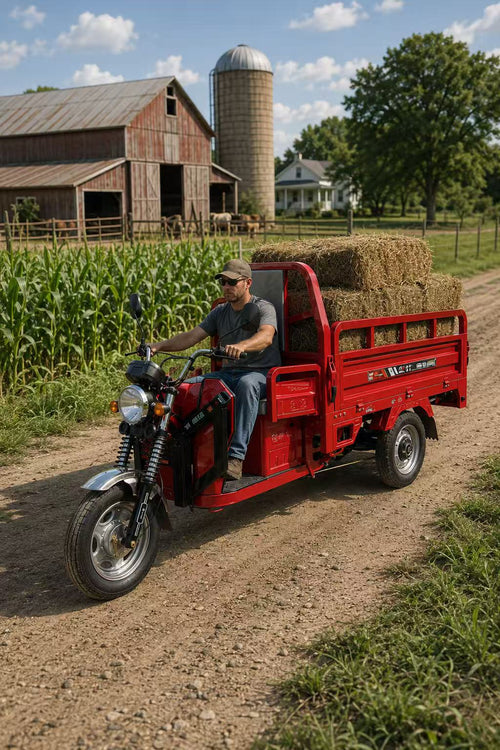
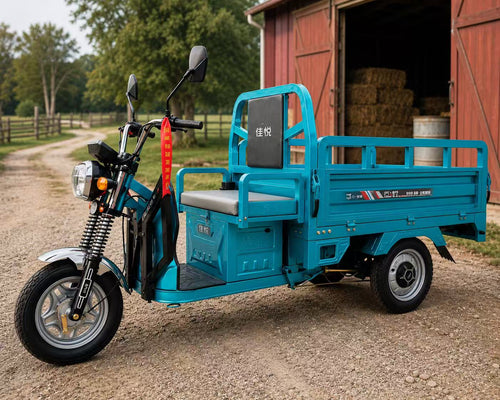
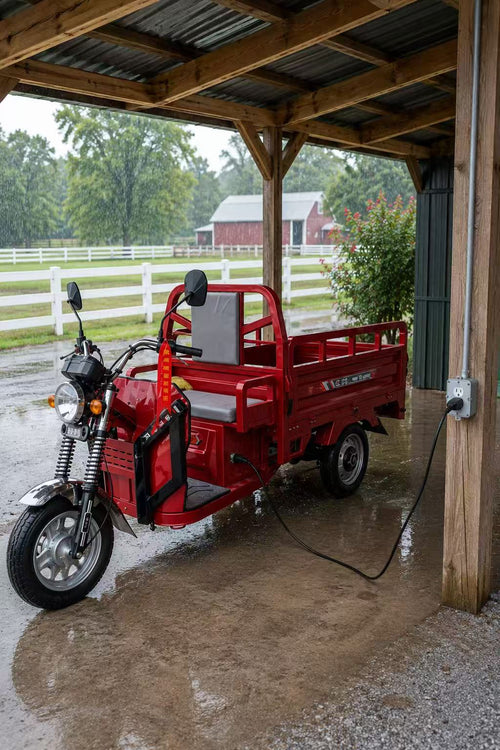
Electric Logistics Vehicle System for Local Delivery and Material Flow
Share
Modern logistics is no longer defined only by long-distance transportation. Every day, millions of products move through warehouses, factories, distribution centers, parcel depots, wholesale markets, business campuses, industrial parks, and local delivery networks before reaching their final destination. These repeated short-distance movements form the foundation of efficient logistics operations.
An electric logistics utility vehicle is not intended to replace trucks, forklifts, cargo vans, or pallet handling equipment. Instead, it fills the operational gap between manual transportation and larger material handling machines by improving the continuous movement of goods inside local logistics environments.
For businesses focused on speed, labor efficiency, and operational reliability, improving internal goods flow often delivers greater long-term value than simply increasing transportation capacity.
⸻
Introduction
Every product follows a journey.
Raw materials arrive at a factory.
Finished products move into storage.
Orders are picked, packed, staged, loaded, transported, delivered, and sometimes returned.
Although customers often see only the final delivery, logistics professionals understand that dozens of smaller movements happen before that package reaches its destination.
Some movements take place inside manufacturing facilities.
Others occur within warehouses, fulfillment centers, distribution hubs, wholesale markets, courier depots, industrial parks, hospitals, campuses, or commercial properties.
Most of these movements happen over surprisingly short distances.
However, they happen repeatedly throughout every working day.
Modern logistics depends not only on moving goods over long distances but also on keeping materials flowing efficiently through every stage of the operation.
⸻
Why Modern Logistics Is Becoming More Complex
Consumer expectations continue to increase.
Businesses promise faster delivery.
Warehouses process more orders.
Factories produce smaller batches with higher frequency.
Distribution centers handle larger product varieties.
Courier companies sort increasing parcel volumes.
Wholesale markets require faster inventory turnover.
Instead of moving one large shipment occasionally, modern logistics now manages thousands of smaller movements every day.
Goods no longer travel through one simple warehouse.
They pass through multiple operational stages before reaching customers.
Receiving.
Inspection.
Storage.
Picking.
Packing.
Sorting.
Loading.
Dispatch.
Returns.
Restocking.
Every transfer creates another logistics task.
Every logistics task creates another movement.
Improving these repeated movements has become one of the most effective ways to increase operational efficiency without expanding workforce size.
⸻
The Hidden Cost Behind Goods Movement
Most logistics managers carefully measure transportation costs, inventory accuracy, warehouse utilization, and delivery performance.
Yet one of the least visible expenses remains repeated internal movement.
Workers walk between storage locations.
Packages move several times before shipment.
Maintenance staff transport replacement equipment throughout the facility.
Small orders require multiple trips between workstations.
Delivery teams prepare routes by moving parcels between sorting areas and loading bays.
Individually, these activities appear insignificant.
Together, they consume thousands of labor hours every year.
The challenge is rarely distance.
The challenge is repetition.
Efficient logistics depends on reducing unnecessary movement while maintaining continuous goods flow.
That is where compact logistics vehicles become valuable—not by replacing existing equipment, but by improving the connection between each operational step.
⸻
A Typical Logistics Workday
Early each morning, delivery vehicles arrive with inbound freight.
Warehouse teams unload products and move them to inspection areas.
Inventory is transferred into storage.
Orders begin arriving through digital warehouse management systems.
Workers retrieve products from shelves and transport them to packing stations.
Completed orders move to staging lanes where outbound routes are organized.
Courier teams prepare neighborhood delivery routes.
Replacement inventory is returned to storage.
Customer returns are inspected before being processed again.
Throughout the day, maintenance departments move tools, spare parts, batteries, scanners, labels, packaging supplies, and operational equipment between different areas of the facility.
Although no single movement appears difficult, hundreds of these short transportation tasks determine whether the logistics operation runs efficiently or experiences unnecessary delays.
A practical logistics vehicle supports these continuous daily movements while reducing labor-intensive transport between operational zones.
Why Modern Logistics Requires More Than One Type of Vehicle
Every logistics operation depends on using the right equipment for the right task.
A semi-truck is designed to move freight between cities.
A box truck delivers products to businesses and customers.
A forklift lifts pallets and heavy cargo.
A pallet jack moves palletized loads across warehouse floors.
A cargo van serves local delivery routes.
Hand carts help workers move small packages through narrow spaces.
Each vehicle performs a specific role.
However, modern logistics includes many transportation tasks that fall between these traditional solutions.
Workers frequently move cartons that are too heavy for manual carrying but too small for a forklift.
Maintenance teams transport tools and spare parts between buildings.
Warehouse employees relocate packaging materials, scanners, labels, batteries, and operational supplies throughout the day.
Distribution centers repeatedly transfer mixed goods between receiving areas, staging lanes, and dispatch zones.
These routine movements happen hundreds of times every week.
A compact electric logistics utility vehicle fills this operational gap by supporting continuous short-distance transportation without replacing existing logistics equipment.
⸻
Goods Flow Is the Heart of Every Logistics Operation
Successful logistics is not measured by the number of trucks a company owns.
It is measured by how efficiently goods move from one process to the next.
Every unnecessary stop slows productivity.
Every repeated trip increases labor costs.
Every delay between receiving, storage, picking, packing, staging, and dispatch reduces operational efficiency.
Modern logistics managers focus on maintaining continuous goods flow.
Products should keep moving.
Materials should always be available where they are needed.
Workers should spend more time completing productive tasks and less time walking between departments.
An efficient logistics system reduces friction throughout the entire workflow.
Rather than treating transportation as a separate activity, leading logistics operations integrate movement into every stage of the process.
⸻
Industry Applications
Warehouses
Warehouses handle far more than pallet storage.
Daily operations include moving inventory, packaging materials, maintenance equipment, replacement parts, labels, scanners, tools, and mixed cartons between receiving, storage, picking, packing, and shipping areas.
A compact logistics vehicle supports these repeated transportation tasks while improving internal workflow.
⸻
Distribution Centers
Distribution centers operate as regional transfer hubs connecting manufacturers, retailers, wholesalers, and delivery networks.
Products continuously move between unloading docks, inspection areas, temporary storage, sorting stations, route staging lanes, and outbound loading zones.
Reducing unnecessary movement helps improve throughput without increasing labor.
⸻
Manufacturing Facilities
Factories rely on uninterrupted internal logistics.
Raw materials move toward production.
Components move between assembly stations.
Finished products travel to inspection, packaging, and storage.
Maintenance departments transport tools, spare parts, lubricants, batteries, and repair equipment across production facilities every day.
Efficient internal transportation supports stable production.
⸻
Parcel and Courier Depots
Parcel operations process thousands of packages every day.
Workers transfer parcels between unloading areas, sorting belts, route preparation zones, loading bays, and delivery vehicles.
Utility vehicles can support parcel movement, delivery supplies, operational equipment, and maintenance tasks inside busy logistics depots.
⸻
Local Delivery Operations
Not every delivery involves crossing an entire city.
Many businesses perform repeated deliveries within industrial parks, commercial campuses, universities, hospitals, resorts, apartment communities, and business districts.
These short-distance operations require flexibility rather than large transportation capacity.
Compact electric logistics vehicles provide practical support for internal delivery and route preparation.
⸻
Wholesale Markets
Wholesale markets operate under constant time pressure.
Fresh produce, seafood, flowers, dairy products, packaged foods, and other goods move continuously between unloading zones, storage areas, vendor stalls, and customer collection points.
Fast internal transportation reduces delays while improving market efficiency.
⸻
Cold Storage Facilities
Cold storage operations demand rapid movement.
The less time products remain outside temperature-controlled environments, the better product quality can be maintained.
Utility vehicles help move packaged goods, supplies, and operational equipment quickly between refrigerated work areas.
⸻
Industrial Parks and Business Campuses
Large industrial parks often contain factories, warehouses, offices, maintenance workshops, distribution facilities, and service departments within one location.
Daily logistics involves moving inventory, maintenance equipment, operational supplies, spare parts, inspection tools, and facility support materials between buildings.
Improving these repeated transportation tasks strengthens overall operational performance.
⸻
The Missing Link in Modern Logistics
Most logistics systems already have large trucks.
They already have forklifts.
They already use pallet jacks.
They already rely on warehouse software.
What many operations still lack is an efficient solution for the countless short-distance transportation tasks that happen between these larger systems.
This missing layer rarely attracts attention because each movement appears small.
However, when repeated hundreds of times every week, these tasks become one of the largest hidden opportunities for improving logistics efficiency.
An electric logistics utility vehicle is not designed to replace existing logistics infrastructure.
It is designed to strengthen the connection between every stage of the logistics workflow.
That is why it fits naturally into warehouses, factories, distribution centers, parcel depots, wholesale markets, industrial parks, and local delivery operations.
Return on Investment (ROI)
Many logistics investments focus on automation, warehouse software, barcode systems, or additional storage capacity.
These technologies improve visibility and planning.
However, efficient logistics still depends on people physically moving goods between operational stages.
Every unnecessary trip increases labor costs.
Every repeated walk reduces productive working time.
Every delay between receiving, storage, picking, packing, staging, and dispatch slows the entire operation.
A practical logistics vehicle helps reduce these hidden inefficiencies.
Instead of making multiple trips with small loads, workers can transport more materials in one journey.
Instead of moving equipment manually between departments, maintenance teams can carry everything needed for the job at once.
Instead of using oversized vehicles for short internal transport, operations can reserve larger equipment for tasks where it delivers the greatest value.
The return on investment is not created by one large improvement.
It comes from eliminating hundreds of small inefficiencies that occur every day.
Over weeks, months, and years, those small improvements become measurable gains in productivity, labor efficiency, and operational consistency.
⸻
The Future of Local Logistics
The logistics industry continues to evolve.
Warehouses are becoming smarter.
Distribution centers process more inventory than ever before.
Factories rely on real-time production systems.
Courier companies face increasing expectations for faster delivery.
Local distribution networks continue expanding as businesses move inventory closer to customers.
Technology will continue improving warehouse management systems, inventory tracking, route optimization, robotics, and automation.
Yet one requirement will remain unchanged.
Goods must still move.
Materials must still reach workers.
Packages must still be transferred.
Supplies must still arrive where they are needed.
The future of logistics is not simply about replacing people with machines.
It is about building smoother workflows where every stage supports the next without unnecessary interruption.
Compact electric logistics vehicles will continue supporting this transition by improving the physical movement that connects every logistics process.
⸻
Continue Exploring Logistics Solutions
Different logistics environments require different transportation solutions.
Explore additional guides developed for specific logistics applications:
* Warehouse Material Handling
* Distribution Center Operations
* Factory Internal Logistics
* Parcel Depot Workflow
* Local Delivery Operations
* Wholesale Market Transport
* Cold Storage Logistics
* Industrial Park Material Flow
* Campus Delivery Systems
* Hospital Internal Logistics
Each guide focuses on one operational environment while connecting back to this Logistics Vehicle System Hub.
⸻
Frequently Asked Questions
Is an electric logistics vehicle a replacement for forklifts?
No.
Forklifts remain the best solution for lifting pallets, loading trucks, and handling heavy materials.
Electric logistics vehicles are designed to transport mixed cargo, operational supplies, maintenance equipment, parcels, cartons, and small freight between different work areas.
The two systems complement each other.
⸻
Can it replace delivery vans?
Not on public roads or regional delivery routes.
Delivery vans remain essential for customer deliveries over longer distances.
Electric logistics vehicles are designed to support short-distance transportation inside facilities, business parks, campuses, industrial estates, wholesale markets, and local logistics environments.
⸻
Which industries benefit the most?
Warehouses.
Factories.
Distribution centers.
Parcel and courier depots.
Wholesale markets.
Industrial parks.
Cold storage facilities.
Business campuses.
Healthcare logistics.
Any organization that performs repeated short-distance movement of goods can improve efficiency through better internal transportation.
⸻
Is this only for logistics companies?
No.
Many organizations operate their own logistics systems even if logistics is not their primary business.
Manufacturers, hospitals, universities, hotels, commercial facilities, municipalities, and maintenance departments all depend on efficient movement of materials, tools, inventory, and operational supplies.
⸻
Business Guidance
Before selecting any logistics vehicle, evaluate how goods actually move through your operation.
Ask practical questions:
* Where do unnecessary transport delays occur?
* Which movements happen most frequently?
* Which loads are too small for forklifts but too heavy for manual handling?
* How much time is spent walking between departments?
* Which transportation tasks are repeated every day?
* Where can one vehicle reduce multiple unnecessary trips?
The most effective logistics equipment is not always the largest or the fastest.
It is the equipment that supports daily workflow while reducing repeated movement and improving operational consistency.
⸻
Conclusion
Successful logistics is built on continuous movement.
Every warehouse, factory, distribution center, parcel depot, wholesale market, and local delivery operation depends on moving goods efficiently from one stage to the next.
Large trucks, forklifts, pallet jacks, and warehouse systems each perform an important role.
However, modern logistics also depends on the many smaller transportation tasks that connect these systems together.
An electric logistics utility vehicle helps bridge that gap.
It supports repeated short-distance transportation, improves material flow, reduces unnecessary labor, and strengthens operational efficiency without replacing existing logistics equipment.
As logistics continues to evolve, businesses that improve both digital coordination and physical movement will be better prepared to meet future operational demands.