Electric Utility Vehicle for Restaurant Supply Wholesale Warehouses
Share
Restaurant supply wholesale warehouses handle a different kind of material movement than standard pallet storage. Many foodservice distributors, cash-and-carry wholesale stores, and restaurant supply buildings move mixed orders every day instead of only full pallets.
A restaurant owner may buy rice bags, flour bags, cooking oil cartons, sauce cases, takeout containers, paper goods, cleaning supplies, frozen food cartons, beverage boxes, and packaging materials in the same pickup trip. A small grocery store may need dry goods, produce boxes, disposable containers, and sealed food products together. A café or food truck operator may collect several smaller cartons instead of one large pallet.
This creates a daily handling problem.
The goods are often mixed, heavy, irregular, and non-palletized. Workers may need to move them from storage aisles to packing areas, from warehouse sections to checkout zones, or from pickup staging areas to customer vehicles. Forklifts and pallet jacks are important for pallet loads, but they are not always the most practical tools for every mixed restaurant supply order.
This is where a cargo-bed electric utility vehicle can support restaurant supply warehouse work.
It is not designed to replace forklifts. It is designed to fill the gap between hand carts, pallet jacks, forklifts, and customer pickup vehicles. For short-distance hauling inside a wholesale warehouse, a compact electric utility vehicle can help move mixed goods more efficiently.
Why Restaurant Supply Warehouses Need Flexible Transport
Restaurant supply warehouses are often busy, practical, and customer-driven. The goal is not only to store products. The goal is to prepare orders, serve business customers, move products quickly, and keep loading areas working during peak hours.
Many customer orders are not uniform.
One order may include rice bags, oil containers, sauce cartons, cleaning chemicals, disposable cups, plastic food containers, napkins, gloves, and packaging materials. Another order may include frozen items, dairy products, dry goods, and paper supplies. These goods do not always fit neatly into a single pallet workflow.
Workers often deal with:
mixed cartons and loose boxes
rice bags and flour bags
cooking oil and sauce cases
takeout packaging and paper goods
cleaning supplies and warehouse consumables
small customer pickup orders
short-distance movement between aisles and loading zones
restocking between storage areas and sales areas
Because the products vary in size, weight, and shape, the handling method must be flexible.
The Limits of Forklifts and Hand Carts
Forklifts are useful for full pallets and heavy warehouse movement. Pallet jacks are useful for floor-level pallet transport. Hand carts are useful for small loads and quick movement.
But restaurant supply warehouses often work in the middle.
A mixed order may be too small for forklift handling, too heavy for repeated hand carrying, and too irregular for a simple pallet jack. A worker may need to move several different items at once across a short route. During busy pickup hours, repeated walking with hand carts can slow down customer service and increase labor fatigue.
A cargo-bed electric utility vehicle helps solve this middle problem.
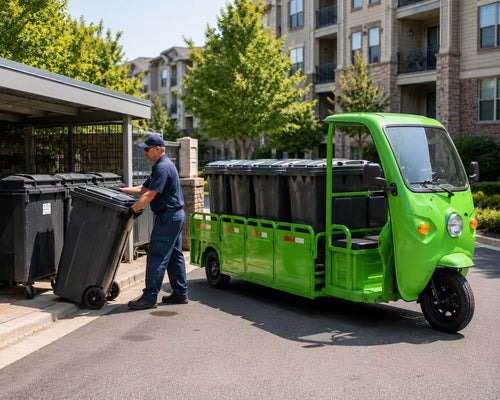
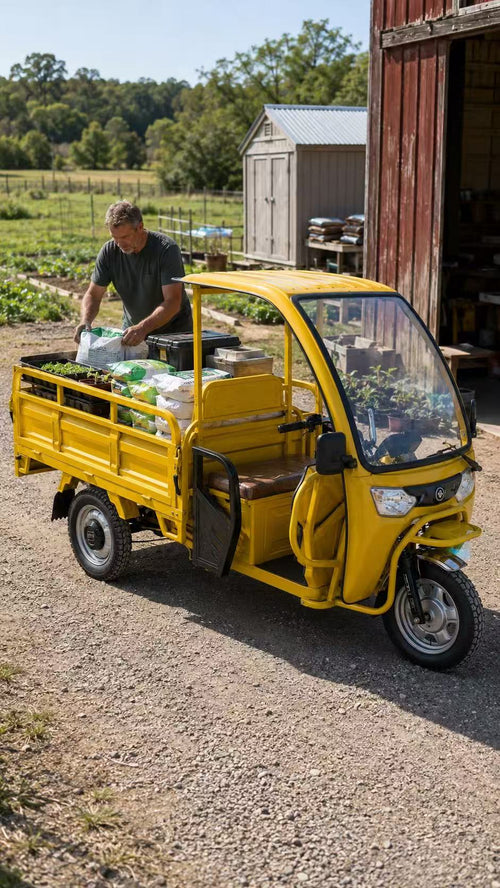
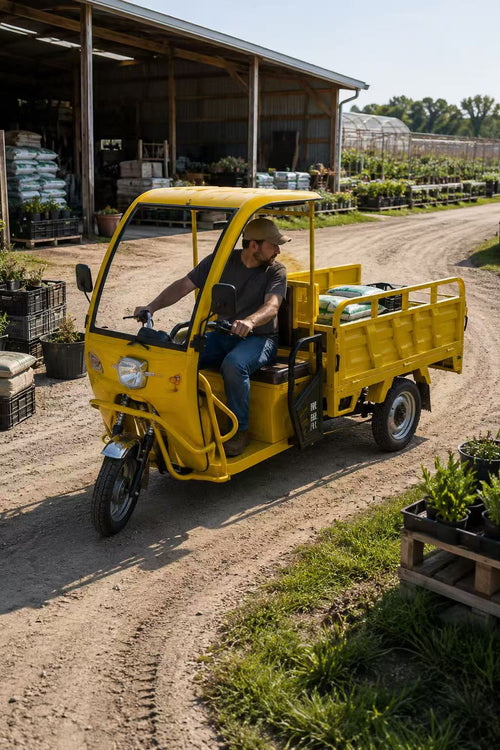
It gives workers a small powered transport tool that can carry mixed goods in one trip. The open cargo bed makes it easy to load cartons, bags, crates, and supplies. The compact vehicle size helps it move through warehouse lanes, pickup zones, dock areas, and outside loading spaces.
How a Cargo-Bed Electric Utility Vehicle Helps
A cargo-bed electric utility vehicle can support restaurant supply warehouse material handling in several practical ways.
It can move mixed orders from storage aisles to customer pickup areas. It can carry packaging supplies from receiving areas to sales zones. It can help workers restock fast-moving products during the day. It can move sealed cartons, bags, and dry goods between warehouse sections without requiring a forklift for every short trip.
For a foodservice distributor or cash-and-carry wholesale store, this kind of vehicle is useful because the work is frequent and repetitive.
The value is not only load capacity. The value is reducing repeated manual movement.
Instead of making several hand-cart trips, a worker can load multiple cartons and bags onto the cargo bed and move them together. Instead of using a forklift for a small mixed order, the worker can use a smaller electric utility vehicle that better fits the task.
Customer Pickup Area Support
Customer pickup is one of the most important areas in restaurant supply wholesale.
Many customers arrive with pickup trucks, vans, small box trucks, or utility vehicles. They may need help moving goods from the warehouse to the vehicle. During busy periods, the pickup area can become crowded with orders, carts, boxes, and workers.
A compact electric utility vehicle can help move completed orders to the pickup zone more smoothly.
It can carry mixed restaurant supply orders from inside the warehouse to the customer vehicle. It can help reduce repeated walking between checkout, storage, and loading areas. It can also support small business customers who buy more than a hand cart can carry but less than a full pallet load.
This makes the vehicle useful for:
restaurant supply pickup areas
cash-and-carry wholesale stores
foodservice warehouse loading zones
small business order staging
mixed carton transport
short-distance customer service support
A Better Fit for Mixed Order Movement
The most important point is simple: not every wholesale order is a pallet order.
Restaurant supply warehouses often deal with mixed orders that require human checking, sorting, and loading. Workers may need to confirm product types, count cartons, separate dry goods from cold goods, and move different products to different pickup areas.
A cargo-bed electric utility vehicle supports this kind of real work.
It keeps the worker involved, but reduces the physical burden of repeated transport. It gives the business a powered short-distance hauling tool that fits between manual carts and larger warehouse equipment.
Where This Vehicle Fits Best
A cargo-bed electric utility vehicle can fit many restaurant supply and foodservice distribution tasks, including:
moving dry goods from aisles to checkout areas
carrying rice bags, flour bags, and oil cartons
moving takeout packaging and paper goods
supporting cleaning supply movement
helping with mixed customer pickup orders
restocking warehouse sales areas
moving boxes between receiving and storage
short-distance hauling near loading doors
It is most useful when the route is short, the load is mixed, and the task happens many times per day.
A Practical Tool for Foodservice Wholesale Work
Restaurant supply wholesale warehouses need practical equipment, not oversized solutions for every task.
Forklifts still matter for pallets. Pallet jacks still matter for pallet movement. Refrigerated vehicles still matter for cold-chain delivery. But many restaurant supply orders are mixed, local, short-distance, and handled many times before they reach the customer vehicle.
That is where a cargo-bed electric utility vehicle can provide real daily value.
For foodservice distributors, cash-and-carry wholesale stores, restaurant supply warehouses, and mixed-goods wholesale operations, a compact electric utility vehicle can help workers move cartons, bags, supplies, and customer orders with less repeated manual effort.
When the work is too frequent for hand carts, too mixed for forklift-only handling, and too short for a truck-based workflow, a cargo-bed electric utility vehicle becomes a practical part of restaurant supply warehouse material handling.