Electric Property & Facility Maintenance Vehicle System for Apartments, Campuses, Hotels and Commercial Properties
Share
Modern apartment communities, commercial buildings, hotels, schools, hospitals, office parks, and public facilities all depend on efficient daily maintenance to keep operations running smoothly. Every day, maintenance teams transport tools, replacement parts, landscaping materials, cleaning equipment, irrigation supplies, waste containers, and maintenance inventory across large properties.
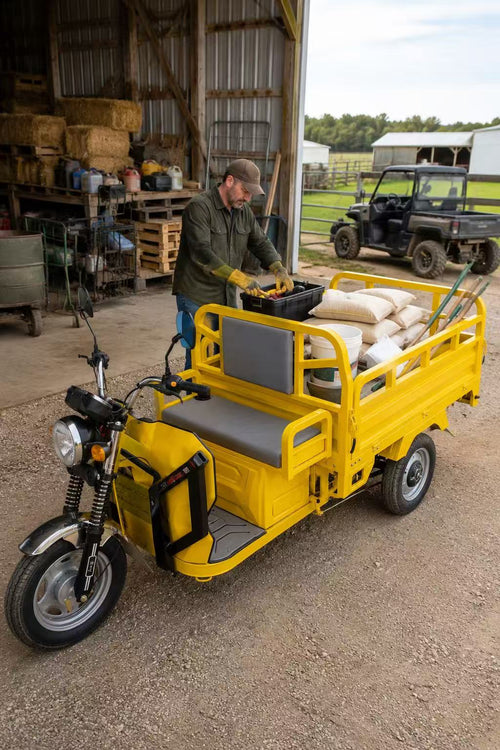
An electric property and facility maintenance utility vehicle is not designed to replace pickup trucks, forklifts, or heavy construction equipment. Instead, it fills the operational gap between manual transportation and oversized vehicles by improving short-distance internal mobility. For modern property management, the greatest opportunity is not moving faster—it is reducing unnecessary walking, repeated trips, and daily labor.
⸻
Introduction
Property maintenance has changed dramatically over the past two decades.
Apartment communities are larger.
Commercial campuses cover more buildings.
Hotels have expanded into resort-style properties.
Universities operate across hundreds of acres.
Hospitals function like small cities.
Maintenance departments are responsible for far more than repairing broken equipment. Today they support landscaping, housekeeping, preventive maintenance, irrigation systems, lighting inspections, waste collection, building repairs, public safety equipment, outdoor facilities, parking areas, and daily operational logistics.
Although each task appears relatively small, together they generate hundreds of transportation activities every week.
Most of these trips happen entirely inside the property.
Not on public roads.
Not between cities.
Simply between buildings, storage rooms, maintenance workshops, landscaping areas, and service locations.
This internal transportation layer has become one of the most overlooked parts of modern facility management.
⸻
Why Property Maintenance Is Changing
Modern properties operate more like small business ecosystems than individual buildings.
A maintenance technician may begin the morning repairing plumbing in one apartment building before moving across the property to inspect lighting fixtures.
A landscaping crew may transport mulch, fertilizer, irrigation components, and power equipment between several work zones before noon.
Housekeeping staff continuously move cleaning supplies, linen carts, waste containers, and replacement inventory throughout hotels, dormitories, healthcare facilities, and commercial buildings.
Every department depends on efficient movement.
The challenge is rarely transportation distance.
The challenge is transportation frequency.
Workers repeatedly interrupt productive work simply because tools, materials, or supplies are located elsewhere.
As labor costs continue rising, reducing unnecessary movement has become one of the easiest ways to improve operational efficiency without increasing workforce size.
⸻
The Hidden Cost of Internal Transportation
Many property owners carefully monitor payroll, utility costs, maintenance contracts, and equipment purchases.
Few measure the cost of repeated internal transportation.
Every forgotten tool means another trip back to the workshop.
Every box of replacement parts carried by hand increases labor time.
Every landscaping project requires equipment, mulch, soil, and irrigation materials to move across the property.
Every housekeeping shift depends on transporting cleaning supplies between multiple buildings.
Individually, these tasks seem insignificant.
Collectively, they consume hundreds of working hours every month.
The greatest hidden expense is not fuel.
It is interrupted workflow.
Every unnecessary trip means maintenance stops.
Cleaning stops.
Landscaping stops.
Repairs stop.
Operational efficiency decreases not because workers are unproductive, but because transportation systems are inefficient.
⸻
A Typical Property Maintenance Workday
Imagine a maintenance team responsible for a modern apartment community.
Early in the morning, technicians transport toolboxes, ladders, plumbing parts, electrical components, and replacement fixtures from the maintenance workshop to several residential buildings.
Later, the landscaping crew delivers mulch, fertilizer, irrigation fittings, trimmers, blowers, and safety equipment throughout the property.
By midday, housekeeping staff move cleaning supplies and maintenance inventory between multiple apartment blocks.
In the afternoon, maintenance personnel inspect playgrounds, parking areas, swimming pools, irrigation systems, sidewalks, lighting fixtures, gates, and common areas.
Before finishing the day, damaged equipment, waste materials, landscape debris, and unused supplies return to storage.
Throughout the entire day, the vehicle performs dozens of short transportation tasks.
Its value is not measured by one large job.
It is measured by how many small jobs become easier every single day.
Why Traditional Maintenance Vehicles Are No Longer Enough
Every maintenance vehicle has its place.
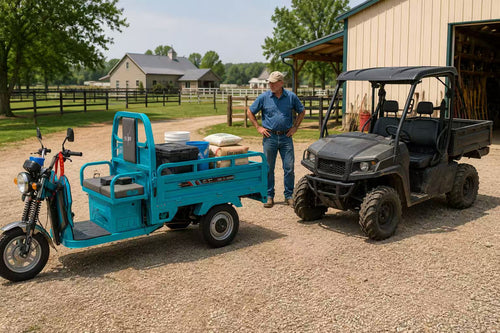
A pickup truck is excellent for transporting heavy materials over public roads, but it is often oversized for daily work inside apartment communities, hotels, schools, and commercial properties.
A golf cart provides convenient transportation for people, but most models are not designed to carry maintenance equipment, landscaping supplies, bulky tools, or replacement parts required for facility operations.
A forklift is highly effective inside warehouses but unsuitable for sidewalks, landscaped areas, pedestrian paths, parks, or mixed-use properties.
Hand carts and wheelbarrows remain useful for very short distances, but they rely entirely on manual labor and become inefficient when dozens of trips are required every day.
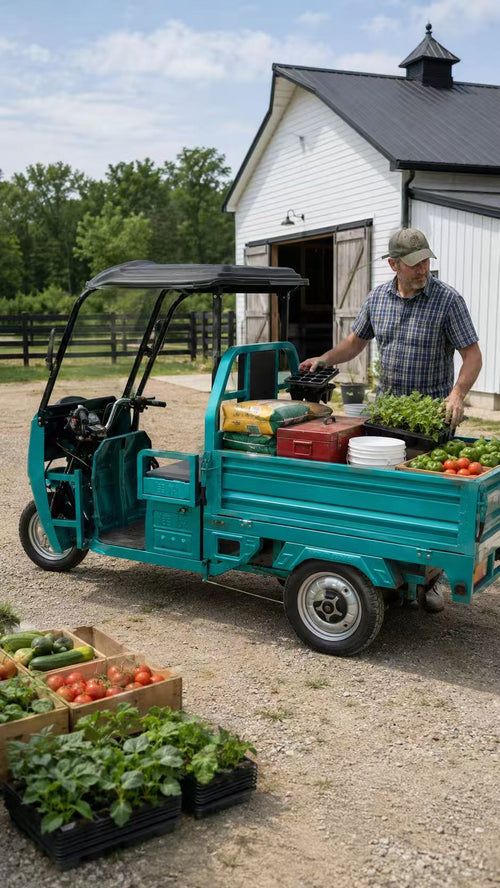
An electric property maintenance utility vehicle fills the gap between these different types of equipment.
It is designed for one purpose:
Supporting daily maintenance operations through efficient internal transportation.
Rather than replacing larger equipment, it allows maintenance teams to reserve heavy machinery for heavy work while completing routine transportation with a smaller, more practical vehicle.
⸻
Electric Utility Vehicle vs. Golf Cart, Pickup Truck and Hand Cart
Many property managers first consider using a golf cart for maintenance work.
Golf carts work well for transporting personnel around large properties.
However, maintenance operations usually require much more than moving people.
Workers transport ladders.
Toolboxes.
Electrical components.
Cleaning supplies.
Replacement fixtures.
Landscape materials.
Trash containers.
Irrigation parts.
Safety equipment.
A dedicated utility vehicle provides a larger cargo platform specifically designed for work rather than passenger transportation.
Compared with pickup trucks, electric utility vehicles are easier to maneuver through sidewalks, courtyards, service roads, parking structures, apartment complexes, pedestrian zones, and landscaped areas.
Compared with hand carts, they dramatically reduce repeated walking and unnecessary physical effort.
The best maintenance departments rarely depend on one vehicle.
They select the most suitable equipment for each type of work.
⸻
Industry Applications
Apartment Communities
Apartment maintenance teams perform hundreds of routine service requests every month.
Workers transport plumbing supplies, electrical parts, painting equipment, HVAC components, cleaning materials, replacement appliances, waste containers, landscaping tools, and maintenance inventory between multiple residential buildings.
An electric maintenance utility vehicle helps reduce unnecessary walking while improving response time across the property.
⸻
HOA Communities
Homeowners’ associations are responsible for maintaining shared public spaces including entrances, sidewalks, parks, swimming pools, playgrounds, clubhouses, irrigation systems, and landscaped common areas.
Daily maintenance often requires transporting tools, repair materials, cleaning supplies, irrigation components, and seasonal decorations across large communities.
Compact utility vehicles improve efficiency without disturbing residents.
⸻
Hotels and Resorts
Hotels operate continuously.
Maintenance teams move luggage carts, housekeeping supplies, replacement furniture, laundry containers, cleaning equipment, maintenance tools, and repair materials throughout the property every day.
Large resort properties may require transportation between multiple guest buildings, restaurants, swimming pools, conference centers, and recreational facilities.
Quiet electric operation is especially valuable in guest environments where noise reduction improves the visitor experience.
⸻
Schools and Universities
Educational campuses function like small cities.
Maintenance departments support classrooms, dormitories, libraries, laboratories, sports facilities, cafeterias, administrative buildings, parking lots, sidewalks, landscaping, and utility systems.
Daily transportation includes tools, maintenance inventory, safety equipment, landscaping materials, event supplies, and repair components.
A utility vehicle allows maintenance teams to respond quickly across large campuses while minimizing unnecessary travel time.
⸻
Hospitals and Healthcare Facilities
Hospitals require continuous facility maintenance.
Technicians transport replacement equipment, maintenance tools, cleaning supplies, waste containers, linen carts, building materials, electrical components, plumbing supplies, and safety equipment throughout the campus.
Electric utility vehicles provide quiet, low-emission transportation suitable for healthcare environments while improving internal logistics.
⸻
Commercial Buildings and Office Parks
Commercial office parks contain multiple buildings connected by parking lots, landscaped areas, service roads, loading zones, and public spaces.
Maintenance teams perform inspections, lighting repairs, HVAC maintenance, irrigation work, waste collection, and landscaping every day.
A utility vehicle helps maintenance personnel carry all required tools and materials in one trip, reducing repeated travel between buildings.
⸻
Industrial Parks and Business Campuses
Industrial facilities often require maintenance across large sites containing warehouses, workshops, offices, storage areas, parking facilities, security checkpoints, and loading docks.
Rather than using full-size service trucks for every task, electric utility vehicles provide an efficient solution for routine inspections, preventive maintenance, equipment servicing, and internal logistics.
⸻
Municipal Parks and Public Facilities
City maintenance departments care for parks, sports fields, walking trails, public gardens, playgrounds, recreation centers, community buildings, and streetscapes.
Daily work includes transporting landscaping tools, trash bins, maintenance supplies, irrigation equipment, repair materials, and seasonal decorations.
Compact utility vehicles improve operational efficiency while allowing crews to work safely in pedestrian-friendly environments.
Return on Investment (ROI)
Property managers often compare maintenance equipment based on purchase price.
However, the long-term value of a maintenance vehicle is determined by operational efficiency rather than initial cost.
A maintenance technician who carries all required tools in one trip spends more time repairing equipment and less time walking back to the workshop.
A landscaping crew that transports mulch, irrigation parts, and power equipment together completes projects more efficiently.
Housekeeping teams that reduce repeated transportation between storage rooms and buildings improve service efficiency without increasing staffing.
Maintenance departments that rely less on oversized pickup trucks for short internal trips also reduce unnecessary fuel consumption, vehicle wear, and operating costs.
The greatest return on investment comes from improving hundreds of small maintenance activities that occur every week.
A few minutes saved during one task may seem insignificant.
Across an entire property and over a full year, those small improvements become meaningful operational gains.
⸻
The Future of Property & Facility Maintenance
Modern facilities continue becoming larger, more connected, and more technology-driven.
Property managers now oversee smart buildings, automated irrigation systems, energy management platforms, digital maintenance scheduling, and predictive equipment monitoring.
Transportation inside these properties will continue evolving as well.
Electric drive systems will become more efficient.
Battery technology will improve.
Fleet management software will optimize vehicle usage.
Future solid-state battery technology may extend operating time while reducing charging interruptions.
Despite these technological advances, one requirement will remain unchanged.
Maintenance teams will always need to move tools, replacement parts, cleaning supplies, landscaping materials, waste containers, and maintenance equipment throughout the property.
The technology may improve.
The daily transportation challenge will remain.
For this reason, electric utility vehicles should be viewed as part of a long-term property maintenance system rather than simply another maintenance vehicle.
⸻
Continue Exploring Property Maintenance Solutions
Different facilities require different maintenance solutions.
Explore additional guides designed for specific maintenance environments:
• Apartment Community Maintenance Vehicles
• HOA Property Maintenance Equipment
• Hotel & Resort Maintenance Utility Vehicles
• School & University Campus Maintenance Solutions
• Hospital Facility Maintenance Transportation
• Golf Course Grounds Maintenance Vehicles
• Municipal Park Maintenance Utility Vehicles
• Commercial Property Groundskeeping Equipment
Each guide explores a specific maintenance environment while connecting back to this Property & Facility Maintenance System Hub.
⸻
Frequently Asked Questions
Is an electric utility vehicle better than a golf cart for property maintenance?
It depends on the job.
Golf carts are primarily designed to transport people.
Property maintenance utility vehicles are designed to carry tools, maintenance equipment, replacement parts, landscaping supplies, cleaning materials, and work-related cargo.
For maintenance operations, a cargo-focused utility vehicle is usually the more practical solution.
⸻
Can it replace a pickup truck?
Not completely.
Pickup trucks remain the best choice for highway transportation and towing.
Electric utility vehicles are designed for repeated short-distance transportation within apartment communities, hotels, campuses, commercial properties, and maintenance facilities.
⸻
Which industries benefit the most?
Apartment communities.
HOA management companies.
Hotels and resorts.
Schools and universities.
Hospitals.
Commercial office parks.
Industrial campuses.
Municipal maintenance departments.
Parks and recreation facilities.
Any organization responsible for maintaining large properties can benefit from improved internal transportation.
⸻
Can one vehicle support multiple maintenance departments?
Yes.
Many organizations use the same utility vehicle for landscaping, housekeeping, maintenance, irrigation, inspections, cleaning operations, and general facility support.
Its flexibility is one of its greatest advantages.
⸻
Business Guidance
Before selecting a maintenance utility vehicle, evaluate how work is actually performed throughout the property.
Consider:
* How many maintenance trips occur every day?
* What materials are transported most frequently?
* How far do technicians travel between work locations?
* Does the property include multiple buildings?
* Are sidewalks, landscaped areas, pedestrian paths, or narrow service roads involved?
* Which tasks create the most repeated walking?
The best maintenance vehicle is not necessarily the largest one.
It is the vehicle that fits the daily workflow and helps maintenance teams complete more work with fewer unnecessary trips.
⸻
Conclusion
Modern property maintenance depends on efficient movement.
Every repair, inspection, landscaping project, housekeeping task, and preventive maintenance activity requires people, tools, equipment, and materials to reach the right location at the right time.
An electric property and facility maintenance utility vehicle helps bridge the gap between manual transportation and oversized service vehicles by improving short-distance mobility throughout apartment communities, hotels, campuses, hospitals, commercial buildings, industrial parks, and public facilities.
Its greatest contribution is not higher speed.
It is reducing unnecessary movement, improving workflow, supporting maintenance teams, and helping modern facilities operate more efficiently every day.