Electric Cargo Trike for Agricultural Use: Should You Choose Carry-Only or Dump Work?
Share
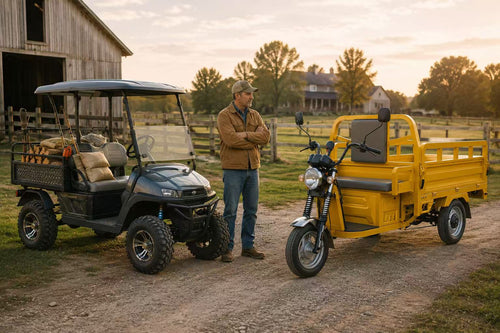
Many agricultural buyers search for an electric cargo trike because they want a lower-cost way to move materials around a farm, ranch, greenhouse, nursery, orchard, or rural work property. But before comparing motors, batteries, prices, or cargo bed sizes, there is one more practical question to answer first:
Do you mainly need to carry materials, or do you also need to dump materials?
This simple question can help a buyer avoid choosing the wrong type of electric work vehicle.
An electric cargo trike for agricultural use is not only about moving from one point to another. In real daily work, the vehicle must match the way materials are loaded, transported, and unloaded. A buyer who mainly carries feed bags and tools may need a different setup from a buyer who moves compost, manure, mulch, wet soil, or wood chips every day.
That is why the buying decision should start with the job, not with the vehicle name.
Carry-Only Agricultural Work
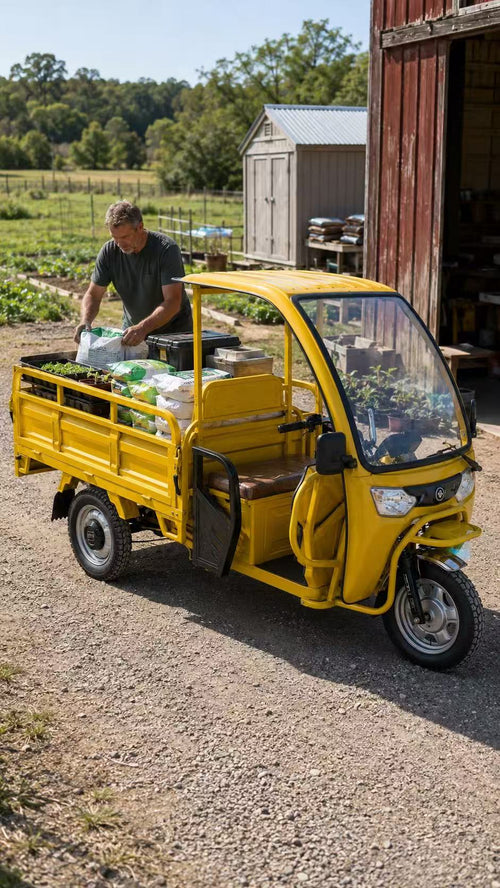
Carry-only work means the vehicle is mainly used to transport items that stay organized in the cargo bed.
This may include:
feed bags
seed bags
fertilizer bags
tools
buckets
fencing supplies
produce crates
fruit boxes
nursery trays
greenhouse supplies
small equipment
repair parts
packaging materials
For this type of work, the buyer usually needs a practical open cargo bed, stable loading space, easy access, and enough capacity for repeated short-distance trips.
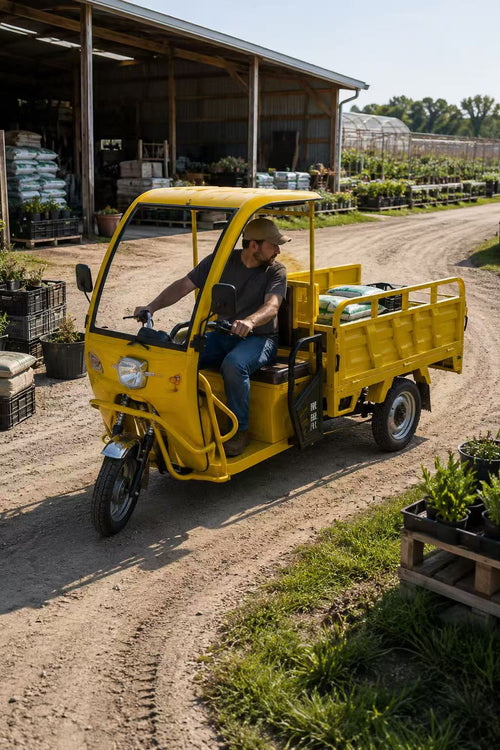
A carry-only electric cargo trike can be a good fit when the materials are loaded and unloaded by hand. The vehicle helps reduce walking, repeated carrying, and small truck use around the property. It is especially useful when the route is short, the speed requirement is low, and one worker needs to move materials many times during the day.
This type of vehicle is often easier to understand as a simple agricultural transport tool.
It is not trying to replace every UTV, pickup, tractor, or heavy equipment vehicle. Its value is in helping one worker move common farm materials more efficiently at a lower cost.
When Carry-Only Makes More Sense
A carry-only electric cargo trike may be the better choice if your work looks like this:
You move feed bags from storage to animal areas.
You carry tools from a shed to a fence line.
You transport produce crates from a field edge to a packing area.
You move nursery trays between growing zones.
You carry greenhouse supplies through controlled work areas.
You deliver small parts, buckets, or maintenance tools around a property.
You do not regularly unload loose bulk material from the cargo bed.
In these situations, a standard cargo bed can be more practical than paying for dump function you may not use often.
The buyer should still check the actual working route. Gravel paths, firm dirt roads, barn yards, paved areas, greenhouse aisles, and controlled farm lanes are very different from steep muddy trails or deep ruts. A compact electric cargo trike is usually better understood as a low-speed work vehicle for repeated internal transport, not as a recreational off-road machine.
Dump Work in Agriculture
Dump work is different.
Dump work means the vehicle is not only carrying material. It also needs to unload loose material more easily.
This may include:
manure
compost
mulch
wood chips
wet soil
sand
gravel
clean-up debris
barn bedding
stable waste
landscaping material
For these jobs, the buyer should consider whether a hydraulic dump cargo bed is necessary.
The difference is not just convenience. It changes the whole work process.
With a standard cargo bed, loose material may need to be shoveled out by hand. That can slow down the job and add physical labor. With a hydraulic dump bed, the vehicle can help release loose material from the rear of the cargo bed, reducing repeated lifting and unloading effort.
For buyers who move loose bulk material every day, the dump function may be more important than a slightly lower purchase price.
When Hydraulic Dump Makes More Sense
A hydraulic dump electric cargo trike may be the better choice if your work looks like this:
You clean animal areas and move manure regularly.
You move compost from one area to another.
You spread mulch, wood chips, or bedding material.
You carry wet soil or loose landscaping material.
You unload repeated small piles during property maintenance.
You want to reduce shoveling at the end of each trip.
You need both hauling and unloading support, not only transportation.
This is where a buyer should be honest about daily work.
If loose material is only an occasional job, a standard cargo trike may still be enough. But if loose material is part of the weekly or daily routine, a dump bed can become a real productivity feature.
The key question is not:
Can the vehicle carry the load?
The better question is:
How will I unload the load after every trip?
Why Load Type Matters More Than Vehicle Appearance
Many buyers compare electric cargo trikes by appearance, motor power, battery range, or price. Those details matter, but the load type often matters more.
Bagged materials are different from loose materials.
Crates are different from wet soil.
Tools are different from manure.
Nursery trays are different from gravel.
A buyer moving organized cargo may care more about bed length, side height, and easy hand loading. A buyer moving loose bulk material may care more about dump angle, rear unloading space, and safe load control.
This is why one electric cargo trike cannot be judged only by photos.
The best choice depends on the work pattern.
Ask these questions before buying:
What do I move most often?
Is the cargo bagged, boxed, crated, or loose?
Do I unload by hand, or do I need the vehicle to help unload?
How many trips do I make in a normal day?
Is the route short and repeated?
Is the surface firm enough for a compact electric work vehicle?
Do I need a lower-cost carry vehicle or a dump work vehicle?
These questions are more useful than asking only for maximum payload.
Route and Surface Still Matter
Even if the load type is clear, the route must also make sense.
An electric cargo trike for agricultural use is usually strongest when the route is controlled and repeated. Examples include farm yards, barn areas, greenhouse lanes, nursery paths, orchard service areas, storage zones, market work areas, and firm rural property routes.
It may be a practical choice for packed dirt, gravel, concrete, paved yards, and moderate farm surfaces.
But if the work requires deep mud, steep hills, rough trails, heavy towing, high speed, long-distance travel, or multiple passengers, a full-size UTV or another vehicle type may be more suitable.
This does not make the electric cargo trike less useful. It simply defines the right use case.
The goal is not to make one vehicle do every agricultural job. The goal is to choose a vehicle that fits the repeated job you actually need to complete.
A Simple Buying Decision
For agricultural buyers, the decision can be simplified:
Choose a standard electric cargo trike if your main work is carrying organized materials such as feed bags, tools, crates, trays, boxes, buckets, and farm supplies.
Choose a hydraulic dump electric cargo trike if your main work includes loose bulk materials such as manure, compost, mulch, soil, wood chips, bedding, sand, or clean-up debris.
Choose a different vehicle if your work requires high speed, 4x4 traction, deep mud performance, heavy towing, long-distance travel, or passenger transport.
This simple decision saves time.
Instead of buying by category name, the buyer can choose by work function.
Who This Vehicle Fits Best
An electric cargo trike for agricultural use may fit buyers such as:
small farm owners
ranch property owners
horse stable operators
poultry farm workers
greenhouse businesses
nursery operators
orchard support teams
produce growers
property maintenance teams
rural homeowners with repeated hauling work
The best fit is a buyer who needs short-distance, low-speed, material-focused transport and wants a simpler electric vehicle with lower operating complexity.
For these users, the electric cargo trike is not a toy and not a recreational vehicle. It is a practical agricultural work tool.
Final Thought
Before buying an electric cargo trike for agricultural use, do not start with the biggest vehicle or the lowest price.
Start with the unloading method.
If your daily work is mostly carrying organized materials, a standard cargo trike may be the smarter and lower-cost choice.
If your daily work includes loose bulk materials, a hydraulic dump cargo trike may save more labor over time.
The right vehicle is not always the strongest-looking one. It is the one that matches your real agricultural workload, your route, your materials, and the way you unload at the end of every trip.