Warehouse Electric Cargo Trike: Compact Alternative to Forklifts and Hand Carts
Share
Warehouses, small distribution centers, repair shops, wholesale stores, and back-of-house storage areas move materials every day.
Cartons, tools, parts, packaging supplies, maintenance materials, small equipment, inventory boxes, and customer orders often need to move between storage shelves, loading doors, packing tables, workstations, service areas, and short delivery points.
For many warehouse operations, the real problem is not long-distance transportation.
The real problem is repeated short-distance movement inside a limited working area.
A full-size forklift may be too large or too expensive for light daily loads. A hand cart is simple, but it becomes slow and tiring when workers repeat the same route many times per day. A golf cart may move people, but it is not always built around cargo work. A pickup truck may be useful outside the building, but it is not practical for indoor or yard-level material movement.
This is where a warehouse electric cargo trike can become a practical compact utility vehicle.
It gives workers a small electric cargo platform for moving daily materials without using a larger machine for every short job.
Why Warehouses Need Compact Utility Vehicles
Not every warehouse needs a forklift for every material movement.
Forklifts are useful for pallets, heavy loads, high stacking, and loading dock work. But many daily warehouse tasks are smaller and more repetitive.
Workers may need to move:
cartons
tools
repair parts
shipping supplies
small equipment
packaging materials
inventory boxes
cleaning supplies
maintenance parts
workshop materials
light delivery loads
returned goods
These jobs may not require a heavy industrial machine.
They require a compact vehicle that can move through working areas, carry useful loads, reduce walking trips, and support daily workflow.
That is why a compact electric cargo trike can fit many warehouse and light logistics operations.
It is not designed to replace every forklift.
It is designed to reduce repeated hand-cart and walking trips for daily short-distance cargo movement.
Warehouse Electric Cargo Trike vs Hand Cart
A hand cart is common in warehouses because it is cheap, simple, and easy to store.
For occasional light loads, it works well.
But when workers move materials repeatedly during the day, hand carts can become a bottleneck.
The main limits of hand carts are:
manual pushing
small load size
repeated walking
worker fatigue
slow movement over longer internal routes
limited usefulness for multiple boxes or mixed supplies
more time spent moving materials instead of completing work
A warehouse electric cargo trike changes the workflow.
Instead of pushing every load by hand, one worker can load the rear cargo bed, drive the route, unload, and return for the next task.
This can be useful for:
moving cartons from storage to packing
carrying tools to maintenance zones
transporting parts between workstations
moving supplies from receiving to shelves
carrying small equipment across the facility
supporting order preparation
moving materials between warehouse and yard areas
The value is not only in carrying more at one time.
The value is reducing repeated manual movement across the workday.
Warehouse Electric Cargo Trike vs Forklift
A forklift is powerful and necessary for many warehouse operations.
It is the right tool for pallet movement, heavy loads, loading trucks, high stacking, and industrial warehouse work.
But a forklift is not always the best machine for smaller daily tasks.
For light material movement, using a forklift may be too much machine for the job. It can require trained operators, more space, more safety control, and more operating cost than a simple internal transport task needs.
A forklift may be better for:
pallet handling
heavy materials
loading and unloading trucks
high rack storage
industrial warehouse operations
large-volume movement
A compact electric cargo trike may be better for:
light cartons
tools and parts
packing supplies
small equipment
maintenance materials
short-distance warehouse routes
narrower working areas
reducing hand-cart trips
moving mixed small loads
supporting workers without using a forklift for every task
The right choice depends on the load.
If the job requires lifting pallets, use a forklift.
If the job is repeated movement of light-to-medium materials across short distances, an electric cargo trike can be a practical support vehicle.
Warehouse Electric Cargo Trike vs Golf Cart
Some facilities use golf carts or passenger carts to move around a property.
But most golf carts are designed to move people, not work materials.
They often have passenger seats where a working cargo bed would be more useful.
In a warehouse or light logistics environment, the main job is usually not passenger movement. The main job is moving boxes, tools, parts, supplies, and small loads.
A golf cart may be better for:
moving people
large property travel
security patrol
general transportation
An electric cargo trike may be better for:
moving cartons
carrying tools
transporting parts
supporting packing work
moving maintenance supplies
carrying small equipment
working in tighter spaces
supporting daily cargo flow
A golf cart moves people.
A warehouse electric cargo trike moves work materials.
That difference matters when the vehicle is used every day.
Warehouse Electric Cargo Trike vs Pickup Truck
A pickup truck is useful for road transport, outside deliveries, large supplies, and moving materials between locations.
But inside a warehouse, yard, shop, or loading area, a pickup can be too large for many short jobs.
A pickup may not be practical for:
indoor warehouse movement
narrow service areas
packing zones
storage aisles
back-of-house routes
short stop-and-go tasks
small loading areas
light internal material movement
For daily internal transport, using a pickup can feel like using a road vehicle for a small warehouse task.
A compact electric cargo trike can fill the gap.
The pickup can bring materials to the building.
The electric cargo trike can move materials inside the facility or around the local work area.
This division can make daily material handling smoother.
Where a Warehouse Electric Cargo Trike Fits Best
A compact electric cargo trike works best in operations where workers move materials repeatedly over short distances.
Good environments include:
small warehouses
wholesale stores
distribution centers
repair shops
factory support areas
maintenance departments
storage yards
market backrooms
packing areas
service centers
farm supply stores
equipment parts rooms
property maintenance shops
light industrial facilities
It can be especially useful where a forklift is too large, a hand cart is too slow, and a pickup truck is not practical for internal movement.
The best fit is not heavy pallet handling.
The best fit is repeated daily cargo movement.
Best Daily Uses for Warehouse and Light Logistics Work
A warehouse electric cargo trike can support many everyday tasks.
Common uses include:
moving cartons from receiving to storage
carrying packages to packing tables
transporting tools across a facility
moving repair parts to work areas
carrying cleaning and maintenance supplies
moving packaging materials
supporting small order picking
moving returned goods
transporting light equipment
carrying supplies between warehouse and yard
supporting back-of-house retail storage
moving materials between nearby buildings
These tasks often do not look heavy one by one.
But they happen repeatedly.
That is why a compact powered cargo vehicle can become valuable. It reduces the number of walking trips and helps workers move more material with less effort.
Why Electric Operation Makes Sense for Warehouses
Electric operation is a good fit for many warehouse and light logistics environments.
Many warehouse routes are short, repeated, and stop-and-go. Workers may start, stop, load, unload, and return many times during a shift.
An electric cargo trike fits this rhythm.
Practical advantages include:
quiet movement
simple daily operation
good fit for short routes
easy start-and-stop use
no need to use a larger gas vehicle for small tasks
useful around workers, shelves, packing areas, and storage zones
compact movement in limited workspaces
The main benefit is not only that the vehicle is electric.
The benefit is that electric movement fits the real pattern of warehouse work: load, move, unload, return, repeat.
Narrow Aisles and Small Work Areas Matter
Many small warehouses and storage areas do not have the space for large vehicles.
Even when a forklift is available, it may not be practical for every area.
A compact electric cargo trike can help in places such as:
narrow warehouse lanes
back storage rooms
packing areas
small loading zones
service corridors
maintenance shops
retail stockrooms
yard-to-building routes
small distribution spaces
In these environments, smaller size can be more useful than higher power.
The goal is not to buy the biggest vehicle.
The goal is to choose a vehicle that fits the actual working route.
Who Should Consider a Warehouse Electric Cargo Trike?
This type of vehicle is a strong fit for buyers who say:
“We use hand carts too much.”
“We move cartons, tools, and parts all day.”
“We do not need a forklift for every small load.”
“We need something smaller than a pickup truck.”
“We need a compact utility vehicle for warehouse routes.”
“We want to reduce walking trips.”
“We need a cargo bed, not passenger seats.”
“We need a lower-cost material handling vehicle.”
It is especially useful for:
warehouse managers
small business owners
wholesale operators
repair shop owners
facility maintenance teams
distribution workers
market operators
parts departments
storage yard operators
property maintenance teams
light industrial businesses
When a Forklift Still Makes More Sense
A warehouse electric cargo trike is not a replacement for every warehouse machine.
A forklift is still the right choice when the job requires:
lifting pallets
stacking heavy loads
loading trucks
moving heavy industrial materials
working with pallet racks
large warehouse volume
high-load operations
The electric cargo trike is not designed for pallet lifting.
It is designed for a different problem:
moving light-to-medium materials across short distances without relying only on hand carts or oversized vehicles.
For many small warehouses, shops, and light logistics operations, that problem happens every day.
The OneClickChina Multi-Purpose Electric Utility Vehicle
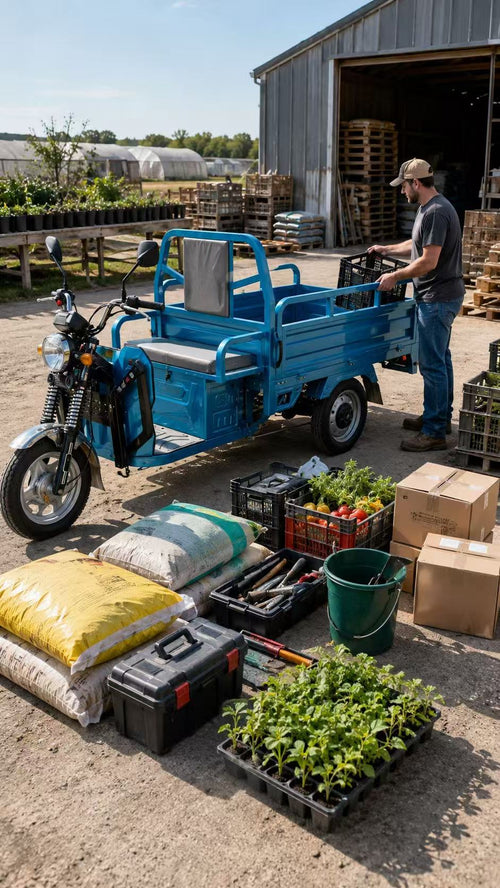
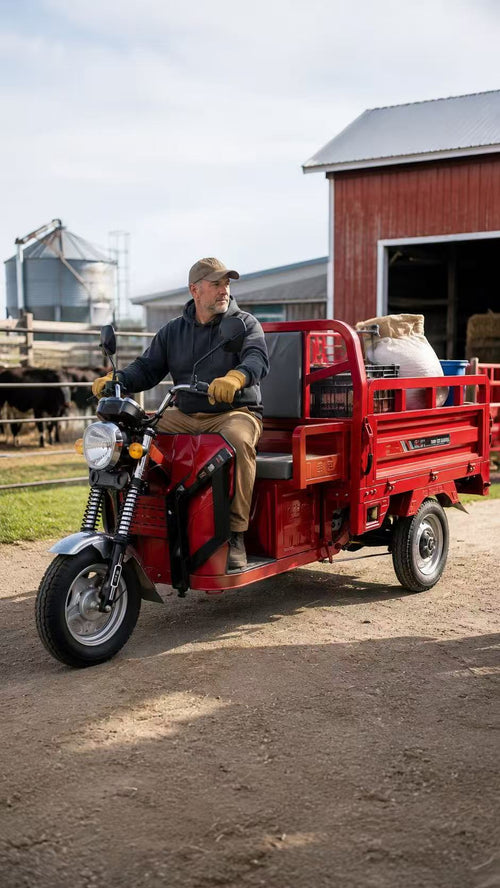
The OneClickChina Multi-Purpose Electric Utility Vehicle is designed for practical short-distance hauling.
For warehouse and light logistics work, it can help move cartons, tools, parts, packaging supplies, maintenance materials, small equipment, and daily work materials across limited areas.
It gives workers a compact electric cargo bed for repeated routes between receiving, storage, packing, loading, and maintenance zones.
For many small operations, it can work as a practical step between a hand cart and a larger forklift, golf cart, or pickup truck.
It is more work-focused than a passenger cart and more compact than a road vehicle.
For businesses that need a lower-cost warehouse utility vehicle for daily material movement, this type of electric cargo trike can be a practical choice.
Canopy and Cab Options for Different Work Environments
Some warehouse and logistics operations also work between indoor and outdoor areas.
For example, workers may move goods between a warehouse, loading yard, storage shed, market area, or nearby delivery point.
In these cases, covered options may be useful.
A canopy utility cargo vehicle can help provide basic sun and light weather protection for outdoor routes.
A cab utility cargo vehicle can provide more protection for drivers in colder, windy, or wet conditions.
For indoor-only warehouse work, the open cargo trike may be enough.
For mixed indoor and outdoor routes, a canopy or cab version may be worth considering.
Final Thoughts
Warehouse material handling does not always require a forklift.
Many daily tasks involve short-distance movement of cartons, tools, parts, supplies, packaging materials, small equipment, and maintenance loads.
A hand cart may work for occasional light jobs.
A forklift is necessary for pallets and heavy loads.
A pickup truck is useful outside the facility.
A golf cart may move people.
But for repeated short-distance warehouse cargo movement, a compact electric cargo trike can be a better fit.
It is small, electric, work-focused, and designed around the real cycle of light material handling:
load
drive
unload
return
repeat
For small warehouses, wholesale stores, repair shops, light logistics operations, and facility maintenance teams, the OneClickChina Multi-Purpose Electric Utility Vehicle can help reduce hand-cart trips and move daily materials with less manual effort.