Electric Cargo Trike for Homestead Work: Hauling Feed, Tools, and Harvest Loads on Private Property
Share
An electric cargo trike for homestead work should be judged by what it can help you move around your own property. For a small farm, homestead, acreage property, greenhouse, garden area, or rural home site, the real value is not top speed. The real value is whether the vehicle can help move feed, tools, harvest crates, buckets, mulch, firewood, hoses, and supplies without using a larger machine for every small job.
Homestead work is different from commercial farm transport. The routes are often shorter. The loads may be lighter than large farm operations, but they happen again and again. A property owner may need to move feed from storage to an animal pen, garden harvest from rows to a wash area, tools from a shed to a fence line, or mulch from a storage pile to raised beds.
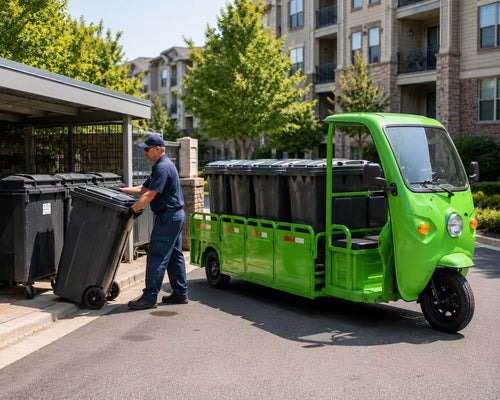
This is where an electric cargo trike can make sense. It can act as a quiet, zero-emission workhorse for private-property hauling when the cargo bed, payload, battery, motor, and route match the job.
Why Homestead Buyers Look at Cargo Trikes
Many homesteads have daily chores that are too small for a tractor but too frequent for hand carrying. A wheelbarrow or garden cart may work for short distances, but over a larger property, repeated manual hauling becomes tiring.
An electric cargo trike can help bridge that gap. It gives the owner a small cargo-focused vehicle for repeated movement across the property.
Typical homestead jobs may include:
Moving feed bags to animals.
Carrying hand tools to a garden or fence line.
Transporting harvest crates from garden beds.
Moving buckets, hoses, and irrigation parts.
Hauling mulch, bedding, compost bags, or small firewood loads.
Taking supplies from a shed to a greenhouse or barn.
These tasks may not require a UTV, ATV, tractor, or pickup every time. A smaller electric cargo trike can be enough when the route is private, the distance is moderate, and the load is realistic.
Different from a Family Cargo Bike
A homestead cargo trike should not be evaluated like a family cargo bike. Many electric cargo bikes are designed for children, pets, groceries, commuting, or city errands. That is not the same as homestead work.
For homestead use, the buyer should focus on the cargo bed, not passenger seating. The vehicle should be able to carry practical materials such as feed bags, tools, harvest crates, buckets, and small supplies.
The cargo area should be easy to load. The frame should feel suitable for repeated work. The tires and brakes should match the route. The motor should support loaded movement, not only casual riding.
This distinction is important because some search results mix homestead cargo needs with family cargo bikes. A serious homestead buyer should separate lifestyle riding from property work.
Start with Your Property Size
Before choosing an electric cargo trike, start with the property layout.
A one-acre homestead, a five-acre rural property, and a larger small farm may need different setups. The question is not only how much land you own. The question is how far you actually carry materials.
Think about the routes you use most often:
House to garden.
Tool shed to fence line.
Feed storage to livestock area.
Greenhouse to wash station.
Wood pile to barn.
Compost area to raised beds.
Driveway to storage shed.
If these routes are repeated every day or every week, a cargo trike may save time and reduce manual labor.
If most work happens within a few steps, a wheelbarrow may be enough. If the property has long rough trails or heavy towing needs, a UTV, ATV, or tractor may be better.
Terrain: Hilly or Flat?
Terrain is one of the most important questions for homestead use.
A cargo trike can work well on gravel driveways, packed dirt paths, concrete pads, barn-side lanes, greenhouse access paths, and moderate garden routes. These are common on modern homesteads and small rural properties.
If the property is hilly, muddy, deeply rutted, sandy, or uneven, the buyer needs to be more careful. A three-wheel vehicle carrying cargo needs stable ground and proper control. Heavy loads on slopes or rough terrain may require a stronger vehicle.
Before buying, walk the route and ask:
Is the route flat or hilly?
Is the ground gravel, pavement, dirt, grass, or mud?
Does the route become slippery after rain?
Are there tight turns near gates, sheds, or animal areas?
Will the vehicle need to climb with a load?
Terrain decides whether the trike will be useful every day or only on good-weather routes.
Primary Cargo Type Matters
The best electric cargo trike for a homestead depends on what you plan to haul.
Feed bags and buckets need payload strength and a cargo bed that keeps the load stable. Garden harvest crates need a flat, clean cargo space. Tools need length and side support. Mulch, dirt, and firewood may need stronger bed construction and easier unloading.
A buyer should list the main cargo before comparing models.
Common homestead cargo includes:
Feed bags.
Garden harvest crates.
Hand tools.
Buckets.
Irrigation hoses.
Mulch bags.
Compost bags.
Small firewood bundles.
Animal care supplies.
Fence repair tools.
If the cargo is mostly crates, bags, tools, and buckets, an open cargo bed may work well. If the cargo is loose dirt, compost, manure, or mulch, a dump-style bed may be more useful.
Open Cargo Bed or Box Cargo Setup
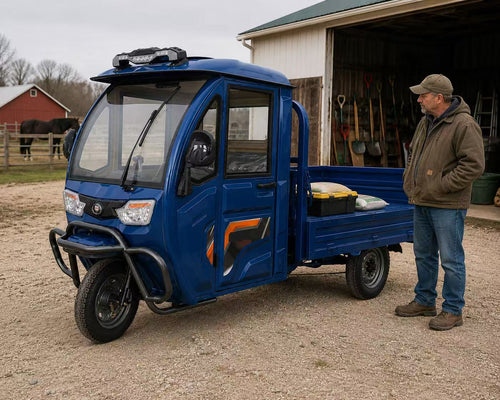
Homestead cargo trikes may use different cargo setups. Some have open flatbeds. Some have box-style cargo areas. Some have taller side panels. Some are designed like small utility beds.
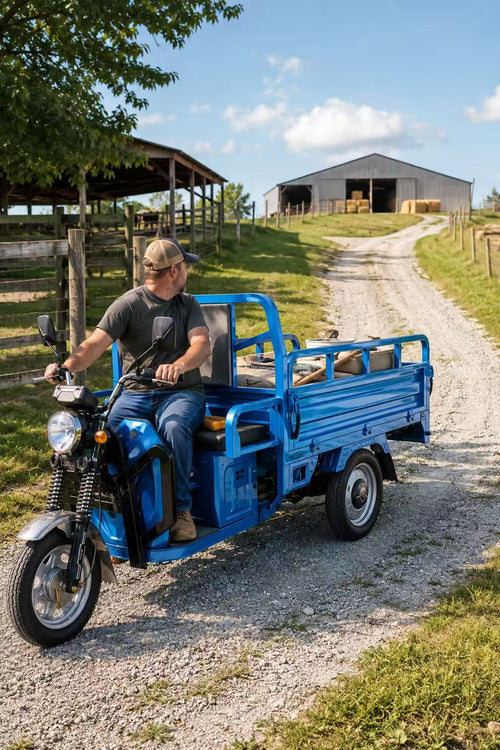
An open cargo bed is flexible. It is useful for mixed loads such as feed, tools, garden crates, and buckets.
A box-style setup can be useful when the owner wants to keep items contained, especially smaller tools or supplies.
A higher-sided cargo bed can help prevent bags or crates from shifting.
A dump bed can help with loose materials, but it may not be necessary for every homestead.
The right setup depends on the job. A homestead owner should not choose a vehicle only because it looks heavy-duty. The cargo area should match the materials moved most often.
Motor and Battery for Homestead Routes
For homestead use, motor and battery should be matched to the route and load. Many smaller cargo trikes may use moderate motors and 48V or 60V battery systems. Heavier work vehicles may use stronger power setups.
The buyer should ask:
Will the trike carry light garden tools or heavy feed bags?
Will it move on flat ground or uphill?
How many trips will it make per day?
Will it be used in a greenhouse, garden area, barn lane, or rough property path?
Does the property have a convenient charging area?
For private-property work, the goal is not racing speed. The goal is smooth loaded movement, enough torque for the normal route, and enough battery range for the daily routine.
If the property has long distances, heavier loads, or slopes, a stronger motor and battery system may be needed.
Hauling Capacity: Be Realistic
Some cargo trikes may be rated for light loads. Others are built for heavier work. The buyer should not choose only by the highest advertised number.
For homestead work, the practical question is: what do you actually haul most often?
A few feed bags, a full toolbox, harvest crates, buckets, or mulch bags can become heavy. But many homestead tasks are still lighter than commercial farm hauling.
A realistic cargo estimate helps avoid two problems:
Buying a vehicle too small for the work.
Buying a vehicle larger and heavier than the property really needs.
For most homestead buyers, the best vehicle is the one that handles the normal daily load comfortably, not the one with the biggest maximum rating.
On-Property Use vs Public Roads
One of the most important questions is where the vehicle will be used.
Many electric cargo trikes are best understood as private-property work vehicles. They can be used around homesteads, farms, greenhouses, barns, gardens, sheds, and internal property routes.
Public road use is different. Rules may vary by state, county, city, vehicle classification, lighting, registration, speed, and local requirements. A vehicle that works well on private property may not be suitable or legal for public roads.
For OneClickChina-style cargo trikes, the clearest positioning is private-property hauling and internal property transport. Buyers should confirm local rules if they plan to use the vehicle beyond their own property.
This keeps expectations realistic and reduces confusion.
When It Can Replace a Wheelbarrow or Garden Cart
A wheelbarrow is simple and useful, but it depends entirely on human effort. A garden cart is helpful, but it still needs pulling or pushing unless attached to another vehicle.
An electric cargo trike can reduce physical labor when the same route must be repeated many times. It may be useful when moving feed, tools, harvest loads, mulch, or supplies over longer property distances.
For example, carrying garden harvest from a field to a wash area once may not justify a vehicle. Doing it many times during a season may make a cargo trike useful.
The value comes from repeated use.
When It Can Reduce UTV or ATV Use
A UTV or ATV may still be better for rough terrain, towing, steep hills, and heavy-duty work. But not every homestead task needs that level of machine.
An electric cargo trike can help with smaller daily work so the owner does not need to start a larger gas-powered vehicle for every chore.
It can be especially useful around areas where quiet operation matters, such as near livestock, greenhouses, family areas, barns, and gardens.
The right way to compare is not “cargo trike or UTV.” The better question is: which jobs truly need the UTV, and which jobs only need a smaller cargo vehicle?
Homestead Work Examples
A cargo trike can be useful in many realistic homestead routines.
A gardener may use it to carry harvest crates, soil amendments, hand tools, and irrigation supplies between raised beds and a storage shed.
A small livestock owner may use it to move feed bags, bedding, buckets, and fencing tools between storage and animal areas.
A greenhouse owner may use it to move plant trays, tools, pots, hoses, and supplies between the greenhouse and packing space.
A rural property owner may use it to move firewood bundles, small repair supplies, garden equipment, or seasonal materials across the property.
These are not extreme jobs, but they are the jobs that happen constantly.
When It May Not Be the Right Fit
An electric cargo trike is not the answer for every homestead.
It may not be the right fit if the property has deep mud, very steep slopes, large rocks, heavy towing needs, public road travel, or oversized cargo.
It may also not be necessary if the property is very small and most chores happen within a short walking distance.
A tractor, UTV, ATV, pickup, or heavier equipment may still be better for demanding work. A cargo trike is best for repeated light to medium hauling on private property.
What to Check Before Buying
Before choosing an electric cargo trike for homestead work, ask these questions:
How many acres do I need to move across?
Is the property mostly flat or hilly?
Will the route be gravel, dirt, grass, pavement, or mud?
What cargo will I haul most often?
Do I need to move feed, tools, harvest crates, mulch, firewood, or dirt?
Do I need an open bed, box bed, or dump bed?
How much weight will I carry in a normal trip?
Will I stay on private property?
Where will I charge the vehicle?
Will this replace a wheelbarrow, support a UTV, or reduce small trips with a gas vehicle?
These questions give a better buying answer than simply comparing price, color, or top speed.
Conclusion
An electric cargo trike for homestead work makes sense when the property has repeated daily hauling tasks. It can help move feed, tools, harvest loads, buckets, mulch, hoses, and supplies around private property quietly and efficiently.
It should be judged as a small work vehicle, not as a family cargo bike or city tricycle. The most important factors are property size, terrain, cargo type, payload, cargo bed setup, motor power, battery range, and whether the vehicle will stay on private property.
For homesteads, small farms, greenhouses, gardens, and rural properties, a cargo trike can become a practical daily helper when it fits the route and workload. It does not replace every tractor, UTV, ATV, or pickup, but it can handle many of the smaller hauling jobs that keep a property running.