Electric Cargo Trike for Agricultural Use: How to Match Cargo, Terrain, and Bed Style
Share
A farm vehicle should not be chosen only by motor power, price, or how large the cargo bed looks in a photo.
For agricultural use, the better question is much more practical: what do you need to carry, where will you drive, and what kind of cargo bed actually fits the work?
That is why an electric cargo trike for agricultural use should be matched to three things before anything else: cargo type, farm terrain, and bed style.
If those three points are clear, the choice becomes much easier.
What Are You Actually Carrying?
The first mistake many buyers make is treating all farm cargo as the same.
It is not.
A trike used for carrying feed bags is different from one used for harvest crates. A vehicle used for toolboxes and fence repair supplies is different from one used for compost, manure, wet soil, or gravel.
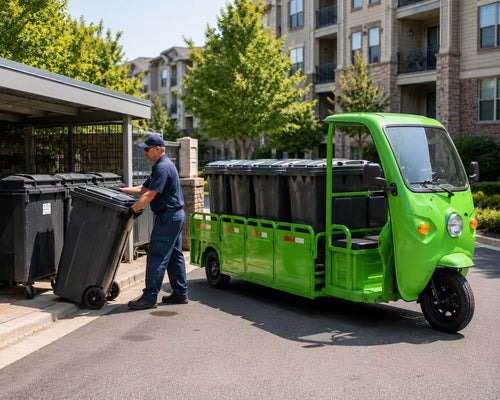
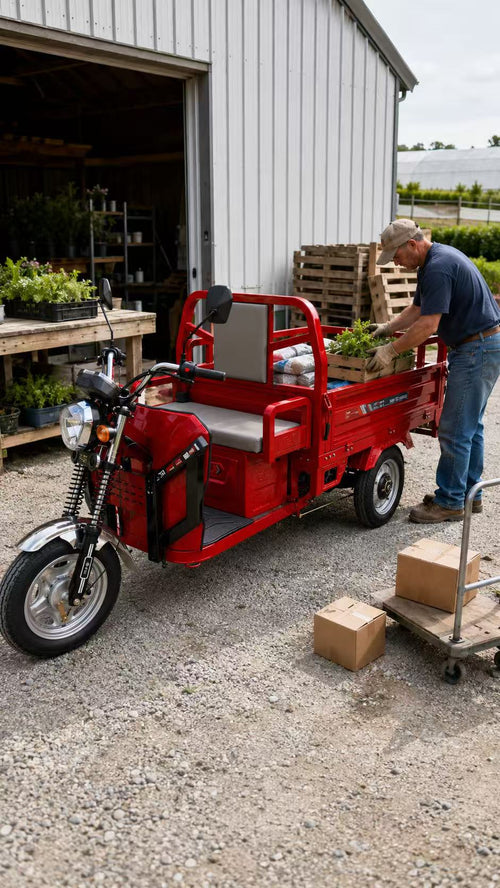
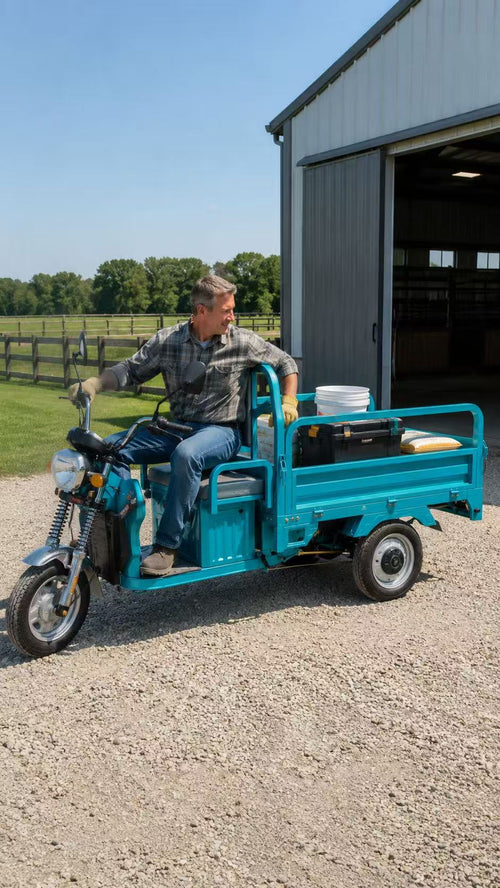
For boxed or bagged cargo, an open rear cargo bed is usually practical. It allows the operator to load from the side, stack items quickly, and unload at different stops around the property.
This works well for:
feed bags
toolboxes
seed trays
produce crates
fertilizer bags
buckets
small farm equipment
repair supplies
harvest boxes
For loose material, the decision changes.
Wet soil, manure, compost, gravel, mulch, and loose fertilizer are harder to unload by hand. If the operator has to shovel the material out after every trip, the vehicle only solves the hauling problem, not the unloading problem.
That is when a hydraulic dump bed becomes more useful.
So the first buying question is simple:
Are you mainly carrying items, or are you moving loose material?
If the load is mostly bags, crates, tools, and supplies, an open cargo bed may be enough. If the load is loose, wet, heavy, and repeated every day, a dump bed may save more labor.
What Kind of Terrain Will the Trike Use?
The second question is terrain.
Google search results often mention farm lanes, dirt roads, muddy paths, uneven ground, and off-road terrain. That is important because farm work is not the same as smooth city riding.
A farm cargo trike may need to move across:
flat dirt roads
gravel lanes
barn entrances
pasture edges
greenhouse paths
small slopes
muddy spots
narrow gates
livestock areas
garden rows
On flat ground, the buyer can focus more on cargo bed size, daily route distance, and loading convenience.
On uneven ground, the buyer should pay more attention to tire size, frame strength, suspension, braking, and load balance.
On muddy paths or hills, the buyer should be more careful. Motor power matters, but it is not the only factor. Tire traction, rear axle stability, braking control, and how the load is placed in the bed can matter just as much.
A farm trike does not need to be fast. It needs to move predictably while loaded.
That is why top speed is not the most important number for agricultural use. Controlled low-speed movement is more useful than speed when the vehicle is carrying feed, tools, crates, or farm supplies.
Open Bed, Covered Box, or Dump Bed?
The third question is bed style.
This is where many buyers need to slow down before choosing.
An open cargo bed is best when the operator needs flexible loading and unloading. It is practical for farms that move mixed cargo throughout the day.
Open bed works well for:
feed bags
tools
produce crates
buckets
seed trays
fencing supplies
nursery materials
daily farm maintenance items
A covered box or enclosed cargo van setup is better when cargo needs weather protection, privacy, or a cleaner enclosed space. It may fit delivery, market transport, packaged goods, or route-based work where rain, dust, or product protection matters.
A dump bed is better when the work involves loose materials that are difficult to unload by hand.
Dump bed works better for:
manure
compost
wet soil
mulch
gravel
loose fertilizer
landscaping material
farm cleanup loads
The right bed style depends on the work. A buyer should not choose a dump bed just because it looks stronger, and should not choose an open bed if the daily work is mostly loose material.
The bed style should match the unloading method.
Can an Electric Cargo Trike Replace a Gas ATV or UTV?
For some jobs, yes. For other jobs, no.
An electric cargo trike can be a quiet, lower-maintenance alternative for repeated short routes around barns, gardens, fields, greenhouses, and storage areas.
It can make sense when the job is:
short-distance
repeated every day
light to medium duty
near animals or people
inside narrow farm areas
focused on carrying rather than towing
For these routes, starting a gas ATV or UTV every time may feel excessive. Gas equipment brings noise, fuel, exhaust, maintenance, and higher operating cost. An electric cargo trike can be easier for small daily hauling.
But it should not be oversold.
If the farm has deep mud, steep hills, heavy towing, long off-road routes, or very heavy work every day, a larger UTV, tractor, or stronger work vehicle may still be necessary.
The real value of an electric cargo trike is not replacing every machine on the farm. It is replacing the repeated small hauling jobs that waste time and labor.
How Much Motor Power Is Enough?
Many agricultural electric cargo trikes appear in the 1000W to 1500W range. Some heavy-duty models go higher.
For many small farm tasks, 1000W to 1500W can make sense when the vehicle is used for short-distance hauling on manageable terrain. But motor power should never be judged alone.
A buyer should also look at:
battery voltage
controller setup
rear axle strength
frame construction
tire traction
braking system
cargo bed size
normal load weight
terrain condition
A 1500W motor may be useful for heavier daily loads, mild slopes, and uneven farm lanes. A 1000W setup may be enough for lighter feed runs, tools, crates, and flat property routes.
The better question is not “Is 1500W strong enough?”
The better question is:
Is the power setup matched to my cargo, my terrain, and my route?
Range Should Be Judged by Farm Routes
Range numbers can also be misleading.
A product page may say 40 miles, 50 miles, or more, but real farm use depends on load weight, stops, terrain, speed, battery type, and how often the vehicle starts and stops.
For agricultural use, buyers should think in routes:
storage shed to barn
barn to pasture
greenhouse to packing area
garden rows to storage
livestock area to feed room
field to farm stand
tool shed to fence line
A small farm may not need long highway-style range. It may need reliable short loops throughout the day.
If the vehicle can finish the daily route, return to a charging area, and carry normal loads without strain, the range may be practical even if the number does not look dramatic.
Where This Type of Vehicle Fits Best
An electric cargo trike for agricultural use fits best between hand tools and larger farm vehicles.
It is more capable than a wheelbarrow for repeated hauling. It is smaller and quieter than a gas UTV for daily barn and field routes. It is easier to maneuver than a pickup in narrow farm spaces.
It is useful for farms that need to move things often, not necessarily farms that need to move the heaviest load once.
Good fits include:
small farms
hobby farms
nurseries
greenhouses
orchards
produce farms
livestock properties
rural homes with daily chores
farmers market supply routes
property maintenance work
The strongest use case is not one big job. It is the repeated work that happens every day.
What Buyers Should Check Before Buying
Before buying an electric cargo trike for agricultural use, ask these questions:
What cargo do I carry most often?
Is the cargo boxed, bagged, loose, wet, or heavy?
Will I unload by hand or need a dump bed?
Will the vehicle drive on flat dirt, gravel, grass, mud, or slopes?
How narrow are my gates, barn paths, or work lanes?
Will the vehicle be used near livestock?
Do I need quiet operation?
Do I need weather protection?
Is this replacing a wheelbarrow, gas ATV, pickup, or small UTV?
How many trips will it make in a normal day?
These questions matter more than choosing by one number.
The Best Choice Starts with the Work
The right electric cargo trike is not chosen by the biggest motor, longest range, or lowest price.
It is chosen by the daily work.
If the farm mainly moves feed, tools, produce crates, and supplies across short routes, an open-bed electric cargo trike can be practical.
If the work involves loose wet materials, a hydraulic dump model may be better.
If the cargo needs weather protection, a covered box may make more sense.
If the route includes mud, slopes, or rough ground, tire traction, braking, frame strength, and load balance become more important than top speed.
For agricultural use, the best vehicle is the one that fits the cargo, terrain, and route.
That is where the buying decision should start.
A farm vehicle should not be chosen only by motor power, price, or how large the cargo bed looks in a photo.
For agricultural use, the better question is much more practical: what do you need to carry, where will you drive, and what kind of cargo bed actually fits the work?
That is why an electric cargo trike for agricultural use should be matched to three things before anything else: cargo type, farm terrain, and bed style.
If those three points are clear, the choice becomes much easier.
What Are You Actually Carrying?
The first mistake many buyers make is treating all farm cargo as the same.
It is not.
A trike used for carrying feed bags is different from one used for harvest crates. A vehicle used for toolboxes and fence repair supplies is different from one used for compost, manure, wet soil, or gravel.
For boxed or bagged cargo, an open rear cargo bed is usually practical. It allows the operator to load from the side, stack items quickly, and unload at different stops around the property.
This works well for:
feed bags
toolboxes
seed trays
produce crates
fertilizer bags
buckets
small farm equipment
repair supplies
harvest boxes
For loose material, the decision changes.
Wet soil, manure, compost, gravel, mulch, and loose fertilizer are harder to unload by hand. If the operator has to shovel the material out after every trip, the vehicle only solves the hauling problem, not the unloading problem.
That is when a hydraulic dump bed becomes more useful.
So the first buying question is simple:
Are you mainly carrying items, or are you moving loose material?
If the load is mostly bags, crates, tools, and supplies, an open cargo bed may be enough. If the load is loose, wet, heavy, and repeated every day, a dump bed may save more labor.
What Kind of Terrain Will the Trike Use?
The second question is terrain.
Google search results often mention farm lanes, dirt roads, muddy paths, uneven ground, and off-road terrain. That is important because farm work is not the same as smooth city riding.
A farm cargo trike may need to move across:
flat dirt roads
gravel lanes
barn entrances
pasture edges
greenhouse paths
small slopes
muddy spots
narrow gates
livestock areas
garden rows
On flat ground, the buyer can focus more on cargo bed size, daily route distance, and loading convenience.
On uneven ground, the buyer should pay more attention to tire size, frame strength, suspension, braking, and load balance.
On muddy paths or hills, the buyer should be more careful. Motor power matters, but it is not the only factor. Tire traction, rear axle stability, braking control, and how the load is placed in the bed can matter just as much.
A farm trike does not need to be fast. It needs to move predictably while loaded.
That is why top speed is not the most important number for agricultural use. Controlled low-speed movement is more useful than speed when the vehicle is carrying feed, tools, crates, or farm supplies.
Open Bed, Covered Box, or Dump Bed?
The third question is bed style.
This is where many buyers need to slow down before choosing.
An open cargo bed is best when the operator needs flexible loading and unloading. It is practical for farms that move mixed cargo throughout the day.
Open bed works well for:
feed bags
tools
produce crates
buckets
seed trays
fencing supplies
nursery materials
daily farm maintenance items
A covered box or enclosed cargo van setup is better when cargo needs weather protection, privacy, or a cleaner enclosed space. It may fit delivery, market transport, packaged goods, or route-based work where rain, dust, or product protection matters.
A dump bed is better when the work involves loose materials that are difficult to unload by hand.
Dump bed works better for:
manure
compost
wet soil
mulch
gravel
loose fertilizer
landscaping material
farm cleanup loads
The right bed style depends on the work. A buyer should not choose a dump bed just because it looks stronger, and should not choose an open bed if the daily work is mostly loose material.
The bed style should match the unloading method.
Can an Electric Cargo Trike Replace a Gas ATV or UTV?
For some jobs, yes. For other jobs, no.
An electric cargo trike can be a quiet, lower-maintenance alternative for repeated short routes around barns, gardens, fields, greenhouses, and storage areas.
It can make sense when the job is:
short-distance
repeated every day
light to medium duty
near animals or people
inside narrow farm areas
focused on carrying rather than towing
For these routes, starting a gas ATV or UTV every time may feel excessive. Gas equipment brings noise, fuel, exhaust, maintenance, and higher operating cost. An electric cargo trike can be easier for small daily hauling.
But it should not be oversold.
If the farm has deep mud, steep hills, heavy towing, long off-road routes, or very heavy work every day, a larger UTV, tractor, or stronger work vehicle may still be necessary.
The real value of an electric cargo trike is not replacing every machine on the farm. It is replacing the repeated small hauling jobs that waste time and labor.
How Much Motor Power Is Enough?
Many agricultural electric cargo trikes appear in the 1000W to 1500W range. Some heavy-duty models go higher.
For many small farm tasks, 1000W to 1500W can make sense when the vehicle is used for short-distance hauling on manageable terrain. But motor power should never be judged alone.
A buyer should also look at:
battery voltage
controller setup
rear axle strength
frame construction
tire traction
braking system
cargo bed size
normal load weight
terrain condition
A 1500W motor may be useful for heavier daily loads, mild slopes, and uneven farm lanes. A 1000W setup may be enough for lighter feed runs, tools, crates, and flat property routes.
The better question is not “Is 1500W strong enough?”
The better question is:
Is the power setup matched to my cargo, my terrain, and my route?
Range Should Be Judged by Farm Routes
Range numbers can also be misleading.
A product page may say 40 miles, 50 miles, or more, but real farm use depends on load weight, stops, terrain, speed, battery type, and how often the vehicle starts and stops.
For agricultural use, buyers should think in routes:
storage shed to barn
barn to pasture
greenhouse to packing area
garden rows to storage
livestock area to feed room
field to farm stand
tool shed to fence line
A small farm may not need long highway-style range. It may need reliable short loops throughout the day.
If the vehicle can finish the daily route, return to a charging area, and carry normal loads without strain, the range may be practical even if the number does not look dramatic.
Where This Type of Vehicle Fits Best
An electric cargo trike for agricultural use fits best between hand tools and larger farm vehicles.
It is more capable than a wheelbarrow for repeated hauling. It is smaller and quieter than a gas UTV for daily barn and field routes. It is easier to maneuver than a pickup in narrow farm spaces.
It is useful for farms that need to move things often, not necessarily farms that need to move the heaviest load once.
Good fits include:
small farms
hobby farms
nurseries
greenhouses
orchards
produce farms
livestock properties
rural homes with daily chores
farmers market supply routes
property maintenance work
The strongest use case is not one big job. It is the repeated work that happens every day.
What Buyers Should Check Before Buying
Before buying an electric cargo trike for agricultural use, ask these questions:
What cargo do I carry most often?
Is the cargo boxed, bagged, loose, wet, or heavy?
Will I unload by hand or need a dump bed?
Will the vehicle drive on flat dirt, gravel, grass, mud, or slopes?
How narrow are my gates, barn paths, or work lanes?
Will the vehicle be used near livestock?
Do I need quiet operation?
Do I need weather protection?
Is this replacing a wheelbarrow, gas ATV, pickup, or small UTV?
How many trips will it make in a normal day?
These questions matter more than choosing by one number.
The Best Choice Starts with the Work
The right electric cargo trike is not chosen by the biggest motor, longest range, or lowest price.
It is chosen by the daily work.
If the farm mainly moves feed, tools, produce crates, and supplies across short routes, an open-bed electric cargo trike can be practical.
If the work involves loose wet materials, a hydraulic dump model may be better.
If the cargo needs weather protection, a covered box may make more sense.
If the route includes mud, slopes, or rough ground, tire traction, braking, frame strength, and load balance become more important than top speed.
For agricultural use, the best vehicle is the one that fits the cargo, terrain, and route.
That is where the buying decision should start.