Damaged Carton Handling in Wholesale Markets
Share
Damaged cartons are a normal part of wholesale market work. In produce markets, seafood markets, restaurant supply warehouses, meat distribution areas, cash-and-carry stores, and general wholesale buildings, goods move through many hands before they reach a customer.
A carton may be crushed during unloading. A foam box may crack near a dock. A produce crate may break during handling. A dry goods box may arrive with a wet corner. A returned carton may need inspection before it can be sold again. A mixed pallet may look fine from the outside, but several boxes may be damaged after it is opened.
These situations are common.
The problem is not only the damaged carton itself. The bigger problem is what happens next.
If damaged cartons remain in the receiving area, they can block movement. If they are mixed with normal goods, they can create customer complaints. If they are left near customer pickup orders, workers may load the wrong item. If they stay in the aisle, they make the market look disorganized.
Damaged carton handling is the process of separating, moving, inspecting, and controlling these goods before they affect normal orders.
Why Damaged Carton Handling Matters
Wholesale markets depend on speed, but speed without control can create mistakes.
A damaged carton may still contain usable goods. It may need repacking. It may need a new outer box. It may need to be checked by a manager. It may need to be returned to a supplier. It may need to be held away from customer pickup until a decision is made.
If the market does not have a simple damaged goods process, workers may make quick decisions in the middle of a busy day. One worker may leave the damaged box beside the dock. Another may move it near a prepared order. Another may think it is ready for sale. Later, the wrong box may reach a customer.
This is why damaged carton handling should be treated as a workflow problem.
The goal is simple:
find the damaged carton
separate it from normal goods
move it to the correct inspection or repack area
decide whether to repack, return, hold, or discard
keep normal orders moving
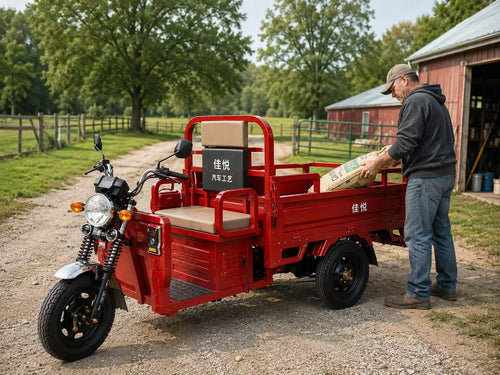
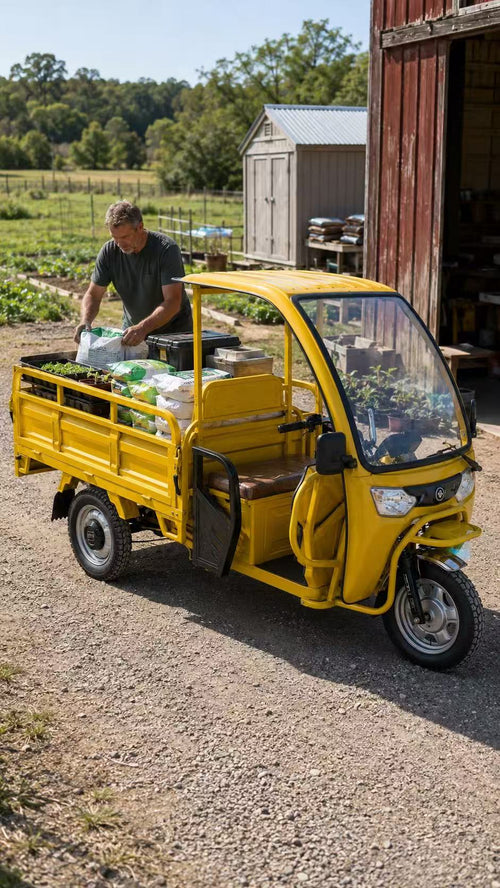
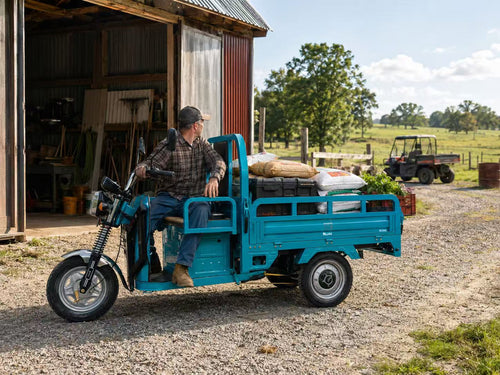
A cargo-bed electric utility vehicle can help with the movement part of this process.
Where Damaged Cartons Appear
Damaged cartons may appear at different points in a wholesale market.
They may be found at inbound receiving when a truck is unloaded. They may be found during order picking when workers pull goods from storage. They may appear during restocking when cartons are moved from the backroom to the front area. They may be noticed at customer pickup before loading. They may come back as returned goods from a customer or delivery route.
Common damaged goods situations include:
crushed outer cartons
wet cardboard corners
broken plastic crates
cracked foam boxes
loose packaging
opened cartons
dented dry goods cases
partially collapsed stacked boxes
returned goods needing inspection
cartons separated from a damaged pallet
These items should not be allowed to move through the market like normal goods until they are checked.
The Role of a Hold or Repack Area
A damaged carton needs a destination.
In a well-organized wholesale market, damaged goods should move to a hold area, inspection area, or repack area. This does not need to be a complicated system. It can be a clearly managed space where workers place goods that need review before they return to normal workflow.
A hold or repack area may be used for:
checking product condition
replacing outer cartons
separating usable goods from damaged packaging
holding items for supplier review
checking returned goods
preventing damaged goods from mixing with customer orders
keeping aisles and pickup areas clear
The important point is that damaged cartons should not stay in the active traffic path.
Once a damaged item is found, it should be moved away from receiving, staging, sales, or pickup areas and placed where it can be handled properly.
How an Electric Utility Vehicle Supports the Process
A cargo-bed electric utility vehicle is useful because damaged goods are often mixed, irregular, and short-distance.
A worker may need to move a few crushed cartons, several damaged produce crates, a cracked foam box, and a returned dry goods case from different points in the market. These items may not be full-pallet loads. They may not justify a forklift. They may be awkward for one hand cart, especially if the market is busy.
The cargo bed can keep these items together while they are moved to the inspection or repack area.
The vehicle can support:
receiving dock to damaged goods area movement
customer pickup area to hold area transfer
sales floor to repack area movement
returned goods to inspection area transfer
damaged cartons from staging to manager review
broken crates and packaging to sorting area
short-distance transfer of nonconforming goods
The vehicle is not a quality control tool. It does not decide whether goods are sellable. But it helps move questionable goods out of the normal workflow so workers can inspect them in the right place.
Do Not Mix Damaged Goods With Normal Orders
One of the biggest risks is mixing damaged goods with normal customer orders.
In a busy wholesale market, workers may prepare several orders at the same time. Cartons, crates, foam boxes, and bags may be grouped by customer, product type, temperature requirement, or delivery route. If damaged cartons sit too close to normal goods, they can be picked up by mistake.
This can lead to:
wrong goods loaded into customer vehicles
customer complaints about damaged packaging
delays while workers search for replacement goods
confusion between returned goods and sellable inventory
extra time spent correcting the order
The simplest rule is to keep questionable goods separate.
When a damaged carton is found, it should be moved away from active customer orders. A cargo-bed electric utility vehicle can help workers remove it quickly without stopping the entire operation.
Produce, Seafood, Meat, and Restaurant Supply Examples
Different wholesale categories handle damaged cartons differently.
In produce markets, a broken crate or crushed produce carton may need quick inspection. Some goods may still be usable if the inner product is clean and undamaged. Other items may need to be removed from sale. The damaged carton should not be left near normal produce orders.
In seafood markets, sealed foam boxes and closed cartons need clean handling. If a foam box is cracked or packaging is compromised, the item should be moved to a controlled inspection area. It should not be mixed with ready pickup orders.
In meat and frozen food distribution, sealed cartons should remain organized and separated when damage is found. Temperature-sensitive goods may need faster review and proper routing.
In restaurant supply warehouses, damaged cartons may include rice bags, oil cartons, paper goods, sauces, cleaning supplies, or packaging materials. Some may need repacking. Some may need supplier review. Some may need to be held away from customer-facing areas.
In every case, the goal is the same: separate first, inspect next, then decide.
Avoid Turning Aisles Into Inspection Areas
A damaged carton often appears at the worst time.
A truck is unloading. Customers are waiting. Workers are moving goods. The easiest choice may be to place the damaged carton beside a wall or near an aisle and deal with it later.
That creates clutter.
Aisles are not inspection areas. Loading lanes are not repack areas. Customer pickup zones are not return sorting areas.
A better process is to move damaged goods to a dedicated area as soon as possible. The space can be simple, but it should be separate from normal traffic and customer orders.
A cargo-bed electric utility vehicle can help by making this removal faster. Workers do not need to leave damaged cartons scattered across the market. They can place them in the cargo bed and move them to the correct holding point in one organized trip.
Returned Goods Need the Same Control
Damaged carton handling is not only about inbound goods.
Customer returns also need control.
A restaurant buyer may return a damaged case. A delivery driver may bring back a carton that was refused. A customer may point out crushed packaging before pickup is complete. These items should not go directly back into normal stock without inspection.
Returned goods should be treated as items needing review.
They may need to be checked, repacked, documented, returned to supplier, or removed from sellable inventory. If they are simply placed near normal goods, workers may accidentally sell or load them again.
A cargo-bed electric utility vehicle can move returned cartons from customer pickup or return areas to the proper inspection point without interrupting active sales or loading.
A Practical Damaged Carton Workflow
A simple damaged carton workflow can help a wholesale market stay organized.
First, workers identify the damaged or questionable carton.
Second, they separate it from normal customer orders or sellable stock.
Third, they place it in the cargo-bed electric utility vehicle.
Fourth, they move it to a hold, inspection, or repack area.
Fifth, a supervisor or responsible worker decides whether the goods should be repacked, returned, held, or removed.
This process keeps damaged goods from spreading confusion across the operation.
It also helps workers maintain cleaner receiving areas, clearer aisles, and more reliable customer pickup zones.
Why This Helps Customer Trust
Customers may accept that packaging damage sometimes happens. What they do not accept is a disorganized process.
If a customer sees damaged boxes mixed with their order, trust goes down. If they receive a crushed carton without explanation, they may question the seller. If workers need extra time to replace damaged goods at the last minute, the customer waits longer.
A clear damaged goods process shows that the wholesale business takes product handling seriously.
The electric utility vehicle supports this by helping workers remove questionable goods from active areas and move them to the correct place for review.
That makes the operation look cleaner and more controlled.
A Better Way to Handle Damaged Cartons
Damaged cartons, broken crates, cracked foam boxes, and returned goods are part of wholesale work. The important question is whether the market has a simple way to control them.
Leaving damaged goods in aisles creates clutter. Mixing them with normal orders creates mistakes. Letting them stay at the receiving dock slows movement. Moving them to a proper hold or repack area gives the business a better chance to inspect and decide.
A cargo-bed electric utility vehicle is useful because it supports short-distance movement of these questionable goods.
It helps move damaged cartons away from receiving, staging, sales, and pickup areas and toward the place where they can be inspected, repacked, returned, or removed.
For produce markets, seafood businesses, meat distributors, restaurant supply warehouses, cash-and-carry stores, and general wholesale operations, damaged carton handling is not just cleanup.
It is part of quality control, customer trust, and daily workflow management.