Wholesale Order Fulfillment System for Modern US Commercial Businesses
Share
Wholesale businesses are an essential part of the American economy. Every day, thousands of wholesalers supply products to restaurants, retail stores, contractors, farms, repair companies, hotels, schools, municipalities, and countless small businesses. Although the industries are different, their daily workflow is remarkably similar.
A customer arrives.
An order is placed.
Someone walks into the warehouse.
The requested products are picked from storage.
The order is organized.
The products are transported to the customer pickup area.
The customer loads the vehicle and leaves.
A few minutes later, the next customer arrives, and the entire process begins again.
Whether the business distributes produce, seafood, hardware, plumbing supplies, electrical materials, restaurant equipment, packaging products, flowers, agricultural supplies, or building materials, the workflow remains almost identical.
Wholesale businesses do not simply move products.
They complete customer orders.
Every customer order must move efficiently from warehouse storage to the customer’s pickup vehicle before the business can move on to the next sale.
For many American wholesale businesses, especially family-owned companies and independently operated distributors, this workflow is repeated continuously throughout the day. The owner may be serving customers at the front counter while another family member or employee prepares orders inside the warehouse. As customer orders continue to arrive, the same short-distance transportation task is repeated again and again.
The challenge is rarely long-distance transportation.
The real challenge is completing customer orders quickly, accurately, and efficiently inside the business itself.
Unlike large distribution centers where forklifts primarily move palletized freight, most wholesale businesses operate around customer orders rather than full truckloads. Every order is different. One customer may purchase ten cartons of restaurant supplies, another may need several boxes of plumbing fittings, while the next customer buys electrical components, hardware, produce, seafood, flowers, packaging materials, or agricultural products.
These are not full pallet shipments.
They are mixed customer orders that must be picked, checked, organized, and delivered to the customer pickup area as quickly as possible.
For many wholesale businesses, the warehouse is located directly behind or beside the sales counter. The distance between storage and customer pickup is often short, but the number of trips made throughout the day is surprisingly high.
The real cost is not distance.
The real cost is repetition.
Every completed order requires someone to leave the warehouse, transport the goods to the pickup area, help load the customer’s pickup truck, cargo van, or small trailer, and then return to the warehouse before preparing the next order.
As customer traffic increases, this repetitive workflow consumes valuable labor time that could otherwise be used to prepare the next sale.
This is where workflow efficiency becomes more important than transportation speed.
Instead of repeatedly interrupting warehouse operations, customer order preparation and customer order delivery can operate as two connected workflows.
While warehouse staff continue picking and organizing the next customer’s order, another person transports completed orders to the pickup area.
When that delivery is finished, the transporter immediately returns to collect the next completed order without interrupting warehouse productivity.
Another important advantage is the ability to move multiple customer orders during a single trip.
A properly organized cargo bed allows several completed orders to remain separated while being transported together from the warehouse to the pickup area.
Customer A’s order.
Customer B’s order.
Customer C’s order.
Each order remains organized, yet all three can be delivered during one transportation cycle.
The objective is not simply carrying more weight.
The objective is completing more customer orders with fewer unnecessary trips, smoother workflow, lower labor demand, and better customer service.
For wholesale businesses, operational efficiency is measured one completed
The future of wholesale operations is not determined only by larger warehouses or higher inventory levels. It is determined by how efficiently every customer order moves through the business.
The traditional order fulfillment process has changed very little over the past several decades. Warehouse staff still spend a significant portion of their working day walking between storage areas and customer pickup locations. Although each individual trip may only cover a short distance, the cumulative time spent on these repetitive movements becomes a major part of daily operations.
Modern wholesale businesses are therefore looking beyond simple transportation equipment. They are beginning to optimize workflow itself.
The objective is straightforward:
Reduce unnecessary walking.
Reduce repeated manual transportation.
Keep warehouse personnel focused on picking and organizing orders.
Allow completed orders to move continuously toward the customer pickup area without interrupting warehouse operations.
This is where short-distance industrial mobility creates value.
It does not replace forklifts.
It does not replace pallet trucks.
It does not replace warehouse shelving systems.
Instead, it connects the final operational gap between order preparation and customer pickup.
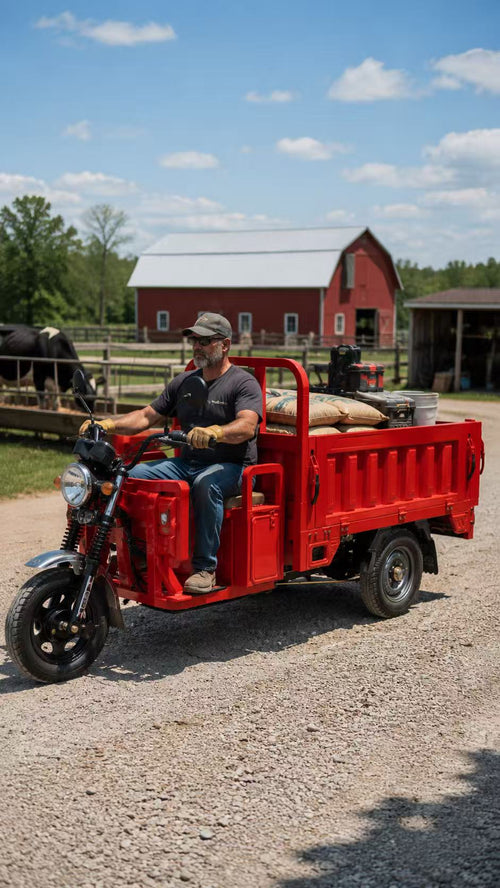
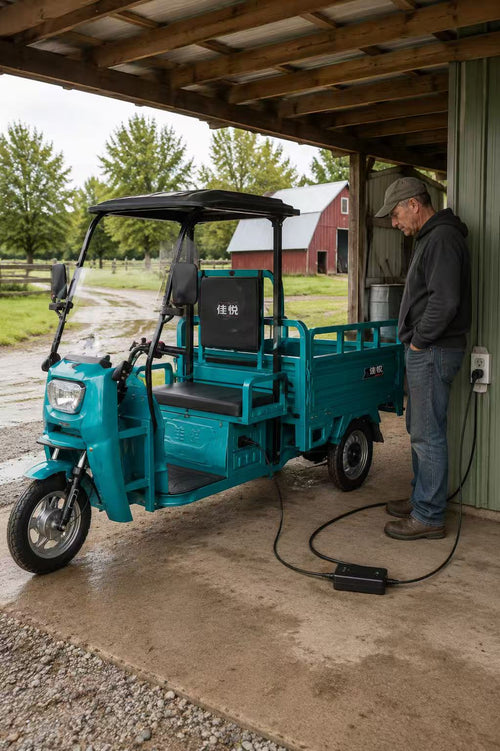
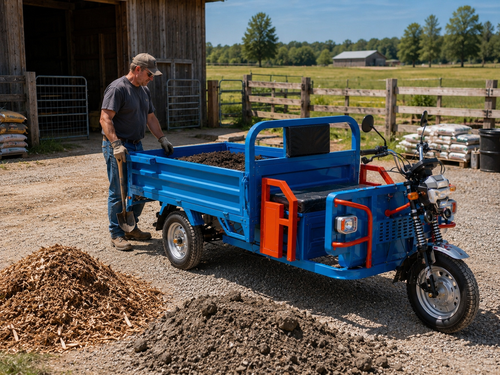
Within this workflow, a compact electric utility vehicle becomes more than a transportation tool.
It becomes part of the order fulfillment process.
Completed customer orders are loaded once.
They are transported efficiently to the pickup area.
Customers load their own vehicles.
The transporter immediately returns to collect the next completed order.
Meanwhile, warehouse staff continue preparing additional orders without interruption.
The result is a continuous operating cycle rather than a series of disconnected tasks.
For family-owned wholesalers, this means fewer unnecessary trips between the warehouse and the storefront.
For growing wholesale businesses, it helps employees focus on the work that generates revenue instead of repeatedly walking products across the property.
For customers, it reduces waiting time and creates a faster pickup experience.
Across produce wholesalers, seafood distributors, restaurant suppliers, hardware wholesalers, agricultural suppliers, packaging companies, building material distributors, and many other commercial businesses, the daily objective remains exactly the same.
Complete customer orders accurately.
Move them efficiently.
Serve the next customer without delay.
That is the foundation of a modern Wholesale Order Fulfillment System.
It is not defined by the type of products being sold.
It is defined by the efficiency of the workflow that connects the warehouse, the order, and the customer.