Common Mistakes Buyers Make When Choosing an Electric Dump Utility Vehicle
Share
Choosing an electric dump utility vehicle looks simple at first. Many buyers compare payload, motor power, battery size, and price, then assume the best option is the one with the highest number on the specification sheet. In real daily work, that is often the wrong way to make a buying decision.
Most buyers do not choose the wrong dump utility vehicle because they misunderstand the product. They choose the wrong vehicle because they misunderstand their daily workflow.
A good electric dump utility vehicle should match the materials you move, the number of trips you make, the space you work in, the terrain you drive on, and the way your team loads and unloads materials every day. Before buying, it is important to avoid several common mistakes.
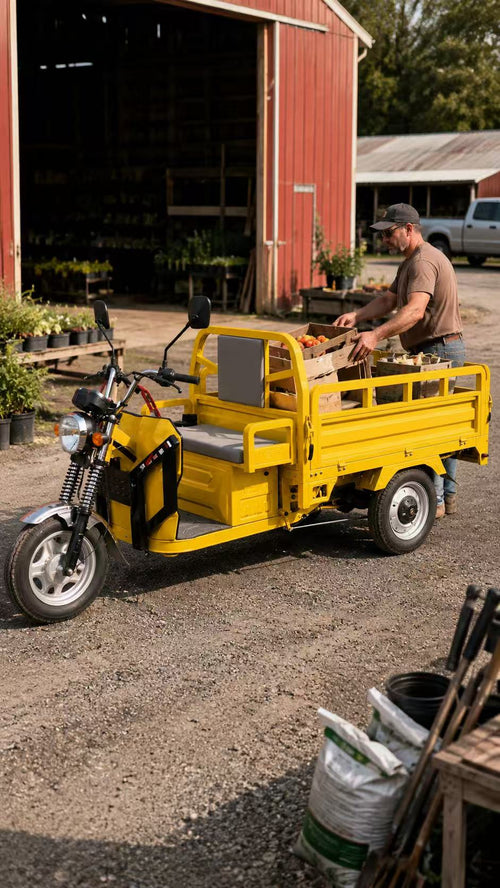
The first mistake is only looking at maximum payload. Payload matters, but it is not the whole story. A vehicle may be able to carry a heavy load, but if the cargo bed is too small for bulky materials like mulch, wood chips, hay waste, or greenhouse trays, the actual working efficiency will still be limited. Weight capacity and usable cargo volume should always be considered together.
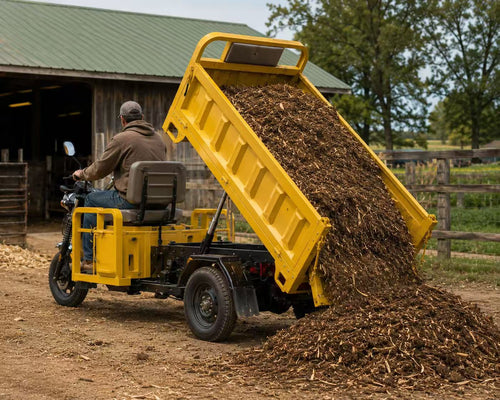
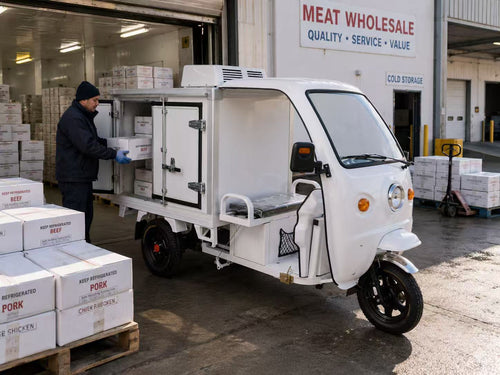
The second mistake is ignoring the type of materials being transported. Dry leaves, animal bedding, compost, gravel, wet soil, livestock manure, feed bags, firewood, and demolition debris do not behave the same way. Some materials are bulky but light. Others are dense and heavy. Loose materials such as sand, soil, mulch, manure, and gravel are usually well suited for a hydraulic dump bed, while boxed goods, fragile items, or bagged materials may require careful manual unloading instead of direct dumping.
The third mistake is choosing a manual dump bed for repeated heavy loads. A manual dump bed may be enough for light-duty or occasional use. However, if a farm worker, ranch hand, landscaper, or contractor unloads heavy materials many times per day, manual tipping quickly becomes tiring. The real value of a hydraulic dump bed is not only strength. It is reducing repeated lifting, saving time, and helping workers complete more loads with less fatigue.
The fourth mistake is buying a vehicle that is too large for the working area. Bigger is not always better. A large dump vehicle may carry more material in one trip, but it may also be harder to turn in narrow barn aisles, greenhouse paths, orchard rows, warehouse lanes, apartment maintenance areas, or livestock handling spaces. A compact electric dump utility vehicle often works better when daily jobs require frequent movement through tight areas.
The fifth mistake is ignoring terrain. A vehicle used on flat concrete floors has different requirements from one used on gravel roads, muddy farm paths, sloped ranch lanes, construction debris areas, or uneven nursery ground. Buyers should consider traction, stability, turning space, braking, and how the loaded vehicle behaves on real working surfaces.
The sixth mistake is underestimating battery and charging needs. Some buyers think only about travel range, but daily work is not always a simple round trip. Short-distance hauling often includes repeated starts, stops, loading, unloading, turning, and slow movement under load. A practical charging plan matters. The vehicle should fit the working schedule instead of forcing the operator to stop in the middle of the day.
The seventh mistake is buying only by price. A lower purchase price may look attractive, but the cheapest option is not always the lowest-cost option over time. If the vehicle requires extra manual labor, creates more trips, slows down unloading, or does not fit the job site, the hidden cost can be much higher than the initial savings. For commercial users, daily productivity often matters more than the lowest upfront price.
The eighth mistake is not thinking about who will operate the vehicle. A utility vehicle may be used by farm owners, employees, maintenance workers, older operators, seasonal workers, or different team members throughout the day. Controls should be simple, unloading should be predictable, and the vehicle should make the job easier for the person actually doing the work.
The best way to choose an electric dump utility vehicle is to start with work questions instead of product numbers:
What materials do you move most often?
How many loads do you move per day?
How far is each trip?
Do you work in tight spaces?
Do you need hydraulic dumping or manual unloading?
Is your ground flat, sloped, muddy, or rough?
Will the vehicle save enough labor to justify the investment?
When buyers answer these questions clearly, the right vehicle becomes much easier to identify.
An electric dump utility vehicle is not just a machine for carrying weight. It is a short-distance material handling tool. The right choice should reduce unnecessary trips, make unloading easier, protect workers from repetitive strain, and keep daily operations moving smoothly.
Before buying, avoid choosing based only on the biggest payload, lowest price, or strongest-looking specification. Choose based on the real work your vehicle must perform every day. That is the difference between buying a vehicle that looks good on paper and buying one that actually improves productivity in the field.