Skid Steer or Electric Dump Cart? Matching the Equipment to Small Material Jobs
Share
Not every material handling job requires a skid steer.
Skid steers are powerful machines. They can dig, lift, grade, scrape, load trucks, move heavy material, and work on demanding construction or landscaping sites. For many jobs, they are the right tool.
But some daily material jobs are different.
A farm, ranch, horse stable, landscaping crew, nursery, rural property owner, or small construction team may not need to dig, grade, or lift heavy pallets. They may simply need to move mulch, soil, compost, gravel, manure, wood chips, bedding waste, sand, branches, tools, or cleanup debris over short distances many times a day.
For that kind of work, the better question is not, “What is the most powerful machine?”
The better question is, “What equipment matches the job?”
A compact electric dump cart and a skid steer are not the same type of machine. They solve different problems. Understanding that difference helps buyers avoid overspending, over-equipping, or choosing equipment that is too large for the daily task.
What does a skid steer do well?
A skid steer is useful when the job requires force, attachment use, and heavy site work.
It can dig into piles, scoop material, load trucks, move pallets with the right attachment, scrape surfaces, grade soil, clear rough debris, prepare construction areas, and handle larger site tasks. On jobs where the operator needs to cut, push, lift, level, or load heavy material quickly, a skid steer may be the better tool.
For construction contractors, excavation crews, large landscaping projects, grading work, demolition cleanup, and heavy material staging, a skid steer can be very valuable.
The key point is simple: skid steers are not just hauling machines. They are heavy equipment platforms.
What does an electric dump cart do well?
An electric dump cart is better suited for repeated short-distance hauling and controlled unloading of suitable loose materials.
It is not designed to replace a skid steer for digging, grading, lifting heavy pallets, or rough excavation work. Instead, it helps move materials that are already loaded into the cargo bed or can be loaded by hand, shovel, small loader, or crew.
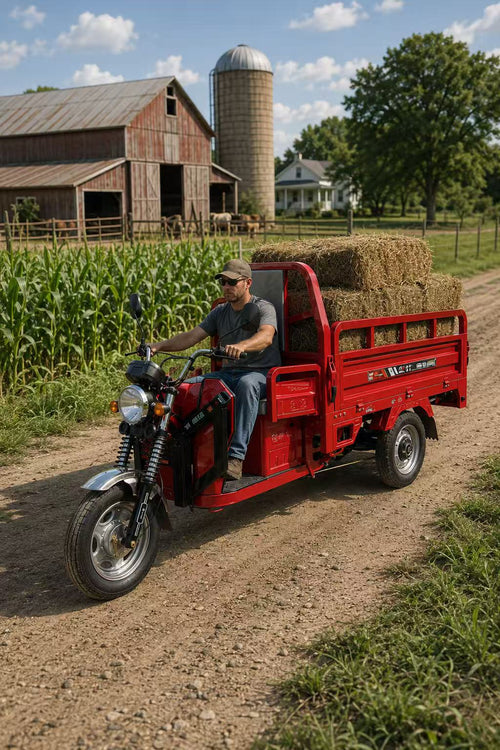
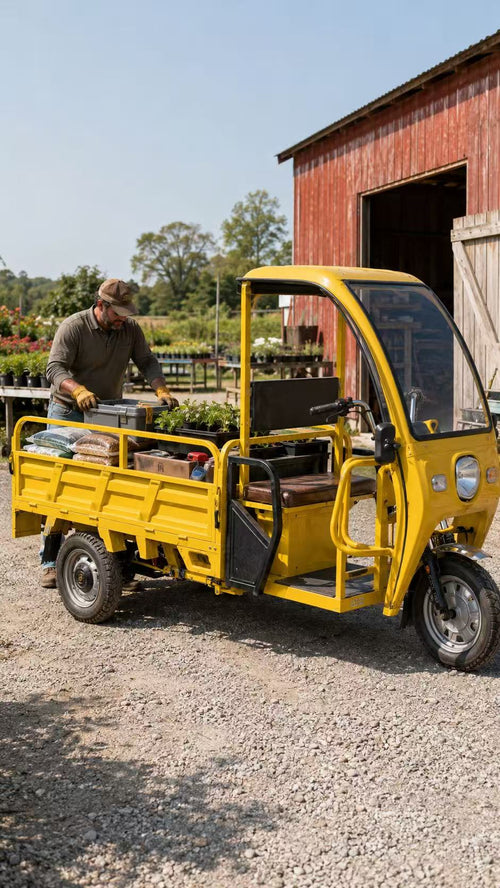
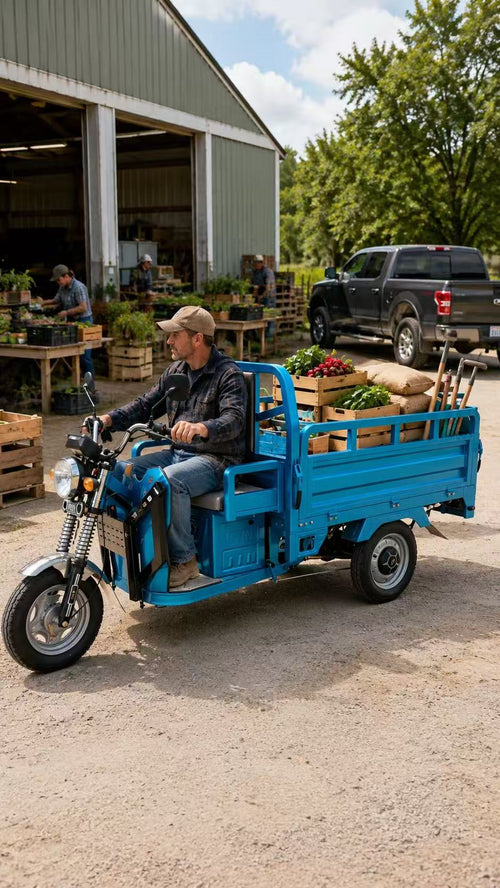
A hydraulic dump utility vehicle can carry loose bulk materials such as soil, gravel, manure, compost, mulch, wood chips, sand, bedding waste, and yard debris. When the material is suitable for dumping, the hydraulic dump bed can reduce the manual effort needed to unload.
For farms, ranches, stables, landscaping crews, nurseries, greenhouses, property maintenance teams, and small work crews, this can be exactly the kind of equipment needed for daily material movement.
When is a skid steer more machine than the job needs?
A skid steer may be more machine than necessary when the work is mostly short-distance hauling, not digging or grading.
For example, moving mulch from a driveway to planting beds may not require a skid steer if the material only needs to be transported and dumped nearby. Hauling manure from a stable to a compost pile may not require a loader if the main task is repeated movement. Carrying small loads of gravel for driveway patching may not require a heavy machine if the work area is tight and the load can be moved in controlled trips.
In these cases, a compact electric dump hauler may be easier to use, easier to position, and more practical for frequent small jobs.
The goal is not to avoid skid steers. The goal is to avoid using heavy equipment when a smaller material handling vehicle matches the task better.
When is a skid steer the better choice?
A skid steer is usually the better choice when the job requires digging, scooping from large piles, lifting high, grading ground, pushing heavy material, using attachments, loading trucks, or working in rough construction conditions.
If the job involves cutting into compacted soil, spreading and grading large areas, lifting heavy pallets, moving large rocks, clearing demolition debris, or loading material into high-sided trucks, an electric dump cart is not the right replacement.
A dump cart can help move material from one point to another, but it does not perform the same heavy mechanical work as a skid steer.
This distinction matters because honest equipment matching builds better buying decisions.
When is an electric dump cart the better fit?
An electric dump cart is often a better fit when the job is repeated, short-distance, ground-level material movement.
Good examples include moving compost from a pile to garden beds, carrying mulch around a landscaping site, hauling manure and bedding waste from a barn to a compost area, transporting wet soil around a small farm, moving gravel for small repair spots, carrying wood chips in a nursery, or removing yard debris from a property.
These jobs may not need digging power. They need steady hauling, easy access, controlled speed, and practical unloading.
A battery powered dump cart is especially useful when workers need to repeat the same route many times without starting a large machine for every small load.
Is an electric dump cart a skid steer alternative?
It can be an alternative for some small material transport jobs, but it is not a complete replacement for a skid steer.
For buyers searching for a skid steer alternative for small jobs, the important word is “small.” If the job requires heavy excavation, grading, lifting, or attachment work, a skid steer is still the right machine. If the job is mostly moving loose material from one place to another, an electric dump cart may be a more practical choice.
A compact electric dump hauler works best as a hauling and unloading tool, not as an excavation machine.
This makes it valuable for small crews that need daily material movement but do not want to use oversized equipment for every task.
Why does equipment size matter for small material jobs?
Equipment size affects access, ground impact, turning space, storage, transportation, and daily convenience.
A skid steer may be powerful, but it may be too large or heavy for narrow garden paths, barn aisles, small yards, greenhouse rows, apartment maintenance areas, soft lawns, finished landscapes, or tight backyard access. It may also require transport planning, skilled operation, and more space to maneuver.
A small electric work vehicle is easier to use in many compact environments. It can help workers move material closer to the actual work area without turning every small hauling task into a heavy equipment operation.
When the job is small and repeated, convenience matters.
How does hydraulic dumping change the comparison?
Hydraulic dumping gives an electric dump cart an important advantage over simple manual carts.
Loose materials such as mulch, compost, soil, manure, gravel, sand, wood chips, and bedding waste often need to be unloaded repeatedly. Without hydraulic dumping, workers may still need to shovel, tip, pull, or lift material by hand. A hydraulic dump bed reduces that unloading effort when the material is suitable.
A skid steer can scoop and dump material, but it may not always be convenient for tight areas or small repeated routes. A hydraulic dump utility vehicle can move a practical load and unload at ground level near the work area.
For small material jobs, this combination of hauling and dumping can be more useful than raw machine power.
What about wheelbarrows and hand carts?
Wheelbarrows and hand carts are simple and low cost, but they become tiring when the job repeats many times. A worker may be able to move one load of mulch, soil, compost, manure, or gravel by hand, but daily repeated hauling can become slow and physically demanding.
An electric dump cart fills the gap between wheelbarrows and heavy equipment. It is larger and more productive than manual tools, but smaller and easier to use than a skid steer for many daily tasks.
This middle position is important. Many small crews do not need the largest machine. They need a practical tool that reduces repeated manual labor.
What jobs are a good match for an electric dump cart?
An electric dump cart is a good match for jobs where material must be moved repeatedly across short distances and unloaded at or near ground level.
Common examples include:
moving mulch around landscaping beds,
hauling soil to garden areas,
transporting compost on farms or rural properties,
moving manure and bedding waste from stables,
carrying gravel for small driveway repairs,
moving wood chips in nurseries,
transporting yard debris after cleanup,
carrying tools and supplies around a property,
supporting barn, ranch, or greenhouse maintenance,
moving loose material where a large loader is unnecessary.
These jobs depend more on workflow than on heavy excavation power.
What jobs are not a good match for an electric dump cart?
An electric dump cart is not the right tool for every job.
It is not designed for digging into compacted soil, grading large surfaces, lifting heavy loads high into trucks, pushing large piles, handling oversized demolition debris, or replacing heavy construction equipment on demanding jobsites.
If the job requires loader attachments, high lifting, heavy pushing, rough grading, or continuous industrial site work, buyers should consider a skid steer, compact loader, tractor, or other appropriate equipment.
Choosing the right tool also means knowing what not to expect from it.
Should buyers rent a skid steer or use an electric dump cart?
The answer depends on the task.
If the job is a one-time project that requires digging, grading, loading, or heavy material movement, renting a skid steer may make sense. If the work is repeated daily or weekly and mainly involves moving loose materials around a farm, stable, property, landscaping site, nursery, or small work area, an electric dump cart may deliver more day-to-day value.
A skid steer may solve a large project quickly. An electric dump cart may solve many smaller material handling problems over time.
Buyers should compare the job type, not just the machine size.
What should small crews consider before choosing?
Small crews should ask practical questions before choosing between a skid steer and an electric dump cart.
Do you need to dig, grade, scrape, or lift?
Or do you mainly need to haul and unload material?
Is the work area open or tight?
Is the ground rough, soft, finished, or sensitive?
How many short trips happen in a normal day?
Will workers move mulch, soil, gravel, compost, manure, wood chips, sand, or debris?
Does the material need to be dumped at ground level?
Will a large machine be inconvenient for daily use?
Will a smaller electric vehicle reduce manual labor without creating extra complexity?
These questions help match equipment to the real job.
Why does this matter for farms and property owners?
Many farms, ranches, stables, landscaping businesses, and rural property owners work with limited labor. They may not need heavy equipment every day, but they do need to move material constantly.
A skid steer may sit unused between major projects. A compact electric dump hauler may be used every day for smaller jobs: hauling manure, carrying feed waste, moving compost, transporting mulch, patching gravel areas, cleaning up debris, or moving tools.
The value of daily equipment is not only measured by power. It is measured by how often the equipment solves real work problems.
The right equipment depends on the job
A skid steer and an electric dump cart are both useful, but they are useful for different reasons.
A skid steer is a powerful machine for digging, grading, loading, lifting, pushing, and demanding site work. An electric dump cart is a practical material handling vehicle for repeated short-distance hauling, low-speed transport, and controlled unloading of suitable loose materials.
One is not automatically better than the other.
The best choice depends on the work.
If the job requires heavy equipment functions, use the right heavy equipment. If the job requires moving soil, mulch, compost, manure, gravel, wood chips, sand, bedding waste, tools, or debris across short distances many times a day, a compact electric dump hauler may be the more practical solution.
Before choosing equipment, do not ask only, “Which machine is stronger?”
Ask, “Which machine fits the job I actually do every day?”