Non-Palletized Goods Handling in Wholesale Markets
Share
Wholesale markets handle far more than palletized freight. In many seafood markets, produce terminals, meat distribution areas, restaurant supply warehouses, and mixed-goods wholesale buildings, a large part of the daily workload comes from loose cartons, produce crates, foam boxes, bagged supplies, sealed food boxes, and mixed customer orders that are not organized on standard pallets.
This is where non-palletized goods handling becomes an important part of wholesale market operations.
Forklifts and pallet jacks are useful for pallet movement, but they do not solve every daily transport task. Many market workers still need to move boxes from one stall to another, carry mixed orders from storage to customer pickup areas, transport sealed cartons from cold rooms to loading zones, or move irregular goods through narrow aisles and crowded workspaces. These tasks are often short-distance, repetitive, and too small or too mixed for forklift-only handling.
A compact cargo-bed electric utility vehicle can help fill this gap.
It provides a practical short-distance hauling solution for wholesale businesses that move non-palletized goods every day. Instead of depending only on manual carts, hand carrying, or larger equipment, workers can use a small electric cargo vehicle to move cartons, crates, foam containers, packaging supplies, and mixed business orders more efficiently.
Why Non-Palletized Goods Matter in Wholesale Markets
Many wholesale operations are built around fast turnover rather than perfect warehouse uniformity. A seafood wholesaler may receive boxed products packed with ice. A produce vendor may prepare mixed fruit and vegetable orders in different box sizes. A restaurant supply warehouse may load rice bags, cooking oil cartons, sauce cases, disposable containers, and cleaning supplies in the same customer order. A general merchandise wholesaler may move small cartons, bulk packs, and irregular supplies that are not stacked on pallets.
These are real working conditions in modern wholesale markets.
Non-palletized goods handling usually involves:
mixed boxes and loose cartons
produce crates and fruit boxes
foam seafood boxes and ice containers
sealed meat cartons and frozen food boxes
restaurant supply orders
paper goods and packaging materials
small customer pickup orders
short-distance transfer between storage, sales, and loading areas
Because these goods are mixed, irregular, or handled in smaller batches, businesses often need a more flexible material handling method.
Why Forklifts Are Not the Whole Answer
Forklifts remain important in wholesale markets. They are the right tools for moving heavy pallets, handling standard warehouse storage, and loading palletized goods onto trucks. Pallet jacks are also useful for moving pallet loads across flat floors.
But many wholesale market transport jobs are not true pallet jobs.
A worker may need to move ten mixed cartons to a customer van, restock a stall with several produce crates, take foam boxes from a seafood cold room to a pickup zone, or carry restaurant supply items through a tight aisle where a forklift is not the most practical option. In these situations, a compact electric utility vehicle offers a different kind of value.
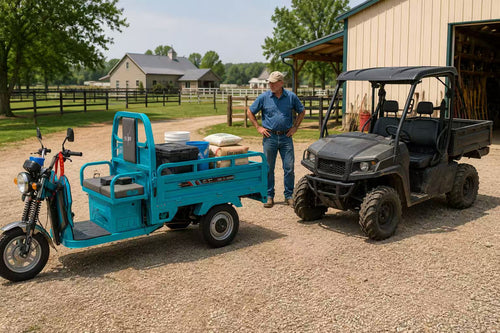
It is not designed to replace forklifts. It is designed to support daily non-palletized goods transport, mixed box handling, and short-distance hauling in real working environments.
How a Cargo-Bed Electric Utility Vehicle Helps
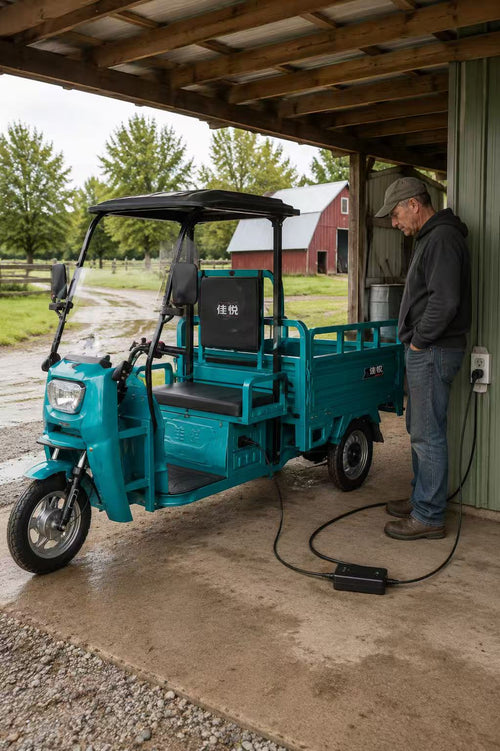
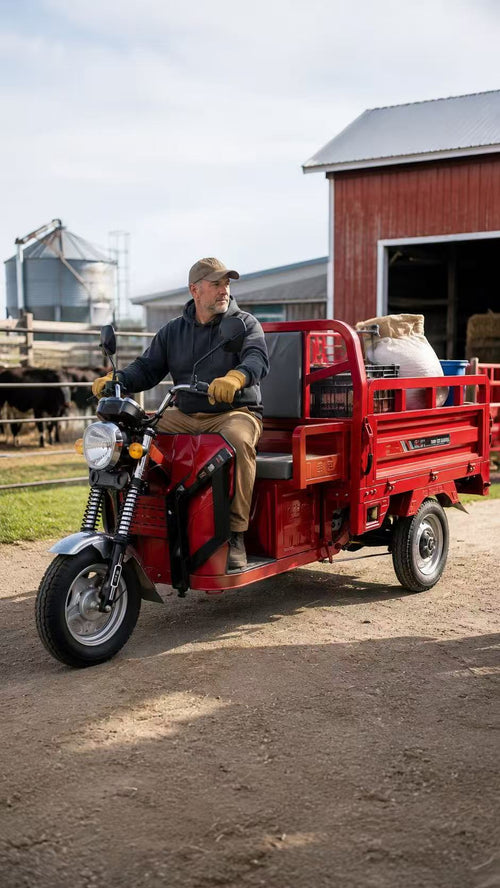
A cargo-bed electric utility vehicle gives wholesale workers a simple way to move non-palletized goods without relying only on manual effort. Its open cargo bed can hold cartons, crates, bags, boxes, and supplies. Its compact size makes it easier to move through loading areas, market lanes, warehouse paths, and pickup zones. Its low-speed electric operation is suitable for repeated internal transport in busy commercial environments.
For non-palletized goods handling, this type of vehicle can support:
carton transport between storage and loading areas
mixed order movement for customer pickup
produce crate transport inside market buildings
foam box handling in seafood distribution areas
restaurant supply loading support
small warehouse restocking work
short-distance hauling between cold rooms and truck areas
daily movement of irregular goods that are difficult to palletize
This matters because non-palletized goods are often the most labor-intensive part of wholesale work. They require frequent handling, repeated movement, and flexible routing.
Seafood, Produce, Meat, and Restaurant Supply Applications
In seafood wholesale markets, workers often move foam boxes, packed seafood containers, and support materials between cold rooms, sorting areas, and vehicle pickup points. In produce wholesale markets, workers handle fruit cartons, vegetable crates, mixed orders, and replenishment loads across short distances. In meat and frozen food distribution areas, sealed cartons may need to move quickly from storage to loading points. In restaurant supply warehouses, mixed orders often combine food products, paper goods, sauces, bags, and cleaning materials in one trip.
These are exactly the kinds of jobs where non-palletized goods handling becomes a daily operational issue.
A compact electric cargo trike or small electric utility vehicle can make these routes easier to manage. It allows workers to carry more than a hand cart, stay more flexible than a forklift, and move goods in spaces where larger warehouse equipment may be inconvenient.
Customer Pickup and Mixed Order Efficiency
One of the most common non-palletized handling problems in wholesale markets is customer pickup preparation.
Many small grocery stores, seafood retailers, restaurants, butcher shops, and local resellers do not always buy full pallet quantities. They often buy mixed goods in smaller volumes. That means workers must gather different products, combine them into one order, and move them to a pickup truck, van, or box truck.
This is not always a forklift task.
A cargo-bed electric utility vehicle is useful because it supports mixed order transport. Workers can place different cartons, crates, and boxes on the cargo bed and move them together in one trip. This helps reduce repeated walking, manual lifting, and unnecessary delay during busy pickup periods.
A Better Fit for Crowded Wholesale Workspaces
Wholesale markets are often busy, crowded, and space-limited. There may be parked trucks, customers waiting, narrow aisle paths, wet floors, temporary stacks of boxes, or multiple vendors working at the same time. In these spaces, a flexible and compact transport vehicle becomes valuable.
A small electric utility vehicle fits this environment well because it supports:
short turning movement
quick stop-and-go transport
repeated internal hauling
box and crate handling
compact maneuvering near stalls and loading areas
For many wholesale businesses, the goal is not to replace all equipment. The goal is to improve the way non-palletized goods move through the market.
A Practical Material Handling Tool for Daily Wholesale Work
Non-palletized goods handling is not a small issue in wholesale markets. It is a daily workflow problem that affects labor time, transport speed, and order preparation efficiency.
Forklifts handle pallets.
Pallet jacks move pallet loads.
But mixed cartons, produce crates, seafood foam boxes, sealed food boxes, and customer pickup orders still need a practical short-distance transport solution.
That is where a cargo-bed electric utility vehicle becomes useful.
For seafood markets, produce wholesalers, meat distribution areas, restaurant supply warehouses, and general wholesale operations, this type of vehicle can support daily material handling in a way that is simple, flexible, and easier to fit into real market work.
When a wholesale business handles more loose cartons than pallets, more mixed orders than standard loads, and more short-distance movement than long warehouse runs, a compact electric utility vehicle can become an effective part of everyday non-palletized goods handling.