Tips to Choose a Reliable Electric Hauling Trike for Your Farm Produce Operation
Share
American small‑scale produce‑based businesses cover a wide range of operating types, from part‑time weekend roadside vendors and year‑round family farms to large commercial orchards, greenhouse growing facilities and local wholesale suppliers. Many independent growers waste hundreds of dollars by purchasing an unsuitable electric cargo tricycle, simply because they do not match vehicle specifications with their daily hauling conditions. This detailed guide explains exactly how to choose a proper electric farm trike, based on your work location, regular load weight, daily driving range, local road conditions and long‑term budget.
Figure Out Your Daily Operating Scenario
Your working environment is the first factor to narrow down your choices, since different farm‑to‑market jobs require trikes with totally different dimensions and performance.
Weekend‑only Market Vendors
If you only sell fresh fruits and vegetables at crowded city farmers‑markets on weekends, go for a slim compact‑size electric cargo trike. Its narrow‑width frame moves easily through packed market walkways, and fits through narrow farm‑gate openings. The moderate‑size cargo bed carries 200‑350 pounds of produce for one‑day market sales, which fully satisfies part‑time business demands.
Full‑Time Family Produce Farms
Full‑time family‑run farms usually finish early‑morning deliveries to nearby markets, hauling 400‑500 pounds of crops every single day. A standard‑size farm utility trike with reinforced rear suspension works best for this group. Balanced overall size adapts to both farm dirt roads and paved public roads.
Large‑Scale Commercial Growers & Wholesale Distributors
Commercial‑scale growers supplying bulk produce to wholesale markets need heavy‑duty three‑wheel electric hauling vehicles. Extended‑length cargo beds, high‑torque motors and upgraded load‑bearing frames support non‑stop high‑weight transport throughout harvest seasons.
Special‑Site Operators: Orchards, Greenhouses, Seafood Markets
Orchard‑harvest trikes need shorter overall length to travel along tight rows of fruit trees. Greenhouse transport tricycles must have slim bodies and emission‑free power systems, to avoid heat and exhaust gas harming sensitive seedlings. Trikes for seafood wholesale markets require fully sealed electrical parts to resist constant damp, salty air.
Key Hardware Specifications To Compare
Once you confirm your operating type, examine four core hardware indexes to filter qualified electric farm trikes.
Motor Torque for Different Road Conditions
Standard‑power motors are fine for paved roads in markets and warehouses. If you regularly travel along muddy or uneven farm paths, pick a high‑torque motor. Strong climbing power prevents the trike from getting stuck on wet soil after rainfall, a common issue for rural American growers.
Cargo Bed Dimension and Maximum Load Capacity
Never choose a trike purely based on its listed maximum load rating. Check usable cargo‑bed space first. Stackable plastic harvest crates take up horizontal room, so a long, wide cargo bed matters more than raw weight capacity for most produce hauling jobs.
Battery Range and Climate Adaptability
Most standard lithium‑ion batteries deliver 35‑45 miles per full charge, enough for 2‑3 daily trips between farmland and nearby marketplaces. If you travel to multiple market sites spread across suburban counties, upgrade to long‑range batteries. Northern‑area farmers need cold‑resistant sealed‑type batteries, to avoid shortened runtime during freezing winter months, while southern growers need batteries that stand up to continuous high heat.
Frame Structure and Long‑Term Maintenance Cost
Trikes working in muddy, damp surroundings (orchards, greenhouses, seafood markets) must use fully‑sealed motors to block out mud, moisture and plant waste. Our whole trike series uses interchangeable spare parts, which local US repair shops can replace quickly, cutting down maintenance downtime during busy harvest periods.
Budget Tier Breakdown
You can match your purchase budget with three clear vehicle classes.
Entry‑level compact trikes suit seasonal, hobby‑style growers with low yearly income, for casual weekend market sales.
Mid‑range electric cargo tricycles strike a perfect balance between reliable components and reasonable pricing, creating the highest return on investment for full‑time independent vendors.
Commercial‑grade heavy‑duty trikes are built for established wholesale‑supply farms, designed for years of non‑stop heavy‑load daily‑use.
Local On‑Site After‑Sales Repair Support
One major concern among many farmers is finding skilled technicians to fix electric motors, wiring systems and chassis damage once the trike breaks down, especially during critical planting or harvesting seasons. We maintain a nationwide network of local agricultural mechanics who specialize in electric farm equipment repair. These nearby technicians know how to service three‑wheel hauling trikes, handling motor rewinding, battery troubleshooting, suspension replacement and electrical circuit repairs right on your farm. Whenever you buy our cargo trike, we will connect you with qualified local mechanics close to your location for routine maintenance or emergency breakdown service, to keep your hauling work going without long delays.
Real‑World Comparison Of The Three Trike Styles
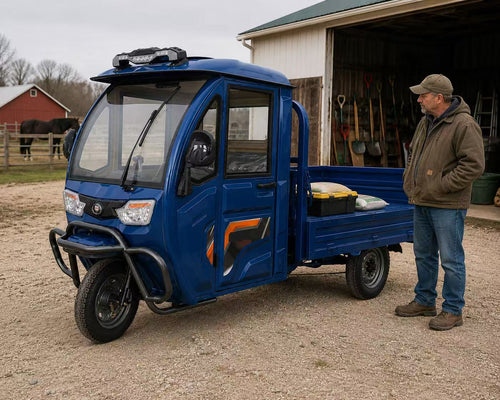
Our compact‑size electric trike is built for weekend‑only market vendors. It has a 320‑pound load‑bearing capacity and reaches a maximum driving range of 40 miles. With a body width of 48 inches, it can navigate narrow market aisles and tight farm gateways without difficulty.
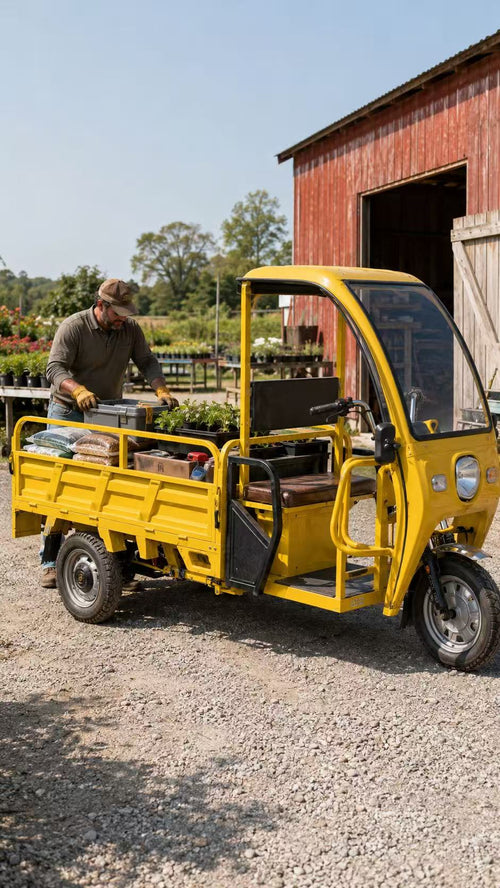
The standard‑size model is designed for full‑time family‑run produce farms. It can haul up to 450 pounds of harvested crops, with a battery range of roughly 42 miles. Its 56‑inch‑wide frame strikes a nice balance, performing steadily both on rough dirt farm roads and paved public roadways for daily early‑morning deliveries.
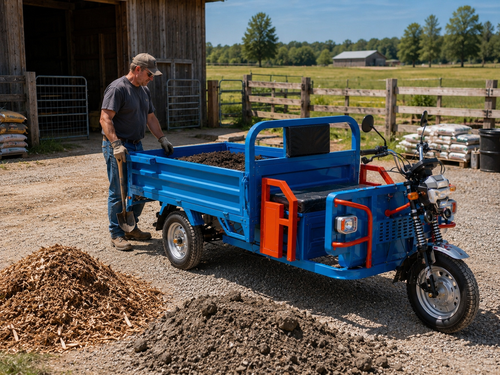
For large‑scale wholesale growers, our heavy‑duty trike provides a maximum load capacity of 620 pounds. Though its 38‑mile battery runtime is slightly shorter due to heavier‑duty components, its 64‑inch‑wide extended cargo bed handles bulk‑quantity shipments for wholesale markets throughout long harvest seasons.
Final Selection Checklist
Before you place your order, go through this short checklist:
1. Confirm the trike’s width fits your regular passageways (market aisles, orchard rows, greenhouse walkways).
2. Check that its maximum daily hauling capacity matches your usual produce weight.
3. Calculate daily driving distance, and choose a battery with sufficient range for your longest workday route.
4. Match motor and sealing‑grade components with your local road and weather conditions.
5. Pick a model that fits your 3‑5‑year long‑term operating budget.
6. Confirm nearby after‑sales repair service can support you throughout harvest‑heavy months.
After checking all these points, you can easily find the proper electric farm trike for your produce‑related business. If you want to look through transport solutions built for separate working‑scenario operations, view our main multi‑purpose farm utility‑vehicle guide.