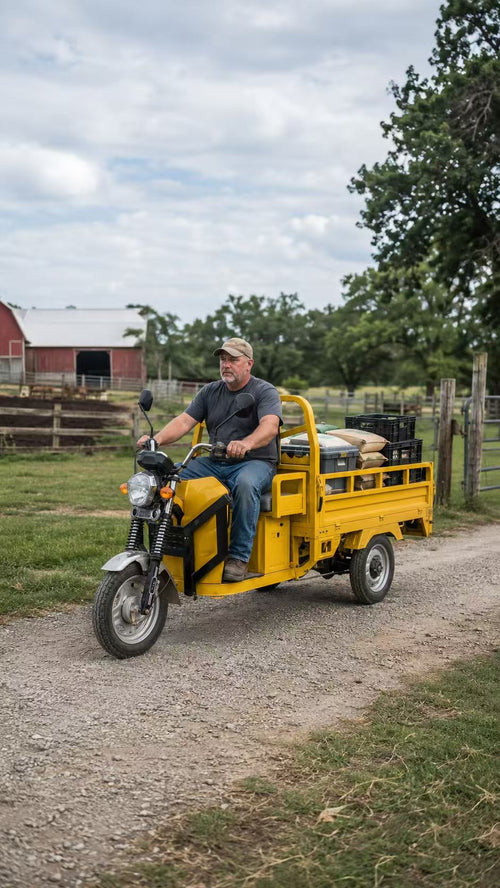
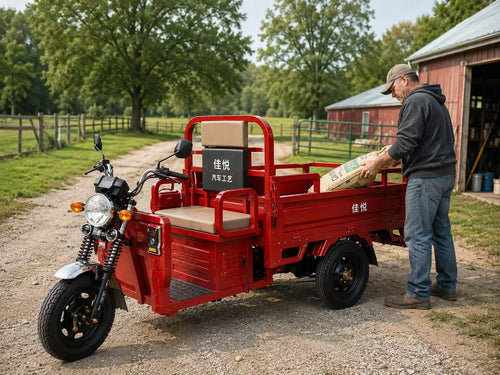
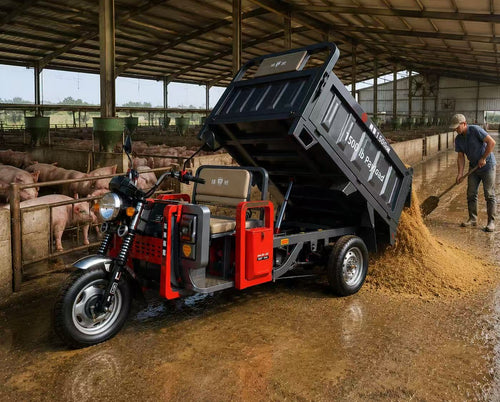
Seafood vendors make countless short trips every single business day. Most transport runs span only tens of meters, travelling between stall fronts, cold‑storage areas and delivery drop‑off points. Traditional gasoline‑powered utility vehicles perform extremely poorly under repeated start‑and‑stop driving conditions.
Internal‑combustion engines burn excessive fuel during constant idling and repeated acceleration. Diesel prices remain volatile across United States coastal regions, creating steady monthly fuel‑related spending for market‑based businesses. Gas‑powered carts also release exhaust fumes inside partially‑enclosed market corridors. Local market management teams regularly fine vendors for poor air quality in crowded work zones. Regular oil changes, spark‑plug replacements and engine maintenance add further long‑term operating costs for stall owners.
Switching to an electric work trike eliminates most of these recurring expenses. Electricity costs are minimal for daily hauling tasks. Zero‑emission operation avoids exhaust‑related penalties from market authorities. Fewer mechanical moving‑parts also drastically cuts regular service and repair work for year‑round operation.
For family‑run seafood stalls, cutting consistent fuel and maintenance costs directly improves yearly profit margins without sacrificing hauling performance.