Practical 3‑Wheel Electric Work Trike for Daily Hauling In US Seafood Wholesale Markets
Share
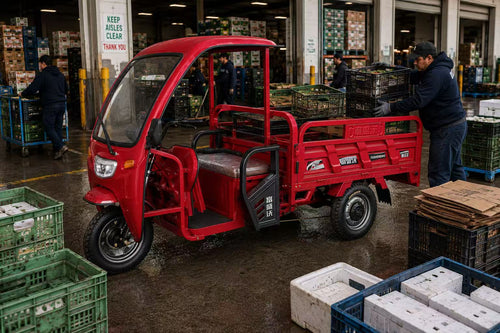
Coastal seafood wholesale markets across the United States, such as Seattle’s Pike Place wholesale seafood district, operate non‑stop from early dawn until late evening. Narrow concrete aisles remain continuously damp from melted ice, seawater and wastewater generated from seafood processing. Operators here rely on hauling vehicles for constant short‑distance deliveries between stalls and cold‑storage areas, putting heavy daily wear on their equipment.
Most high‑end utility‑vehicle brands from the United States build bulky, heavy‑duty carts for farms and construction sites. These premium‑priced vehicles rely on proprietary components. When exposed to the damp, salt‑rich conditions of seafood markets, any wear and tear leads to costly replacement parts and lengthy repair times, which creates ongoing financial pressure for small‑scale stall owners.
Local industry terms for hauling vehicles used within seafood yards: waterfront haul cart, ice crate shuttle, market shuttle cart, electric work trike, low‑speed utility vehicle (LSV). Our compact 3‑wheel electric trike has become a practical daily‑use transport solution for local vendors, mainly thanks to its great maneuverability, low running expense and affordable upkeep.
Core Pain Points for American Seafood Wholesale Operators
1. Poor mobility in narrow aisles. Passageways inside seafood markets are relatively tight. Large forklifts and oversized branded carts cannot make quick turns, slowing down cargo transfers between adjacent stalls.
2. High‑frequency stop‑and‑go operation. Vendors haul seafood crates throughout the whole day. Gas‑powered carts waste a great deal of fuel during repeated short trips and idling periods.
3. Expensive long‑term maintenance. High‑end work carts use exclusive spare parts. Repair costs rise steadily when vehicles endure constant exposure to salt‑laden moisture in seafood markets.
4. High upfront purchase cost. Premium utility carts carry steep price tags, which places a heavy financial burden on individual small‑business vendors.
5. Low‑efficiency manual handling. Stacked seafood containers are heavy, and constant hand‑carrying wears out workers and slows down daily restocking.
Key Advantages of Our Electric Work Trike
1. Excellent agility for market‑wide use. Its compact frame and tight turning‑radius let drivers navigate narrow, crowded market aisles easily. It can be parked conveniently beside stalls whenever needed.
2. Budget‑friendly initial purchase cost. Its wholesale price is far lower than high‑end commercial hauling carts, making it an easy investment for individual seafood vendors.
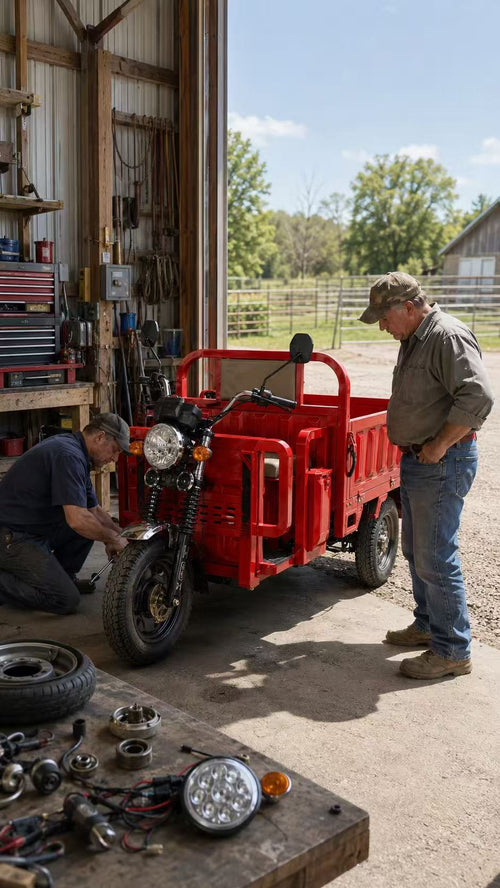
3. Extremely low‑cost maintenance . It uses widely‑available standard parts. If any components become worn after long‑term work in damp market conditions, replacements can be sourced locally at a low price, without expensive brand‑specific service fees
4. Efficient daily hauling capacity. It easily carries stacked seafood crates, cutting down manual labor and speeding‑up stall restocking and cross‑stall cargo transfers.
5. Low daily‑operating expense. Electric power greatly cuts daily fuel costs compared with gas‑powered carts, perfectly fitting all‑day frequent‑use scenarios in wholesale markets.
Common Daily‑Use Scenarios in American Seafood Markets
1. Transporting ice‑filled seafood crates between neighboring wholesale stalls
2. Back‑and‑forth hauling between cold‑storage facilities and sales stalls
3. Moving bulk‑quantities of shellfish, salmon and other seafood products
4. Clearing away ice scraps, seafood waste and general market refuse
5. Carrying maintenance tools and cleaning supplies for market staff
FAQ Google PAA Weight‑Boosting Section
Q1: Which hauling cart works best for seafood wholesale markets along US coasts?
A1: Compact electric work trikes are widely preferred by local vendors. Their tight turning radius works well for narrow aisles, and low‑cost parts keep long‑term operating expenses under control for daily heavy‑duty use.
Q2: Do electric trikes save money compared with gas‑powered carts for seafood‑market work?
A2: For 10‑12‑hour daily operation within wholesale markets, electric hauling vehicles eliminate fuel costs. Combined with cheap replacement parts, they create significant long‑term savings for seafood‑business owners.
Q3: How does this trike compare with premium‑grade commercial utility carts?
A3: Higher‑priced branded carts are built for large‑scale farms and construction projects. They feature bulky frames and costly proprietary parts that drive up repair bills in seafood‑market environments. Our trike focuses on low‑cost ongoing operation to fit small‑vendor budgets.
Q4: Is this low‑speed utility vehicle permitted for indoor use in American wholesale seafood markets?
A4: As a standard LSV, it meets noise‑control and emission requirements for nearly all indoor fresh‑food wholesale markets across the United States.
Related Internal Anchor Links
1. Core pillar page: Electric Utility Carts for All Fresh Food Wholesale Markets
2. Linked‑scene article: Narrow Aisle Market Shuttle Cart for Crowded Wholesale Venues
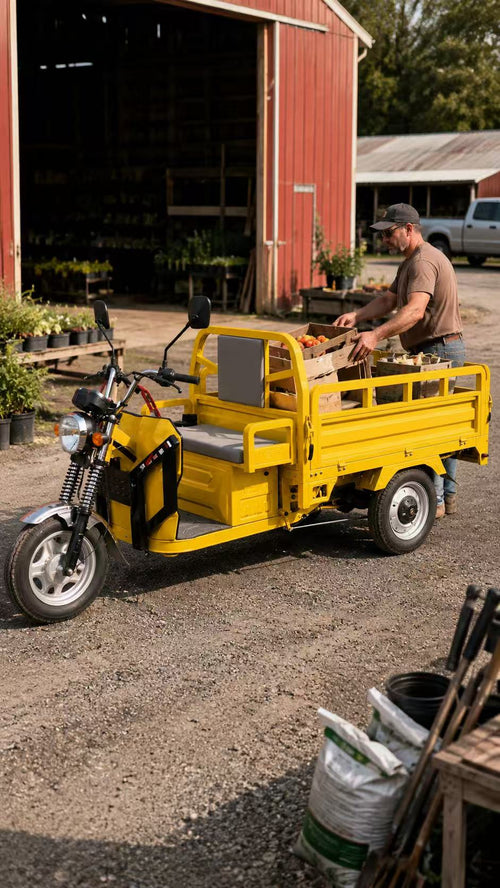
Many self‑employed vendors handle both seafood and fresh fruit‑and‑vegetable businesses. Our dedicated produce‑hauling electric trike meets daily transport demands for farmers‑market stalls and regional fruit‑and‑vegetable wholesale hubs.