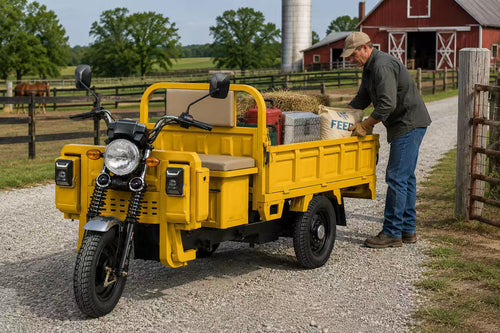
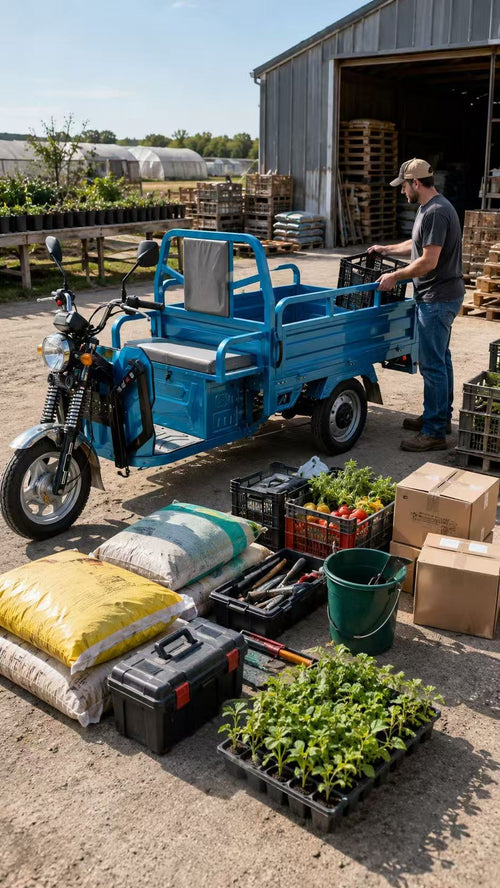
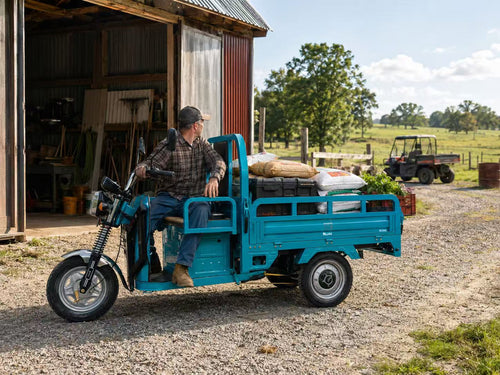
Modern poultry farms rely on efficient internal transportation to keep daily production running smoothly. Every day, workers move packaging materials, replacement equipment, disinfectants, maintenance tools, veterinary supplies, and production materials between multiple poultry houses. Reliable internal transportation improves workflow while reducing labor requirements across large poultry facilities.
Electric utility vehicles provide an efficient solution for poultry house supply distribution. Their compact design allows operators to travel safely through farm roads and service lanes while transporting essential materials between production buildings.
Internal Supply Distribution
Daily poultry operations require continuous movement of production supplies, including:
* Packaging materials
* Veterinary supplies
* Cleaning equipment
* Disinfectants
* Maintenance tools
* Spare parts
* Lighting equipment
* Daily production materials
Fast supply distribution helps workers complete routine tasks without unnecessary delays.
Supporting Poultry Production Lines
Large poultry farms often include multiple production buildings connected by internal service roads. Electric utility vehicles help transport supplies quickly between different work areas while supporting maintenance crews and daily production activities.
Efficient transportation reduces unnecessary manual handling and improves coordination throughout the farm.
Improving Farm Operating Efficiency
Compared with manual carts or larger utility trucks, electric utility vehicles offer several practical advantages:
* Easy operation on narrow farm roads
* Lower operating costs
* Quiet electric performance
* Faster material delivery
* Reduced labor intensity
* Better internal logistics
* Improved daily productivity
Suitable Poultry Farm Applications
Electric utility vehicles support a wide range of poultry operations, including:
* Internal material distribution
* Production supply delivery
* Equipment transportation
* Cleaning material movement
* Maintenance support
* Veterinary supply transport
* Daily facility logistics
* General farm operations
Choosing the Right Utility Vehicle
When selecting a utility vehicle for poultry farm logistics, operators should consider:
* Farm size
* Number of poultry houses
* Daily transportation distance
* Payload capacity
* Battery operating range
* Road conditions
* Maintenance requirements
Selecting the right vehicle improves transportation efficiency while supporting stable daily production.
Conclusion
Efficient internal logistics are essential for modern poultry production. Electric utility vehicles provide a practical solution for distributing supplies, transporting maintenance equipment, and supporting daily production line operations across poultry farms. By improving internal transportation efficiency, farm operators can reduce labor costs and maintain smooth production throughout the year.