Electric Farm Trike vs Pedal-Assist Cargo Trike: Which Type Fits Farm Use?
Share
Not every electric farm trike is built for the same kind of work. When buyers search for an electric farm trike, they may see several different vehicle types: pedal-assist cargo trikes, heavy-duty utility e-trikes, farm cargo tricycles, canopy utility vehicles, and enclosed UTV-style carts.
They may all have three wheels, but they do not serve the same purpose.
For small farms, greenhouses, nurseries, ranch support areas, and private work properties, the real question is not simply whether a vehicle is electric. The better question is: what type of electric trike fits the daily farm work, terrain, cargo, and operator needs?
A pedal-assist cargo trike may be useful for light movement on smooth ground. A heavier electric farm utility trike may be better for tools, feed bags, plant trays, produce crates, and repeated internal transport. A canopy or cab-style utility cargo vehicle may help when the operator needs shade, wind protection, or more comfort during repeated daily use.
Understanding the difference helps buyers avoid choosing the wrong type of trike for farm work.
Why the Word “Electric Farm Trike” Can Mean Different Things
The term electric farm trike is broad. Some people use it to describe a fat-tire electric bike with a cargo basket. Others use it for a three-wheel cargo vehicle with a motor and open bed. Some sellers use it for enclosed or canopy-style utility vehicles designed for private property work.
This can confuse buyers.
A farm owner searching for a work vehicle may not need a pedal-assist bike. They may need a compact electric utility trike that can carry supplies around the property. Another buyer may only need a light cargo trike for tools, small boxes, or personal movement around a flat farm lane.
Before comparing prices, buyers should first identify which type of electric trike they are actually looking at.
Pedal-Assist Cargo Trikes: Best for Light Loads and Smooth Routes
A pedal-assist cargo trike is usually closer to an e-bike than a utility vehicle. It may have three wheels, a basket, a small rear platform, or a front cargo area. These models can be useful for light tasks, especially on smooth surfaces.
They may fit:
light tool movement
small packages
personal transportation around a flat property
light nursery or garden use
short movement on paved or compacted paths
occasional low-weight cargo
The advantage is simplicity. A pedal-assist cargo trike is usually smaller, easier to store, and lower in cost.
But the limits are important. It may not be ideal for repeated feed transport, heavy bags, produce crates, rough farm lanes, uneven ground, or long daily utility work. If the farm route includes gravel, dirt paths, slopes, pasture edges, or heavier cargo, a pedal-assist model may feel underbuilt.
Heavy-Duty Electric Farm Trikes: Built for Utility Tasks
A heavy-duty electric farm trike is different. It is designed more like a compact work vehicle than a bicycle.
This type of vehicle usually focuses on:
cargo bed usefulness
payload capacity
low-speed movement
private property transport
stable three-wheel operation
repeated work trips
tools, feed, trays, crates, and supplies
For farms, greenhouses, nurseries, and property maintenance sites, this type of trike can be more practical than a small e-bike-style cargo trike. It can move materials across internal routes without needing a full-size UTV or pickup for every small job.
A heavy-duty electric farm trike is not mainly about speed. It is about controlled work movement.
Why Canopy and Cab Designs Matter
Some electric farm trikes include a canopy, windshield, or semi-enclosed cab. These designs can be useful when the operator uses the vehicle many times per day or works in open areas with sun, wind, dust, or light weather exposure.
A canopy utility cargo vehicle can provide some shade and front protection while keeping an open cargo bed for tools, feed bags, plant trays, buckets, and produce crates.
A cab utility cargo vehicle may be better when the operator needs more protection, especially in warehouses, private lots, logistics parks, farms, or work areas where weather and comfort matter.
This does not mean every farm needs a covered vehicle. But for repeated daily use, operator protection can become part of productivity. A worker who makes many short trips in a day may benefit from shade, wind protection, and a more comfortable work position.
Cargo Type Should Guide the Choice
The type of cargo is one of the clearest ways to choose between electric trike types.
A pedal-assist cargo trike may be enough for:
small tools
light boxes
personal gear
small buckets
light-duty errands
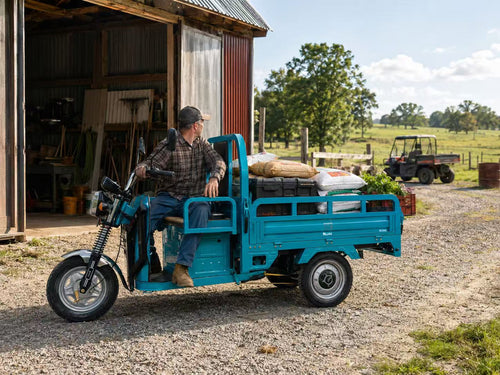
A heavier electric farm utility trike is better suited for:
feed bags
plant trays
produce crates
hand tools
soil bags
fertilizers
buckets
farm supplies
maintenance materials
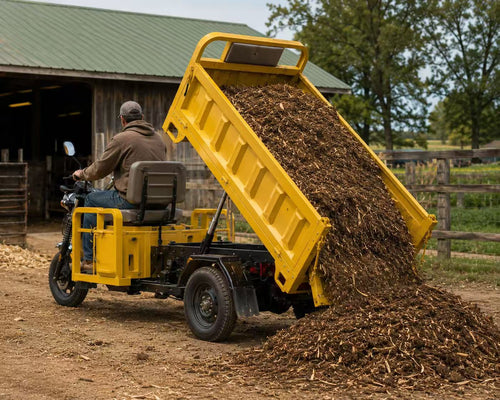
A dump-style utility vehicle may be more suitable for:
compost
mulch
soil
wood chips
manure
gravel
loose bulk material
The buyer should not choose only by vehicle appearance. The cargo type should decide the vehicle type.
Terrain Makes a Big Difference
Terrain is another major factor.
Pedal-assist cargo trikes usually work best on smooth, firm, predictable routes. They may struggle on uneven ground, soft pasture, deep gravel, mud, or rough farm paths.
A heavier electric farm trike may fit better on controlled work surfaces such as:
gravel yards
packed dirt paths
concrete pads
greenhouse paths
nursery aisles
farm lanes
feed storage areas
private work yards
However, even a heavy-duty utility trike has limits. Deep mud, steep rough pasture, large rocks, severe ruts, or heavy towing may require a different vehicle.
The best choice depends on the real surface, not only on the product description.
Speed Is Usually Not the Main Point
Many buyers compare top speed first. For farm use, this is often less important than stability, cargo control, turning space, and stopping near the work area.
Farm movement usually involves short routes and frequent stops. A worker may move from the greenhouse to the shed, from the feed area to a livestock pen, or from a nursery bench to a loading area. These trips require low-speed control more than road speed.
An electric farm trike should be judged by how well it handles real work movement: loading, stopping, turning, carrying, and returning.
When a Pedal-Assist Cargo Trike Makes Sense
A pedal-assist cargo trike can be a good choice when:
cargo is light
the route is smooth
the property is small
the work is occasional
the operator wants exercise-assisted movement
the buyer does not need a large cargo bed
the surface is mostly paved or compacted
This can work for light property maintenance, small garden operations, or personal movement around a flat site.
When a Heavy-Duty Electric Farm Trike Makes Sense
A heavier electric farm trike or canopy utility cargo vehicle makes more sense when:
the load is moderate but repeated
the vehicle carries feed, tools, crates, trays, and supplies
the work happens many times per day
the property has gravel or packed dirt routes
the operator needs a cargo bed instead of a small basket
the vehicle is used on private farm property
the buyer wants a simple low-speed utility vehicle
This type of vehicle is closer to a compact farm work vehicle than a bicycle.
When a Cab or Canopy Utility Vehicle Makes Sense
A canopy or cab-style cargo vehicle can be the better choice when:
the operator works in sun or wind
the route is repeated daily
the work area is a farm, nursery, warehouse, private lot, or logistics park
the vehicle carries supplies while also supporting operator comfort
the buyer wants a more vehicle-like work platform
the cargo bed still needs to remain useful and easy to access
This is why a canopy utility cargo vehicle can fit many farm and nursery operations. It provides a balance between open-bed cargo use and basic operator protection.
What Buyers Should Compare Before Choosing
Before choosing between an electric farm trike and a pedal-assist cargo trike, compare these practical points:
1. Cargo weight
How heavy is the normal load?
2. Cargo type
Will it carry tools, feed bags, plant trays, produce crates, buckets, or loose material?
3. Surface condition
Will it run on pavement, gravel, packed dirt, greenhouse paths, or uneven farm ground?
4. Work frequency
Will it be used occasionally or many times per day?
5. Operator comfort
Does the worker need shade, wind protection, or a more stable platform?
6. Cargo bed size
Does the vehicle have enough useful cargo space for real farm materials?
7. Turning space
Can it move through the actual lanes, gates, sheds, and work areas?
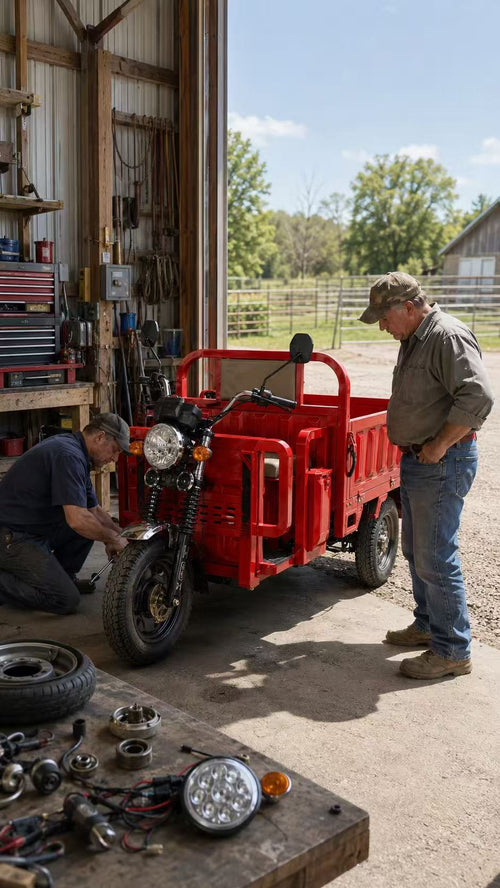
8. Maintenance support
Can a local small equipment, motor, or farm machinery repair technician help if service is needed?
These questions are more useful than choosing by the word “trike” alone.
Final Thought
An electric farm trike and a pedal-assist cargo trike may look similar in search results, but they serve different jobs.
For light errands on smooth ground, a pedal-assist cargo trike may be enough. For repeated farm work, moderate cargo, greenhouse supplies, feed bags, produce crates, and private property transport, a heavier electric farm utility trike or canopy utility cargo vehicle may be a better fit.
The best choice depends on cargo, terrain, work frequency, and operator needs. A farm vehicle should not be chosen only by category name. It should be chosen by the work it needs to do every day.