Electric Cargo Trike for Farm Work: How to Choose Between a Canopy and an Open Cargo Bed
Share
When a farm buyer searches for an electric cargo trike for farm work, the real question is usually not only price or motor size. The more practical question is: what kind of daily hauling job does the vehicle need to handle?
Some farms need a simple open cargo bed for tools, feed bags, crates, and rough daily work. Other farms may need a canopy electric cargo trike to give the operator more comfort during repeated routes under sun, light rain, or open-field conditions.
Both designs can be useful. The better choice depends on the farm route, the cargo type, the operator’s routine, and how often the vehicle will be used during the day.
For farms, ranches, nurseries, greenhouses, orchards, and private properties, an electric cargo trike can be a quiet, low-speed, practical alternative to using a large ATV or UTV for every small job. But before choosing a model, buyers should compare the vehicle by work use, not only by appearance.
Why farm buyers search for an electric cargo trike
Many small farms and working properties do not need a full-size pickup truck or a high-cost UTV for every task. A large vehicle may be useful for towing, long-distance movement, or heavy work, but many daily jobs are smaller and more repetitive.
A farm worker may need to move feed bags from storage to pens, carry tools to a repair area, transport produce crates from the field to a sorting shed, or move plant trays around a nursery. These are short-distance jobs, but they happen again and again.
That is where an electric cargo trike for farm use becomes practical.
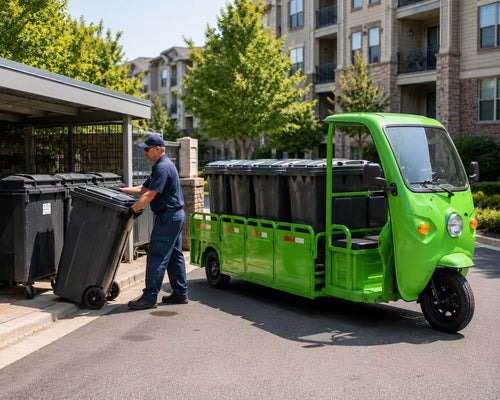
It can reduce walking time, reduce hand-carrying, and make daily property movement easier. It is usually quieter than gas-powered equipment and can be easier to use for low-speed internal routes. For light hauling and property maintenance, the right electric cargo trike can become a daily work helper rather than a recreational vehicle.
The important point is to choose the right layout.
Open cargo bed: best for flexible farm materials
An open rear cargo bed is often the most practical design for farm work. It gives the operator a simple loading space for mixed materials that change from day to day.
A farm does not always move neat boxes. One load may include tools and buckets. The next load may include feed bags, irrigation parts, small fencing supplies, produce crates, nursery trays, or soil bags. A rear cargo bed makes these mixed loads easier to arrange.
An open cargo bed is useful when the farm needs:
- easy loading from the side or rear
- space for irregular tools and supplies
- quick access to cargo during repeated stops
- simple transport between barns, sheds, fields, and work areas
- a practical alternative to hand carts and wheelbarrows
- a compact vehicle for low-speed internal hauling
For farms that mostly move materials rather than protect the operator from weather, an open cargo bed may be enough.
This style works especially well in nurseries, greenhouses, ranch lanes, small orchards, warehouse yards, and private properties where the vehicle is used as a simple material mover.
Canopy electric cargo trike: better for repeated operator use
A canopy does not change the basic job of the vehicle. The rear cargo bed still handles tools, bags, crates, and supplies. But a canopy changes the operator experience.
If the vehicle is used many times a day, the operator may spend a lot of time moving across open areas. Sun exposure, light rain, wind, and long repeated routes can make small jobs more tiring. A canopy can make daily use more comfortable.
A canopy electric cargo trike can be a good fit when:
- the operator uses the vehicle several times per day
- the route crosses open farm lanes or nursery yards
- shade and light weather protection matter
- the vehicle supports daily inspection, feeding, or maintenance routes
- the farm wants a more comfortable low-speed work vehicle
- the operator often carries tools or supplies between separated work zones
For farm work, a canopy is not only about appearance. It can help the operator stay more comfortable during routine hauling.
This is important because many farm transport jobs are not one-time jobs. They are repeated routes: from storage to barn, from barn to field, from greenhouse to loading area, from tool shed to repair site. When a vehicle becomes part of the daily routine, comfort matters.
How terrain affects the choice
Before choosing between a canopy and an open cargo bed, buyers should look at the actual farm terrain.
A farm route may include gravel lanes, packed dirt, concrete paths, grass edges, muddy sections, greenhouse aisles, or uneven ranch ground. Some properties are mostly flat. Others have slopes, loose soil, or hilly areas.
For rougher routes, buyers should pay attention to:
- tire size and tread
- suspension structure
- turning space
- braking
- ground clearance
- load balance
- how the cargo bed carries weight
The search term electric cargo trike for farm often connects with ideas like rugged terrain, stable hauling, and light property maintenance. That means the buyer is not simply looking for a city cargo bike. They are looking for something that can work on real property routes.
A canopy is helpful for comfort, but it does not replace the need for a strong cargo layout and stable vehicle structure. If the route is rough, the vehicle still needs to match the ground conditions.
What kind of cargo will you haul?
The cargo type should guide the buying decision.
If the farm mostly carries tools, supplies, bags, and crates, a rear cargo bed is usually the most important feature. If the cargo changes often, an open cargo bed gives more flexibility.
Common farm cargo includes:
- feed bags
- hay or bedding supplies
- produce crates
- nursery trays
- hand tools
- buckets
- irrigation fittings
- small pumps or repair parts
- fencing materials
- greenhouse supplies
- maintenance equipment
If the operator needs to stop often and access cargo quickly, an open bed may be easier. If the operator drives longer repeated routes in open areas, a canopy may make the vehicle more practical.
The best choice is not based on which model looks better. It is based on what the farm carries every day.
Electric cargo trike vs ATV or UTV
Many farms already use ATVs or UTVs. These vehicles can be powerful and useful, but they are not always necessary for every small job.
An electric cargo trike can be a simpler alternative for light hauling and property maintenance. It is usually better suited for low-speed, short-distance, repeated routes where the main job is moving supplies instead of towing heavy loads.
A farm may still need a UTV for rougher, heavier, or faster work. But for many daily chores, a compact electric cargo trike can be more convenient.
It may be useful for:
- checking livestock areas
- moving small loads around barns
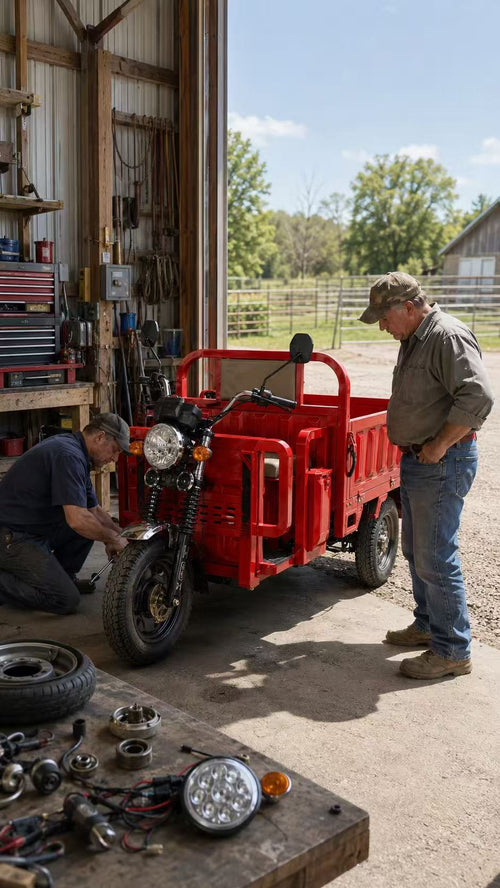
- carrying tools for repairs
- supporting greenhouse or nursery work
- moving produce or supplies across short routes
- reducing unnecessary pickup or UTV use
The goal is not to replace every farm vehicle. The goal is to use the right vehicle for the right level of work.
When an open cargo bed is enough
An open cargo bed electric cargo trike may be enough if the farm mainly needs a simple hauling vehicle.
Choose an open cargo bed style when:
- the route is short and familiar
- the operator does not need much weather protection
- cargo access is more important than driver comfort
- the vehicle carries mixed tools and materials
- the farm wants a lower-complexity work vehicle
- the cargo bed will be used throughout the day
This option is often practical for small farms, nurseries, orchards, ranch yards, and maintenance teams that need a low-speed utility trike for frequent material movement.
When a canopy is the better choice
A canopy model becomes more useful when operator comfort matters as much as cargo movement.
Choose a canopy electric cargo trike when:
- the vehicle is used repeatedly every day
- the farm has open sun-exposed routes
- light weather protection is helpful
- the operator spends more time driving between work zones
- the farm wants a more comfortable daily utility vehicle
- the vehicle supports routine inspection, feeding, or maintenance
A canopy can make the trike feel more like a practical farm work vehicle, especially when the vehicle is part of the regular daily workflow.
Questions to ask before buying
Before choosing an electric cargo trike for farm work, buyers should ask a few practical questions:
What is the main route?
Is it flat, hilly, paved, gravel, muddy, or mixed?
What will the vehicle carry most often?
Tools, feed, crates, trays, supplies, produce, or maintenance parts?
How often will the vehicle be used?
Once in a while, several times a day, or as a daily work vehicle?
Does the operator need shade or light weather protection?
If yes, a canopy may be worth considering.
Is fast cargo access important?
If yes, an open rear cargo bed may be more convenient.
Is this for private property use?
Most farm cargo trikes are best understood as low-speed internal transport vehicles, not highway vehicles.
Final thought
An electric cargo trike for farm use should be chosen by the work it needs to do. A canopy model can improve operator comfort on repeated routes. An open cargo bed can make loading and unloading easier for mixed farm materials.
For many farms, ranches, nurseries, greenhouses, and private properties, the best choice is not the biggest vehicle. It is the one that fits the route, the cargo, and the daily routine.
If the farm needs a quiet, compact, low-speed vehicle for tools, feed, crates, produce, and property maintenance, an electric cargo trike can be a practical alternative to using a larger ATV or UTV for every small task.
The right model is the one that makes daily hauling easier, not more complicated.