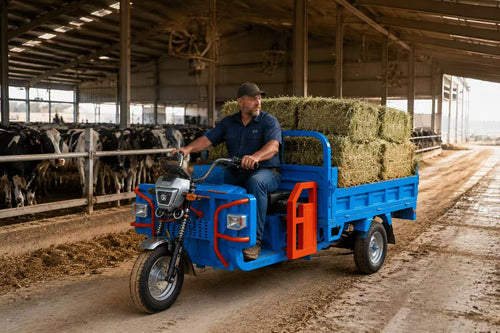
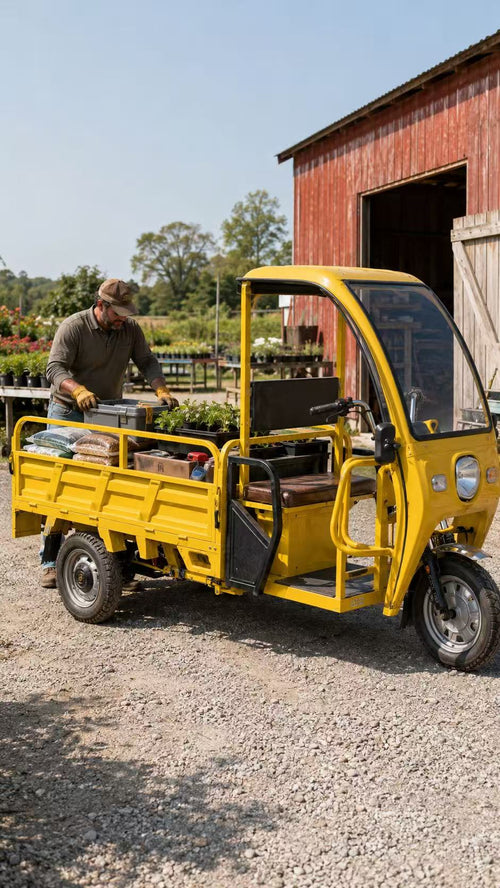
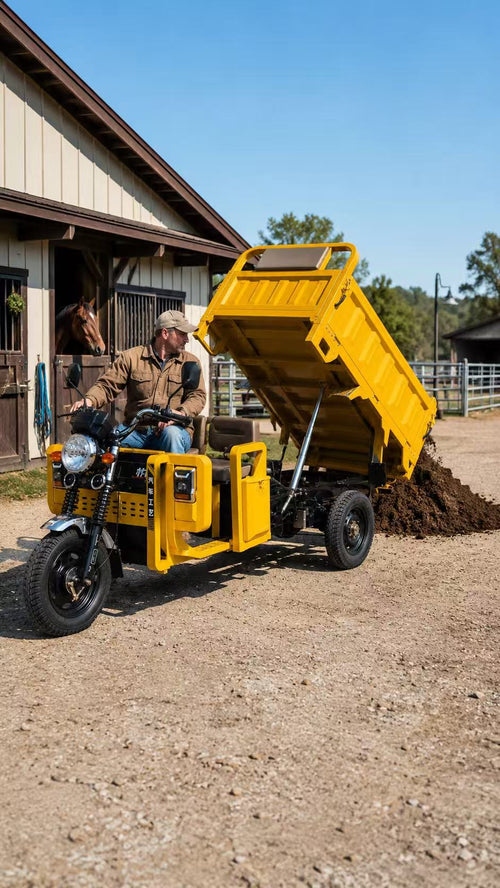
Electric utility vehicles are designed to improve greenhouse material handling and plant logistics, helping growers transport seedling trays, harvested vegetables, fertilizers, irrigation supplies, packaging materials, and maintenance equipment efficiently throughout greenhouse facilities.
Unlike open-field farming, greenhouse operations require continuous movement of materials through narrow working aisles. Repeated manual transportation increases labor costs and reduces productivity, especially during planting, harvesting, and seasonal maintenance. A compact electric utility vehicle provides an efficient solution for these daily transportation tasks while improving workflow and reducing worker fatigue.
Why Greenhouse Material Handling Matters
Successful greenhouse production depends on smooth internal logistics. Workers constantly move growing materials, harvested crops, nursery plants, fertilizers, irrigation components, and farming tools between different production areas. Efficient material handling minimizes unnecessary labor and supports continuous production throughout the growing season.
Daily Plant Logistics Applications
Electric utility vehicles are ideal for transporting:
* Vegetable harvest crates
* Seedling and nursery trays
* Flowers and ornamental plants
* Fertilizer bags
* Soil and growing media
* Irrigation pipes and equipment
* Farm maintenance tools
* Packaging materials
* Greenhouse production supplies
These transportation tasks occur every day and play an important role in maintaining greenhouse efficiency.
Advantages for Commercial Greenhouse Operations
Compared with manual carts or larger fuel-powered equipment, electric utility vehicles offer several important advantages:
* Compact size for narrow greenhouse aisles
* Quiet electric operation
* Lower operating and maintenance costs
* Reduced manual labor
* Faster internal transportation
* Improved material handling efficiency
* Better daily workflow management
Supporting Modern Plant Logistics
As greenhouse production continues to expand, efficient plant logistics become increasingly important. Reliable transportation equipment allows workers to move crops, seedlings, fertilizers, and supplies quickly between growing areas, storage rooms, packing stations, and loading zones.
Electric utility vehicles help simplify these repetitive transportation tasks while improving productivity and reducing operational costs.
Suitable Greenhouse Applications
Electric utility vehicles are widely used in:
* Commercial vegetable greenhouses
* Tomato production
* Strawberry cultivation
* Cucumber growing
* Pepper production
* Flower nurseries
* Ornamental plant growers
* Seedling production facilities
* Commercial horticulture operations
Choosing the Right Greenhouse Utility Vehicle
When selecting a vehicle for greenhouse material handling, growers should evaluate:
* Greenhouse aisle width
* Daily transportation distance
* Payload requirements
* Battery operating time
* Turning radius
* Maintenance requirements
* Future production expansion
Selecting the appropriate vehicle helps improve efficiency while supporting long-term greenhouse productivity.
Conclusion
Greenhouse material handling and plant logistics are essential components of modern protected agriculture. Electric utility vehicles provide an efficient, economical, and environmentally friendly solution for transporting crops, seedlings, fertilizers, tools, and production materials throughout greenhouse facilities. By improving internal logistics, greenhouse operators can reduce labor costs, increase operational efficiency, and support sustainable business growth.