Clean Load or Dirty Load? Planning Material Order for Electric Dump Cart Work
Share
An electric dump cart may carry many different materials during the same workday.
On a farm, it may move feed bags in the morning, compost before lunch, and manure or bedding waste in the afternoon. At a horse stable, it may carry clean bedding first and dirty stall waste later. In landscaping work, it may move tools, mulch, soil, branches, wet leaves, and debris in the same day. On a large property, it may carry repair supplies, cleaning products, yard waste, trash bags, and loose material across different routes.
The question is not only whether the vehicle can carry these materials.
The question is: in what order should they be moved?
A good material order can reduce cleaning time, prevent messy cargo beds, protect clean supplies, and keep the workday moving smoothly. A poor material order can create extra rinsing, wiping, odor, residue, reloading, and wasted time between jobs.
An electric dump cart is more efficient when the load sequence matches the work.
Why material order matters
Many workers think about load size, route, dump zone, and unloading. Those are important. But material order is another part of the workflow.
Clean loads and dirty loads should not always be mixed randomly.
If the vehicle carries manure, muddy soil, wet compost, or bedding waste first, the cargo bed may hold moisture, smell, mud, or residue. If the next job is moving feed bags, clean bedding, boxed supplies, tools, nursery trays, or packaged materials, the worker may need to stop and clean the bed before loading again.
That interruption may not seem serious once. But when the vehicle changes tasks many times in one day, the lost time becomes part of the workflow.
Planning material order helps reduce unnecessary cleanup between loads.
Clean loads should usually go first
In most workdays, clean loads should be moved before dirty loads.
Clean loads may include feed bags, clean bedding, boxed supplies, hand tools, repair parts, packaged materials, nursery trays, seedling flats, dry tools, light equipment, and materials that should not be placed on a dirty or wet cargo bed.
These loads are not always delicate, but they are cleaner than manure, wet soil, compost, muddy debris, or trash. Moving them first helps use the clean cargo bed before it becomes contaminated by wet or dirty material.
This is especially useful for farms, horse stables, nurseries, greenhouses, landscaping crews, property maintenance teams, and apartment community maintenance workers.
A clean cargo bed at the start of the day is an asset. It should be used wisely.
Dirty loads usually belong later in the day
Dirty loads are not a problem. They are one of the main reasons a hydraulic dump cart is useful.
The problem is moving dirty loads too early when clean loads still need to be handled later.
Dirty loads may include manure, wet bedding waste, compost, muddy soil, wet leaves, yard debris, trash bags, rotten plant material, barn cleanup waste, mixed landscaping debris, and construction cleanup material.
These materials can leave residue inside the cargo bed. Some are wet. Some are sticky. Some create odor. Some may need rinsing before the vehicle can carry cleaner supplies again.
For that reason, dirty loads often make more sense later in the work sequence.
If a crew needs to move clean bedding, feed bags, or tools and also needs to haul manure or wet waste, the clean material should usually go first. The manure and waste can be scheduled after the clean loads are finished.
Wet loads create more cleanup than dry loads
Wet loads often create more cleanup than dry loads.
Wet soil, wet compost, wet manure, muddy debris, soaked bedding waste, and wet leaves can stick to the cargo bed, leave moisture, and affect the next load. Even if the vehicle unloads successfully, the cargo bed may not be ready for clean materials immediately afterward.
This does not mean wet loads should be avoided. Many real jobs require moving wet materials. But the operator should understand that wet materials change the rest of the workflow.
If wet material must be moved before clean material, the crew may need a quick cleaning step before the next task. That could mean scraping loose residue, brushing the bed, rinsing if water is available, or using a liner or container system for certain loads.
The main point is simple: wet loads should be treated as workflow-changing loads, not just another trip.
Dry bulk materials are usually easier to sequence
Dry bulk materials are often easier to manage.
Dry mulch, dry wood chips, dry compost, dry leaves, and dry soil may leave some loose material behind, but they usually create less cleaning trouble than wet manure, muddy soil, or soaked bedding waste.
These materials can often be moved after clean packaged items and before the dirtiest waste loads.
For example, a landscaping crew may move tools and supplies first, then dry mulch, then soil or compost, and finally wet debris or trash. A nursery may move trays and packaged supplies first, then potting mix, then plant waste later.
This sequence keeps the cleanest work first and the messiest work last.
Horse stable example: clean bedding before manure
Horse stables are one of the clearest examples of material order planning.
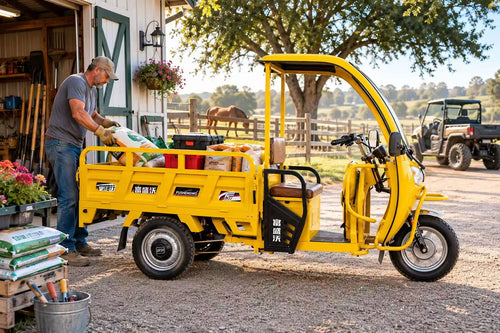
A stable may need to move clean bedding, feed, tools, water buckets, manure, wet bedding waste, and compostable material during the same day.
If the electric dump cart carries manure first, the cargo bed may not be clean enough for bedding or feed bags without extra cleaning. That creates an unnecessary step.
A more practical order is often:
clean supplies first, clean bedding next, stall waste later, manure and wet bedding waste last.
This keeps clean materials separated from dirty materials and reduces the need to stop and wash the cargo bed in the middle of the work.
The vehicle can still haul dirty material very effectively. The difference is that dirty hauling is placed later in the sequence.
Farm example: feed and supplies before compost and waste
On farms and ranches, a dump cart may support many small tasks.
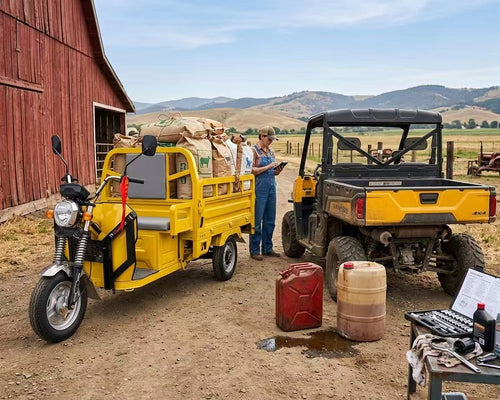
It may carry feed bags, fencing tools, small equipment, seed, fertilizer bags, compost, soil, gravel, manure, plant waste, and general cleanup material.
A good material order depends on the day, but a practical rule is to move cleaner and packaged items before loose organic waste.
For example, a worker may first deliver feed bags or tools to the barn area. Then the vehicle may move soil, compost, or gravel. Later, it may carry manure, bedding waste, muddy material, or plant debris to a compost area.
This order helps prevent dirty residue from affecting clean supplies.
It also helps workers avoid repeated cleaning between unrelated jobs.
Landscaping example: tools, mulch, soil, then debris
Landscaping crews often change materials several times in one day.
The same vehicle may carry tools, bags, mulch, topsoil, compost, wood chips, branches, leaves, and cleanup debris.
A better sequence may begin with tools, packaged supplies, and clean materials. Then the crew can move mulch, wood chips, soil, or compost. Wet leaves, muddy debris, branches, trash bags, and mixed cleanup material can be handled later.
This is not a fixed rule for every job. Sometimes debris must be removed first to open the work area. But when the crew has a choice, clean-to-dirty sequencing usually reduces cargo bed cleanup.
It also makes the vehicle more pleasant to use throughout the day.
Property maintenance example: repair supplies before waste
Property maintenance teams also benefit from material order planning.
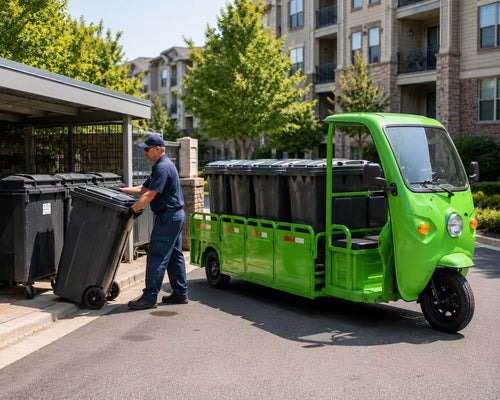
In apartment communities, HOA properties, senior living facilities, hotels, resorts, schools, parks, and large private properties, a utility vehicle may carry repair tools, cleaning supplies, replacement parts, trash bags, yard debris, branches, wet leaves, and general cleanup materials.
If trash bags, wet debris, or muddy yard waste are carried first, the cargo bed may not be ideal for boxed parts, filters, tools, or cleaning supplies later.
A better plan is often to handle clean service materials first. That may include tools, parts, cleaning products, filters, light equipment, and packaged supplies. Later in the route, the vehicle can be used for trash, branches, leaves, and other waste materials.
This helps property teams avoid turning every mixed-use day into a cleaning problem.
When dirty loads must come first
Sometimes the clean-to-dirty rule cannot be followed.
A blocked path may need to be cleared before anything else can happen. A barn may need urgent manure removal. A landscaping site may need debris removed before mulch can be placed. A storm cleanup may require branches and wet leaves to be moved first. A construction area may need waste removed for safety.
In those cases, dirty loads may need to come first.
That is acceptable. The goal is not to create a rigid rule. The goal is to understand the consequence.
If dirty loads come first, the crew should plan a transition step before clean loads. That may include scraping the bed, brushing out residue, rinsing the cargo area, using containers, separating packaged materials, or scheduling clean loads with another vehicle if available.
Good workflow planning includes exceptions.
How to separate clean and dirty loads
Small crews can separate clean and dirty loads in simple ways.
They can group clean tasks at the beginning of the route. They can avoid placing feed bags or clean bedding directly into a wet cargo bed. They can use tubs, bins, tarps, or containers for certain supplies. They can brush or scrape the bed between messy loads. They can reserve the final part of the day for manure, wet bedding, compost, or debris.
They can also choose material order during morning planning.
The question should not be only, “What do we need to move?”
It should also be, “Which material should move first?”
That small question can prevent extra cleanup later.
Material order affects the dump zone too
Material order is not only about the cargo bed. It also affects where material is placed.
Clean materials and dirty waste usually do not belong in the same area. Feed and bedding should not be staged near manure waste. Mulch and compost may go to landscape beds, while debris may go to a separate waste area. Construction cleanup material may need a different disposal location than soil or gravel.
If the electric dump cart moves materials randomly, the operator may waste time switching between different zones.
A better sequence groups similar destinations together.
For example, finish clean supply delivery first. Then move soil or mulch to the landscape area. Then move waste material to the compost pile, debris pile, dumpster, or disposal area.
This reduces unnecessary route switching.
Same vehicle, different standards
A mixed-use electric dump cart can be very useful, but different loads require different standards.
A cargo bed that is clean enough for mulch may not be clean enough for feed bags. A bed that is acceptable for yard debris may not be acceptable for clean bedding. A bed that just carried manure may need cleaning before it carries repair supplies or packaged material.
This is common sense, but it is easy to ignore during a busy workday.
The vehicle is the same. The material standard changes.
The operator should match the cargo bed condition to the next load.
A simple clean-to-dirty workday
A practical mixed-use day may look like this:
Start with tools, feed bags, clean bedding, packaged supplies, or replacement parts. Move dry materials such as mulch, wood chips, soil, or compost during the middle of the day. Handle manure, wet bedding waste, muddy debris, trash bags, wet leaves, and dirty cleanup material later. End with a quick bed check, residue removal, and basic cleaning before parking.
This kind of sequence is not complicated.
It simply uses the cleanest cargo bed when clean material matters most and leaves the messiest work for later.
For many farms, stables, landscaping crews, and property teams, this can reduce unnecessary cleaning and make the vehicle easier to use across several tasks.
Planning material order saves time
A few minutes of planning can save repeated cleaning later.
If a crew moves manure first, then realizes clean bedding needs to be delivered, the vehicle may need to be cleaned before the next load. If wet compost is moved before tools, the cargo bed may need wiping or a liner. If trash bags leak before repair supplies are loaded, the workday slows down.
These are small problems, but they are avoidable.
Material order planning helps the crew use the electric dump cart more professionally.
It keeps clean materials cleaner. It keeps dirty materials controlled. It reduces mid-day interruptions. It makes the vehicle easier to share across several tasks.
The best sequence supports the whole workflow
An electric dump cart is valuable because it can move many materials across short distances. But when the same vehicle handles both clean loads and dirty loads, the order matters.
Clean loads usually belong earlier. Dry bulk materials often fit in the middle. Dirty, wet, smelly, or messy loads often belong later. Exceptions are normal, but they should be planned.
The goal is not to make the vehicle perfect after every trip.
The goal is to avoid unnecessary cleaning, contamination, odor, residue, and wasted time between tasks.
For farms, ranches, horse stables, landscaping crews, nurseries, property maintenance teams, and small construction cleanup jobs, material order is part of the workflow.
A clean load and a dirty load may both fit in the same electric dump cart.
They should not always happen in the wrong order.