How Many Loads Per Day Make a Hydraulic Dump Utility Vehicle Worth Buying?
Share
A hydraulic dump utility vehicle becomes valuable when unloading is no longer an occasional task, but a repeated daily workflow. For many farms, ranches, construction crews, landscaping teams, wholesale markets, and property maintenance operations, the real question is not whether a hydraulic dump bed is convenient. The better question is how many loads per day make hydraulic dumping worth the investment.
Some buyers only look at payload capacity, motor power, or purchase price. Those details matter, but they do not fully explain the value of a hydraulic dump utility vehicle. The real value appears when a worker has to load, move, unload, return, and repeat the same material handling process many times in one day.
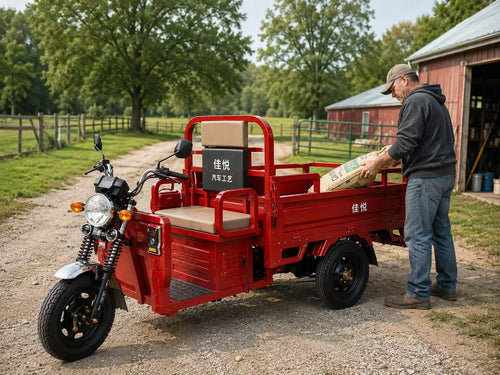
If you only move one or two light loads per week, a manual cart, wheelbarrow, or small trailer may be enough. But if your daily work includes repeated hauling of soil, gravel, manure, compost, mulch, feed, wood chips, firewood, landscaping waste, or construction debris, hydraulic dumping can quickly become a productivity tool instead of a convenience feature.
For light users completing one to three loads per day, the decision depends on the material. If those loads are dry leaves, empty containers, lightweight boxes, or small tools, hydraulic dumping may not be necessary. However, if even a few daily loads involve wet soil, livestock manure, gravel, sand, or dense landscaping material, the benefit becomes more noticeable because each unloading cycle requires less physical effort.
For moderate users completing four to eight loads per day, a hydraulic dump bed starts to make more sense. At this level, unloading is no longer an occasional job. It becomes part of the daily workflow. A ranch worker moving bedding waste, a small farm moving feed and compost, or a property maintenance team clearing branches and debris may save meaningful time and reduce fatigue by using hydraulic dumping instead of manual lifting.
For heavy users completing nine to fifteen loads per day, hydraulic dumping becomes a strong investment. The benefit is not just speed. It is consistency. Workers can maintain the same pace throughout the day without becoming exhausted from repeated tipping, lifting, and shoveling. In farm, ranch, nursery, greenhouse, and landscaping operations, this can directly improve daily productivity.
For commercial users completing more than fifteen loads per day, a hydraulic dump utility vehicle is often no longer optional. At this point, the vehicle is not just transportation equipment. It becomes part of the production system. Construction crews moving debris, market operators transporting waste and supplies, horse stable workers removing bedding, and ranch teams handling manure or feed waste can lose significant time if every unloading cycle depends on manual labor.
However, the number of loads is only one part of the decision. Five loads of wet soil may be harder than twenty loads of empty plastic bins. Ten loads of gravel may create more strain than thirty loads of dry leaves. This is why buyers should evaluate three things together: load frequency, material weight, and unloading difficulty.
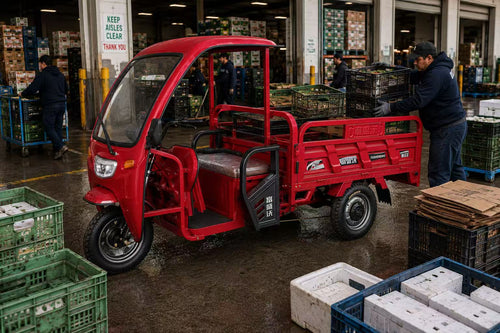
Distance also matters. A short-distance work vehicle may only travel a few hundred yards at a time, but it may repeat that route many times per day. On farms, this might mean moving between a barn, feed storage area, compost pile, and livestock pen. On construction sites, it may mean moving between material piles, work zones, and disposal points. In wholesale markets, it may mean traveling between storage rooms, loading docks, and vendor stalls.
Hydraulic dumping improves efficiency because it reduces the slowest part of many material handling jobs: unloading. Loading may still require workers, tools, or equipment. Driving may take only a few minutes. But unloading dense or loose materials by hand often consumes time and energy. A hydraulic dump bed shortens that step and helps workers move to the next load faster.
A useful way to judge whether hydraulic dumping is worth buying is to ask these questions:
How many loads do you move on a normal workday?
Are those loads light, bulky, dense, wet, or loose?
How much time does manual unloading take per trip?
How tired is the operator after repeated unloading?
Does unloading slow down the rest of the work?
Would faster dumping allow the team to complete more jobs in the same day?
If the answer shows that unloading happens repeatedly and creates delay or fatigue, a hydraulic dump utility vehicle is worth serious consideration.
The goal is not to buy a machine only because it has a hydraulic system. The goal is to remove a repeated bottleneck from daily work. When unloading is rare, manual tools may be enough. When unloading becomes a daily cycle, hydraulic dumping can reduce labor fatigue, improve workflow, protect workers from repetitive strain, and increase total output.
For small farms, horse stables, cattle ranches, landscaping crews, construction sites, nurseries, warehouses, and property maintenance teams, the best buying decision comes from counting real work, not just comparing specifications. A hydraulic dump utility vehicle is worth buying when it helps complete daily material handling faster, safer, and with less physical effort.