Loose Tools in a Dump Bed? Organizing Supplies Before Electric Dump Cart Work
Share
An electric dump cart is often used for loose materials.
Soil, gravel, mulch, compost, manure, bedding waste, sand, wood chips, and yard debris are common loads. These materials are easy to understand because they match the purpose of a dump bed. They can be loaded, hauled, raised, and unloaded from the rear of the cargo bed.
But real daily work is not always that simple.
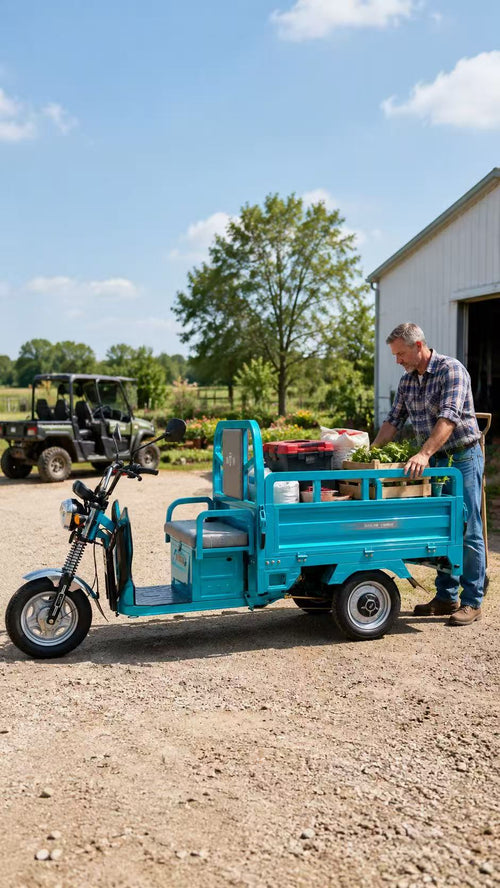
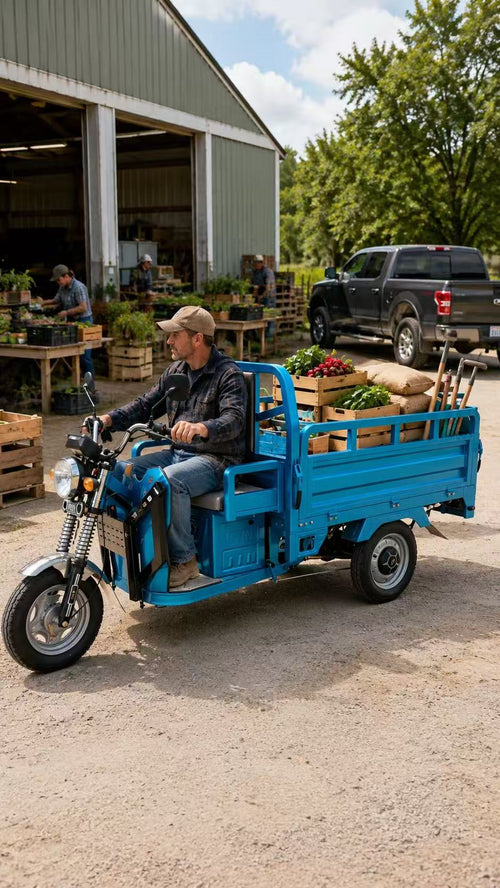
The same electric dump cart may also carry shovels, rakes, forks, buckets, toolboxes, feed bags, clean bedding, fencing tools, gloves, replacement parts, repair supplies, cleaning products, nursery trays, water buckets, and small hardware.
These are not the same as loose bulk material.
A dump bed can carry many things, but not everything should ride loose inside it.
If tools, bags, buckets, and small supplies are placed randomly in a hydraulic dump bed, they may roll, slide, get buried, become dirty, fall against the sidewall, extend outside the bed, or accidentally move with the material during unloading.
Organizing supplies before electric dump cart work is a small step that can prevent wasted time, misplaced tools, dirty materials, and unsafe unloading mistakes.
A dump bed is not a tool cabinet
A dump bed is designed for hauling and unloading material.
It can carry tools and supplies when needed, but it should not be treated like a loose storage box. The bed may tilt. The vehicle may turn. The route may be uneven. The cargo may shift. Loose items may move inside the bed during travel.
This matters because many work crews use the same vehicle for different tasks throughout the day.
A horse stable worker may carry clean bedding, then manure tools, then wet bedding waste. A landscaping crew may carry rakes and shovels, then mulch, then soil, then yard debris. A farm worker may carry fencing supplies, feed bags, buckets, and compost during the same work route.
If everything is placed loosely in the dump bed, the cargo area can become disorganized quickly.
The vehicle may still move, but the workflow becomes messy.
Loose tools should not ride like loose soil
Tools are not soil, gravel, or compost.
A shovel, rake, fork, broom, pry bar, post driver, cordless drill, hand tool, or long-handled tool should not be tossed into a dump bed as if it were loose material.
Loose tools can slide during turns. They can bounce on rough ground. They can hit the side of the cargo bed. They can become buried under mulch, manure, bedding waste, or soil. They can also be forgotten when the bed is raised.
Long tools create another problem.
If a shovel handle, rake, fork, or broom extends outside the cargo bed, it may catch on gates, barn doors, fences, stable walls, landscaping plants, tool racks, or nearby people. Even if the vehicle is moving slowly, a tool sticking out of the bed can create a problem in tight work areas.
Tools should be placed low, contained, and within the bed edge whenever possible.
Small parts need containers
Small parts are easy to lose in a dump bed.
Fencing hardware, screws, bolts, hose fittings, plumbing parts, irrigation parts, gloves, nozzles, repair pieces, washers, clips, and small tools can disappear quickly when mixed with mulch, soil, bedding waste, leaves, or compost.
The best solution is simple: use containers.
A small toolbox, plastic bin, bucket, crate, parts tray, or supply box can keep small items together. It also makes unloading easier because the worker can remove the whole container instead of searching through the cargo bed.
This is especially useful for farm repair work, property maintenance, landscaping irrigation repair, stable maintenance, fence repair, greenhouse work, and nursery operations.
A dump cart can move small parts efficiently, but only if the parts are organized before the trip begins.
Buckets and tubs should be stable
Buckets and tubs are useful, but they can move if they are not placed carefully.
A bucket of tools, feed, cleaning supplies, fasteners, small parts, or water-related equipment should sit flat and low in the cargo bed. It should not be balanced on top of uneven material or placed where it can tip during travel.
If the route includes bumps, gravel, compacted dirt, barn thresholds, nursery paths, or landscaping edges, unsecured buckets may slide or fall over.
A tipped bucket may spill parts into loose material. It may also create extra cleanup at the end of the route.
For small crews, this kind of delay matters. A few minutes spent organizing buckets before moving can prevent a larger delay later.
Do not mix tools with material that will be dumped
This is one of the most important rules.
If the load will be dumped, loose tools should not be mixed into the dump flow.
For example, a worker should not place a rake, shovel, bucket, or toolbox inside a bed of mulch if the plan is to raise the dump bed and unload the mulch. A tool hidden inside soil, compost, manure, bedding waste, gravel, or debris can slide out with the material or remain buried in the pile.
This creates two problems.
First, the worker may lose or damage the tool. Second, the dump zone may need to be searched or cleaned before work can continue.
Before raising the dump bed, the operator should know exactly what is inside the cargo bed.
If tools must travel with the vehicle, they should be removed before dumping or kept in a separate container that is not part of the loose material load.
Bagged materials need a different plan
Bagged materials are not the same as loose materials.
Feed bags, bedding bags, soil bags, fertilizer bags, seed bags, packaged supplies, and boxed parts can be carried in an electric dump cart, but they should not be treated like dumpable material.
Bags can tear if they are placed under sharp tools, rough debris, broken branches, gravel, or metal parts. Clean bags can become dirty if placed after manure, wet soil, compost, or trash loads. Heavy bags can shift if stacked unevenly.
Bagged loads should be kept clean, low, and stable.
If the same vehicle will also carry manure, wet bedding, compost, or dirty debris later in the day, the bagged material should usually be moved before the dirty loads. If dirty material has already been carried, the bed may need to be brushed, scraped, or cleaned before carrying clean bags.
This protects the material and saves extra cleanup time.
Long-handled tools need special attention
Long-handled tools are common in farm, stable, landscaping, and property maintenance work.
Shovels, rakes, pitchforks, brooms, manure forks, post tools, loppers, and pruning tools are useful, but they can be awkward in a compact cargo bed.
They should be placed in a way that does not extend into the operator’s space, stick out into the route, or interfere with gates, doorways, animals, pedestrians, or material piles.
If the bed is too short for a tool to lie safely, the crew should consider a tool rack, side holder, separate hand carry, or another transport method. Forcing long tools into the dump bed may create more problems than it solves.
A compact dump cart works best when the load stays inside the vehicle’s working envelope.
Stable work: separate bedding tools and manure loads
Horse stable work often mixes clean and dirty tasks.
A worker may need to move clean bedding, manure forks, brooms, feed bags, buckets, wet bedding waste, and manure in the same day.
The tools used for stall cleaning should not be buried in the same load that will be dumped at the compost pile. Clean bedding should not be placed into a bed that still contains wet manure residue. Feed bags should not be loaded beside dirty stall waste.
A better workflow is to separate the load types.
Clean bedding and feed can move first. Tools can be carried in a controlled position or container. Manure and wet bedding waste can be loaded later. Before dumping, the worker should confirm that no fork, shovel, bucket, or small tool remains in the loose waste load.
This keeps stable work cleaner and more organized.
Landscaping work: keep tools out of mulch and soil
Landscaping crews often work quickly.
A team may load rakes, shovels, buckets, mulch, soil, compost, wood chips, irrigation parts, plants, and yard debris into the same vehicle during the day.
Without organization, the cargo bed can become a mixed pile.
A rake may be buried under mulch. A bucket of irrigation parts may tip into soil. A shovel may slide during a turn. A bag of soil may tear against a metal tool. A hand tool may be left in the bed when the next load is dumped.
The solution is not complicated.
Tools should have a consistent place. Small parts should be in a container. Mulch and soil that will be dumped should not be mixed with loose tools. Branches and yard debris should be loaded so they do not trap or hide equipment.
A tidy cargo bed helps the crew work faster.
Property maintenance: do not mix clean supplies with wet debris
Property maintenance teams often carry many kinds of supplies.
A single route may include toolboxes, cleaning products, filters, replacement parts, trash bags, wet leaves, branches, mulch, soil, and general debris. This happens in apartment communities, HOA properties, senior living facilities, schools, parks, hotels, resorts, and large private properties.
The problem appears when clean supplies and dirty debris share the same space without separation.
A box of filters should not sit next to wet leaves. Cleaning products should not be buried under yard debris. Replacement parts should not roll around in a bed that may later carry trash bags or muddy material.
The electric dump cart can support property work well, but only if supplies are grouped.
Clean supplies should be carried in bins, boxes, or tool cases. Wet debris and waste should stay separate. If the vehicle changes from repair work to cleanup work, the bed should be checked before the new task begins.
Farm repair and fence work
Farm repair work often involves small parts and awkward tools.
Fencing pliers, wire, staples, clips, bolts, insulators, hose fittings, post tools, gloves, and hand tools can be easy to lose in a dump bed, especially if the same vehicle also carries soil, gravel, compost, hay, or debris.
For fence repair, irrigation repair, water area maintenance, or barn repair, small parts should be placed in containers. Sharp tools should not be thrown loosely against bagged materials. Wire or straps should not be allowed to tangle with other cargo.
If the dump cart will later carry loose material, the repair supplies should be removed before dumping work begins.
A few minutes of organization protects both the tools and the workflow.
Before raising the dump bed, check the cargo
Before raising a hydraulic dump bed, the operator should check what is inside.
This is especially important when the vehicle has carried mixed cargo earlier in the day.
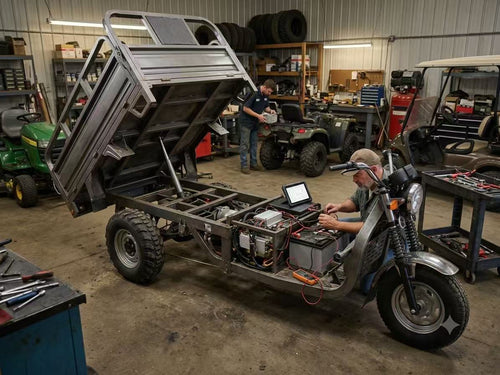
A shovel, bucket, tool case, feed bag, small part container, strap, glove, or hand tool may still be inside the bed. If the bed is raised without checking, that item may slide, fall, become buried, or be damaged.
The check does not need to be complicated.
Look inside the cargo bed. Confirm that only the material intended for dumping is in the bed. Remove tools, bags, buckets, parts, and containers before unloading loose material.
This habit can prevent lost tools and unnecessary cleanup.
Use the bed for the right kind of load
The dump bed is very useful when the load matches its purpose.
Loose soil, gravel, compost, mulch, manure, bedding waste, sand, wood chips, and debris can be hauled and dumped efficiently when loaded properly.
Non-dump loads need more planning.
Tools, bags, buckets, parts, supplies, and containers may be carried, but they should be organized, separated, secured, or removed before dumping.
A good operator understands the difference between a dump load and a carry load.
A dump load is meant to leave the bed by raising the bed.
A carry load is meant to stay organized until the worker removes it by hand.
Mixing the two without planning creates problems.
Questions to ask before loading tools and supplies
Before using an electric dump cart for tools, bags, buckets, and supplies, workers should ask practical questions.
Will this load be dumped later?
Are any tools loose in the bed?
Are small parts in a container?
Are long tools below the bed edge?
Could a bucket tip during travel?
Are clean supplies separated from dirty material?
Could a tool be buried under mulch, soil, compost, or manure?
Should bagged material be moved before wet or dirty loads?
Will anything slide if the bed is raised?
These questions help keep the cargo bed organized and the workflow clean.
A better dump cart workflow starts with organization
An electric dump cart can do more than haul loose material.
It can carry tools, buckets, bags, parts, supplies, and equipment across farms, stables, ranches, landscaping sites, nurseries, construction cleanup zones, and property maintenance areas.
But the cargo bed should not become a random pile.
Loose tools should not ride like loose soil. Small parts should use containers. Long tools should stay within the bed edge. Bagged materials should stay clean and stable. Tools should not be mixed into material that will be dumped.
A dump bed can carry many things.
The best workflow comes from knowing which things should be loose, which things should be contained, and which things should be removed before the bed is raised.