Will the Load Stay Inside? Why Bed Sides Matter in a Powered Dump Hauler
Share
Higher sides can help with bulk material
Higher cargo bed sides can be helpful when the work involves loose material.
Mulch, wood chips, compost, manure bedding waste, leaves, and plant debris often need more containment than flat items or bags. A deeper bed can help keep material from falling out during the route.
This is why buyers should think about what they haul most often.
If the main work is loose bulk material, side wall height matters more. If the main work is tools, buckets, bags, boxes, or flat items, lower sides may still be practical because the load is easier to place and remove by hand.
There is no perfect side height for every job.
The right design depends on the material.
A horse stable moving manure bedding waste may benefit from more containment. A landscaping crew moving mulch and yard debris may also need higher sides. A property maintenance team carrying toolboxes and trash bags may care more about easy access.
The bed sides should match the daily load.
Lower sides can make loading easier
Higher sides are not always better.
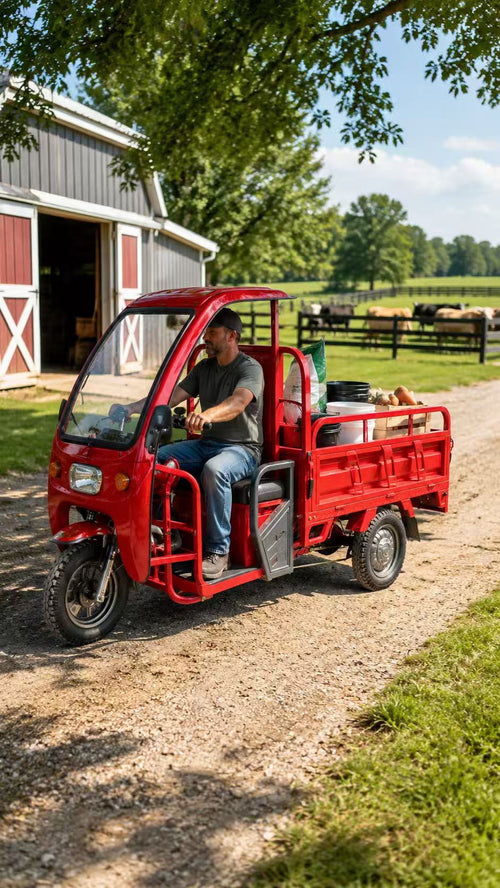
A lower side can make it easier to place tools, bags, buckets, feed supplies, repair parts, and smaller items into the bed. It may also make it easier to remove items by hand after transport.
This matters for mixed-use work.
A farm or ranch may use the same hauler for feed bags in the morning, compost later, tools after lunch, and yard debris before the day ends. A property maintenance team may carry cleaning supplies, branches, mulch, trash bags, and repair materials in different trips. A nursery may carry soil bags, trays, plant waste, buckets, and tools.
If the sides are too high for every task, workers may need to lift too much or reach too far.
That is why buyers should not think only about containment.
They should also think about loading height, hand access, and how often items must be removed manually.
Good bed design balances containment and access.
Do not overfill just because the sides are high
High side walls can create a false sense of capacity.
Workers may think that if the bed can hold more volume, it should always be filled to the top. That is not always the right approach.
A full bed may be too heavy. A tall pile may shift. Wet material may settle unevenly. Gravel may roll. Branches may bounce. Compost may pack down. Manure bedding waste may spread. Yard debris may catch the wind.
The side walls help contain material, but they do not cancel the need for good load planning.
A practical load should stay low, balanced, and inside the bed edges. It should match the route, surface, material weight, stopping distance, and unloading area.
This is especially important for wet soil, gravel, compost, manure, and dense material.
The fact that material fits inside the bed does not always mean it should be carried that way.
Flatbed carts and dump beds serve different jobs
Some buyers compare a dump hauler with a flatbed utility cart.
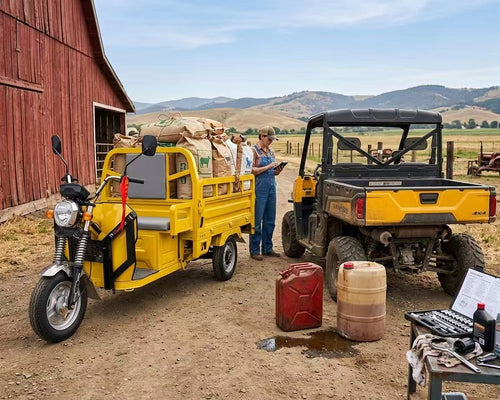
Flatbeds can be useful for large boxes, long items, toolboxes, equipment, bins, and supplies that need open access. A flatbed can make sense when the material is already contained in bags, boxes, crates, or tubs.
But loose material is different.
Mulch, compost, gravel, manure bedding waste, soil, wood chips, and yard debris need containment. A flat platform may not hold these materials well unless workers add bins, tubs, side panels, or other containment.
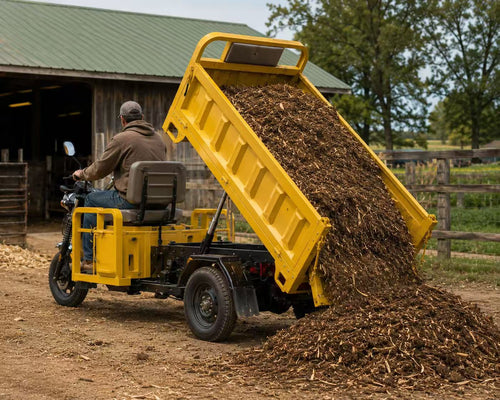
A dump bed is better suited to loose bulk material because the sides help hold the load, and the bed can release loose material from the rear when dumping.
That does not make one design better for every job.
It means buyers should choose based on the material.
Flatbed carts are often better for contained cargo. Dump beds are often better for loose material.
Tailgate and rear containment matter
Cargo containment is not only about the left and right sides.
The rear of the bed matters too.
A powered dump hauler may carry material across uneven ground, make turns, stop near a pile, or reverse into position before unloading. If the rear area does not contain material well during movement, loose cargo may shift or fall out before the operator reaches the dumping point.
At the same time, the rear discharge path must allow material to leave cleanly when the bed raises.
That creates a balance.
The rear area should help hold the load during transport but still allow practical unloading when the operator is ready to dump.
Buyers should think about how mulch, compost, gravel, manure bedding waste, leaves, soil, and yard debris will behave near the rear of the bed.
The best design supports both transport and unloading.
Branches and bulky debris need different planning
Branches, brush, vines, plant waste, and bulky yard debris do not behave like gravel or mulch.
They can stick out, catch on bed edges, shift during turns, or block other material from settling properly. A higher side wall can help contain some bulky debris, but long material still needs careful placement.
Workers should avoid stacking branches too high or letting material hang over the sides. Long pieces may need to be cut shorter, arranged in the same direction, or tied down depending on the job and route.
A powered dump hauler can help property maintenance teams, landscaping crews, farms, parks, and rural properties move yard debris, but bulky material should not be treated like loose soil.
The load should stay inside the bed and should not interfere with the wheels, handlebar area, operator space, or rear discharge path.
Containment depends on how the load is arranged.
Bags and tools do not need the same containment as mulch
Bagged materials and tools create a different cargo problem.
Feed bags, soil bags, bedding bags, fertilizer bags, toolboxes, buckets, repair parts, cleaning supplies, and plant trays do not flow like loose material. They may not need high side walls, but they do need stable placement.
If bags are stacked too high, they can shift. If tools are loose, they can slide. If buckets are placed near the edge, they can tip. If clean supplies are mixed with dirty material, the load becomes harder to manage.
Bed sides help, but organization still matters.
For tool and supply transport, the goal is not only to keep material from spilling. The goal is to keep items arranged so workers can unload them quickly and avoid damage.
A cargo bed used for both loose material and tools should be managed carefully.
Not every load should be dumped.
Wind can affect light material
Light material can move even when the bed sides are adequate.
Dry leaves, straw, wood shavings, dry bedding, small plant waste, and lightweight mulch may shift or blow in open areas. This matters for farms, horse stables, nurseries, landscaping sites, and property maintenance teams working on windy days.
A deeper bed can help, but workers should still avoid overfilling light material above the side walls.
If the route crosses open ground, driveways, resident areas, school paths, barn lanes, or landscaped areas, wind-blown material can create cleanup work.
For light loads, containment is not only about weight.
It is about height, wind exposure, travel speed, and how loosely the material is placed.
A lower, contained load is often better than a tall, messy load.
Turns and stops affect cargo containment
Material can stay inside while parked but shift when the vehicle moves.
Starting, stopping, turning, and approaching the dumping area all affect cargo. Loose gravel can roll. Compost can settle. Wet bedding can slide. Bags can shift. Branches can bounce. Buckets can tip.
This is why cargo containment should be considered together with slow-speed control and load balance.
A good powered dump hauler should be operated in a way that keeps the load stable. Workers should avoid sudden starts, fast turns, and abrupt stops when carrying loose or mixed material.
The bed sides help control the load, but the operator still matters.
Good containment is a combination of bed design, load height, material type, and careful operation.
Horse stable material needs containment
Horse stable work often involves manure, wet bedding, clean bedding, feed bags, buckets, and tools.
This mix makes cargo containment important.
Manure bedding waste and shavings should stay inside the bed while moving from stalls to a compost or waste area. Clean bedding should not fall out along the barn route. Feed bags should stay stable. Buckets and tools should not slide into dirty material.
A stable owner choosing a powered dump hauler should think about the full stable routine.
Does the bed contain manure and bedding waste?
Can clean bedding bags be placed without too much lifting?
Can tools and buckets ride without sliding?
Can the material dump from the rear without scattering along the path?
Stable work is repetitive, so small containment problems can become daily cleanup problems.
Landscaping loads can be messy
Landscaping crews often move materials that spill easily.
Mulch, soil, compost, gravel, leaves, branches, wood chips, sod pieces, tools, and yard debris may all be carried in the same workday. Some loads are loose. Some are bagged. Some are bulky. Some are dirty. Some should be placed carefully near finished landscaping.
Bed sides help keep material controlled while moving through lawns, driveways, side yards, planting beds, and property edges.
A low, stable load inside the bed can reduce spill cleanup and help crews look more professional on customer properties.
If the load spills on a driveway, sidewalk, or lawn, the crew may need to clean before leaving. That adds time.
For landscaping work, containment affects both efficiency and appearance.
Nurseries and greenhouses need controlled cargo
Nurseries and greenhouses often move plant-related materials.
Soil bags, potting mix, plant trays, mulch, compost, empty pots, fertilizers, tools, plant waste, and watering supplies may need to move through narrow service lanes and around valuable plants.
Cargo containment matters because spilled soil, tipped trays, or loose debris can create extra work.
A dump bed with useful side walls can help contain loose material, but the buyer should also consider access and organization. Plant trays and fragile items may need careful placement. Potting mix may need containment. Tools should not slide into plants or bags.
A nursery hauler should not only move material.
It should help keep the work area organized and controlled.
Property maintenance routes need clean transport
Property maintenance teams often move through shared areas.
Apartment properties, HOA communities, schools, parks, resorts, and senior living facilities may have residents, students, visitors, parked cars, sidewalks, landscape beds, and service areas.
Spilled mulch, soil, trash, leaves, branches, or tools along the route can create extra work and make maintenance look careless.
A powered dump hauler used in these areas should keep the load inside the bed while traveling slowly across the property.
Bed sides, load height, cargo arrangement, and careful operation all matter.
The goal is not only moving material from one place to another.
The goal is moving it without creating another cleanup job.
Cargo containment helps protect the vehicle too
Keeping material inside the bed can also help protect the vehicle.
If loose material spills over the sides, it may fall near the wheels, frame, or ground under the vehicle. If branches hang over the edge, they may rub against wheels or catch on objects. If gravel or soil is piled too high, it may shift and affect control.
A properly contained load keeps the material where it belongs.
That supports cleaner operation and reduces avoidable mess around the vehicle.
Workers should not allow material to cover the wheels, spill under the chassis, or block the operator area. A powered dump hauler should carry material inside the cargo bed, not all over the frame.
Good loading habits help the machine work better.
Mixed loads need extra care
Many real jobs are mixed.
A worker may put tools on top of mulch. A property team may carry trash bags with branches. A stable worker may carry buckets with bedding. A landscaper may carry soil bags beside loose compost. A nursery worker may carry trays and potting mix together.
Mixed loads are convenient, but they can create containment problems.
Loose material can bury tools. Bags can shift into debris. Branches can catch on buckets. Dirty material can contaminate clean supplies. Some items may need to be removed by hand before dumping.
A dump bed is useful, but it should not be treated as a random catch-all.
Before transporting a mixed load, workers should ask whether the items should ride together and whether anything must be removed before dumping.
Containment includes organization.
Ask what the bed needs to contain
Before buying, a serious buyer should list the materials that will ride in the bed most often.
For a horse stable, that may be manure bedding waste, clean bedding, feed bags, buckets, and tools. For a landscaping crew, it may be mulch, compost, gravel, branches, leaves, soil bags, and yard debris. For a farm or ranch, it may be feed, compost, gravel, tools, fence supplies, and waste. For a nursery, it may be potting mix, plant trays, soil bags, and plant debris. For property maintenance, it may be trash bags, branches, tools, mulch, and cleaning supplies.
Each material needs different containment.
Loose material needs side walls. Bags need stable placement. Tools need organization. Branches need arrangement. Light material needs lower loading. Wet material needs weight control.
The right bed is the one that matches the real load mix.
Questions to ask before buying
Before choosing a powered dump hauler, electric dump cart, powered wheelbarrow, motorized wheelbarrow, or battery-powered utility cart, ask practical containment questions.
What materials will be hauled most often?
Are they loose, bagged, bulky, wet, dry, light, heavy, or mixed?
Are the bed sides high enough for loose material?
Are the sides low enough for practical loading and unloading?
Will mulch, compost, gravel, manure, or wood chips stay inside during turns?
Will branches or yard debris hang over the edge?
Will bags and tools slide during movement?
Does the rear area hold material during transport?
Can the load dump from the rear without spilling from the sides?
Will the route include wind, turns, slopes, gravel, or shared paths?
These questions help buyers think beyond payload.
They connect the cargo bed to the daily work.
The load should arrive where it is needed
A powered dump hauler is valuable when it moves material efficiently.
But the material needs to arrive where it belongs.
If mulch falls out along the route, if gravel spills beside the wheels, if manure bedding waste drops near the barn entrance, if tools slide into dirty material, or if branches hang outside the bed, the hauler may create extra cleanup.
Cargo containment is part of work efficiency.
A good bed side design helps keep the load controlled from the loading point to the unloading point. It helps workers move material without leaving a trail behind. It helps the dump function work as intended because material stays inside until the operator is ready to unload.
That is why bed sides matter.
Do not only ask how much the hauler can carry.
Ask whether the load will stay inside long enough to reach the place where it is needed.