What Is an Electric Cargo Trike? A Practical Guide for Farm, Nursery, and Property Hauling
Share
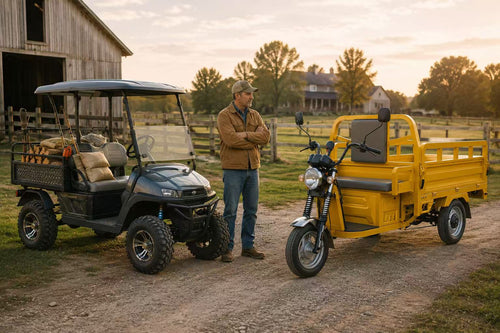
When people search for an electric cargo trike, they may see many different vehicle types. Some are family cargo bikes. Some are front-load e-bikes for children or groceries. Some are adult electric tricycles. Others are heavier three-wheel utility vehicles with a rear cargo bed.
For farm, nursery, ranch, greenhouse, and private property work, the important question is not just whether the vehicle has three wheels. The real question is whether the electric cargo trike is built for daily material movement.
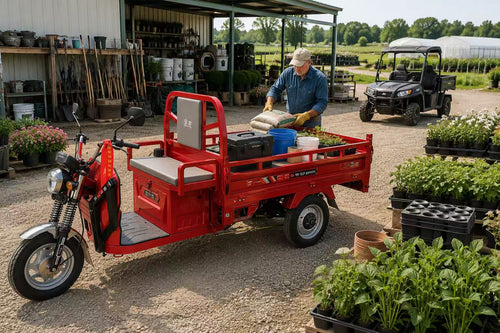
A work-focused electric cargo trike should help move tools, feed bags, produce crates, plant trays, irrigation parts, maintenance supplies, and other small loads across short internal routes. It should be simple to operate, easy to load, and practical for repeated low-speed hauling.
That is very different from a family cargo bike or a lightweight urban cargo trike.
The electric cargo trike search result is broad because the word “cargo” can mean many things. For one buyer, cargo may mean groceries or children. For another buyer, it may mean farm tools, feed, produce, and work materials. This article focuses on the second group: buyers who need a compact electric cargo trike for real property work.
Why the rear cargo bed matters
Many electric cargo trikes use a front box or basket design. That can work well for city delivery, family use, or light personal transport. But for farm and property work, a rear cargo bed is often more practical.
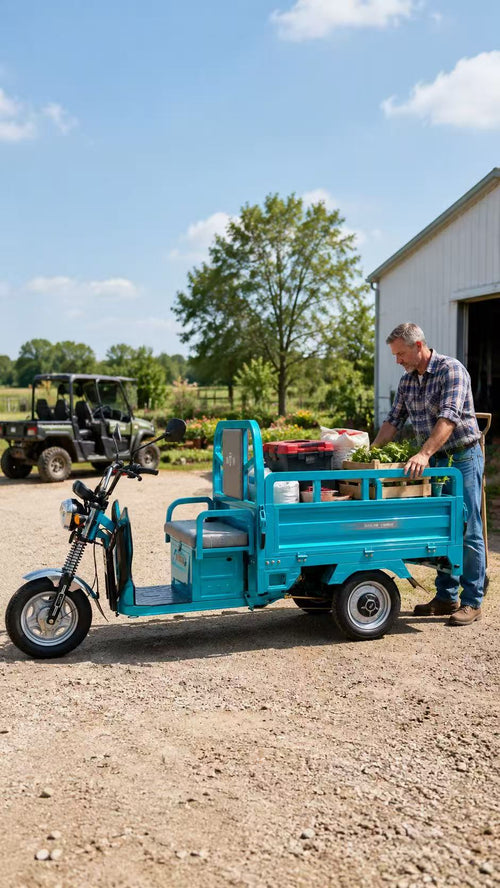
A rear cargo bed gives the operator a more open loading area. It can hold irregular items such as shovels, buckets, feed sacks, small crates, hoses, fencing parts, and repair tools. It also allows workers to load from the side or rear without lifting everything into a deep front box.
For daily farm hauling, the cargo bed is often more important than the vehicle name. A buyer may search for an electric cargo trike, electric cargo tricycle, farm cargo tricycle, or small electric farm vehicle. But the practical decision usually comes down to one thing: can the cargo area handle the work?
A farm vehicle does not need to look complicated to be useful. It needs to match the load, the route, and the daily work pattern.
Electric cargo trike vs electric cargo bike
Many search results for electric cargo trike also show electric cargo bikes. This can confuse buyers.
An electric cargo bike is usually designed for lighter cargo, urban movement, family trips, small deliveries, or personal transportation. It may be efficient, but it is not always designed for rough farm paths, frequent loading, or work materials.
A work-style electric cargo trike is different. It is usually more focused on stability, cargo space, low-speed movement, and repeated hauling. A rear cargo bed electric cargo trike can be easier to understand for farm buyers because it behaves more like a compact utility vehicle than a bicycle.
For a farm, nursery, ranch, or greenhouse, the question is not “bike or trike?” The better question is:
What do you need to carry every day, and where does it need to go?
If the answer includes feed, tools, trays, crates, irrigation supplies, and maintenance materials, a cargo bed trike may be a better fit than a lightweight cargo bike.
Where an electric cargo trike fits on a property
An electric cargo trike works best when the routes are short, repeated, and mostly inside private property. It is not meant to replace a full-size pickup truck. It is not meant for highway driving. It is not a heavy towing machine.
Its value comes from handling the small transport jobs that happen over and over again.
Typical use cases include:
- moving tools from a storage shed to a work area
- carrying feed bags to livestock pens
- transporting plant trays inside a nursery
- moving produce crates from the field to a sorting area
- carrying irrigation fittings, hoses, and repair parts
- supporting greenhouse maintenance routes
- moving small supplies around a ranch or private property
- reducing repeated walking and hand-carrying
For this type of work, a compact electric cargo trike can save time without adding the cost or size of a full UTV.
Why three wheels can help with daily hauling
The three-wheel layout is one reason buyers search for cargo trikes. A trike can provide a more stable platform than a two-wheel cargo bike when the vehicle is moving slowly with a load.
For farm and property use, low-speed stability matters. Workers may be moving over gravel, packed dirt, concrete lanes, nursery paths, barn areas, or mixed surfaces. The vehicle may stop frequently for loading and unloading. The operator may need to carry bulky but not extremely heavy items.
In this situation, a three-wheel cargo vehicle can feel more practical than a two-wheel bike. It can stand naturally when stopped, support a rear cargo bed, and make short work routes easier to repeat.
However, three wheels alone are not enough. Buyers should also check the cargo bed size, tire setup, motor power, battery range, braking, turning space, and how the vehicle fits the route.
What to check before choosing an electric cargo trike
A buyer should not choose only by price or photos. The best electric cargo trike is the one that matches the real job.
1. Cargo bed design
Look at the cargo area first. Is it an open rear bed, a front box, a basket, or a flat platform? For farm work, an open rear cargo bed is often more flexible for tools, bags, crates, and supplies.
2. Daily payload
Think about normal daily loads, not only maximum load claims. A vehicle may carry different items every day. Feed bags, produce crates, trays, soil bags, tools, and equipment parts all create different loading needs.
3. Route surface
A good electric cargo trike for farm use should fit the actual route. Gravel lanes, dirt paths, greenhouse walkways, barn yards, nursery rows, and paved warehouse areas all require different handling.
4. Route distance
Search results often mention range, but range depends on battery capacity, terrain, load weight, and stop-and-go use. For property work, the key question is whether the vehicle can complete the normal daily route with the expected load.
5. Operator comfort
For repeated daily use, comfort matters. A canopy can help provide shade and light weather protection. A comfortable seat, easy entry, clear visibility, and simple controls can make the vehicle more practical for frequent work.
6. Use environment
A farm, nursery, or warehouse yard may not need a street-legal vehicle. In many cases, buyers are looking for a low-speed private property cargo vehicle. That should be clearly understood before purchase.
Why a canopy cargo trike can be useful
A canopy is not just a visual feature. For daily property work, it can make repeated hauling more comfortable.
On farms and nurseries, operators may move between sheds, fields, greenhouses, loading areas, and storage zones throughout the day. Sun exposure and light weather can make short trips tiring when repeated many times.
A canopy electric cargo trike gives the operator some protection while still keeping the vehicle simple. It can be useful in open farm yards, nursery rows, greenhouse areas, ranch lanes, and private properties where the operator is moving materials throughout the day.
This makes a canopy model a practical choice when the vehicle is used often, not just occasionally.
Who should consider this type of vehicle?
A rear-bed electric cargo trike can be a good fit for:
- small farms
- nurseries
- greenhouses
- ranches
- orchards
- private landowners
- maintenance teams
- small business yards
- warehouse support areas
- buyers comparing cargo trikes and small electric farm vehicles
It is especially useful for people who do not need a large UTV but still need a reliable way to move supplies around a property.
A buyer searching for electric cargo trike may see many lifestyle and family cargo bike options. But for work use, the better choice is usually the vehicle with a practical cargo bed, simple operation, useful range, stable handling, and a structure that fits daily hauling.
Final thought
An electric cargo trike can mean different things to different buyers. For family use, it may mean a front-load bike for children and groceries. For city use, it may mean a delivery trike. For farm and property work, it should mean something more practical: a compact electric cargo vehicle with enough bed space for daily materials.
Before choosing one, buyers should look beyond the name. Check the cargo bed, route, payload, battery, terrain, operator comfort, and real daily work.
If the goal is to move tools, feed, trays, crates, produce, or maintenance supplies across short internal routes, a rear cargo bed electric cargo trike can be a useful alternative to walking, hand carts, and oversized vehicles.
The best electric cargo trike is not always the biggest or most expensive one. It is the one that fits the work route and makes daily hauling easier.