Can the Vehicle Wait There? Planning Temporary Parking Spots During Repeated Dump Cart Work
Share
An electric dump cart does not spend the whole workday moving.
During repeated hauling work, the vehicle starts, stops, waits, loads, unloads, turns around, returns, and waits again. On a farm, ranch, horse stable, landscaping job, construction cleanup area, or rural property, these waiting moments matter more than many people realize.
A temporary parking spot may seem like a small detail. But if the vehicle waits in the wrong place, it can block a barn aisle, farm gate, gravel road, animal path, tool area, material pile, driveway, equipment route, or unloading space.
That creates extra movement for everyone else.
A good electric dump cart workflow is not only about payload, route, dump bed function, or battery range. It is also about where the vehicle can safely stop between loads without interrupting the rest of the job.
Why temporary parking matters during repeated hauling
Repeated hauling work is built around a loop.
The vehicle moves to the loading point, receives material, travels to the dump zone, unloads, returns, and repeats the same route again. In a perfect setup, each part of the loop is clear and simple.
But real work areas are rarely perfect.
A worker may need to pause before loading. Someone may be shoveling material into the cargo bed. Another worker may be using the same path. A gate may need to stay open. Animals may need to pass. A tractor, pickup, mower, skid steer, wheelbarrow, or hand cart may also need room.
If the electric dump cart is parked in the wrong place while waiting, it can slow down the entire work area.
A temporary parking spot gives the vehicle a place to wait without blocking the next step.
What makes a bad temporary parking spot?
A bad waiting spot usually creates one of three problems: blocking, unsafe positioning, or wasted movement.
The vehicle may block a barn door, stable aisle, driveway, gate, material pile, sidewalk, tool shed, livestock path, or loading area. Even if the vehicle is only there for a few minutes, the delay can repeat many times during the day.
A bad parking spot may also place the vehicle on soft ground, loose mud, uneven soil, a slope, a ditch edge, or a narrow corner. That can make the next start, turn, or loaded movement more difficult.
Another problem is parking too close to the material pile or dump area. The vehicle may be near the work, but it may also block the worker’s shovel position, wheelbarrow access, dump flow, or return route.
The right question is not only “Can the vehicle fit there?” The better question is “Can the vehicle wait there without slowing down the rest of the work?”
Temporary parking near the loading point
The loading point is one of the most important places to plan a waiting spot.
If the vehicle waits too far from the material, workers spend extra time carrying soil, gravel, mulch, compost, manure, or wood chips to the cargo bed. If it waits too close, it may block the shovel angle, the pile face, or the route for the next load.
A good temporary parking spot near the loading point should allow workers to load material comfortably. The cargo bed should be close enough for efficient loading, but the vehicle should not sit directly in the way of people, tools, or other equipment.
The operator should also be able to leave after loading without backing through a crowded area. A clean exit path is just as important as a good loading position.
For small crews, this can make a major difference. The vehicle should wait where it can be loaded, leave, and return without constant repositioning.
Temporary parking near the dump zone
The dump zone also needs a clear waiting area.
After the vehicle unloads, the operator may need to lower the dump bed, check the ground, move forward, turn around, or prepare for the next trip. If the vehicle stops in the wrong place, it may block the next pile, create a tight turning angle, or force the operator to reverse unnecessarily.
A good temporary parking spot near the dump zone should leave enough space behind the vehicle for material flow and enough space ahead for the vehicle to move away safely.
This is especially important when dumping loose materials such as soil, gravel, compost, mulch, manure, wood chips, sand, bedding waste, or yard debris. The material should have room to land and spread naturally. The vehicle should not remain in a position that blocks the next load from being placed correctly.
The dump zone is not only where material leaves the cargo bed. It is also where the vehicle must recover, turn, and return.
Barns, stables, and livestock areas
Temporary parking matters even more in animal work areas.
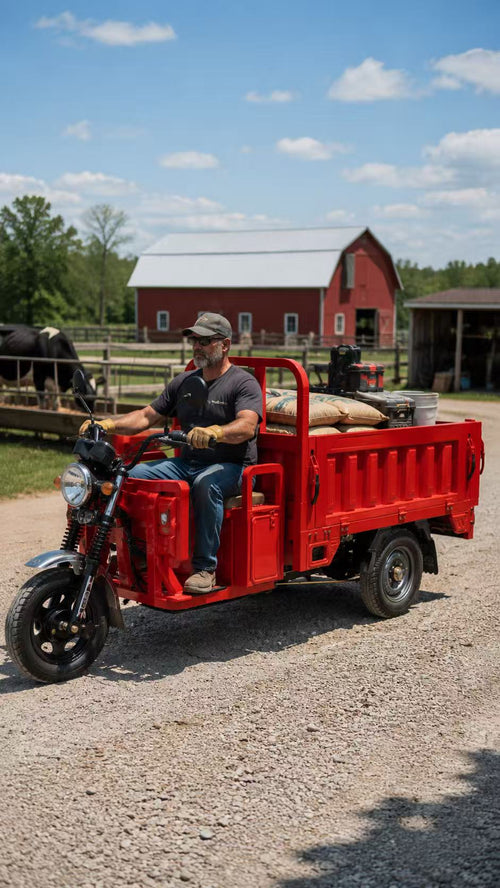
In horse stables, cattle barns, dairy areas, poultry houses, and ranch lanes, the vehicle should not block animal movement, feeding routes, cleaning paths, or emergency access. A parked vehicle in the wrong place can create stress, confusion, or delay.
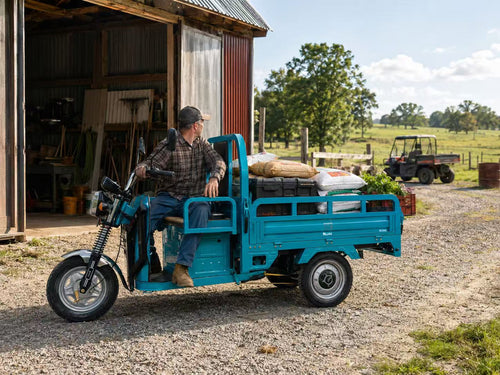
For barn cleaning, manure hauling, bedding replacement, and feed area cleanup, the electric dump cart should wait near the work area without closing off the aisle. Workers should still be able to move with buckets, forks, brooms, wheelbarrows, feed carts, or cleaning tools.
The best parking spot may be slightly outside the main aisle, near a wide entrance, beside a wall with enough clearance, or along a firm side area that does not interrupt traffic.
The goal is simple: the vehicle should support the work, not become an obstacle inside the barn.
Landscaping and property maintenance areas
In landscaping and property maintenance, temporary parking can affect residents, workers, and public access.
A vehicle parked across a sidewalk, driveway, clubhouse entrance, apartment walkway, garden path, service gate, or loading zone can quickly become a problem. Even when the vehicle is compact, it still needs a planned waiting position.
For mulch installation, soil movement, leaf cleanup, branch removal, flower bed repair, or debris hauling, the vehicle should wait close to the task without blocking normal movement.
On apartment communities, HOA properties, hotels, resorts, senior living facilities, schools, and parks, this becomes especially important. Maintenance vehicles often work in shared spaces. A poor parking spot can interrupt foot traffic, golf cart paths, service vehicles, residents, or guests.
A good waiting spot keeps the vehicle visible, stable, and out of the main path.
Construction cleanup and gravel repair work
Small construction and repair jobs often involve tight spaces.
During renovation cleanup, driveway repair, gravel patching, soil removal, or debris hauling, the electric dump cart may need to stop near piles of material, temporary barriers, tools, ladders, trailers, or other equipment.
The temporary parking spot should not block the work face or the route used by other workers. It should also avoid soft edges, trench sides, loose piles, steep slopes, and unstable ground.
If gravel or soil is being hauled repeatedly, the vehicle should wait where it can be loaded and leave in a straight or simple path. Too much backing, turning, and repositioning reduces the benefit of using a compact powered hauler.
The more crowded the jobsite, the more important the waiting spot becomes.
Why parking on firm ground matters
A temporary parking spot should be firm enough for the vehicle and the expected load.
Loose mud, wet soil, soft grass, deep bedding waste, uneven compost areas, and unstable gravel edges can make movement harder after the vehicle is loaded. A vehicle that parks easily when empty may be harder to move when the cargo bed is full.
Firm ground also helps the operator keep the vehicle stable while loading. If the vehicle sits at an angle or sinks slightly into soft ground, the loading process becomes less controlled.
This does not mean the entire jobsite must be perfect. It means the waiting spot should be chosen carefully, especially when hauling wet soil, gravel, manure, compost, sand, or other heavy loose materials.
How temporary parking reduces wasted movement
A planned waiting spot helps small crews avoid repeated repositioning.
Without a clear parking spot, the operator may move the vehicle forward, back up, turn around, stop again, move away for another worker, and then return to the same area. This does not look like heavy labor, but it wastes time and breaks the workflow.
A good temporary parking spot keeps the vehicle ready for the next step.
It gives the loader enough space to work. It gives the operator a clean exit. It keeps the path open for others. It avoids blocking the next load or the next dump. It helps the crew repeat the same hauling loop with fewer interruptions.
When the same job repeats all day, small delays become real labor cost.
How to choose a good waiting spot
A practical temporary parking spot should meet several conditions.
It should be close enough to the work area to reduce walking and carrying. It should be far enough from the material pile to leave space for loading. It should not block gates, doors, aisles, animal routes, sidewalks, driveways, or other equipment. It should sit on firm and reasonably level ground. It should allow the vehicle to leave without difficult backing or tight turning.
The spot should also make sense for repeated use. A place that works for one trip may not work after several loads if the pile grows, the dump area changes, or more tools enter the work zone.
Good operators keep checking the parking spot as the job changes.
Planning the vehicle’s pause points
Before starting repeated hauling, it helps to think about pause points.
Where will the vehicle wait before loading?
Where will it stop during loading?
Where will it pause after unloading?
Where can it turn around?
Where can it move aside if another person, animal, or machine needs to pass?
Where can it sit without blocking the next load?
These questions help turn a messy jobsite into a smoother material handling loop.
The vehicle does not need a large parking area. It needs a practical pause point that keeps the workflow moving.
A better workflow is not only about movement
Many buyers focus on how much an electric dump cart can carry and how far it can travel. Those are important questions. But in daily work, stopping points also matter.
A vehicle that carries material well can still slow down the job if it waits in the wrong place. A compact dump cart that parks correctly can support loading, unloading, turning, and return trips more efficiently.
For farms, ranches, horse stables, landscaping crews, construction cleanup jobs, and property maintenance teams, temporary parking is part of the material handling plan.
The question is simple:
Can the vehicle wait there without blocking the work?
If the answer is yes, the hauling loop becomes cleaner, faster, and easier to repeat.