Small Electric Farm Truck for Internal Farm Transport, Not Highway Driving
Share
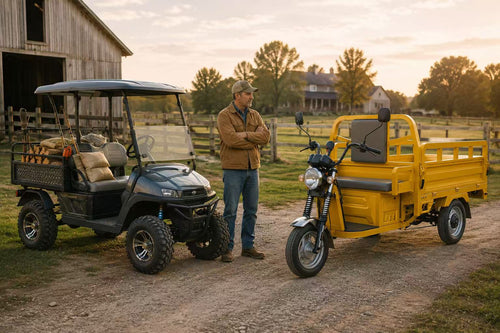
Many buyers who search for a small electric farm truck are not actually looking for a highway pickup. In most cases, they are looking for a compact electric work vehicle that can move tools, feed bags, soil, supplies, and other farm materials across private property with less effort and lower running cost.
That difference matters.
A full-size truck is useful for public roads, towing, and long-distance transport. But many daily farm jobs happen inside the property, not on the highway. They happen between barns, feed storage areas, equipment sheds, fenced lanes, greenhouses, orchards, livestock zones, and work yards. For these repeated short trips, a small electric farm truck may be a better fit than a larger vehicle.
Why Buyers Search for a Small Electric Farm Truck
The phrase small electric farm truck usually comes from a practical need. A farm owner may already have a pickup, tractor, or larger utility vehicle, but still need something simpler for low-speed internal transport.
That is where a compact electric utility vehicle starts to make sense.
Instead of thinking only in terms of truck category, it is better to look at the real work pattern. Many farm tasks involve short-distance hauling, frequent stops, moderate loads, and limited space. In that kind of workflow, compact size often matters more than road speed.
Start With the Job, Not the Vehicle Label
One of the most common buying mistakes is choosing by label instead of by work type. A vehicle may be called a truck, a utility vehicle, a mini truck, or a farm work vehicle, but those labels do not automatically tell you whether it matches your farm.
A better approach is to begin with the task.
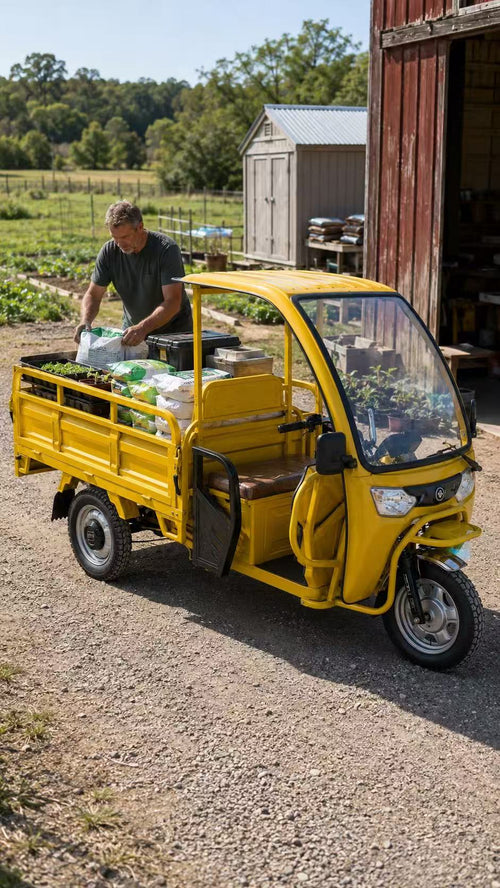
If the vehicle will mainly carry feed bags, hand tools, fencing supplies, buckets, compost, soil bags, produce crates, plant trays, or small equipment around the farm, then the key questions are not about highway comfort. The key questions are about cargo usefulness, turning space, access to work areas, and how easily the vehicle fits into daily routines.
For internal farm transport, a small electric farm truck is often chosen because it supports repeated utility work without the size, fuel use, or operating style of a larger machine.
Why Low-Speed Work Can Be the Right Fit
Some buyers worry when a compact electric work vehicle is not designed for highway driving. But on many farms, low-speed performance is not a weakness. It is part of the correct design for the job.
Internal farm transport usually happens on private property. The route may be from a barn to a feed area, from a shed to a fence line, from a greenhouse to a loading point, or from a compost pile to a garden block. These routes often involve frequent stops, short travel distances, and low-speed movement through active work areas.
In those conditions, a small electric farm truck does not need to behave like a road truck. It needs to be easy to control, practical to load, and simple to use over and over during the day.
Where Compact Size Creates Real Value
Compact dimensions and a small footprint matter more than many buyers first expect. Large vehicles can be useful in open areas, but they can become less convenient around barns, livestock pens, narrow service lanes, storage sheds, older farm buildings, and work zones with limited turning space.
A smaller electric farm truck can be easier to position near a work area, easier to stop and load, and easier to use in places where a full-size pickup feels unnecessary. This can improve daily workflow in farms, ranches, nurseries, orchards, greenhouses, and other properties where short-distance utility movement happens all day.
If the goal is internal logistics rather than road travel, compact size becomes part of the value.
What a Small Electric Farm Truck Should Carry
Small farm vehicles are most useful when the load matches the real work.
Typical internal farm transport jobs may include moving:
feed bags
soil bags
buckets
hand tools
fencing materials
plant trays
harvest crates
wood chips
compost
small equipment
barn supplies
general maintenance materials
This is why a practical cargo bed matters more than a marketing label. Buyers should focus on whether the bed is useful for the materials they move most often, whether loading height is manageable, and whether the vehicle supports repeated daily hauling without wasted space.
When a Small Electric Dump Work Vehicle Makes More Sense
Some internal farm transport jobs involve not just carrying materials, but unloading them efficiently.
If the work includes compost, mulch, wood chips, loose soil, manure, or similar bulk materials, a small electric dump-style farm truck may be more useful than a standard utility cart. The benefit is not only moving material from one place to another. It is also reducing labor during unloading.
For small farms and work properties, this can be especially valuable because the same vehicle can support both transport and dump work in daily chores.
Not for Highway Driving, and Not for Every Farm Task
A small electric farm truck can be highly useful, but it is not the right tool for every situation.
It may not be the best choice if your work depends on:
regular highway driving
heavy towing
very long route distances
deep mud or severe off-road terrain
large-scale commercial hauling
high-speed transport between distant locations
This is important. Buyers make better decisions when they understand both the fit and the limit of the vehicle.
A compact electric farm truck is best understood as an internal farm transport tool for low-speed work on private property. It is not a replacement for every pickup, tractor, or heavy-duty UTV.
What Small Farm Buyers Should Check Before Buying
Before choosing a small electric farm truck, check the following points:
1. Work area layout
Will the vehicle move through barns, feed zones, fenced lanes, greenhouses, orchards, or gravel work yards?
2. Route distance
How far does it need to travel in a normal day?
3. Load type
Will you move bagged materials, tools, crates, buckets, or loose bulk materials?
4. Cargo bed usefulness
Does the bed design fit the type of materials you move most often?
5. Dump function
Do you need a dump bed for compost, mulch, wood chips, soil, or manure?
6. Terrain
Will it run mostly on gravel, packed dirt, concrete, or mixed farm surfaces?
7. Charging routine
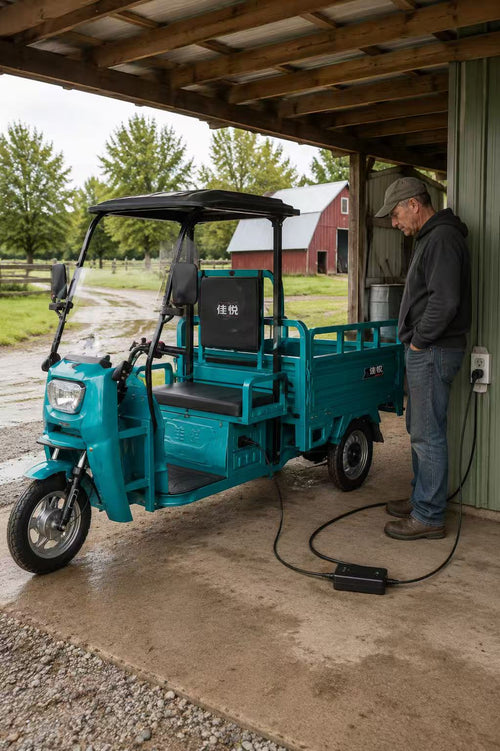
Can charging fit naturally into the daily work pattern?
8. Repair support
If service is needed, can the vehicle be supported locally through a farm equipment, motor, or small machinery repair technician?
These questions usually matter more than generic product claims.
Final Thought
A small electric farm truck should not be judged as if it were a road pickup. Its value comes from a different job.
For farms, ranches, nurseries, orchards, and work properties that need repeated low-speed internal transport, a compact electric farm truck can be a practical solution. If your work happens on private property and your daily tasks involve short-distance hauling rather than highway driving, choosing for internal logistics may be smarter than simply choosing the biggest vehicle.