How to Pick the Right Electric Farm Trike for Your Produce Business in 2026
Share
American small‑scale produce operators run different business models, from weekend‑only roadside booths to year‑round organic farms and local wholesale suppliers. Choosing a proper electric cargo trike becomes confusing when facing dozens of models with varied load capacity, frame width, battery range and price range. Many growers end up buying unsuitable hauling equipment due to mismatched daily‑use requirements. This buying guide breaks down key selection factors based on real‑world farm‑to‑market operations across the United States.
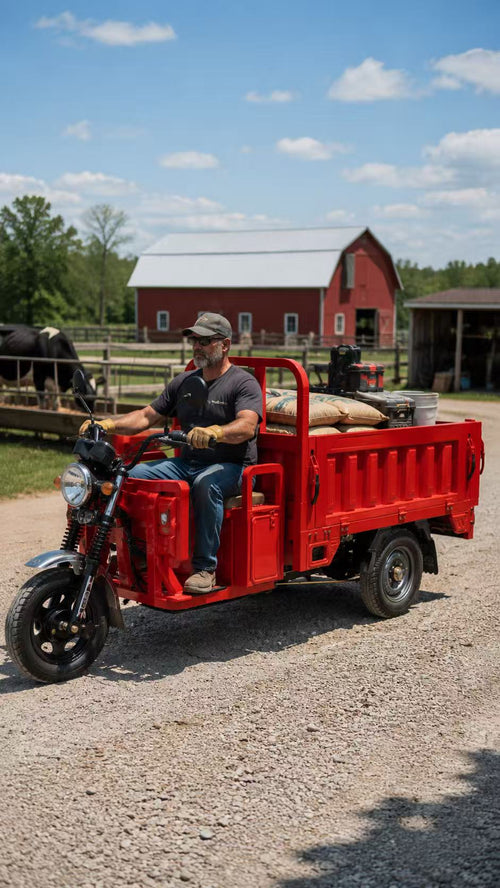
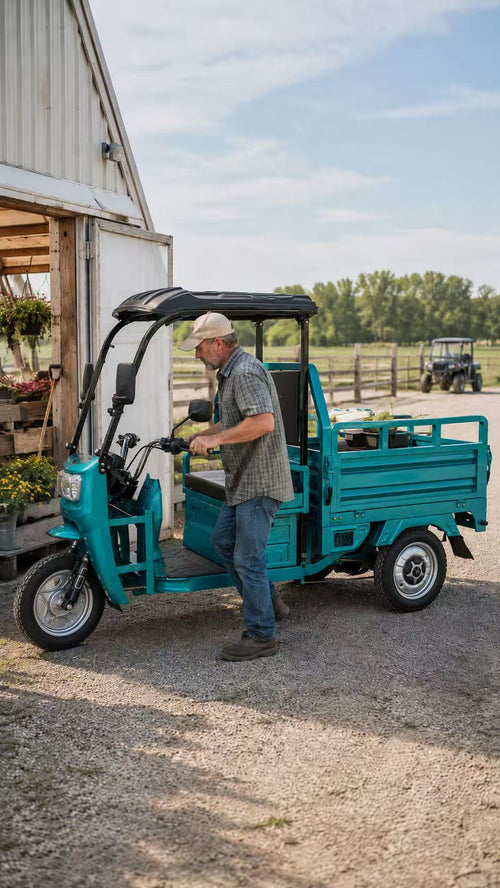
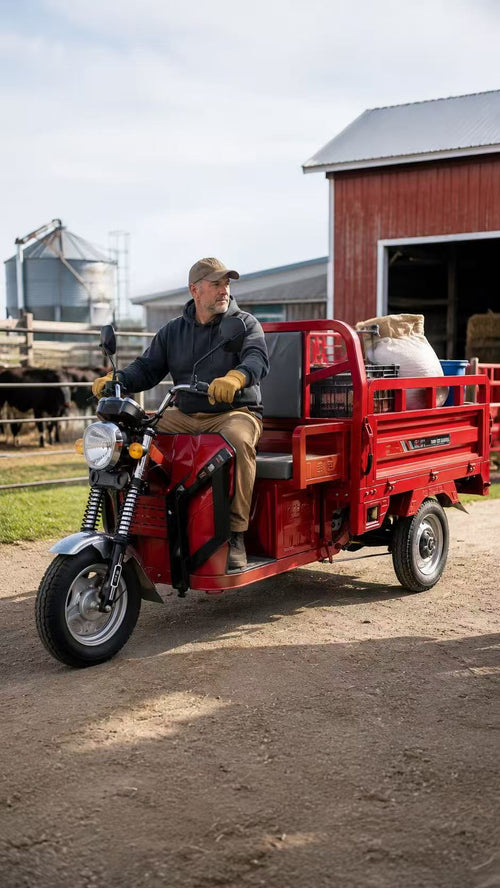
First of all, you need to match the trike’s size with your regular working places. Vendors selling goods at crowded city farmers‑markets should pick narrow‑body compact versions. Slim‑framed trikes can navigate tight market walkways and fit through narrow farm gate entrances. Orchard and greenhouse operators require vehicles with shorter overall length to travel along rows of crops. Wholesale distributors that mainly work in open‑air warehouses and large wholesale markets can select wider heavy‑duty models for higher loading capacity.
Load capacity directly decides which trike suits your business. Part‑time weekend vendors usually haul 200‑350 pounds of fruits and vegetables each trip, and standard‑duty electric trikes fully meet their needs. Full‑time family farms regularly deliver 400‑500 pounds of produce each dawn, requiring reinforced frames and upgraded rear suspension. Commercial‑scale growers doing wholesale bulk deliveries need heavy‑duty trikes built for continuous high‑load daily use.
Battery runtime remains a top concern for American farmers. Most standard lithium‑ion batteries support 35‑45 miles per full charge, enough for farmers making two or three daily trips between farmland and nearby markets. Long‑range battery upgrades are recommended for those driving to multiple market locations spread across suburban counties. Hot summer heat and cold winter weather in different US regions affect battery life, so sealed cold‑resistant batteries work better for northern‑area growers.
Budget tiers separate buyers into three groups. Entry‑level compact trikes fit hobby‑style, seasonal growers with limited yearly income. Mid‑range models balance reliable components and reasonable pricing for full‑time independent vendors, and they have the best overall return on investment. Heavy‑duty commercial‑grade trikes target established wholesale‑supply farms, designed for years of heavy‑duty daily operation.
Maintenance conditions also deserve consideration. Farmers working in muddy orchards or damp greenhouses should choose trikes with fully sealed electric motors to stop moisture and dirt from damaging internal parts. Those staying on paved market and warehouse roads can go with regular basic configurations. All our trike series use interchangeable spare parts, which US local repair shops can easily replace.
After sorting out your daily hauling distance, load volume, working environment and budget, you can narrow down your choices quickly. If you want to learn transport solutions designed for specific scenarios including market vending, orchard harvesting, greenhouse hauling and seafood wholesale delivery, view our main multi‑purpose farm utility‑vehicle guide.