When a Dump Bed Saves the Most Labor: Jobs Where Unloading Takes Longer Than Hauling
Share
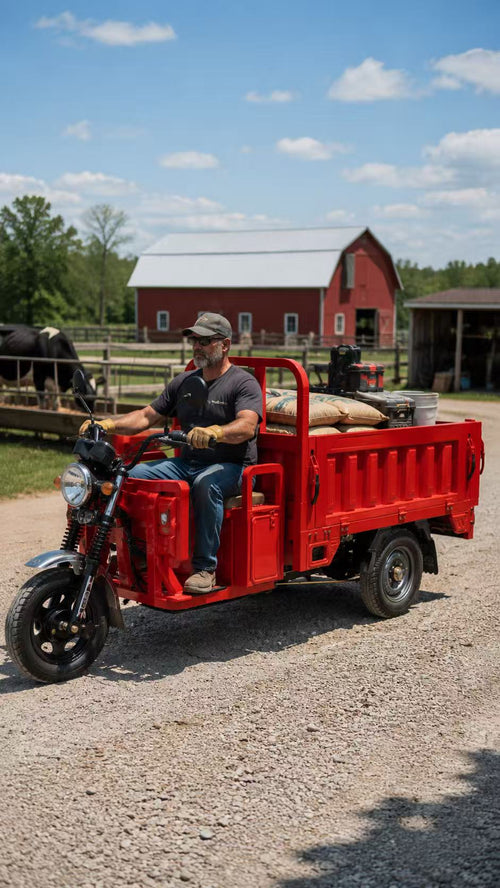
In many daily material handling jobs, the short drive is not the hardest part.
The harder part is often what happens after the vehicle reaches the destination.
A worker may only drive a short distance from a barn to a compost pile, from a mulch pile to a landscape bed, from a gravel pile to a driveway repair area, or from a cleanup zone to a debris pile. The route may be short. The vehicle may move slowly. The hauling distance may not seem difficult.
But once the load arrives, someone still has to unload it.
That is where a hydraulic dump bed can save the most labor.
A hydraulic dump bed creates the most value when the unloading step takes more time and physical effort than the short drive itself. For loose materials such as soil, gravel, manure, compost, mulch, wood chips, sand, bedding waste, and yard debris, unloading can become the slowest and most tiring part of the job.
The real question is not only, “How far do I need to haul?”
The better question is, “How much work does it take to unload every load?”
Why is unloading often the hidden part of material handling?
Many buyers think first about moving materials from one place to another. They compare payload, battery range, cargo bed size, motor power, and price. Those are important details, but they do not always show the full labor cost.
Material handling usually includes three steps: loading, hauling, and unloading.
The hauling step may be easy if the route is short. But unloading loose materials can require shoveling, scraping, tipping, pulling, raking, or repeated bending. If the material is wet, sticky, heavy, or dense, unloading becomes even harder.
This is why a vehicle that only carries material may not solve the whole problem. It moves the load, but it may still leave the worker with a full cargo bed to empty by hand.
When does unloading take longer than hauling?
Unloading often takes longer than hauling when the route is short, the material is loose, and the job repeats many times.
For example, moving manure from a horse stable to a compost pile may involve a short route. But if every load must be shoveled out by hand, the unloading step becomes the real labor problem.
Moving mulch from a driveway delivery pile to several landscape beds may also involve short trips. The driving time may be quick, but unloading and spreading each load can slow the crew down.
Gravel driveway repair is another example. A worker may only move gravel a short distance, but if the material has to be shoveled out of a flat cargo bed every time, the work becomes physically demanding.
In these jobs, the dump bed does not only help the vehicle move materials. It helps reduce the labor at the end of every trip.
What materials make unloading harder?
Some materials unload more easily than others. Dry, loose, light materials may slide or shovel out with less effort. Wet, dense, sticky, or compacted materials can be much harder.
Wet soil can cling to the cargo bed. Manure mixed with bedding waste may hold moisture and become heavy. Compost can be sticky after rain. Gravel and sand may slide well, but they are dense and heavy. Mulch and wood chips may be lighter, but repeated unloading still takes time when the crew must empty load after load by hand.
Common materials that benefit from hydraulic dumping include:
soil,
wet soil,
gravel,
sand,
manure,
compost,
mulch,
wood chips,
bedding waste,
yard debris,
grass clippings,
small cleanup debris.
These are exactly the materials that often create repeated unloading labor in farm, ranch, stable, landscaping, construction cleanup, and property maintenance work.
Why does a flat cargo bed still leave manual unloading?
A flat cargo bed can carry many materials, but it does not automatically unload them.
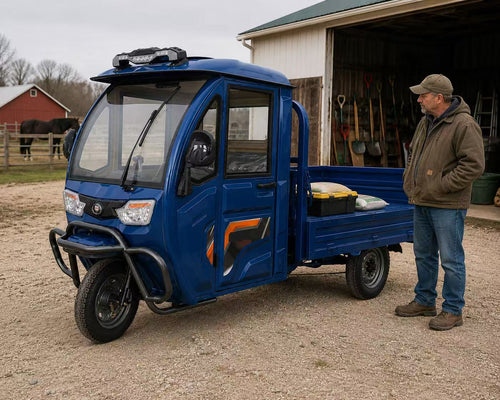
If a non-dump electric utility vehicle carries toolboxes, feed bags, boxes, plants, repair parts, or cleaning supplies, manual unloading is expected. Workers can remove those items by hand because they need careful handling.
But loose bulk materials are different. Soil, manure, compost, mulch, gravel, sand, and debris do not come out neatly like a toolbox. They often have to be shoveled, scraped, or pulled out.
This means a flat cargo bed may solve transportation but not unloading.
For occasional use, that may be acceptable. For daily repeated hauling, the unloading step can become the main reason to choose a hydraulic dump utility vehicle instead.
How does hydraulic dumping change the workflow?
A hydraulic dump bed changes the unloading step.
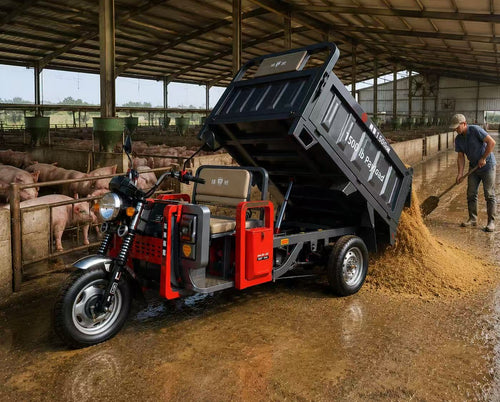
Instead of load, drive, stop, shovel, scrape, clean, and return, the operator can use a simpler workflow for suitable loose materials: load, drive, position the vehicle, raise the dump bed, allow material to exit from the rear, lower the bed, and return for the next load.
This does not remove all work. Workers may still need to spread mulch, level gravel, place soil, rake compost, or clean the bed after sticky materials. But hydraulic dumping can reduce the hardest part of unloading the cargo bed itself.
For high-frequency material handling, small time savings on each load can become meaningful by the end of the day.
Which jobs benefit most from a dump bed?
A dump bed is most useful when loose material must be unloaded repeatedly at ground level.
Horse stable cleanup is a good example. Manure and bedding waste may need to be moved from stalls or barn areas to a compost pile every day. The distance may be short, but the unloading repeats.
Landscaping mulch work is another strong example. Crews may need to move mulch from a main pile to multiple beds around a property. A hydraulic dump bed can reduce the need to empty every load by hand.
Driveway gravel repair also benefits from a dump bed. Gravel is dense, and even small repair jobs can require multiple trips. Being able to unload gravel from the rear can reduce shoveling.
Farm compost and soil movement are similar. Compost, wet soil, topsoil, and garden material often need to be moved in repeated loads. A hydraulic dump electric utility vehicle can help shorten the unloading step.
Small construction cleanup may also benefit when the debris is loose and suitable for dumping. The vehicle is not a replacement for heavy equipment, but it can support short-distance cleanup and material movement.
When is a dump bed less important?
A dump bed is less important when the cargo should not be dumped.
Tools, toolboxes, feed bags, boxes, repair parts, nursery trays, plants, cleaning supplies, packaged materials, and small equipment should usually be unloaded by hand. These items need control and organization. Dumping them can damage the cargo or create more work.
If most of the daily work involves carrying organized supplies rather than loose bulk materials, a non-dump electric utility vehicle may be enough.
The dump bed becomes more important when the work includes loose, dirty, heavy, or repetitive unloading.
Does a dump bed save labor on every job?
No. A dump bed does not save labor on every job.
If the vehicle mainly carries tools or packaged goods, the dump function may not be used often. If the material is fragile, bagged, boxed, or needs exact placement by hand, hydraulic dumping may not help.
But when the job involves repeated loose material unloading, the value becomes much clearer. The more often workers have to empty a cargo bed by shovel, rake, or hand, the more the dump bed matters.
This is why buyers should think about unloading frequency, not only hauling distance.
Why does repeated unloading matter more than one heavy load?
One heavy unload can be tiring. Repeated unloading can define the whole workday.
A worker may be able to shovel out one load of mulch, soil, manure, or compost without much concern. But if the same unloading happens many times, fatigue builds up. Work slows down. More breaks may be needed. The crew may need more people for a task that should have been simpler.
Hydraulic dumping helps because it reduces repeated manual unloading. Its value increases with each additional load.
For farms, ranches, horse stables, landscaping crews, nurseries, and property maintenance teams, this repeated pattern is common.
How does unloading affect small crews?
Small crews often feel the cost of unloading more than large crews.
If only one or two workers are available, every repeated manual task matters. One person may need to load, drive, unload, return, and continue the next job. If unloading takes too long, the whole work schedule slows down.
A hydraulic dump utility vehicle helps small crews by reducing the physical effort required at the destination. The worker can spend less time emptying the cargo bed and more time placing, spreading, cleaning, repairing, or returning for the next load.
For small crews, the dump bed is not just a feature. It can be a labor multiplier.
What should buyers ask before choosing a dump bed?
Before choosing between a simple cargo bed and a hydraulic dump bed, buyers should ask practical unloading questions:
What materials will I unload most often?
Are they loose, wet, dense, or dirty?
Will I move soil, gravel, manure, compost, mulch, wood chips, sand, or bedding waste?
How many loads will I move in a normal day?
How much time does unloading take now?
Do workers shovel material out of the bed by hand?
Does the material need to be dumped at ground level?
Will the vehicle unload in one location or several locations?
Is the route short but repeated?
Would reducing the unloading step save meaningful labor?
These questions help buyers understand whether a dump bed is worth the added function.
How should farms think about unloading?
On farms, unloading often happens many times in ordinary daily work.
Manure may need to be unloaded at a compost pile. Soil may need to be delivered to garden or repair areas. Compost may need to be moved between piles, beds, or fields. Gravel may be used for small road or drainage repairs. Feed waste and bedding waste may need to be moved away from barns.
If these jobs happen regularly, the unloading step matters. A hydraulic dump electric utility vehicle can help reduce manual unloading when the material is suitable for dumping.
For farm work, the best equipment is often the equipment that makes repeated daily jobs easier, not only the equipment that carries the biggest single load.
How should landscaping crews think about unloading?
Landscaping crews often work with materials that are easy to transport but slow to unload manually.
Mulch, topsoil, compost, gravel, wood chips, sod debris, branches, and yard waste may need to be moved to several locations across a property. A crew may need to place materials near beds, trees, borders, paths, or cleanup zones.
If a worker has to shovel or drag each load out of a flat bed, the unloading time adds up. A dump bed can help place loose material closer to where it is needed, reducing the amount of material that must be removed by hand from the vehicle.
The crew may still need to spread or finish the material, but the cargo bed does not have to be emptied manually each time.
How should stable and ranch owners think about unloading?
Stable and ranch work often includes dirty, repetitive material movement.
Manure, bedding waste, wet straw, wood shavings, compost, feed waste, and cleanup debris may need to move from stalls, barns, pens, or animal areas to a dump zone or compost area. These materials can be wet, bulky, and unpleasant to handle repeatedly.
A hydraulic dump utility vehicle helps because it allows suitable loose material to unload from the rear instead of forcing workers to empty the bed by hand.
For stable and ranch owners, the dump function is most valuable when cleanup happens every day.
How should property maintenance teams think about unloading?
Property maintenance teams may use a vehicle for both organized supplies and loose cleanup materials.
Tools, parts, and cleaning supplies may not need a dump bed. But yard debris, mulch, soil, gravel, compost, branches, and cleanup material may benefit from hydraulic unloading.
This is why a hydraulic dump vehicle can be useful for mixed work. It can carry tools when needed and dump loose material when appropriate.
The key is understanding which tasks create the most unloading labor.
What is the difference between hauling time and unloading time?
Hauling time is the time spent moving from one place to another. Unloading time is the time spent emptying the cargo bed after arrival.
On long routes, hauling time may be the biggest part of the job. On short routes, unloading time can become more important.
Many farm, ranch, stable, landscaping, and property jobs are short-route jobs. The vehicle may travel only a few hundred feet. In that situation, the drive is not the main labor cost. The repeated loading and unloading cycle is.
That is why a hydraulic dump bed can be more valuable on short routes than buyers expect.
The dump bed matters most when unloading is the bottleneck
A hydraulic dump bed is not needed for every type of cargo. It is not meant for every job. But when loose material unloading becomes the bottleneck, the dump bed becomes one of the most important features on the vehicle.
If the work involves repeated short-distance hauling of soil, gravel, manure, compost, mulch, wood chips, sand, bedding waste, or debris, the unloading step should be part of the buying decision.
A non-dump vehicle can carry the load.
A hydraulic dump utility vehicle can help unload it.
For daily material handling, that difference can matter more than buyers first realize.
Before asking only how far the vehicle can haul, ask how long it takes to empty the bed at the end of every trip.