Manual Dump Bed vs Hydraulic Dump Bed: Which One Is Better for Daily Heavy-Duty Work?
Share
If you’re shopping for a utility vehicle, one of the biggest decisions isn’t the motor size or battery capacity—it’s whether you should choose a manual dump bed or a hydraulic dump bed. While both options are designed to transport and unload materials, they perform very differently once daily workloads become heavier and more frequent.
Many first-time buyers assume a manual dump bed is enough because it costs less. For light gardening, occasional yard cleanup, or transporting empty containers, that may be true. However, daily work on farms, ranches, construction sites, nurseries, wholesale markets, and commercial properties often involves much heavier materials. Wet soil, gravel, sand, compost, livestock manure, mulch, animal feed, landscaping debris, firewood, and construction waste quickly increase the effort required to unload each trip.
The real question is not simply how much weight a vehicle can carry. The more important question is how many times you unload that weight every day.
Imagine unloading a half-loaded cargo bed ten or twenty times during a workday. Even if each load can technically be tipped by hand, repeated lifting creates fatigue, slows productivity, and increases the risk of back or shoulder injuries. Over weeks and months, that repeated manual effort becomes one of the biggest hidden operating costs.
This is where a hydraulic dump bed begins to show its real value.
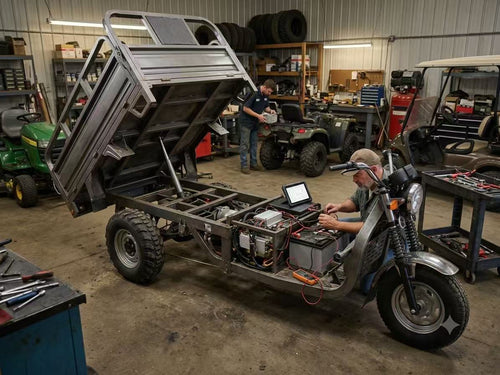
Instead of relying on physical strength, a hydraulic system raises the cargo bed smoothly with the push of a button or control lever. Heavy materials slide out naturally, reducing unloading time while keeping the operator focused on the next task. Rather than struggling with every load, workers can maintain a steady workflow throughout the day.
For farms, hydraulic dumping makes moving livestock manure, bedding materials, fertilizer, harvested produce, and feed significantly easier. Ranch owners benefit when transporting hay waste, fencing materials, minerals, and maintenance supplies across large properties. Landscapers appreciate faster unloading of mulch, soil, gravel, and tree debris. Contractors save valuable labor when moving sand, concrete waste, bricks, or demolition materials. Property maintenance teams can quickly dispose of leaves, branches, and construction debris without repeated manual lifting.
A manual dump bed still has its place. If your vehicle is used only a few times each week with lightweight materials, it remains an affordable solution. Simplicity also means fewer hydraulic components to maintain. For homeowners or occasional users, this can be a practical choice.
However, businesses and professional operators should think beyond the initial purchase price. Equipment should be selected based on total daily workload rather than the lowest upfront cost. Saving a few hundred dollars today may result in years of unnecessary physical labor and reduced productivity.
When choosing between manual and hydraulic dumping, consider these practical questions:
* How many unloading cycles do you complete every day?
* What materials do you transport most often?
* Are the materials dry, wet, loose, or compacted?
* Will more than one employee operate the vehicle?
* Does reducing labor save money for your business?
The answers often make the decision much easier.
A hydraulic dump utility vehicle is not simply an upgraded version of a manual cart. It is a productivity tool designed for repetitive material handling. As workloads increase, the value of hydraulic dumping grows quickly because it reduces physical effort, shortens unloading time, improves workplace safety, and helps complete more work within the same day.
Instead of asking which dump bed is stronger, ask which system allows your team to work more efficiently over the next several years. In many professional applications, the answer is clear.