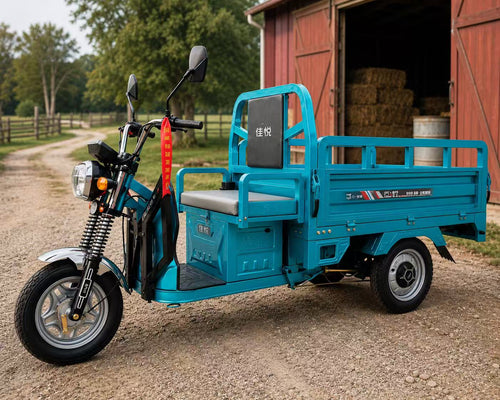
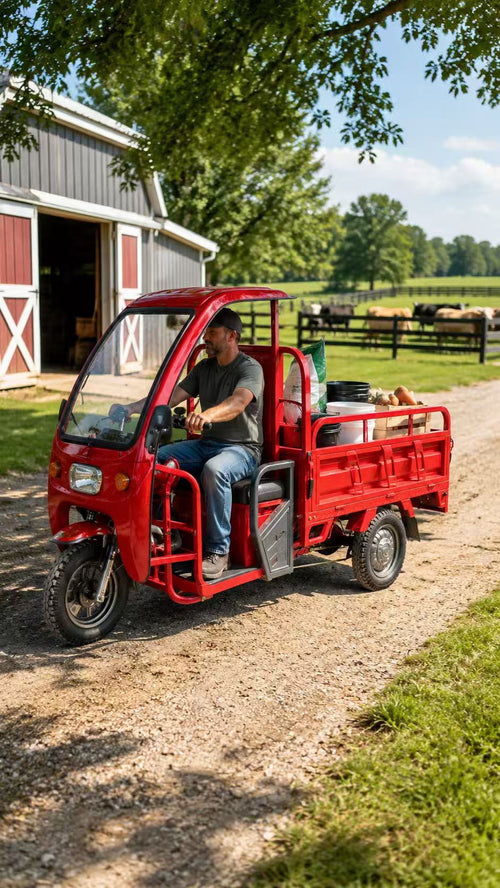
Will the Dump Bed Lift Smoothly? Hydraulic Lift Checks Before Choosing a Powered Dump Hauler
Share
A powered dump hauler is often judged by whether it has a hydraulic dump bed.
That is understandable.
A hydraulic dump bed can make daily unloading easier than shoveling material out by hand. It can help move mulch, compost, manure bedding waste, soil, gravel, yard debris, feed-area cleanup material, greenhouse waste, nursery supplies, and property maintenance loads across farms, ranches, horse stables, landscaping sites, nurseries, greenhouses, and private work areas.
But the buying question should not stop at:
Does it have a hydraulic dump bed?
The better question is:
Will the dump bed lift smoothly, lower smoothly, hold position properly, and return cleanly during real daily work?
A powered dump hauler, electric dump cart, electric work trike, battery-powered utility cart, electric utility trike, powered wheelbarrow, motorized wheelbarrow, compact utility vehicle, or small farm hauler may look useful in a product photo. But in real use, the hydraulic lift movement matters.
If the dump bed raises unevenly, lowers too quickly, makes unusual noises, shakes, sticks, or feels hard to control, the operator may lose confidence. If the bed movement is smooth, predictable, and easy to observe, the vehicle feels more practical for daily material handling.
For buyers, the hydraulic lift is not only a feature.
It is part of the daily work cycle.
Hydraulic lift quality affects daily confidence
A hydraulic dump bed should feel controlled.
The operator should not feel surprised when the bed begins to rise. The movement should not feel jumpy or violent. The bed should not drop suddenly. The vehicle should remain stable while the bed is raised. The operator should be able to understand what the bed is doing.
This matters because many powered dump haulers are used in tight private-property work areas.
A farm worker may unload compost near a garden edge. A horse stable worker may dump manure bedding waste near a pile. A nursery worker may unload soil or plant waste near a service area. A property maintenance worker may dump mulch or yard debris beside a landscape bed. A ranch worker may unload material near a barn, fence line, or equipment shed.
In these places, smooth movement matters more than dramatic lifting power.
A hydraulic dump bed should make unloading calmer, not more stressful.
Raising is only one part of the lift cycle
A powered dump hauler is often judged by whether it has a hydraulic dump bed.
That is understandable.
A hydraulic dump bed can make daily unloading easier than shoveling material out by hand. It can help move mulch, compost, manure bedding waste, soil, gravel, yard debris, feed-area cleanup material, greenhouse waste, nursery supplies, and property maintenance loads across farms, ranches, horse stables, landscaping sites, nurseries, greenhouses, and private work areas.
But the buying question should not stop at:
Does it have a hydraulic dump bed?
The better question is:
Will the dump bed lift smoothly, lower smoothly, hold position properly, and return cleanly during real daily work?
A powered dump hauler, electric dump cart, electric work trike, battery-powered utility cart, electric utility trike, powered wheelbarrow, motorized wheelbarrow, compact utility vehicle, or small farm hauler may look useful in a product photo. But in real use, the hydraulic lift movement matters.
If the dump bed raises unevenly, lowers too quickly, makes unusual noises, shakes, sticks, or feels hard to control, the operator may lose confidence. If the bed movement is smooth, predictable, and easy to observe, the vehicle feels more practical for daily material handling.
For buyers, the hydraulic lift is not only a feature.
It is part of the daily work cycle.
Hydraulic lift quality affects daily confidence
A hydraulic dump bed should feel controlled.
The operator should not feel surprised when the bed begins to rise. The movement should not feel jumpy or violent. The bed should not drop suddenly. The vehicle should remain stable while the bed is raised. The operator should be able to understand what the bed is doing.
This matters because many powered dump haulers are used in tight private-property work areas.
A farm worker may unload compost near a garden edge. A horse stable worker may dump manure bedding waste near a pile. A nursery worker may unload soil or plant waste near a service area. A property maintenance worker may dump mulch or yard debris beside a landscape bed. A ranch worker may unload material near a barn, fence line, or equipment shed.
In these places, smooth movement matters more than dramatic lifting power.
A hydraulic dump bed should make unloading calmer, not more stressful.
Raising is only one part of the lift cycle
Many buyers focus only on whether the bed can rise.
But a hydraulic lift cycle has several parts:
The bed starts from a level position.
The lift begins.
The bed rises under control.
The bed holds long enough for material to move.
The operator lowers the bed.
The bed returns fully to its normal travel position.
Each part matters.
A powered dump hauler may raise the bed, but the buyer should also think about how it lowers and returns.
Does the bed settle back cleanly?
Does it align naturally with the frame?
Does the operator feel in control?
Does the movement sound normal?
Does the cylinder area look stable?
Does the bed feel secure when lowered?
A smooth full cycle is more valuable than a lift that only looks impressive in one raised photo.
Jerky movement can reduce trust
Jerky dump bed movement is a warning sign for buyers.
A bed that jumps, shakes, hesitates, or moves in sudden steps may make the operator uncomfortable. It may also disturb the load during unloading.
This does not automatically mean the vehicle is unusable. But it does mean the buyer should pay attention.
Hydraulic movement can be affected by load balance, mechanical alignment, cylinder condition, hydraulic fluid condition, hose condition, fittings, pivot points, and how the vehicle is parked.
For daily users, the result is what matters most:
Does the bed move predictably?
A powered dump hauler used for manure, mulch, compost, soil, gravel, or yard debris should not feel unpredictable when the bed lifts.
The operator should be able to stand clear, keep the vehicle stopped, and watch the bed move in a controlled way.
The vehicle should be stopped before lifting
A hydraulic dump bed should not be raised while the vehicle is moving.
Before lifting, the powered dump hauler should be stopped in a clear unloading area. The ground should be firm enough. The operator should check that people, animals, tools, plants, fences, equipment, and buildings are not too close to the rear or side of the bed.
This is especially important in horse stables, barnyards, nursery yards, greenhouse service areas, landscaping sites, ranch lanes, and property maintenance routes.
The dump bed changes the vehicle’s balance when raised.
Even if the load is not large, the operator should treat the lift action as a controlled work step, not something done casually while rolling.
Stop first.
Check the dump zone.
Raise the bed under control.
Lower it fully before driving again.
That simple habit protects the vehicle, operator, and work area.
Level ground helps the lift work more predictably
A raised dump bed changes weight position.
That is why the ground matters.
Firm, level ground is better for hydraulic dump bed operation than soft, sloped, uneven, or unstable ground. Gravel yards, concrete pads, compacted dirt, barnyard surfaces, or stable service areas can work well if they are firm and reasonably level.
Soft mud, loose shoulder edges, steep slopes, deep ruts, and uneven ground can make the lift feel less stable.
A buyer should think about where the hauler will actually unload.
Will it dump near a manure pile?
Near a compost area?
Beside a barn?
At a greenhouse service lane?
Near a landscape bed?
At a ranch work zone?
Beside a property maintenance yard?
The hydraulic lift is only as practical as the area where it is used.
Load balance affects dump bed movement
A hydraulic dump bed works best when the load is placed reasonably.
If heavy material is loaded too far to one side, too far forward, too high, or unevenly, the lift may feel different. The bed may rise with more strain. The material may shift unexpectedly. The operator may notice less smooth movement.
This matters with wet soil, dense compost, gravel, manure bedding waste, mulch, tools, and mixed cleanup material.
A powered dump hauler is not only about carrying weight.
It is about carrying and unloading weight in a controlled way.
Before lifting the bed, the operator should make sure the load is low, stable, and not caught on the side rails or rear gate area. Bagged items, tools, or large objects should not be dumped like loose material unless the work plan truly supports it.
Loose bulk materials should move out naturally.
Stable loading helps the hydraulic lift feel smoother.
Not every load should be dumped
A hydraulic dump bed is useful, but that does not mean every cargo type should be dumped.
Loose materials such as mulch, compost, soil, manure bedding waste, small gravel, or yard debris are more suitable for controlled dumping. But toolboxes, feed bags, plant trays, buckets, equipment, parts, and fragile supplies usually should be lifted out by hand.
This matters because buyers sometimes think a dump bed solves every unloading problem.
It does not.
A dump bed is best when the material is suitable for sliding or flowing out of the rear area. For loads that can break, spill, bounce, or damage the bed, hand unloading may be safer.
A good powered dump hauler buyer thinks about both the lift system and the load type.
The hydraulic bed should be used for the right kind of work.
Hydraulic cylinder visibility helps buyers understand the lift
A hydraulic cylinder is not only a hidden component.
It is part of the visible work action.
When the dump bed is raised, buyers should be able to understand where the lift force is coming from and how the bed is supported. The cylinder area, pivot point, frame connection, and underside of the cargo bed should look stable and aligned.
This does not mean every buyer needs to become a mechanic.
But a buyer should be able to notice obvious concerns:
Does the cylinder look straight?
Does the bed rise evenly?
Does anything appear loose or bent?
Are hoses positioned where they will not be pinched?
Does the lift structure look strong enough for daily work?
Does the bed return to the frame properly?
For a powered dump hauler used every day, the lift system should inspire trust.
A clean, visible, stable hydraulic lift makes the vehicle easier to understand.
Listen for unusual noise
A hydraulic dump bed may make normal operating sounds.
But harsh grinding, loud knocking, repeated popping, sudden banging, or unusual squealing should not be ignored.
Noise can come from many places, including loose cargo, hinge points, frame contact, dry pivot areas, hydraulic movement, or general mechanical issues.
The important point for buyers is simple:
The lift should not sound uncontrolled.
A powered dump hauler used in a horse stable, farmyard, nursery, greenhouse, ranch, or property maintenance route should operate in a predictable way.
This matters especially around animals and people.
A smooth lift sound supports confidence. A violent or uncertain sound makes the operator hesitate.
Lowering control is just as important as lifting power
A powerful lift is useful, but controlled lowering may be even more important.
After unloading, the bed must return to its normal position before the vehicle moves again. If the bed lowers too fast, stops unevenly, drops suddenly, or does not sit flat, the operator may not feel confident.
Lowering should be deliberate and predictable.
The bed should come down smoothly. The operator should stay clear of pinch areas. The vehicle should remain stopped. The bed should fully return before the hauler drives away.
This is part of safe daily operation.
A hydraulic dump bed that raises well but lowers poorly is not a complete solution.
Buyers should think about the entire raise-and-lower cycle.
The bed should not be driven while raised
After dumping, the bed should be lowered before moving the vehicle.
A raised bed changes the height, balance, visibility, and clearance of the powered dump hauler. It can also create risk near barns, gates, roof edges, tree branches, greenhouse structures, storage racks, stable doorways, or people working nearby.
A hydraulic dump cart should not be treated like it is ready to drive just because the material has left the bed.
The work cycle should be clear:
Stop the vehicle.
Check the area.
Raise the bed.
Allow suitable material to unload.
Lower the bed fully.
Confirm the bed is seated.
Then move the vehicle.
This habit helps avoid unnecessary damage and confusion.
Smooth lift matters in horse stable work
Horse stable work often involves repeated unloading of manure bedding waste, wet bedding, clean bedding, feed-area cleanup, or small maintenance loads.
The environment may include horses, stall doors, riders, dogs, workers, buckets, gates, fencing, and uneven barnyard surfaces.
A sudden or noisy dump bed can disturb the work environment.
A stable buyer should value a hydraulic lift that feels calm and predictable.
The operator should be able to stop the vehicle, raise the bed slowly, unload in a controlled dump zone, lower the bed fully, and move away without rushing.
For horse stable use, the lift system is not only about speed.
It is about calm daily routine.
Smooth lift matters in landscaping and property maintenance
Landscaping and property maintenance work often happens near customer-facing areas.
A crew may unload mulch, soil, yard debris, branches, compost, or maintenance waste near lawns, garden beds, apartment buildings, HOA paths, park areas, schools, resorts, or private estates.
In these places, the hydraulic dump bed should look controlled and professional.
A bed that jerks or drops can make the work look unsafe or messy. A smooth lift helps the operator place material more carefully and keep the work area organized.
For property maintenance buyers, appearance and control matter.
The vehicle is often visible to customers, residents, or managers.
A controlled dump bed supports a more professional work process.
Smooth lift matters in nursery and greenhouse work
Nursery and greenhouse work may include soil, plant waste, pots, mulch, trays, bags, and growing supplies.
These environments can include tight lanes, benches, irrigation lines, plants, workers, and customers.
A hydraulic dump bed should be used carefully.
Not every greenhouse or nursery load should be dumped. Fragile plant trays, pots, or boxed supplies may need hand unloading. But loose soil, plant waste, and cleanup material may be suitable for controlled dumping in the right place.
For these buyers, smooth lift movement helps prevent sudden material movement and makes it easier to keep the work area clean.
The operator should choose a firm, clear unloading spot and avoid lifting the bed in tight or crowded lanes.
Hydraulic lift checks should be practical, not complicated
This article is not telling buyers to perform advanced hydraulic repair.
The point is simpler:
Before choosing or using a powered dump hauler, pay attention to whether the dump bed movement feels smooth, stable, and practical.
A buyer can observe basic things:
Does the bed raise evenly?
Does it lower under control?
Does the cylinder area look stable?
Are there visible leaks?
Do hoses appear pinched or damaged?
Does the bed return fully to the frame?
Does the lift sound normal?
Does the vehicle stay still while lifting?
Is the dump zone clear?
These are practical buying and daily-use questions.
They help buyers judge whether the hydraulic dump bed fits real work.
Leaks should not be ignored
Visible hydraulic fluid leaks are a serious concern.
If fluid appears around hoses, fittings, cylinder seals, pump areas, or under the vehicle, the buyer should not ignore it. A leak may reduce performance, create mess, attract dust, and eventually affect lift function.
A powered dump hauler used in farms, stables, nurseries, greenhouses, landscaping, and property maintenance should be checked visually.
This does not require deep mechanical knowledge.
If something looks wet, oily, fresh, or abnormal around the hydraulic system, it deserves attention before heavy use.
A hydraulic dump bed should be a labor-saving feature, not a recurring uncertainty.
The dump bed should hold position during use
When the bed is raised for unloading, it should feel stable enough for the task.
The operator should never stand under the raised bed or place hands into pinch points. But from a safe position beside the vehicle, the operator should see whether the bed holds its raised position in a controlled way.
If the bed slowly drops, shakes badly, or appears unstable, the issue should be handled before daily use continues.
A raised dump bed has weight and movement.
The operator should treat it with respect.
Smooth lifting, stable holding, and controlled lowering are all part of the same hydraulic performance.
Buyers should match the lift to the material
The hydraulic dump bed should match the normal material.
For loose mulch, compost, manure bedding waste, soil, gravel, and yard debris, a controlled lift can make unloading much easier. For tools, feed bags, plant trays, fragile supplies, buckets, or equipment, dumping may not be the right method.
Before buying, the customer should ask:
What will I dump most often?
Will the material slide out naturally?
Is the load loose or packed?
Will wet material stick?
Will I need to shovel part of it out?
Can the dump area receive the material safely?
Will the bed lift smoothly with this kind of load?
The best hydraulic dump hauler is not only strong.
It matches the material and work routine.
A smooth hydraulic bed improves daily acceptance
A powered dump hauler becomes valuable when workers trust it.
If the dump bed movement feels smooth and predictable, workers are more likely to use the vehicle for daily hauling. If the lift feels rough, noisy, unstable, or confusing, they may avoid the dump function and return to manual unloading.
That defeats the purpose of buying a hydraulic dump bed.
Good lift behavior supports daily acceptance.
The vehicle feels easier to use.
The operator feels more in control.
The material unloads more predictably.
The work area stays more organized.
The buyer gets more value from the machine.
Ask these hydraulic lift questions before buying
Before choosing a powered dump hauler, electric dump cart, electric work trike, hydraulic dump cart, battery-powered utility cart, electric utility trike, powered wheelbarrow, motorized wheelbarrow, compact utility vehicle, or small farm hauler, buyers should ask:
Does the dump bed raise smoothly?
Does it lower smoothly?
Does the bed hold position during unloading?
Does the hydraulic cylinder look stable?
Are hoses protected from pinching?
Are there visible leaks?
Does the bed return fully to the frame?
Does the lift sound normal?
Does the vehicle remain stopped and stable while lifting?
Is the dump zone clear and level?
Is the material suitable for dumping?
Will the operator use the dump function every day?
These questions help buyers look beyond the word “hydraulic.”
A hydraulic dump bed should feel controlled
A hydraulic dump bed is one of the most valuable features on a powered dump hauler.
But the feature matters only when it works smoothly in real conditions.
A buyer should not choose a vehicle only because the bed can rise. They should consider whether the lift is controlled, stable, quiet enough, predictable, and easy to understand during daily work.
For farms, ranches, horse stables, nurseries, greenhouses, landscaping crews, and property maintenance teams, smooth hydraulic movement can make the difference between a vehicle that looks useful and a vehicle that is used every day.
A powered dump hauler should carry material well.
It should unload material well.
And the hydraulic dump bed should raise and lower in a way that gives the operator confidence.